Networks and cities' news

Catch up on the latest updates from cities working together in URBACT Networks. The articles and news that are showcased below are published directly by URBACT’s beneficiaries and do not necessarily reflect the programme’s position.

Want to learn more about the projects that are featured here? Discover the URBACT Networks.


  • THESSALONIKI TRANSFER STORY

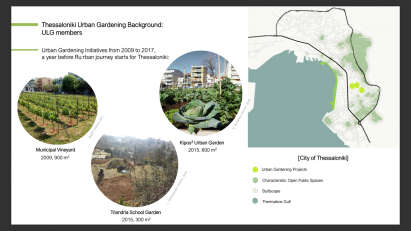
    Municipality of Thessaloniki, even though it refers to a city of only 2.5m2 per resident, during the last years supports and hosts in public spaces a vineyard, an orchard, an urban community garden project (Kipos3) and a schoolyard (Triandria school garden). The existence of those productive and “edible” landscapes, within the city center, motivated the Common Benefit Enterprise of the City of Thessaloniki (KEDITH), to participate in the European network Ru:rban of URBACT III. 

    Through this experience, the City gained valuable input to structure an institutional tool and a manual in order to multiply its urban gardening initiatives along with the active citizens’ engagement. The rural-urban (“rurban”) blending these initiatives may bring, aims to more cohesive neighborhoods and communities, to more attractive public spaces – especially for the remnant, non accessible and inactive of those -, to a more inclusive, resilient and alive city in the end . Ioanna Kosmopoulou, President of Common Benefit Enterprise City of Thessaloniki "KEDITH"

    Patricia Hernandez

    See more
  • THESSALONIKI TRANSFER STORY

    Municipality of Thessaloniki, even though it refers to a city of only 2.5m2 per resident, during the last years supports and hosts in public spaces a vineyard, an orchard, an urban community garden project (Kipos3) and a schoolyard (Triandria school garden). The existence of those productive and “edible” landscapes, within the city center, motivated the Common Benefit Enterprise of the City of Thessaloniki (KEDITH), to participate in the European network Ru:rban of URBACT III. 

    Through this experience, the City gained valuable input to structure an institutional tool and a manual in order to multiply its urban gardening initiatives along with the active citizens’ engagement. The rural-urban (“rurban”) blending these initiatives may bring, aims to more cohesive neighborhoods and communities, to more attractive public spaces – especially for the remnant, non accessible and inactive of those -, to a more inclusive, resilient and alive city in the end . Ioanna Kosmopoulou, President of Common Benefit Enterprise City of Thessaloniki "KEDITH"

    Patricia Hernandez

    See more
  • THESSALONIKI TRANSFER STORY

    Municipality of Thessaloniki, even though it refers to a city of only 2.5m2 per resident, during the last years supports and hosts in public spaces a vineyard, an orchard, an urban community garden project (Kipos3) and a schoolyard (Triandria school garden). The existence of those productive and “edible” landscapes, within the city center, motivated the Common Benefit Enterprise of the City of Thessaloniki (KEDITH), to participate in the European network Ru:rban of URBACT III. 

    Through this experience, the City gained valuable input to structure an institutional tool and a manual in order to multiply its urban gardening initiatives along with the active citizens’ engagement. The rural-urban (“rurban”) blending these initiatives may bring, aims to more cohesive neighborhoods and communities, to more attractive public spaces – especially for the remnant, non accessible and inactive of those -, to a more inclusive, resilient and alive city in the end . Ioanna Kosmopoulou, President of Common Benefit Enterprise City of Thessaloniki "KEDITH"

    Patricia Hernandez

    See more
  • A Tale of Two Cities. Transfer Stories from East and West.

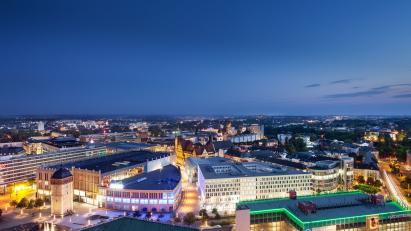
    Two German cities are currently lead partners in the 23 URBACT Transfer Networks. Altena in North Rhine-Westphalia and Chemnitz in Saxony. Altena shared its best practices on how to develop sustainable initiatives with a minimum of external resource input in the Re-growCity network. Chemnitz shared its good practice of activating vacant buildings in need of refurbishment in the ALT/BAU Network.

    Both cities were forced to develop methods to lessen the impact of the severe population loss. Chemnitz, in the east, lost about 25% of its population after German reunification until 2005, most of whom migrated to the west to find employment.  Altena, in the west, has been losing residents since the 1970s. Between 1990 and 2009, the city was subject to a 15% population decline, making it the municipality with the fastest population decline in NRW. How did the two cities experience the transfer process in the URBACT networks over the past two and a half years? Volker Tzschucke, ULG member in Chemnitz reports about both cities.

    sabine.hausmann

    See more
  • A Tale of Two Cities. Transfer Stories from East and West.

    Two German cities are currently lead partners in the 23 URBACT Transfer Networks. Altena in North Rhine-Westphalia and Chemnitz in Saxony. Altena shared its best practices on how to develop sustainable initiatives with a minimum of external resource input in the Re-growCity network. Chemnitz shared its good practice of activating vacant buildings in need of refurbishment in the ALT/BAU Network.

    Both cities were forced to develop methods to lessen the impact of the severe population loss. Chemnitz, in the east, lost about 25% of its population after German reunification until 2005, most of whom migrated to the west to find employment.  Altena, in the west, has been losing residents since the 1970s. Between 1990 and 2009, the city was subject to a 15% population decline, making it the municipality with the fastest population decline in NRW. How did the two cities experience the transfer process in the URBACT networks over the past two and a half years? Volker Tzschucke, ULG member in Chemnitz reports about both cities.

    sabine.hausmann

    See more
  • A Tale of Two Cities. Transfer Stories from East and West.

    Two German cities are currently lead partners in the 23 URBACT Transfer Networks. Altena in North Rhine-Westphalia and Chemnitz in Saxony. Altena shared its best practices on how to develop sustainable initiatives with a minimum of external resource input in the Re-growCity network. Chemnitz shared its good practice of activating vacant buildings in need of refurbishment in the ALT/BAU Network.

    Both cities were forced to develop methods to lessen the impact of the severe population loss. Chemnitz, in the east, lost about 25% of its population after German reunification until 2005, most of whom migrated to the west to find employment.  Altena, in the west, has been losing residents since the 1970s. Between 1990 and 2009, the city was subject to a 15% population decline, making it the municipality with the fastest population decline in NRW. How did the two cities experience the transfer process in the URBACT networks over the past two and a half years? Volker Tzschucke, ULG member in Chemnitz reports about both cities.

    sabine.hausmann

    See more