Networks and cities' news

Catch up on the latest updates from cities working together in URBACT Networks. The articles and news that are showcased below are published directly by URBACT’s beneficiaries and do not necessarily reflect the programme’s position.

Want to learn more about the projects that are featured here? Discover the URBACT Networks.
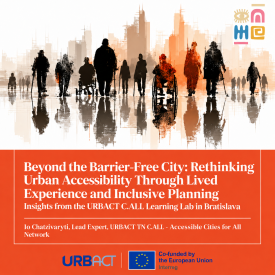


  • Beyond Physical Accessibility: Lived Experience and Inclusive Urban Governance

    Can a city be physically accessible without being genuinely inclusive? 


    This question challenges approaches to urban accessibility centred primarily on infrastructure provision and technical compliance. Although removing physical barriers is essential, it does not necessarily ensure independent movement, equal participation or a meaningful experience of urban life. This article argues that inclusive urban mobility also depends on how cities incorporate lived experience, organise participation and translate accessibility knowledge into municipal decisions.


    Drawing on the third Transnational Network Meeting of the URBACT TN C.ALL – Accessible Cities for All Transfer Network, held in Bratislava on 6–7 October 2026, the article examines the Learning Lab as an exploratory qualitative case study. Its methodological sequence: Learn, Experience, Harvest, Co-design and Commit, connected urban observation, stakeholder dialogue, collaborative interpretation and preliminary proposals for local testing.


    The analysis develops five interconnected dimensions of inclusive mobility governance: whole-journey accessibility assessment, participatory knowledge production, institutional coordination, context-sensitive experimentation and continuous evaluation. Examples from Komotini and participating European partners illustrate how these dimensions may inform the adaptation of accessibility practices to different local circumstances. These examples represent emerging approaches rather than completed interventions with demonstrated outcomes.


    The article concludes that moving from accessible infrastructure towards inclusive urban environments requires changes not only in urban design, but also in how planning knowledge is produced and acted upon. Transnational learning can support this transition by connecting technical expertise with lived experience. Its lasting contribution, however, depends on whether learning influences institutional responsibilities, investment priorities and everyday urban experiences.


    Keywords: urban accessibility, inclusive urban mobility, lived experience, participatory governance, accessibility assessment, policy transfer, urban experimentation, URBACT TN C.ALL.

    Eleftheria Gkiosou

    See more
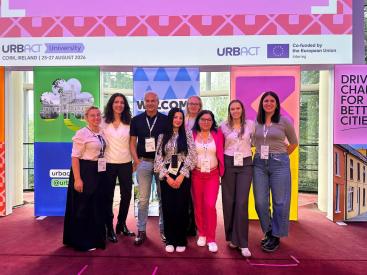
  • RE:START partners strengthen cooperation and shared learning at URBACT University 2026

    Partners from the RE Transfer Network took part in URBACT University 2026, held from 25 to 27 August in Cork, Ireland. The event brought together 292 participants from 156 cities across 28 countries, representing the 25 URBACT Transfer Networks.

    Nuno Capelo

    See more
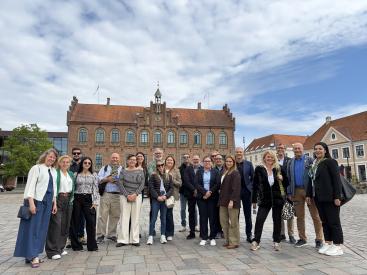
  • Meeting in Nyborg

    2nd Transnational Meeting held in Nyborg, Denmark, dedicated to Place Branding

    On 17 and 18 June 2026, partners from the URBACT RE:START Transfer Network gathered in Nyborg, Denmark, for the network’s second Transnational Meeting, dedicated to Place Branding and territorial attractiveness.

    Nuno Capelo

    See more
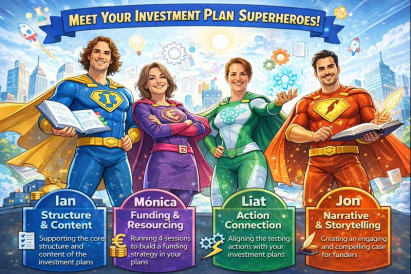
  • When experts work together, can cities achieve more?

    Monica.nagore@gmail.com

    See more
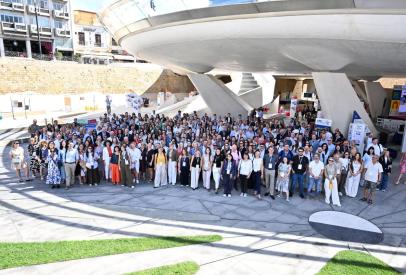
  • Group photo of the festival participants

    Beyond the Urban reunites in Nicosia at the URBACT City Festival

    Representatives from partner cities and fuctional areas of the European network attended the festival to share experiences, discover initiatives from other cities and further strengthen the collaborative ties established during the project.

    Monica Carrera

    See more
  • An event in Kočani

    From planning to action: Beyond the Urban partners publish their Integrated Action Plans for sustainable urban–rural mobility

    Beyond the Urban is an URBACT network of ten territories across Europe. Cities, regions and rural areas work together to rethink how people move —between villages and cities, to work, to school, to services— with sustainability, inclusion and digital tools at the core. Led by Osona, Beyond the Urban has been a shared journey of learning, testing and planning a new kind of urban–rural mobility.

    Monica Carrera

    See more