
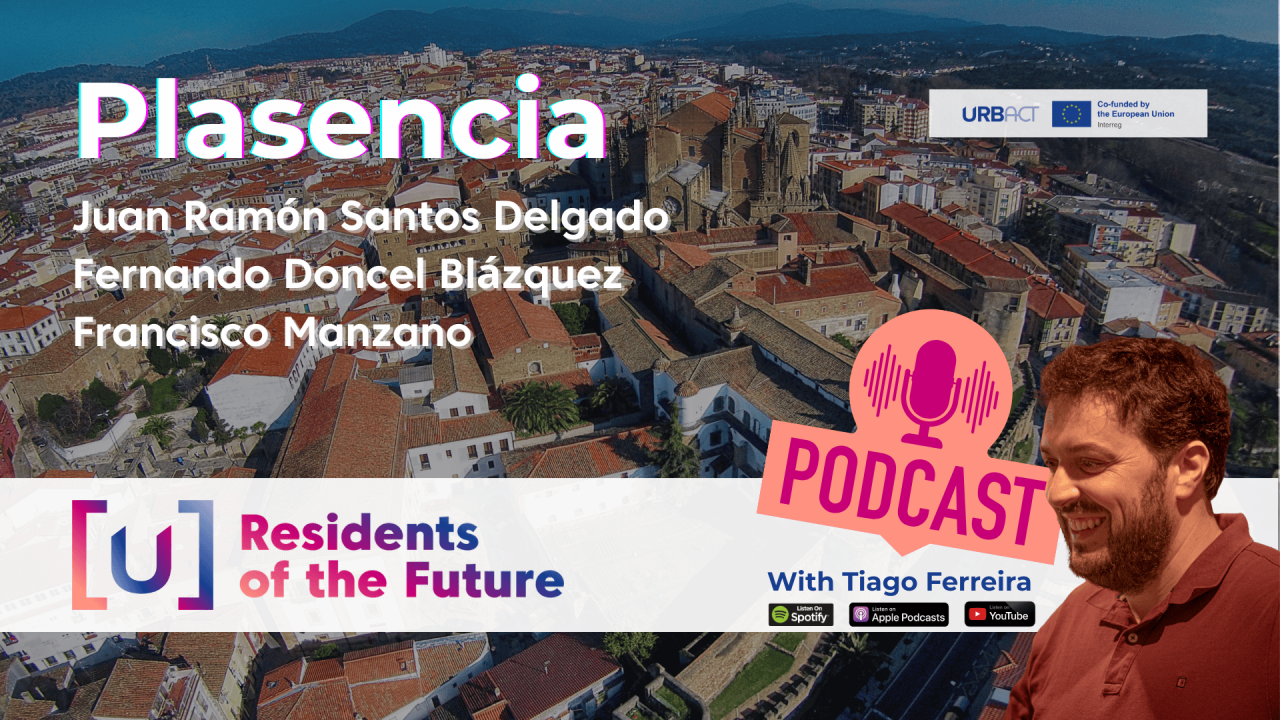
In the latest episode of the Residents of the Future podcast, the spotlight turns to Plasencia, a historic city in Spain’s Extremadura region. Known for its cathedral, medieval old town and surrounding natural landscapes, Plasencia represents a growing number of small and medium-sized European cities facing the challenge of population decline. Joined by local guests Juanra, Fernando and Francisco, URBACT Lead Expert Tiago Ferreira explores the city’s experience with urban shrinkage and how the community is responding.
Plasencia began losing population after decades of growth. While earlier generations moved from rural areas into the city, more recent economic crises reversed the trend, leading to outward migration and concerns about long-term vitality. Beyond statistics, there was a psychological impact: when people leave, confidence declines.
Yet the discussion reveals a different narrative emerging.
Quality of life is central to Plasencia’s appeal. Everything is within walking distance. Residents can return home for lunch with family. Nature is immediate and accessible. Social networks are strong but not intrusive. The city offers cultural heritage, essential services and proximity to rivers, forests and mountains — a combination difficult to replicate in larger metropolitan areas.
Through its participation in the URBACT Residents of the Future network, Plasencia established a local group to co-design solutions. Testing actions included a welcome kit for newcomers, community events hosted by the mayor, and a lifestyle-focused promotional video highlighting everyday traditions and local identity.
Looking ahead, the city’s Integrated Action Plan proposes ambitious initiatives: a pilot neighborhood with affordable housing near natural areas, a coworking space to attract remote workers, and a housing innovation hackathon to increase supply.
Plasencia’s experience suggests that economic competitiveness alone does not define urban success. Belonging, identity and everyday life matter just as much. For cities navigating demographic change, this Spanish example demonstrates that community-driven strategies can transform challenge into opportunity.