Networks and cities' news

Catch up on the latest updates from cities working together in URBACT Networks. The articles and news that are showcased below are published directly by URBACT’s beneficiaries and do not necessarily reflect the programme’s position.

Want to learn more about the projects that are featured here? Discover the URBACT Networks.


  • Water Finds A Way - The Transfer experience of the Hydro-Heritage Cities

    In this HHC Network Final Report, Sandra Rainero (lead expert) and Chiara Lucchini (ad hoc expert) narrate what it means to transfer in creative and inspiring ways an innovative practice of sustainable water-heritage management. 

    Christos Giovanopoulos

    See more
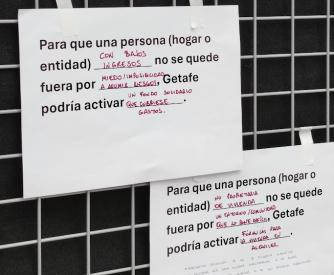
  • A conversation on energy poverty, knowledge transfer, governance and the role of cities in Europe

    Contacted by Maximiliano Schulz, intern at the German URBACT Point, EmPowerIngUs Coordinator Fernando Gonzalez Ferreira and Ad Hoc Expert Chiara Lucchini had the chance to dialogue and reflect about the project's development, trajectories, legacies and future perspectives. The interview was also a priceless occasion to reflect on the URBACT programme as an opportunity for cities in the EU to innovate and reframe their courses of action, as much as to explore new frontiers of governance, government and integrated development**. 

    Chiara.Lucchini

    See more
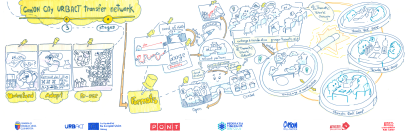
  • THE COM’ON CHRONICLE (Issue #1: November 2025 – August 2026)

    Understanding before translating: How five European cities want to improve and rebuild their youth participatory budgeting (YPB) based on the Com’ON Cluj good practice

    Nils Scheffler

    See more
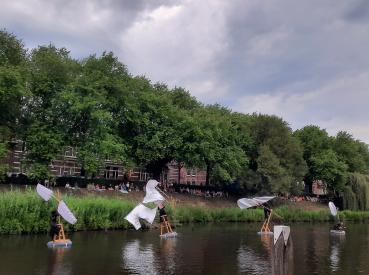
  • Bosch Parade 2026

    From Local Challenges to Shared Solutions: What Theatre4all Cities Learned in Den Bosch

    Kamila Gamalova

    See more
  • Layers of the old Piraeus station: connecting stories, place and data in Daring Cities

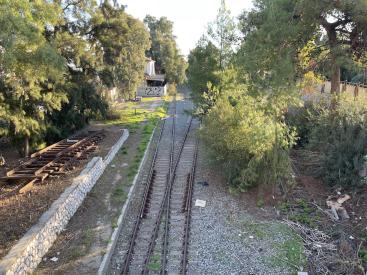
    We can hardly hear each others’ voice as we head West in the Piraeus port. On our right, tall buildings loom over us, echoing the noise of the traffic on the left. Trapped between the infinite flow of cars and the towers overlooking the port, it feels as if we walked the tightrope in the surrealistically narrow strip of public space towards a couple of trees that forced their way through the concrete pavement. Behind the trees, the station building. 

    The architects accompanying our group open the gate and suddenly an oasis opens up before us. Behind the gates, a long wall and the station building, that has been abandoned for over a decade, a stretch of grass, weeds and trees spontaneously growing out of the contaminated soil in every possible direction cover the rails that no longer lead anywhere.

    As our group traverses the field behind the station, slowly balancing our steps around the abandoned railway tracks, we all think about the future of this area. Public servants from Altea, Den Helder, Dunaújváros, Kragujevac, Olomouc and Ravenna all recognize the sense of freedom and indetermination that this terrain vague evokes. They simultaneously think of the railway stations turned into bars, recycling centres, community gardens and linear parks that we visited together in Paris and areas in their hometowns waiting for new uses and new stories.

    Levente Polyak

    See more
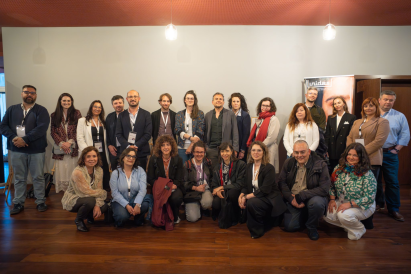
  • UNIDAS4EU International Seminar

    Carla Lourenço

    See more