
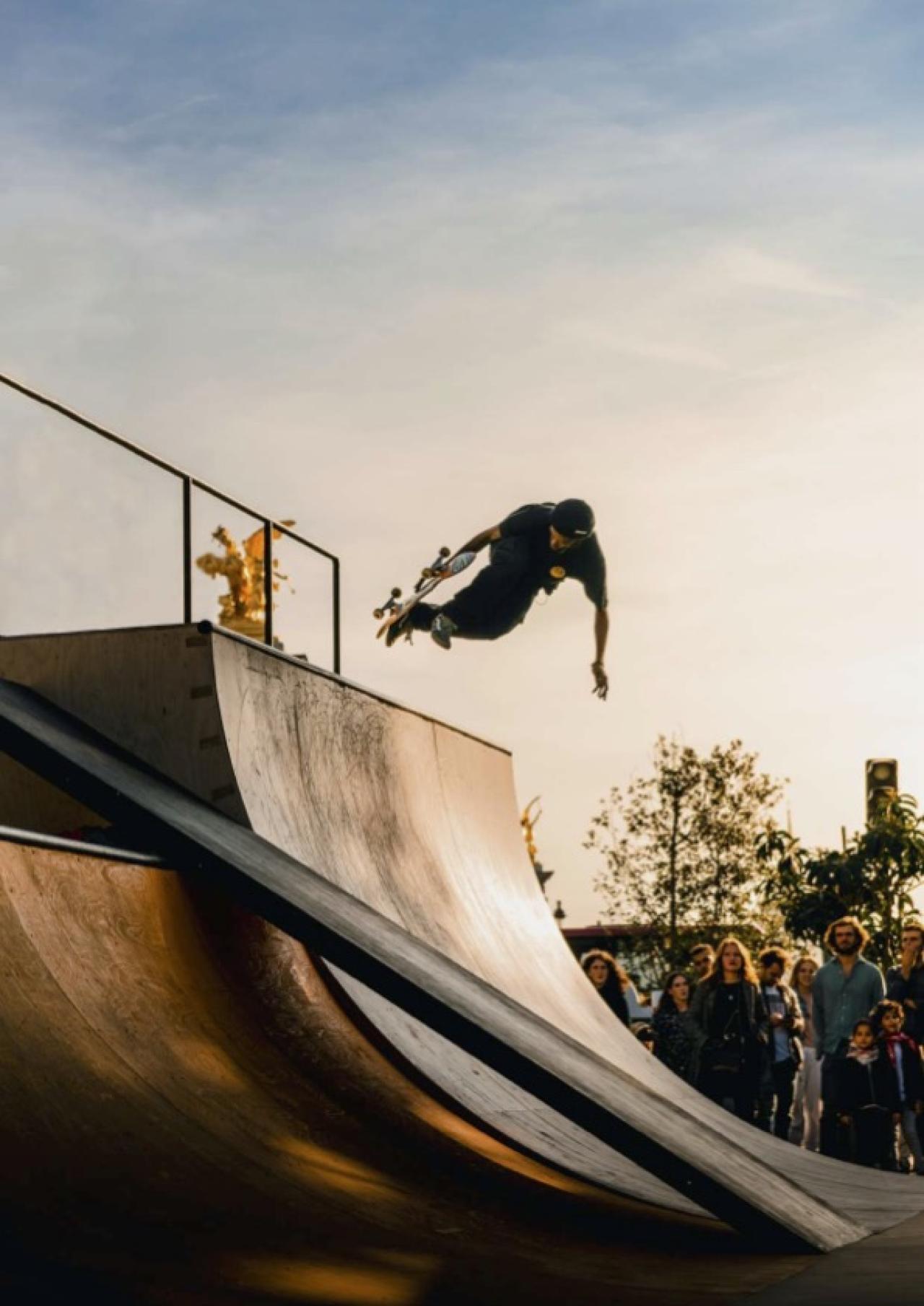
Research in urban design, environmental psychology, and public health shows that the quality of public space strongly influences physical activity and wellbeing. Walkability, multifunctional open areas, safety, and environmental comfort encourage movement and strengthen social ties, particularly among adolescents. For young people, sport plays a key role in identity formation, autonomy, and social belonging, especially where formal opportunities are limited.
In disadvantaged neighbourhoods, sport has additional social and protective functions. Studies in Sport for Development and Peace demonstrate that inclusive sport practices build trust, intercultural dialogue, and collective efficacy. When embedded in public spaces, sport enhances informal social control, reduces fear, and reinforces community stability.
Urban regeneration research highlights how even small, low-cost sport interventions can reactivate neglected areas, reorganise spatial flows, and revitalise public life. When combined with cultural elements, sport also contributes to place-making and local identity building.
Sport-Based Solutions (SBS) represent an innovative approach that uses informal, adaptable, and youth co-created sport interventions to transform spaces socially and spatially. Grounded in tactical urbanism, SBS rely on reversible, low-cost actions that generate evidence for long-term planning. Urban Sport Hubs (USH) are their more consolidated form, functioning as multifunctional, inclusive environments that integrate sport, creativity, nature-based solutions, and social interaction.
These approaches are particularly relevant for disadvantaged youth, providing safe, supportive environments that strengthen resilience, school engagement, and civic participation.
Overall, scientific and policy evidence confirms that sport is a multidimensional driver of urban health, inclusion, and regeneration. Through Sport-Based Solutions and Urban Sport Hubs, sport becomes a strategic tool for building healthier, more resilient, and more socially cohesive cities in the face of inequality, mental health challenges, and spatial fragmentation.
Read the full article by Raffaella Lioce in the Library section.