
Welcome to the URBACT Knowledge Hub on Greening Urban Economies!
How do cities transition to greener urban economies? What is at stake and how can you identify your first, second and third steps considering the many interests across the city?
In this hub you can find inspiration from cities who are on their path towards greener urban economies. You can discover different entry points to green your urban economy: from a circular economy approach, through green transition of post-industrial areas, collaboration with businesses, creation of green spaces to citizen involvement for climate action.
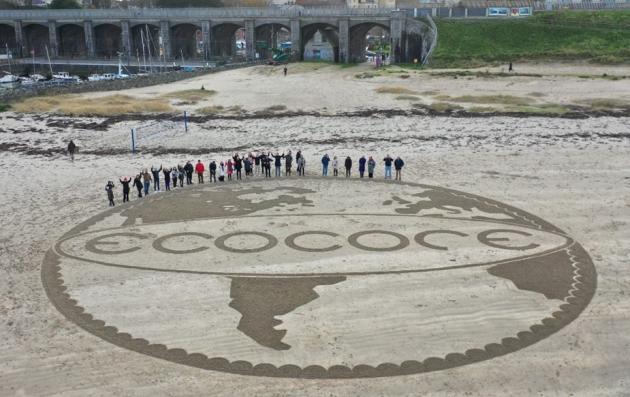
This hub is building on the learnings and outputs from five URBACT networks – COPE, EcoCore, GreenPlace, In4Green and LET'S GO CIRCULAR! - all having developed Integrated Action Plans on green transition for their cities.
- Climate action
- Local economy
Webinar "What is a thriving green urban economy?"
What are green urban economies and how can cities harvest the opportunities they offer? What are the entry points for cities who want to start their journey towards a greener urban economy?
URBACT cities have the answers! Watch the recording from the webinar of 13 November 2025 and discover the stories of five URBACT networks actively building greener urban economies in their cities: COPE, EcoCore, GreenPlace, In4Green and Let's Go Circular!
Webinar What is a thriving green urban economy 13.11.2025 - final slides.pdf
How to create a greener urban economy? Stories from URBACT cities
Discover more stories on how to green your urban economy with the presentation from the URBACT session “How to create a greener urban economy? Stories from URBACT cities” that took place at the Smart City Expo World Congress on 5 November 2025.
How to create green urban economies - stories from URBACT cities.pdf
Municipality as a facilitator of green transition
Building sustainable and inclusive societies requires governance models that actively engage people and empower them to contribute meaningfully to collective decisions. When participation becomes a core part of governance, it strengthens trust, accountability, and shared responsibility.
Discover how to put in place such governance models in your city with the resources below!
Change of mindset – crucial in all levels when working with citizen action!
Citizen Engagement – a Democratic Necessity
Power to the people: Rethinking city governance
How cities in Europe are retrofitting to reflect new…
Small Scale Co-creation Action in Kavala, Greece
Citizen Engagement in Pombal's Green Transition
From_CE Vision_to_Measurement.pdf
Case Study: Helsinki Ring of Industry
Digitalisation, industrial innovation and regeneration
Rapid technological evolution is transforming the way cities function, driving the need for urban spaces that accommodate new kinds of activities - from localised food systems and energy infrastructure to electrified mobility and digitally integrated urban services. At the same time, many conventional industrial roles are losing relevance. As a result, this shift creates a foundation for reimagining and renewing urban areas.
Learn how to green your urban industries with the resources below!
From Concept to Impact: Hands-On Approaches to Digital and Industrial Innovation
Greening industry where it matters: lessons from small and medium-sized European cities
Final Product: In4Green Playbook - Green Transitions for Industrial Cities.pdf
Case Study: Fabrica Santo Tirso
Case Study: Ormoz Basins
Case Study: TUP Dubrovnik
Circular economy and industrial symbiosis
Greening urban economies requires that local authorities rethink traditional development models: prioritising renewable energy solutions, circular resource flows, climate‑adapted urban design, and inclusive community engagement. When planning processes incorporate sustainability criteria and cross‑sector collaboration, they empower municipalities to reduce emissions, enhance biodiversity, and improve quality of life.
Learn how to start building a circular economy in your city with the resources below!
LETS GO CIRCULAR_Final IAP report_2025.pdf
URBACT_GreenPlace_Practice Fiche_Circular Cities.pdf
LGC! LE Article CE Awareness-2024.pdf
LGC! Thematic Article_Guimaraes_2024.pdf
LGC! Riga_Thematic_Report_2024.pdf
Case Study: Industrial Symbiosis Kekava
Skills and green competences
The green transition calls for new skills and competences, ranging from environmental literacy to innovative problem‑solving. These enable individuals, communities, and organisations to respond effectively to climate challenges. By integrating participatory governance with the development of green skills, we create a foundation where citizens not only influence sustainable policies but also possess the competencies to put them into practice.
Discover how cities can support development of green competences with the resources below!
Citizen Engagement in Vilnius' Green Transition
Final Product: Municipalities as Democratic Facilitators of a Green and Just Transition.pdf
Get inspired