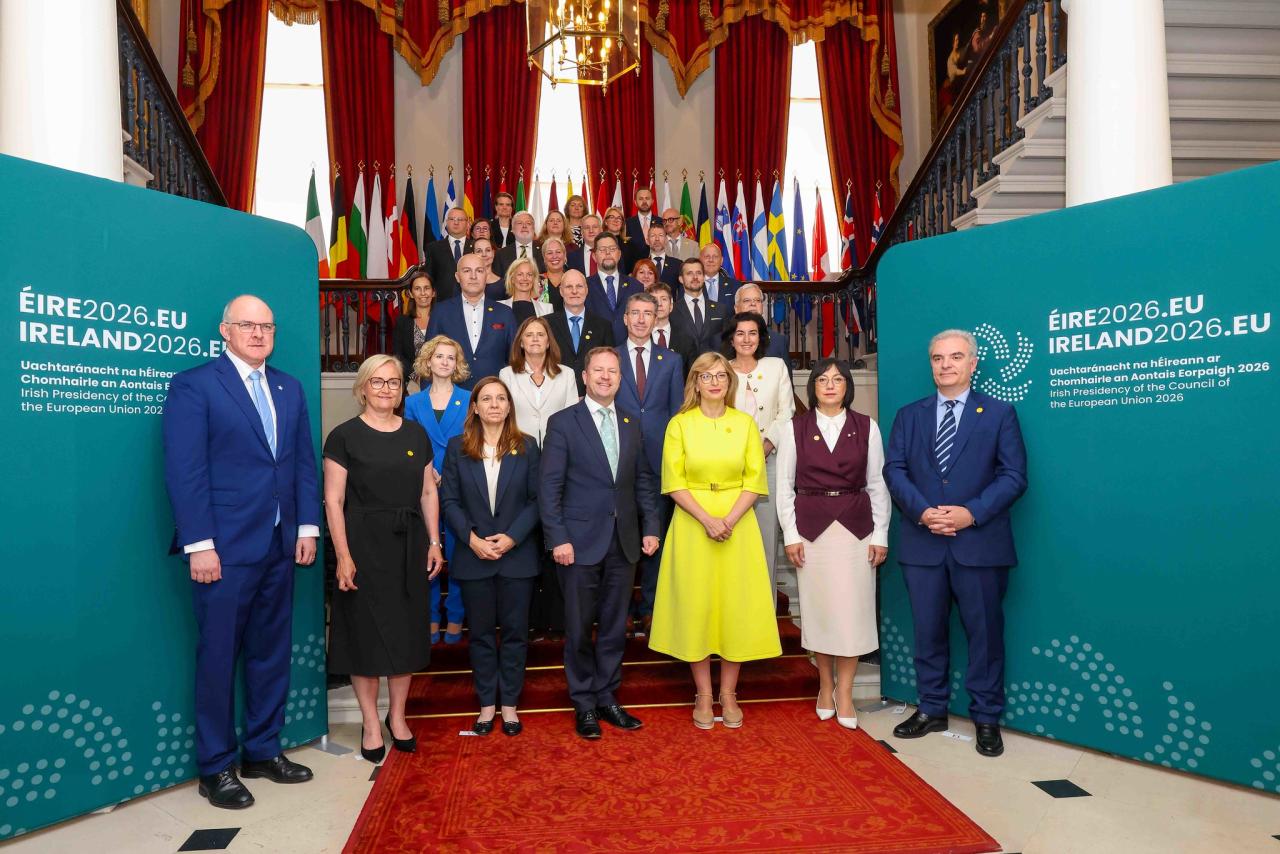
For six months, Irish ministers and officials will chair Council meetings, organise the work and broker compromises among Member States until the end of December 2026. Irrespective of the presiding country, the Presidency of the Council of the EU represents the Council in negotiations with other EU institutions. Its influence lies in setting the pace and keeping priorities moving, while decisions continue to depend on agreement among Member States and, for legislation, with the European Parliament.
Ireland is taking on this role as negotiations begin on the 2028–2034 Multiannual Financial Framework (MFF) and European cities face growing pressure to deliver on affordable housing and the green transition, while responding to heatwaves and other climate risks.
What could Ireland’s Presidency mean for cities across Europe? Here’s an exclusive on the urban policy items in the official programme, plus some insights from representatives of the Eastern and Midland Regional Assembly and Ireland’s Department of Housing, Local Government and Heritage.
Where the Presidency meets the city
The Irish Presidency is centred around three central themes, namely; competitiveness, European values and security. For urban policy practitioners across Europe, these themes might not immediately inspire confidence, but those close to the Presidency confirm that a more competitive, resilient and cohesive Europe is directly tied to the success of cities:
 | “Cities and local authorities are key stakeholders when it comes to implementing EU policies and delivering results for citizens.” Pauline Riordan, Senior Planning Advisor, Department of Housing, Local Government and Heritage |
The Irish Presidency programme describes ‘access to affordable’ housing as a key part of a competitive European economy and commits to advancing the European Affordable Housing Plan. Ireland also has recent experience updating housing requirements in its revised National Planning Framework.
Looking at the Presidency calendar, a few meetings stand out as opportunities for advancing the European housing agenda and strengthening coordination on housing and homelessness. The European Commission is expected to propose an Affordable Housing Act in September 2026, with Ireland intending to lead the Council’s work on it. On 25–26 November, Dublin will host an informal meeting of EU housing ministers, aligned for the first time with a ministerial meeting of the European Platform on Combatting Homelessness.
Cities also have a direct stake in the future of EU Cohesion Policy. According to Ireland’s Department of Public Expenditure, Infrastructure, Public Service Reform and Digitalisation, the Presidency will promote place-based solutions, build local capacity and support multilevel governance with the active involvement of cities, regions and other stakeholders. These commitments now sit within negotiations on the 2028–2034 MFF budget and post-2027 Cohesion Policy, which will determine what support cities receive for investment and the capacity needed to plan and deliver it. The outcome will shape how cities combine investment in housing, transport, energy, climate adaptation and regeneration, as well as how closely local authorities are involved in the process.
Innovation according to Ireland’s Department of Housing, Local Government and Heritage, is not restricted to large metropolitan cities. Hence, smaller cities and rural communities possess enormous potential, which can be unlocked during the Irish Presidency.
On climate policy, Ireland is committed to advancing the EU’s climate-neutrality objectives and strengthening resilience across climate, biodiversity and water policy. These agendas converge with sustainable urban development through the way cities renovate buildings, organise transport, redesign public space and manage water. Ireland also seeks to contribute to wider policy discussions on the Urban Agenda for the EU and the New European Bauhaus. This includes sharing lessons from an URBACT research initiative on 'Unlocking Compact Cities'. Coordinated by the Irish Presidency, this initiative examines how EU regional funding can support sustainable urban development, creating a route for evidence from local projects to inform wider European urban-policy discussions.
Ireland’s URBACT journey
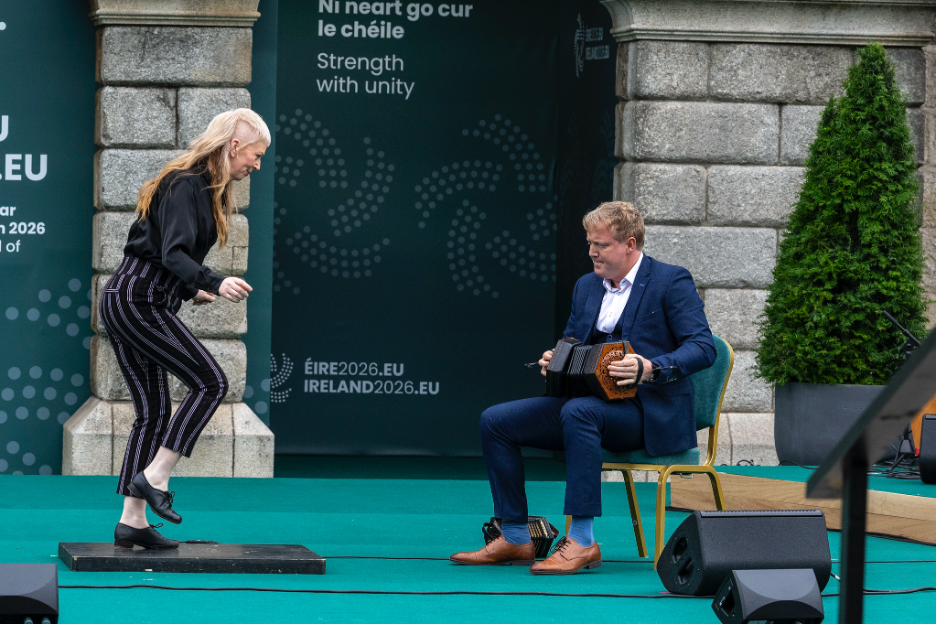
Ireland has a track record of involvement in URBACT, with a growing mix of returning authorities and first-time participants. At the start of the Presidency, Irish partners are active in two Innovation Transfer Networks and four Transfer Networks, with Galway City among the newcomers.
Cork’s experience with the Playful Paradigm network provides one example. The city adapted an approach, first developed in Udine (IT), to make public space more playful and inclusive, and its continuing work can be seen in the URBACT Good Practices: Let’s Play Cork was awarded in 2021 and then transferred to five Irish towns that adapted the approach, and the most recent Cork PlaysMaking was awarded in 2024.
Among current participants, Galway, Limerick, Dublin and Monaghan are working through four URBACT Transfer Networks on accessibility, biodiversity, participatory decision-making and urban green space.
| “We are very pleased to see Irish towns and cities fully participating in URBACT, learning from their European counterparts. Ireland is committed to further expanding the impact of this local learning through URBACT during our Presidency.” Laure Antoniotti, Administrative Officer, Eastern and Midland Regional Assembly |
From 25 to 27 August, Cork will also host the 2026 URBACT University, where practitioners and local stakeholders from current Transfer Networks will strengthen their skills in participatory and integrated policymaking. Follow the University to see what cities take home from Cork and how the learning is put into practice across Europe.
What comes next for cities?
Over the next months, Ireland can shape the agreements, funding choices and cooperation that cities rely on. The clearest test will be whether its work on housing, Cohesion Policy and climate action gives local authorities stronger capacity and a meaningful role in shaping and implementing decisions.
Follow the Irish Presidency programme and events calendar as negotiations unfold, and explore URBACT in Ireland to see how Irish cities are already turning European cooperation into local action.
For more urban perspectives, revisit URBACT’s coverage of the Danish Presidency and Cypriot Presidency.