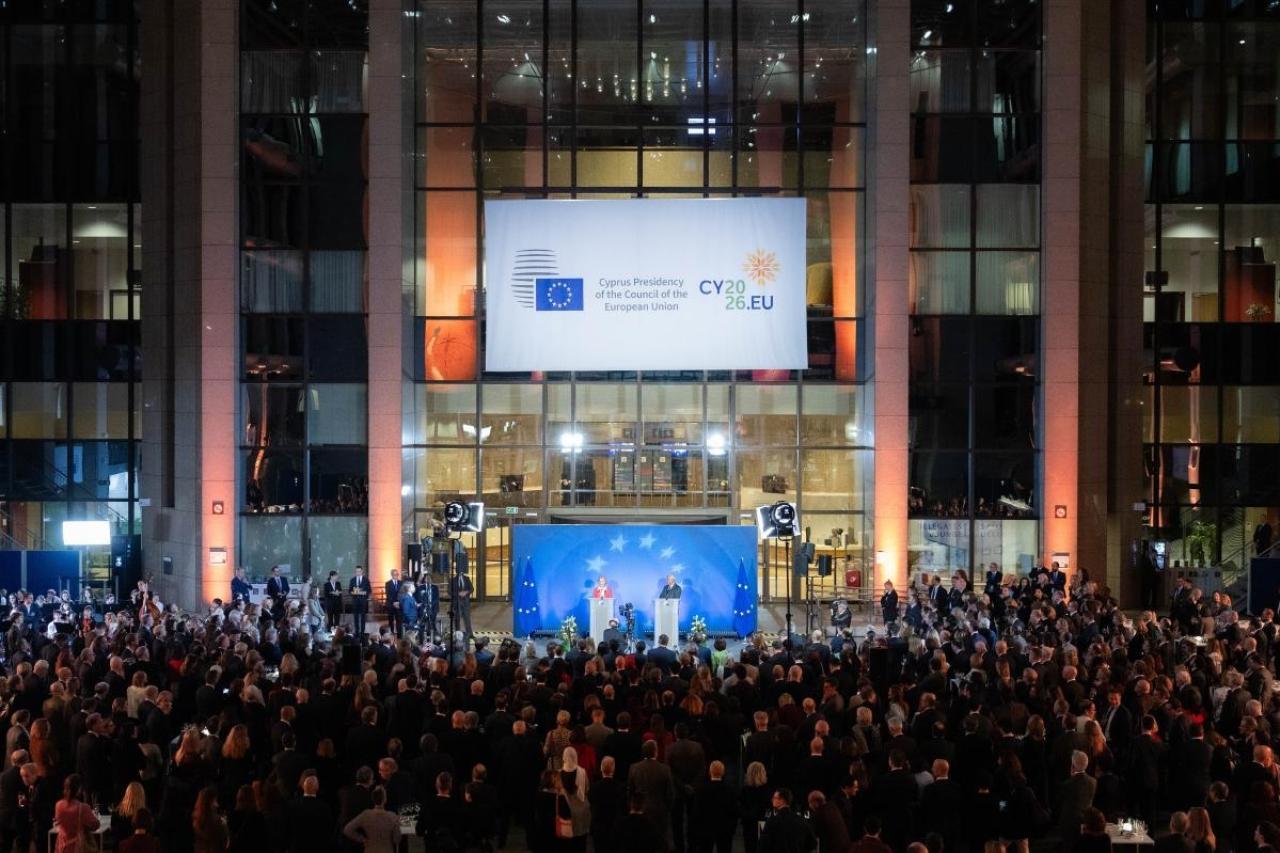
The Cyprus Presidency, which kicked off on 1 January 2026, comes at a point of transition, with lessons emerging from the 2021-2027 programme that will inform the next multiannual funding framework (including the new EU Agenda for Cities and post-2027 Cohesion policy).
With this transition in mind, is there room to further sustainable development and urban-related policies? We reached out to the Cypriot Ministry of the Interior to discuss how sustainable development and urban-related policies will figure in the Cyprus Presidency of the Council of the European Union (which kicked off on 1 January 2026).
This piece looks closer at urban issues on the Presidency’s agenda as well as expectations for the upcoming URBACT City Festival in Nicosia.
Cyprus rounds out a trio on a note of autonomy
At the start of its mandate, the Cyprus Presidency of the Council of the EU officially revealed a programme bent on securing Europe’s strategic autonomy. Looking closer at Presidency priorities, European autonomy has nuances, when it comes to policy, cutting across security and defence to trade and the twin green and digital transitions as well as their impact on citizens and communities.
It is worth looking at the Cyprus Presidency as part of a trio, following in the footsteps of the Polish and Danish Presidencies. These recent Presidencies made sustainable development, and other urban-related policies, a cornerstone of their programmes. From 1 January to 30 June 2025, Poland focused on strengthening European cohesion for the post-2027 EU policy framework, which included getting ministers to commit to furthering urban-territorial cooperation in the Warsaw Joint Declaration (May 2025). Denmark followed up on this, placing particular focus on the EU’s 2040 climate framework and affordable housing.
Let us look closer at the Presidency’s programme to see how Cyprus fits in this trio of Presidencies and builds on the discussions of its predecessors.
Unpacking Cyprus’s programme: urban challenges & solutions
It does not take much convincing to see that cities and urban communities need to be autonomous to tackle critical urban challenges. With European autonomy as a goal, the Presidency’s programme touches on EU sustainable development policy areas. This section will focus on activities in a few areas, namely, territorial cohesion (particularly for islands and Southern Europe), social cohesion and smart mobility.
Towards a comprehensive EU urban agenda and territorial vision
In upcoming meetings on urban matters, the Cyprus Presidency will discuss the new EU Agenda for Cities and its connection to the Urban Agenda for the EU (UAEU), with the aim of drafting a proposal to renew the Multiannual Working Programme of the UAEU. Meetings on building decarbonisation and the adaptive reuse of cultural heritage structures are also planned in the calendar.
In anticipation of the revised Territorial Agenda 2030, the Presidency will support the delivery of ESPON’s FutureTerritory 2050 project analysing the risks and implications of territorially blind policies (this was explicitly mentioned in the Polish Presidency’s May 2025 Warsaw Declaration).
The Presidency will also make the most of its mandate to bring Mediterranean urban challenges (e.g. water scarcity, climate stress, small-city governance, tourism pressure) to the fore. Strengthening ties across cities and regions will be another element of the new Pact for the Mediterranean championed by the Presidency.
 |
“It is expected to help shift EU urban discourse to include Southern, island, and coastal realities, hopefully reinforcing the need for flexibility in EU policies”. – Christiana Sizinou, European Funds Directorate, Ministry of the Interior, URBACT Monitoring Committee National Representative. |
Social cohesion and other cross-cutting urban issues
Territorial cohesion is also important for strengthening social cohesion. This is, in part, because it takes into account cross-cutting issues and the needs of vulnerable communities in urban, rural and remote areas. In this sense, territorial cohesion can help harmonise national and regional efforts to improve affordable housing, reduce energy poverty and promote gender equality.
With this in mind, the Cyprus Presidency will organise meetings with the European Directors of Architecture and other high-level events to promote the European dimension of affordable housing policy pushed forth by Denmark.
| “The Cyprus Presidency seeks to emphasise the central role of the built environment in achieving the objectives of the European Green Deal and the New European Bauhaus. In this context, we will examine the links between architectural policy and broader urban issues.” – Irene Hadjisavva, Town Planning and Housing Department, Ministry of the Interior, Urban Contact Point, European Urban Initiative. |
Another priority will be to support the implementation of the EU Roadmap for Women’s Rights, involving a high-level event in March 2026 on the upcoming European Strategy for Gender Equality 2026-2030.
Sustainable and smart mobility
In addition to the above, seamless sustainable, intermodal, efficient mobility will also be a priority during the Cyprus Presidency. Particular attention will be paid to connecting cities, rural areas and island regions. This ‘cross-regional connectivity’ will be reinforced through resilient digital networks, modern transport links and key energy corridors.
2026 URBACT City Festival: symbolic timing for Cyprus & the URBACT programme
Over the years, Cyprus’s involvement in URBACT has evolved not just as an entry point to EU urban cooperation but also a capacity-building instrument. Beyond Nicosia, the participation of small and medium-sized cities across the island has made URBACT a training opportunity for local administrations with limited staff and resources.
| “Cyprus’s relationship with URBACT shows signs of maturity, as Cypriot cities are more confident and participation is more strategically aligned with cohesion policy, climate goals, and territorial cohesion objectives.” – Christiana Sizinou, European Funds Directorate, Ministry of Interior, URBACT Monitoring Committee National Representative. |
The decision to host the 2026 URBACT City Festival in Nicosia marks an important milestone during the Presidency. From 31 March to 1 April, over 500 city practitioners and EU policymakers will exchange knowledge and stories of urban cooperation, local action, EU governance and funding as well as take in the sites of Nicosia (plus its urban sustainable development accomplishments).
This year’s edition will also be an opportunity to bridge local practice and EU policy, with the festival outcomes, hopefully feeding Council discussions on cohesion, urban funding and governance.
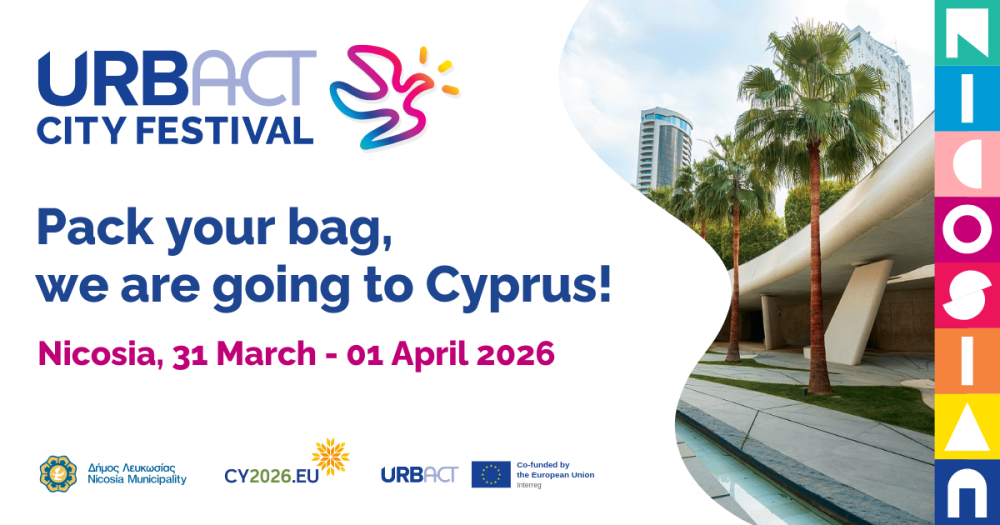
What’s the latest news on the 2026 URBACT City Festival? Keynote speakers, among others, will take the stage: Charalambos Prountzos, Mayor of Nicosia; Themis Christophidou, European Commission's Director-General for Regional and Urban Policy; Constantinos Ioannou, Minister of Interior of Cyprus; Corinne de La Mettrie of the French National Agency for Territorial Cohesion. Check out the event programme for more information.
Stay updated on the Cyprus Presidency programme and event agenda.
Want more context on EU Presidency developments related to urban issues over the last year? Read our articles on the Presidency of the Council of the EU for Poland and Denmark.