Networks and cities' news

Catch up on the latest updates from cities working together in URBACT Networks. The articles and news that are showcased below are published directly by URBACT’s beneficiaries and do not necessarily reflect the programme’s position.

Want to learn more about the projects that are featured here? Discover the URBACT Networks.


  • Have you ever tried beehive therapy? Have you ever met a biodiversity officer?

    In this edition, we dive into the transformative work of Local Authority Biodiversity Officers in Ireland, explore urban beekeeping as a tool for engagement, and discover how public parks can evolve into climate-resilient biodiversity hubs. We also take a closer look at groundbreaking initiatives like Limerick’s first Natural Play Area, permaculture gardens in Slovenia, and innovative tree and park management in Budapest.

    Ferenc Szigeti-Böröcz

    See more
  • SCHOOLHOOD’s fourth stop on its journey to safe, green and happy ways to school

    Vasilis Koutalas

    See more
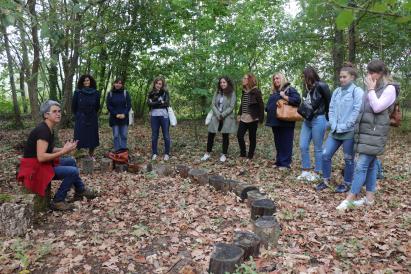
  • The participants in the Empathy Retreat. The image shows the 32 people and trainers in front of the Museum, where some activities were held. (Source: Robert Barlea for AMAIS, 2022).

    Accessible and Inclusive Public Spaces: Foundations for Thriving Communities

    Public spaces are the core of urban community life, offering people a place to observe each other, connect, and share goals, needs, and stories. When designed with human diversity in mind, these spaces have the transformative potential to foster social cohesion, enhance quality of life, and support sustainable urban living. They serve as platforms for community interaction, cultural exchange, and recreation, contributing in the long term to healthier, more equitable cities. Public spaces should be accessible to all citizens and not create discrimination caused by the built environment. However, although accessibility and inclusion are recurring topics in numerous EU documents and reports, they are still too often treated as add-ons rather than integral components of urban planning. This leaves many spaces inaccessible or unfriendly to diverse user groups and leads to missed opportunities for building an equitable society.

    To build on this, GreenPlace, one of Urbact’s networks that aims to develop a set of activities for "recycling" unused urban areas using social participation tools having a strong focus on diversity and inclusion, recently held a workshop titled “Equitable Cities—An Inclusive Approach” in Nitra, Slovakia. The participants examined how the built environment can contribute to social segregation and generate disabilities even where there are no permanent ones. They discussed the importance of shifting accessibility from being viewed as a "special case" 1 to becoming a core priority in public space development. 


    iris.popescu

    See more
  • SCHOOLHOOD’s third stop on its journey to safe, green and happy ways to school

    Vasilis Koutalas

    See more
  • Unlocking the potential of remote work: insights from the Remote-IT network

    The global workforce is undergoing a profound transformation, with remote work and digital nomadism reshaping economies, urban planning, and governance. For cities, this shift presents both opportunities and challenges: How can urban areas attract and retain skilled remote workers? How can public administrations integrate remote and hybrid work models while maintaining efficiency?

    The Remote-IT Network, composed of eight European cities—Dubrovnik, Brindisi, Tartu, Murcia, Heraklion, Bucharest District 6, Câmara de Lobos, and Tirana—explores strategies to make cities more adaptable to remote work. Through transnational meetings, testing action initiatives, and discussions in forums and podcasts, the network has identified key insights and recommendations for cities aiming to become leaders in the future of work.

    Alisa Aliti Vlasic

    See more
  • URBACT – Landesgartenschau Löbau 2012

    When we decided to apply for the Greenplace project, we already knew what we wanted to share with the other project participants – our experience from the 2012 Saxon State Horticultural Exhibition (6. Sächsische Landesgartenschau Löbau 2012). For this exhibition, a 20-hectare industrial wasteland in Löbau was completely transformed. The site had previously housed several textile factories and various buildings of the Löbau sugar factory. Following the decline of these industries, the sugar factory—the last operating facility in this area near the city center—closed in 2002.

    Joanna Gańcza-Pawełczyk

    See more