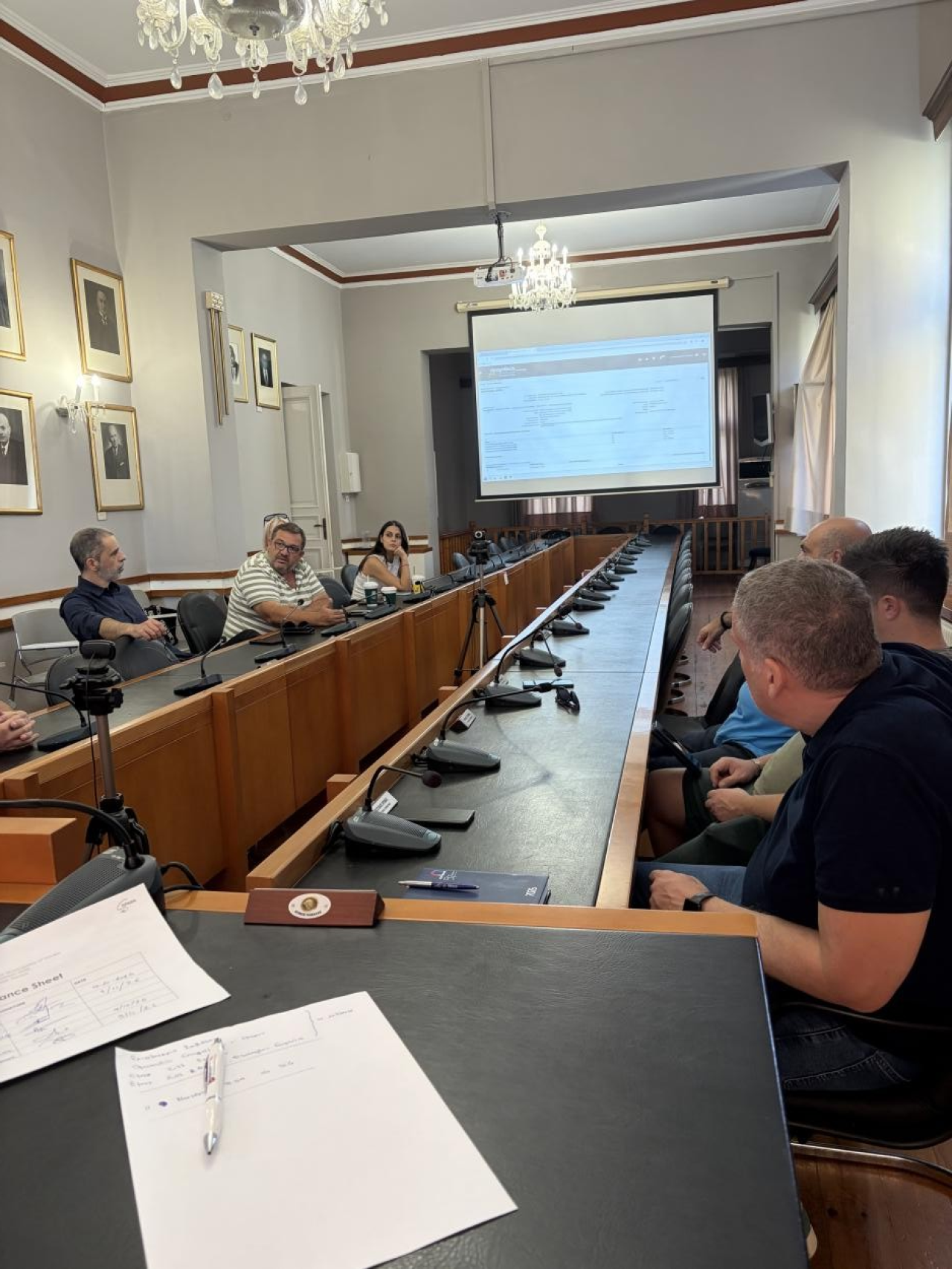
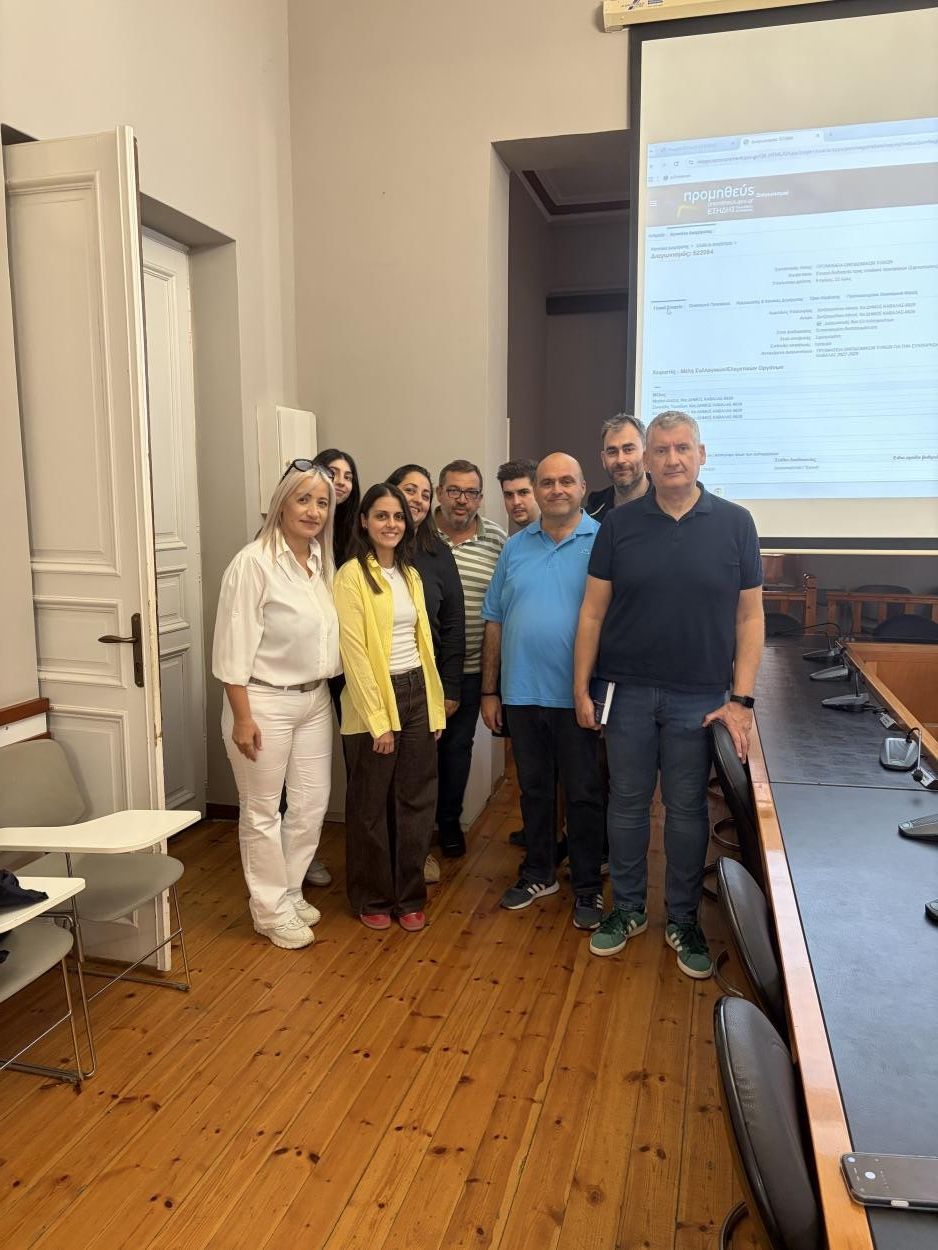
The Municipality of Kavala, Lead Partner of the SPARK Transfer Network, held the third meeting of its URBACT Local Group (ULG), bringing together representatives of the Municipality, members of the Kavala Trade Association and local suppliers to discuss public procurement, stakeholder engagement and the next steps of the project.
Although the meeting was initially planned as an information and training session on public procurement procedures, last-minute cancellations by several interested suppliers required a change of plans. Rather than proceeding with the original agenda, the organisers and participants agreed to use the opportunity for an open discussion and to reschedule the training session for a later date.
This adjustment offered a valuable reminder that effective stakeholder engagement requires flexibility. Building a strong Local Group is not simply about bringing stakeholders together, it is about listening to their needs, understanding the challenges they face and adapting activities to encourage meaningful participation.
Learning from Experience and Strengthening the Local Group
An important part of the meeting focused on the composition and further development of the Kavala ULG. Building on the experience and insights gained during URBACT University 2026 in Cork, participants engaged in a collective brainstorming exercise to identify additional organisations that could contribute to the Local Group.
The discussion helped highlight potential gaps in the existing stakeholder list and explore opportunities to broaden participation. Involving organisations with different areas of expertise and perspectives can strengthen local cooperation and ensure that the project reflects a wider range of needs and experiences.
This process also reinforced the importance of treating stakeholder engagement as an ongoing activity. As the project progresses, the Local Group can evolve by welcoming new participants, developing new connections and responding to emerging local priorities.
Connecting Local Businesses with Public Procurement Opportunities
The meeting also provided an opportunity to exchange experiences and discuss the challenges local businesses face when engaging in public procurement procedures.
A local supplier with previous experience in participating in public procurement procedures, shared his experience with other suppliers who had not yet participated in similar processes. This exchange helped bring practical perspectives into the discussion and highlighted the value of learning directly from the experiences of local businesses.
Despoina Chinisoglou, Head of the Municipality’s Procurement Department, facilitated the discussion and introduced the main topics that will be covered in the upcoming training session. She also demonstrated the eProcurement online platform, providing participants with an initial insight into the digital tools used in public procurement.
The demonstration offered a practical starting point for the next stage of the ULG’s work: developing a more comprehensive information and training activity that will reach businesses from different sectors of the local economy.
The planned session will focus on public procurement procedures, the applicable legal framework and practical guidance on participating in public tenders. Its aim is to help local businesses better understand the process and explore opportunities to engage with public contracts.
From Discussion to Joint Action
Beyond exchanging experiences, participants worked together to define the next steps for the Local Group. One of the main priorities identified was to broaden the range of businesses and organisations involved in future activities, ensuring that the upcoming training session responds to the needs of a wider audience.
The group also agreed on the date of its next meeting, scheduled for the afternoon of 11 November 2026, taking into account the availability of participants and the operating hours of local businesses.
Chrysoula Papadopoulou, SPARK Project Coordinator, also updated the participants on the upcoming activities of the network, including the third Transnational Meeting in Pamplona, Spain. The exchange between local and transnational activities remains an important part of the transfer process, enabling partners to share experiences, reflect on different approaches and identify lessons that can be adapted to their own local contexts.
Moving Forward Together
The third ULG meeting demonstrated that progress does not always depend on following an initial plan exactly as intended. Sometimes, changing course creates space for a more meaningful discussion, a better understanding of stakeholder needs and a clearer definition of priorities.
For the SPARK network, this is an essential part of the URBACT approach: encouraging collaboration, learning through exchange and adapting project activities to local realities.
In Kavala, the next steps will focus on strengthening the Local Group, expanding stakeholder participation and providing practical support to local businesses interested in public procurement.
By maintaining an open dialogue with the local business community and building on the knowledge and experience of its members, the Municipality of Kavala aims to strengthen cooperation between public authorities and local suppliers and contribute to a more accessible and inclusive public procurement environment.
SPARK continues to move forward through a simple but important principle: listen to the people involved, learn from their experiences and shape the next steps together.