Can a City Be Accessible Without Being Inclusive?
A city may provide accessible vehicles, redesigned crossings and barrier-free public buildings while still presenting difficulties for the people who use them. Journeys may remain fragmented, information may be inaccessible, and those most affected by mobility barriers may have little influence over planning decisions.
The distinction between accessibility and inclusion is therefore more than semantic. It concerns the relationship between the provision of accessible infrastructure and people’s ability to move independently, use services and participate in urban life.
Physical accessibility remains indispensable. Yet its effectiveness depends on the connections between infrastructure, information, service provision and institutional responsibilities. A barrier removed at one location may have limited value if another part of the journey remains inaccessible.
This article advances an exploratory proposition: integrating lived experience into accessibility assessment and municipal decision-making can help cities develop more coherent, context-sensitive and inclusive mobility interventions. Rather than testing a causal hypothesis, it examines how this proposition is reflected in the design and emerging lessons of a transnational learning process.
The third Transnational Network Meeting of the URBACT TN C.ALL – Accessible Cities for All Transfer Network provided the setting for this inquiry. Held in Bratislava on 6–7 October 2026, the meeting was conceived as a participatory Learning Lab, bringing together municipal representatives, urban practitioners, policymakers and people with disabilities.
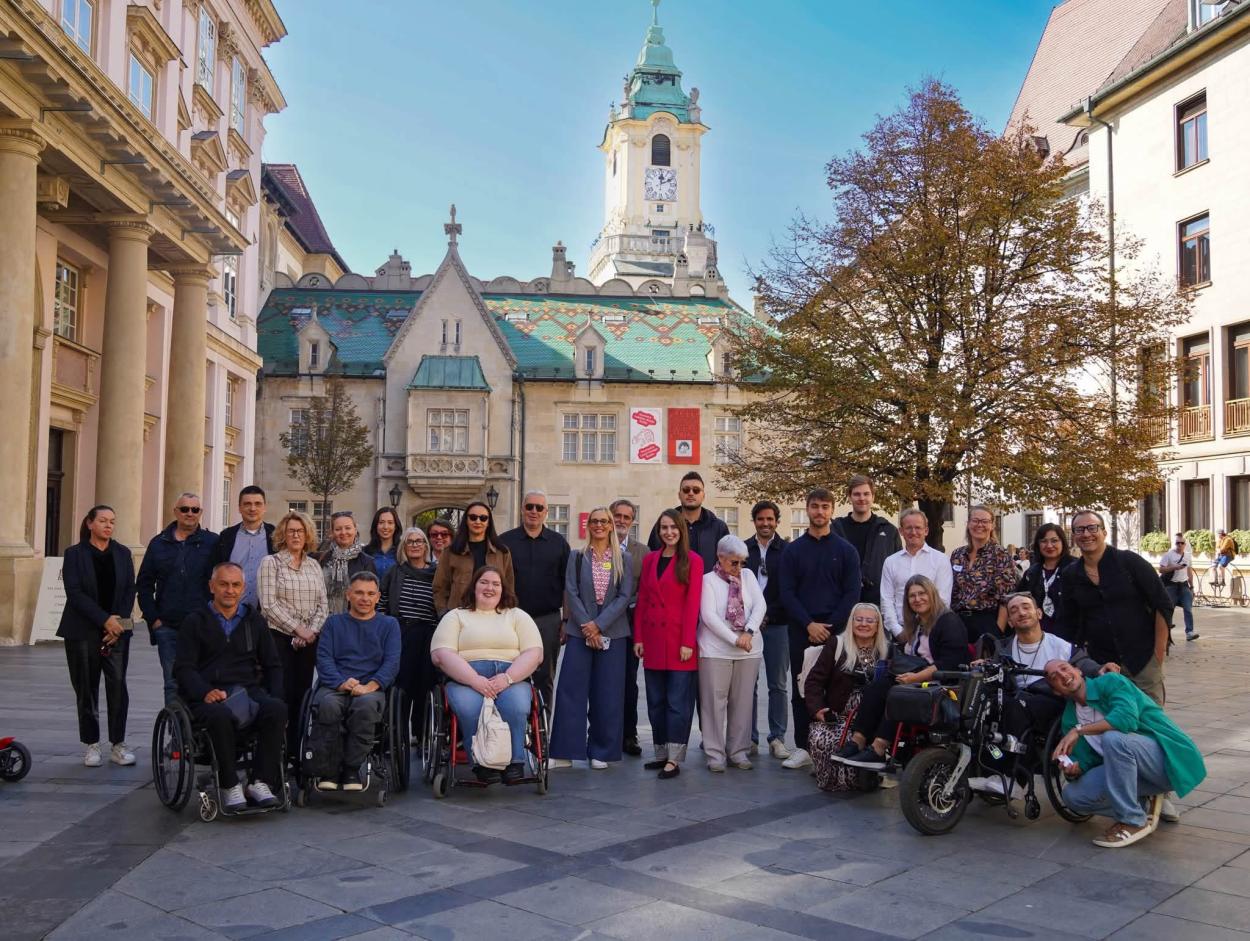
Its approach shifted attention from what cities have implemented to how people experience those interventions. Bratislava became a setting for direct observation, dialogue and collaborative interpretation, rather than simply a venue for presenting municipal practices.
Within URBACT TN C.ALL, the transfer of Komotini’s good practice is understood as a process of local adaptation rather than straightforward replication.
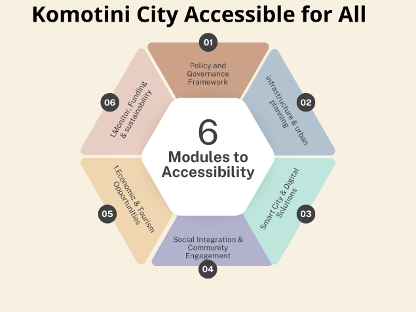
Exchanges among partner cities also create opportunities for reciprocal learning, allowing the lead city and transfer partners to reconsider their own approaches.
The article asks three questions:
- How can lived experience complement technical accessibility assessment?
- How can participatory learning strengthen the connection between accessibility knowledge and municipal action?
- How can transnational exchange support the context-sensitive adaptation of accessibility practices?
Conceptual Framework: Accessibility, Knowledge and Governance
Accessibility as a whole-journey experience
Accessibility-oriented planning considers not only movement through transport networks, but also the opportunities that movement makes available. This perspective broadens the focus from individual infrastructure components to the relationship between people, places and services (Geurs & van Wee, 2004).
An everyday journey may involve pedestrian routes, crossings, public transport, digital information, building entrances and interactions with service providers. A barrier at any stage can compromise the journey as a whole.
Accessibility consequently has physical, informational and organisational dimensions. It also depends on whether conditions are sufficiently reliable and predictable for people to travel independently.
Assessing isolated assets remains necessary, but it is insufficient for understanding how those assets function together. Whole-journey assessment asks whether accessible elements form a usable sequence, rather than merely whether they exist.
Lived experience as planning knowledge
The social model of disability directs attention towards environmental, institutional and social barriers that restrict participation. For urban planning, this perspective makes the experiences of people encountering those barriers directly relevant to understanding how cities function.
Technical assessments and lived experience offer different, complementary forms of knowledge. Technical expertise can identify compliance issues and design requirements. Experiential knowledge can reveal difficulties arising through actual use, including uncertainty, disrupted connections and service procedures that are not readily captured by infrastructure checks.
The central issue is not simply whether people with disabilities are consulted, but when and how their knowledge influences decisions. Arnstein’s (1969) account of citizen participation remains useful in distinguishing opportunities to express views from opportunities to shape outcomes.
Meaningful participation therefore extends beyond collecting feedback. It involves people in defining problems, establishing priorities, developing alternatives and evaluating results.
Policy transfer as contextual adaptation
Transnational networks provide opportunities to exchange methods and institutional practices. However, a practice that works in one city may not function in the same way elsewhere.
Policy transfer is shaped by political, administrative and institutional conditions (Dolowitz & Marsh, 2000). Accessibility practices may also require adaptation to differences in urban form, resources, technical capacity and stakeholder relationships.
Effective transfer therefore requires cities to understand both the visible intervention and the conditions that support it. The relevant question is not simply “What can we copy?” but “What makes this practice work, and what would need to change here?”
Within URBACT TN C.ALL, local testing offers a way to explore these questions on a manageable scale. It can help municipalities examine feasibility, involve stakeholders and refine an approach before considering wider implementation.
Methodology: An Exploratory Qualitative Case Study
The article draws on the methodological design and documentation of the Bratislava Learning Lab. The material comprises the Lead Expert’s presentation, partner progress presentations and project documentation describing accessibility challenges, stakeholder engagement and preliminary testing ideas.
The analysis examines the learning mechanisms and governance approaches represented in these materials. It is not an independent evaluation of the meeting’s effectiveness, nor does it establish changes in accessibility outcomes.
The Learning Lab followed five connected stages:
Learn: examine Bratislava’s accessibility practices, including audits, mapping and stakeholder cooperation, and consider their relationship to Komotini’s good practice.
Experience: observe urban environments through different stakeholders’ perspectives.
Harvest: organise observations about barriers, enabling conditions and opportunities for improvement.
Co-design: develop possible responses through collaborative problem-solving.
Commit: connect the discussions to preliminary proposals for local testing and adaptation.
This sequence was intended to connect learning with potential municipal action. Its analytical value lies in the relationship between observation, interpretation and practical follow-through.
Throughout the article, documented activities and partner intentions are distinguished from the author’s interpretation of their potential contribution to inclusive mobility governance. Preliminary proposals are treated as proposals, not as evidence of successful implementation.
The author’s position as Lead Expert provides insight into the Learning Lab’s design, but also warrants caution when interpreting its significance. The discussion should therefore be read as a reflective analysis of a facilitated learning process rather than an external assessment of its impact.
4. Bratislava as a Learning Environment
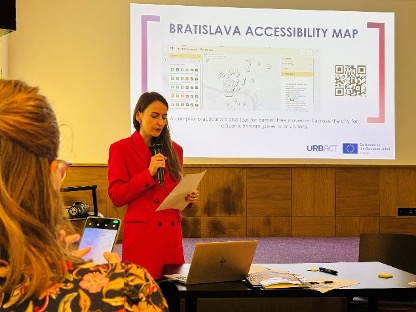
A central element of the Learning Lab was structured observation of Bratislava’s urban environment. The host city’s presentations addressed barrier removal, mobility improvement, awareness-raising and institutional cooperation, with particular attention to accessibility audits and mapping.
Participants were invited to interpret these practices through three observation categories:
- Friction: conditions that create difficulty, uncertainty or exclusion.
- Welcome: features that support independent movement and participation.
- Possibility: opportunities for redesign, adaptation or improved services.
The framework broadened attention beyond the presence or absence of individual accessible features. It encouraged participants to consider how environmental conditions interact during an everyday journey.
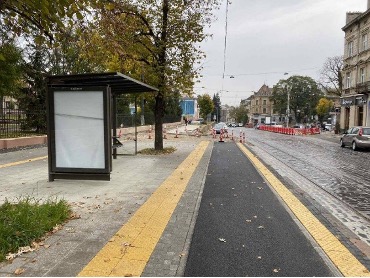
For example, a pedestrian route involves more than pavement width and surface quality. Crossings, orientation information, temporary obstacles and connections to public transport also shape its usability. Similarly, access to a cultural facility involves not only entering the building, but also finding information, navigating the space and participating in its activities.
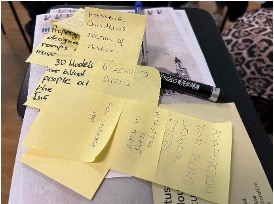
The subsequent evidence-harvesting process sought to turn individual observations into shared learning. During the Transfer Wall workshop, participants considered which practices might be transferable, which would require adaptation and which needed further investigation.
This distinction matters because apparent similarity between cities does not guarantee that an intervention will work under different local conditions. Understanding the responsibilities, resources and relationships behind a practice is part of understanding the practice itself.
From Consultation to Co-design
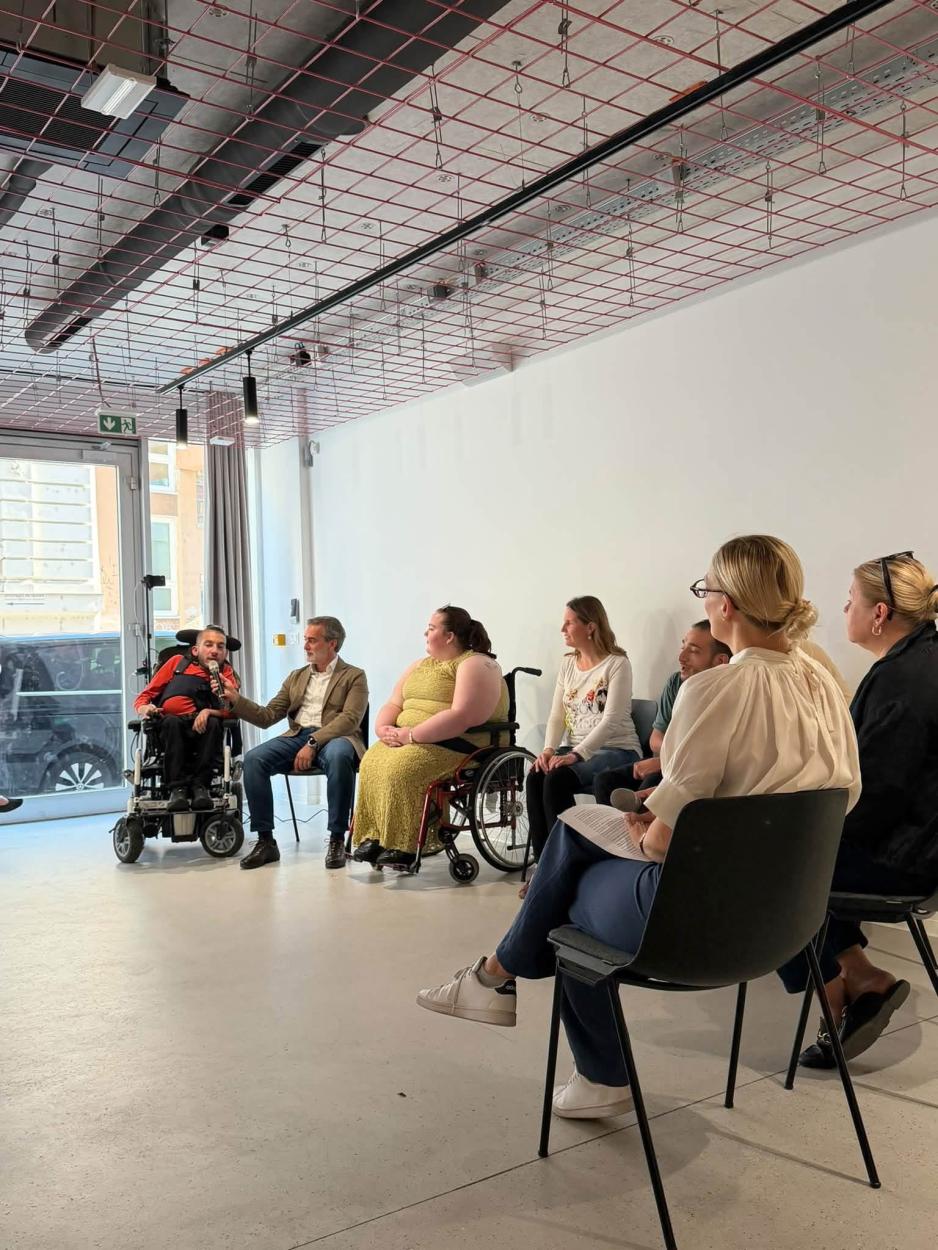
The Learning Lab sought to strengthen the relationship between lived experience and municipal decision-making. Dialogue among people with disabilities, policymakers and urban practitioners focused on concrete situations and possible institutional responses.
This approach highlights the distinction between consultation and co-design. Consultation gathers views on a problem or proposal. Co-design gives participants a more substantive role in defining the problem and developing possible responses.
In accessibility planning, this distinction is consequential. A technically compliant facility may still be difficult to use because of confusing information, inconsistent procedures or inaccessible connections. Such difficulties become visible when assessment includes everyday experience alongside technical criteria.
On the second day, the Inclusive Design Lab explored these issues through the Spot the Barrier exercise, inspired and designed by PERPATO NGO representatives Spyros Dadanides and Litsa Argyropoulou and co animated with Io Chatzivaryti-Lead Expert of TN. C.ALL. Participants examined settings such as transport stops, cultural facilities, schools, public spaces and recreational environments, identifying obstacles and proposing improvements.
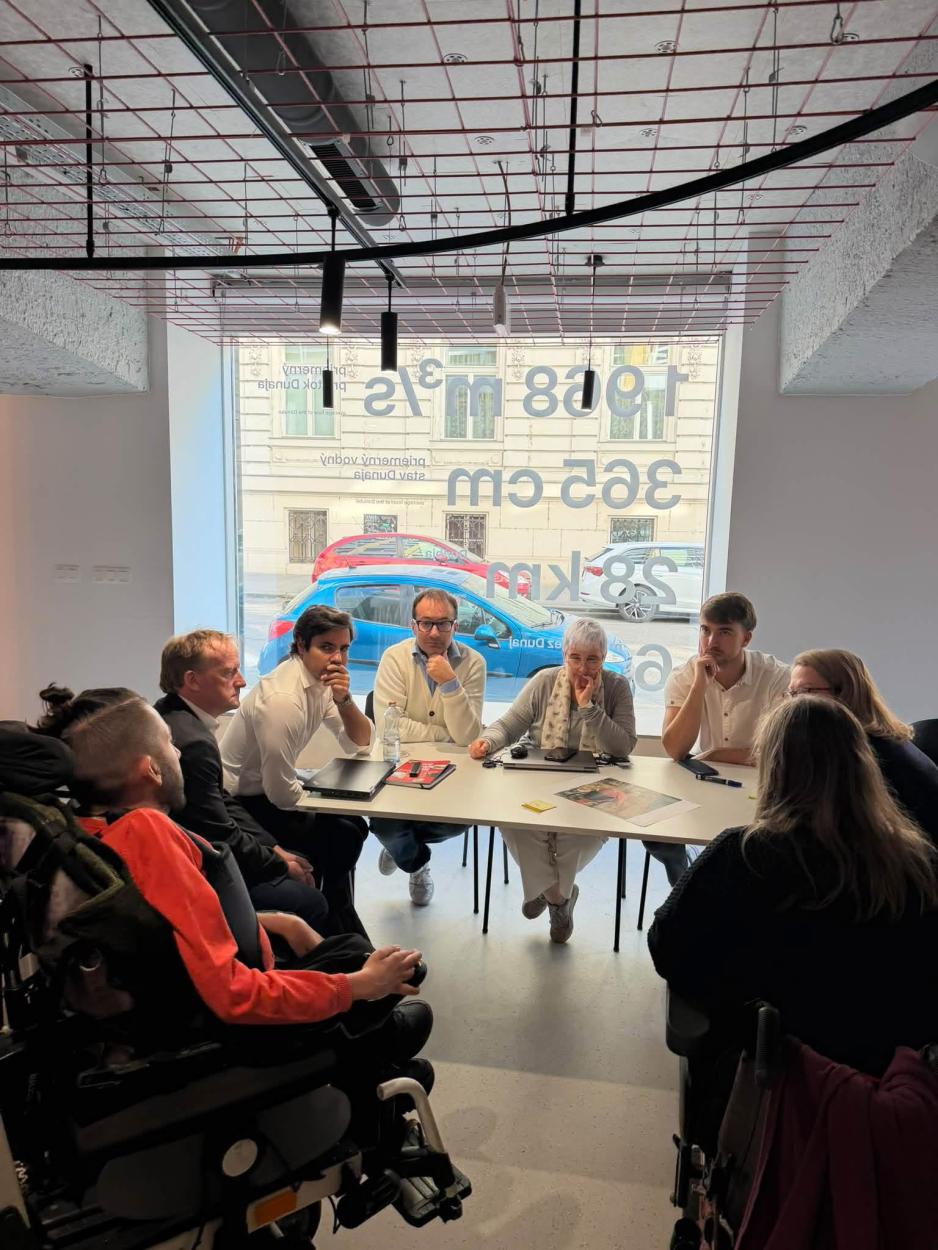
The exercise approached accessibility barriers as physical, informational, organisational and experiential. By connecting barrier identification with collaborative solution development, it illustrated how participatory methods can broaden the scope of accessibility assessment.
Nevertheless, participation in a workshop does not itself demonstrate influence over municipal decisions. That influence depends on what happens afterwards: whether observations inform priorities, whether responsibilities are assigned and whether participants remain involved in assessing the response.
The governance challenge is therefore to connect participatory learning with decisions, resources and accountability.
6. Accessibility Mapping as an Institutional Practice
Accessibility mapping emerged as a significant theme in exchanges among URBACT TN C.ALL partners. Digital information can help people identify routes, facilities and services suited to their needs. Its usefulness, however, depends on the reliability of the information and the arrangements supporting its maintenance.
Pentágono Urbano, the Portuguese partnership involving five municipalities, identified gaps in shared accessibility data, limited assessment tools and financial constraints. Its emerging approach prioritises common assessment procedures and dependable information before expanding digital functionality.
The proposed sequence is incremental:
Analyse → Start small → Test → Learn → Scale
This approach places the institutional foundations of mapping ahead of the platform itself. Information must be collected against appropriate criteria, checked consistently and updated as conditions change. Responsibility for those tasks must also be clear.
Accessibility information must account for different user requirements. A route suitable for one person may present barriers for another, making a simple accessible/inaccessible classification insufficient in some circumstances.
The Portuguese approach suggests that mapping is best understood as an ongoing municipal practice supported by technology. Its potential value lies in serving both individual journey planning and decisions about where improvements are needed.
The key connection is between information and action: identifying a barrier is more useful when the information can reach the institution responsible for addressing it.
From Transnational Learning to Local Adaptation
The partner presentations in Bratislava illustrated different approaches to adapting accessibility practices across the URBACT TN C.ALL network. These differences reflect variations in institutional capacity, spatial conditions, local challenges and governance arrangements. Taken together, they show that inclusive mobility is not a standardised planning solution, but a context-dependent process of institutional learning and spatial adaptation.
While some municipalities prioritise accessibility mapping and evidence-based assessment, others focus on independent mobility, heritage-sensitive interventions, urban regeneration or participatory governance. Their approaches suggest that the transferability of good practices depends less on replicating individual interventions than on adapting the underlying principles to local spatial, institutional and socioeconomic conditions. Komotini: Strengthening an established good practice As the Good Practice city, Komotini plays a central role in the network’s transfer process. However, the exchange also creates opportunities for the municipality to further develop its own approach.
Komotini expressed interest in Bratislava’s accessibility audit methodology and mapping tools. One preliminary idea involved conducting a small-scale accessibility assessment of a public building or everyday route, involving people with disabilities and municipal staff. The proposal remains exploratory, with its methodology and feasibility requiring further examination.
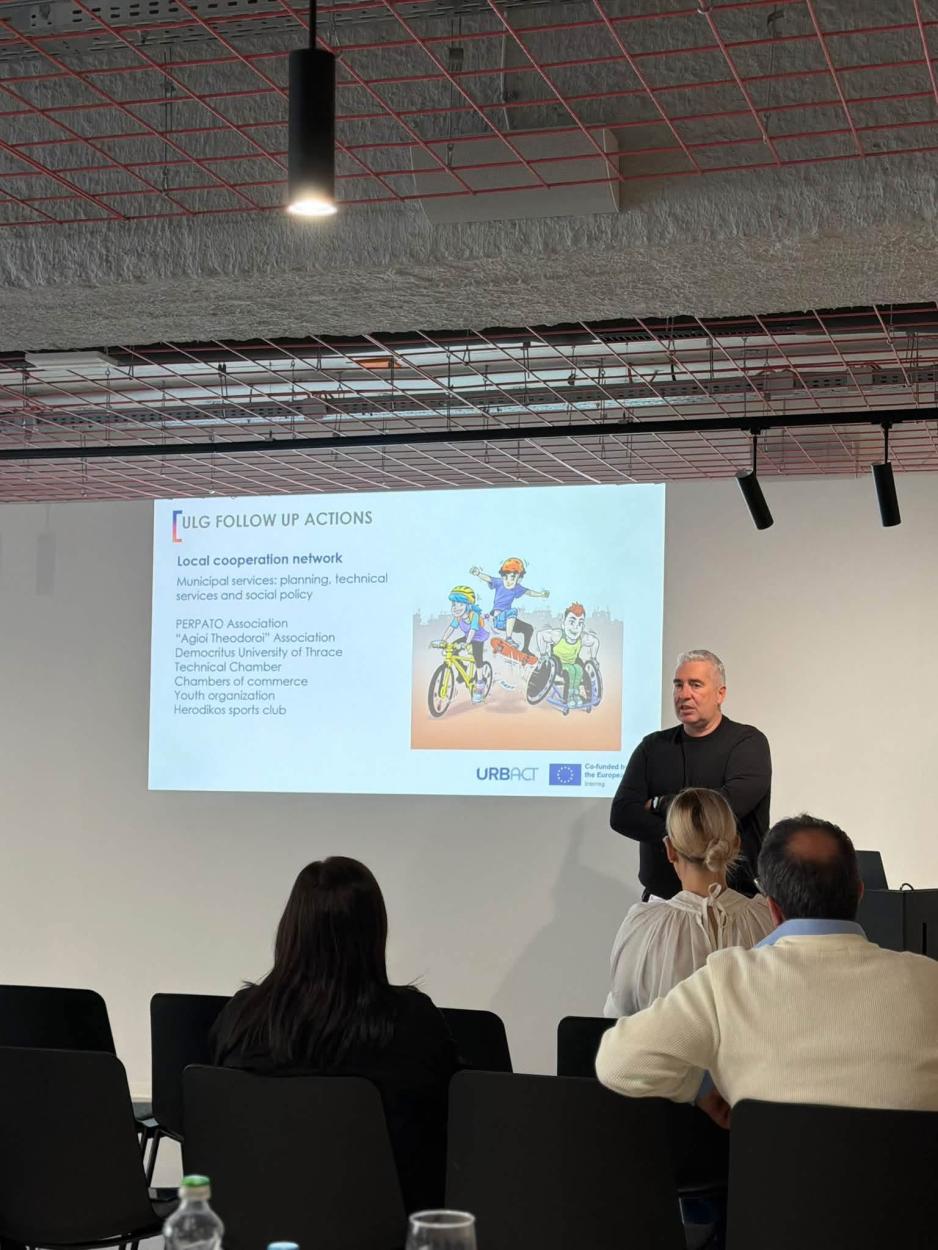
This illustrates the reciprocal character of transnational learning. Recognised good practices are not static models; they can continue to evolve through engagement with transfer partners and exposure to different institutional contexts.
Galway: Integrating accessibility into urban and cultural services
Galway identified potential applications involving accessibility mapping, municipal facilities, cultural venues and public events. Its preliminary ideas included accessibility audits of municipal buildings and consideration of accessibility within cultural infrastructure and festivals.
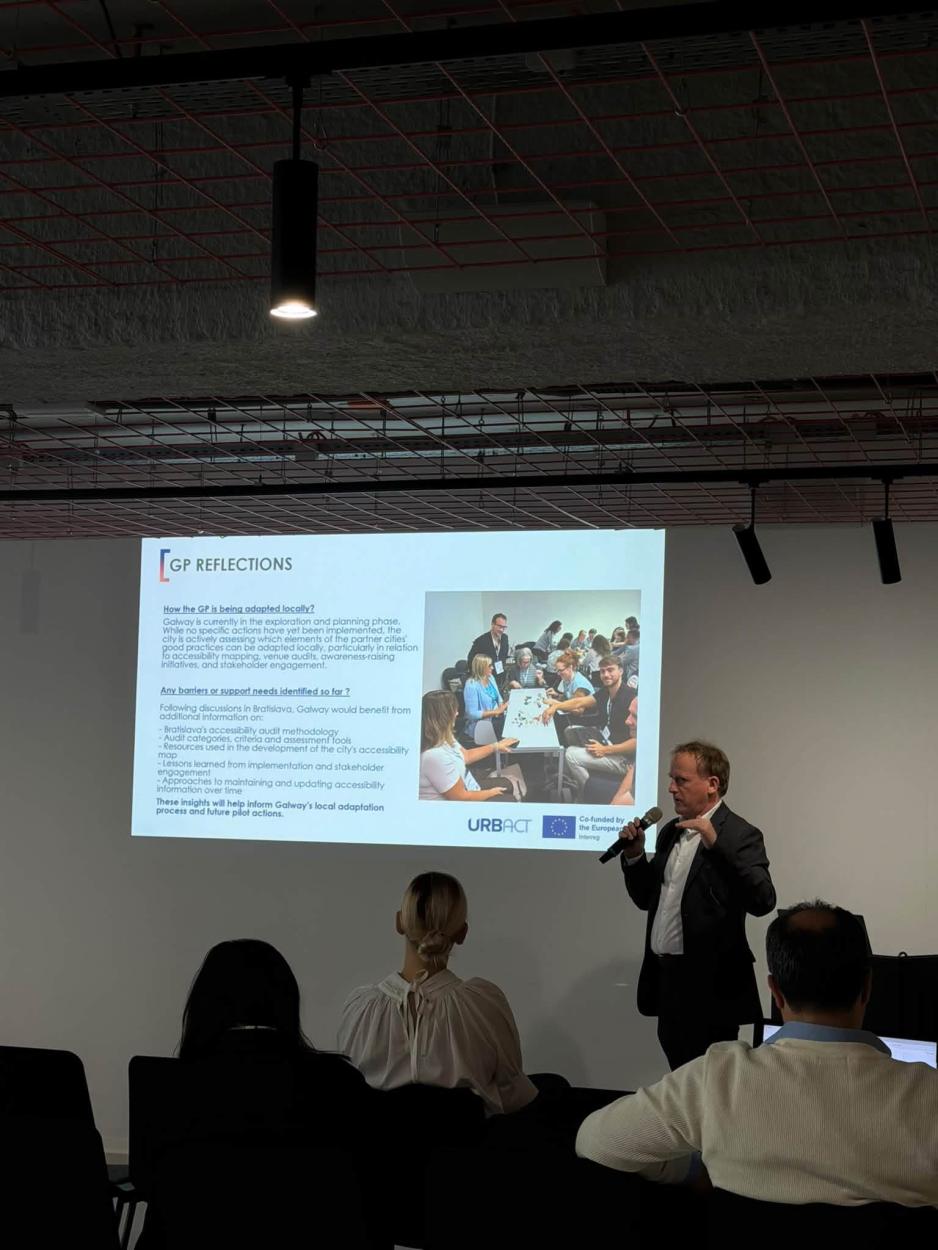
These proposals connect accessibility planning with broader municipal responsibilities. They also highlight cultural participation as a significant dimension of inclusive urban mobility: access to cultural life depends not only on reaching a venue, but also on being able to use and participate in it.
Zrenjanin: User-centred assessment and incremental improvement
Zrenjanin presented an approach centred on stakeholder cooperation and the direct participation of people with disabilities. Its preliminary testing ideas included accessibility walks, mapping priority barriers and implementing a small, visible improvement.
The proposed use of stakeholder feedback to assess and refine interventions reflects the potential of incremental experimentation. Such approaches may be particularly relevant where financial or technical resources are limited, as they allow municipalities to test practical responses before committing to wider implementation.
Pentágono Urbano: Intermunicipal coordination and shared information
Pentágono Urbano is developing cooperation across five municipalities with different local accessibility approaches. Its work emphasises shared assessment procedures, stakeholder engagement and the gradual development of reliable accessibility information.
The involvement of disability organisations, educational institutions and transport stakeholders illustrates the importance of cooperation across institutional boundaries. The partnership’s emerging approach suggests that reliable accessibility information is not only a technological product, but also a shared governance resource requiring common criteria, consistent validation and clear responsibilities for maintenance.
Dubrovnik: From accessibility barriers to independent urban mobility
Dubrovnik’s approach highlights the challenges of achieving inclusive mobility in a historic and tourism-intensive urban environment. Following its first URBACT Local Group workshop in September 2026, the municipality identified accessibility barriers affecting pedestrian routes, public transport information, public buildings, beaches and other urban facilities.
A significant principle emerging from stakeholder discussions was that accessibility interventions should enable independent movement rather than create dependence on assistance from others. This reframes accessibility as a matter of autonomy and dignity, rather than simply the presence of accessible facilities.
Dubrovnik’s preliminary testing ideas include participatory accessibility walks along priority routes, improved visual contrast at pedestrian obstacles and level changes, and assessments of audible announcements and visual information at bus stops. These proposals show how lived experience can inform targeted, relatively small-scale interventions while also contributing to broader accessibility planning.
The city’s experience reinforces the importance of understanding accessibility not merely as physical access to individual destinations, but as the capacity to navigate the urban environment independently and with dignity.
San Lucido: Embedding accessibility into urban regeneration
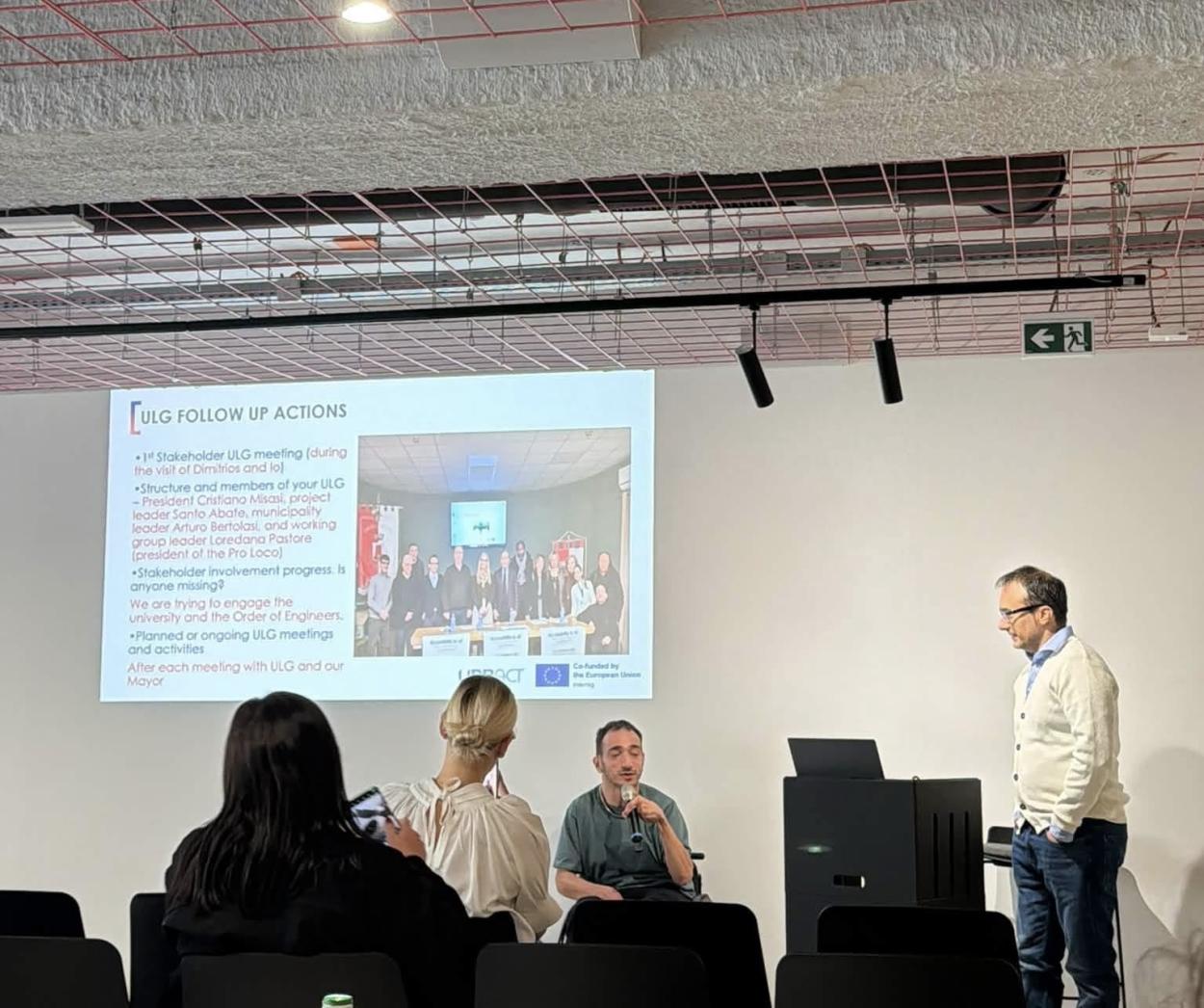
San Lucido illustrates both the opportunities and constraints of integrating inclusive design into the planning and regeneration processes of smaller municipalities. The municipality is working to incorporate Komotini’s Good Practice into new planning initiatives and project designs. Its approach is supported by a developing URBACT Local Group, with efforts under way to strengthen cooperation with academic institutions and professional engineering organisations.
The principal challenges identified concern limited financial resources and the physical characteristics of existing roads, which complicate the implementation of accessibility improvements. These conditions make it particularly important to integrate accessibility requirements at the earliest stages of planning rather than treating them as later corrections.
A particularly relevant initiative is the reconstruction of the municipality’s main street, which San Lucido presents as an opportunity to create a more accessible urban environment. From an urban planning perspective, this approach highlights the value of mainstreaming accessibility into urban regeneration. It also demonstrates how the transfer of accessibility principles must respond to the financial and spatial constraints of smaller urban settlements.
Jarosław: Reconciling urban heritage with universal design
Jarosław presents an approach centred on institutional coordination, participatory governance and the integration of accessibility into historic urban environments.
The municipality has formally established an URBACT Local Group comprising 32 entities across eight sectors, including municipal departments, educational institutions, heritage authorities, disability organisations and community representatives. This broad institutional composition provides a foundation for addressing one of the city’s principal challenges: reconciling the protection of historic urban heritage with contemporary accessibility requirements.
Current planning activities include consultation on accessibility improvements to municipal facilities, consideration of universal design principles in the planned renovation of historic buildings, and proposals to improve pedestrian routes and public transport stops. Jarosław is also exploring small-scale accessibility experiments through stakeholder co-design, alongside efforts to move from individual accessibility audits towards a more integrated municipal accessibility strategy.
Its experience illustrates that inclusive urban planning requires coordination between heritage conservation, spatial planning, public investment and the experiential knowledge of urban stakeholders. Rather than treating heritage protection and accessibility as competing objectives, Jarosław’s emerging approach creates an opportunity to examine how both can be incorporated into a more integrated planning framework.
Emerging lessons
The experiences of Komotini, Bratislava, Galway, Zrenjanin, Pentágono Urbano, Dubrovnik, San Lucido and Jarosław demonstrate that inclusive mobility develops through locally grounded processes of institutional learning and spatial adaptation.
The cases differ in focus: some emphasise mapping and evidence-based assessment, others independent mobility, heritage-sensitive design, urban regeneration or participatory governance. This diversity is not a weakness of the network. It reflects the need to adapt shared principles to different urban forms, resources and governance conditions.
Importantly, many of these initiatives remain at the planning or exploratory stage. Their contribution to inclusive urban development will ultimately depend on how effectively participatory knowledge and transnational learning are translated into implemented actions, institutional responsibilities and measurable improvements in everyday accessibility.
8. Discussion: Connecting Knowledge to Municipal Action
The Bratislava case provides a basis for considering accessibility as a governance issue as well as a design issue. Physical improvements remain essential, but their contribution to inclusion depends on how infrastructure, information and services work togetherand on how identified problems are addressed.
Five interconnected components emerge from the analysis:
- Whole-journey assessment: examine accessibility across complete journeys and everyday activities.
- Participatory knowledge production: bring lived experience into dialogue with technical expertise.
- Institutional coordination: connect identified barriers to responsible departments, services and decision-making processes.
- Context-sensitive experimentation: test responses at a manageable scale and adapt them to local conditions.
- Continuous evaluation: revisit interventions as urban conditions and user needs change.
These components can be expressed as a recurring sequence:
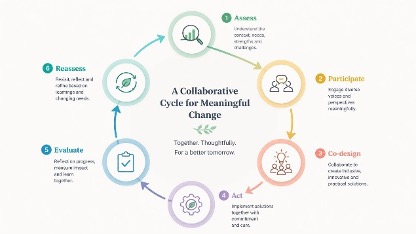
The sequence is an analytical interpretation of the Learning Lab, not an empirically validated model. Its purpose is to clarify the connections needed between learning and implementation.
Assessment has limited value if its findings remain disconnected from decisions. Participation risks becoming symbolic if it does not influence priorities. Experimentation may remain isolated if lessons are not incorporated into routine planning and investment.
Local testing can help connect these activities, but only when cities identify how a test will inform subsequent action. Relevant considerations include who is responsible, how stakeholders will participate, what will be assessed and how the findings will affect future decisions.
The study’s limits are important. The material concerns a learning event and emerging partner intentions. It does not demonstrate that the proposed approaches produced lasting institutional change or improved mobility outcomes. Establishing those effects would require follow-up evidence from implementation and the people using the affected environments.
For transnational networks, the implication is that successful exchange should be considered alongside the capacity to act on what has been learned.
9. Conclusion
The Bratislava Learning Lab illustrates an approach to accessibility that connects physical environments with lived experience, participation and municipal decision-making.
Its contribution lies not in demonstrating that inclusion has been achieved, but in making the relationship between learning and action explicit. Urban observation, stakeholder dialogue and co-design can help cities identify barriers that isolated technical assessments may overlook. Their significance depends, however, on whether the resulting knowledge changes priorities, responsibilities and implementation.
The emerging approaches of URBACT TN C.ALL partners show how shared learning can lead towards different local responses. They also underline that accessibility transfer is a process of adaptation rather than replication.
Moving beyond physical accessibility does not mean diminishing the importance of infrastructure. It means ensuring that infrastructure improvements form part of a connected, usable and accountable urban system.
A genuinely inclusive city is therefore shaped not only by the barriers it removes, but also by whose experiences inform its planning, whose knowledge influences its decisions and how consistently it acts on what it learns.
References
- Arnstein, S. R. (1969). A ladder of citizen participation. Journal of the American Institute of Planners, 35(4), 216–224.
- Dolowitz, D. P., & Marsh, D. (2000). Learning from abroad: The role of policy transfer in contemporary policy-making. Governance, 13(1), 5–23.
- Geurs, K. T., & van Wee, B. (2004). Accessibility evaluation of land-use and transport strategies: Review and research directions. Journal of Transport Geography, 12(2), 127–140.
- United Nations. (2006). Convention on the Rights of Persons with Disabilities. United Nations.
- URBACT URBACT TN C.ALL Transfer Network. (2026a). Third Transnational Network Meeting: Bratislava Learning Lab, 6–7 October 2026. Internal project documentation.
- URBACT URBACT TN C.ALL Transfer Network. (2026b). Partner progress presentations: Bratislava, Komotini, Galway, Pentágono Urbano and Zrenjanin. Internal project documentation.