Picture this. A city manager from Slovenia sharing how financial incentives brought new businesses back to a street full of empty shopfronts. An urban planner from Ireland explaining how activating a single public square transformed the economic pulse of an entire downtown. A policy officer from Spain walking the group through years of hard-won regulatory tools to push back against touristification. A team from Greece describing how a participatory process with residents reshaped the future of their central square.
Different cities, different challenges, different solutions but the same willingness to learn from each other. This is Cities@Heart.
A shared challenge, ten distinct stories
When Cities@Heart launched in June 2023 under the URBACT programme, ten urban areas from across Europe joined forces around an uncomfortable truth: city centres are in trouble. Not in the same way, but the pressures are real and remarkably consistent. E-commerce has hollowed out high streets. Tourists have replaced residents in some historic cores. Climate change has made public spaces unbearable in summer and vulnerable in winter. Demographics shifts are reshaping who uses city centres, and how.
The ten partners (from Portugal's Pentágono Urbano to the Greater Paris Metropolis, from the small Belgian town of Fleurus to the Croatian city of Osijek, with stops in Italy, Spain, Slovenia, Poland, Greece and Ireland) brought very different contexts to the table. A metropolis of 7 million people and a town of 20,000 sitting in the same network became one of the project's greatest strengths.
The network began by building a common language. Through a shared taxonomy of city centre dynamics (spanning commerce, housing, mobility, public space, governance, identity and climate resilience,) cities that seemed to have little in common discovered they were wrestling with the same challenges. From this collective diagnosis emerged a vision that was both deceptively simple and deliberately ambitious: city centres should be all things, to all people, at all times.
From vision to action: five levers for transformation
The network developed five transformation levers that form the practical backbone of this work. The first, sustaining local commerce, recognises that a diverse, vibrant retail and economic offer is the lifeblood of any city centre. The second, reinforcing residential life, addresses the need for people to actually live in the centre — affordably, and in good conditions. The third, promoting inclusive environments, ensures that public spaces and services work for everyone, regardless of age, income or background. The fourth, building city centre identity, focuses on the cultural, social and physical elements that give a place its character and make people want to spend time there. The fifth, creating shared governance, acknowledges that no single actor can steer a city centre alone, and that lasting change requires collaboration, transparency and genuine shared ownership.
Together, the five levers provide a framework that is flexible enough to adapt to different urban contexts, yet structured enough to ensure that local initiatives consistently reinforce a coherent and shared vision.
The power of exchanging knowledge
More than 60 internal good practices were shared across the network's thematic webinars and transnational meetings. From Granada's regulatory innovations on short-term rentals, to Celje's city-centre housing grants, to Sligo's remarkable night-time economy strategy, the network became a living repository of tested, real-world experience. Not theory. Not aspirational case studies, but initiatives that cities had actually implemented, along with honest accounts of what worked, what did not and why.
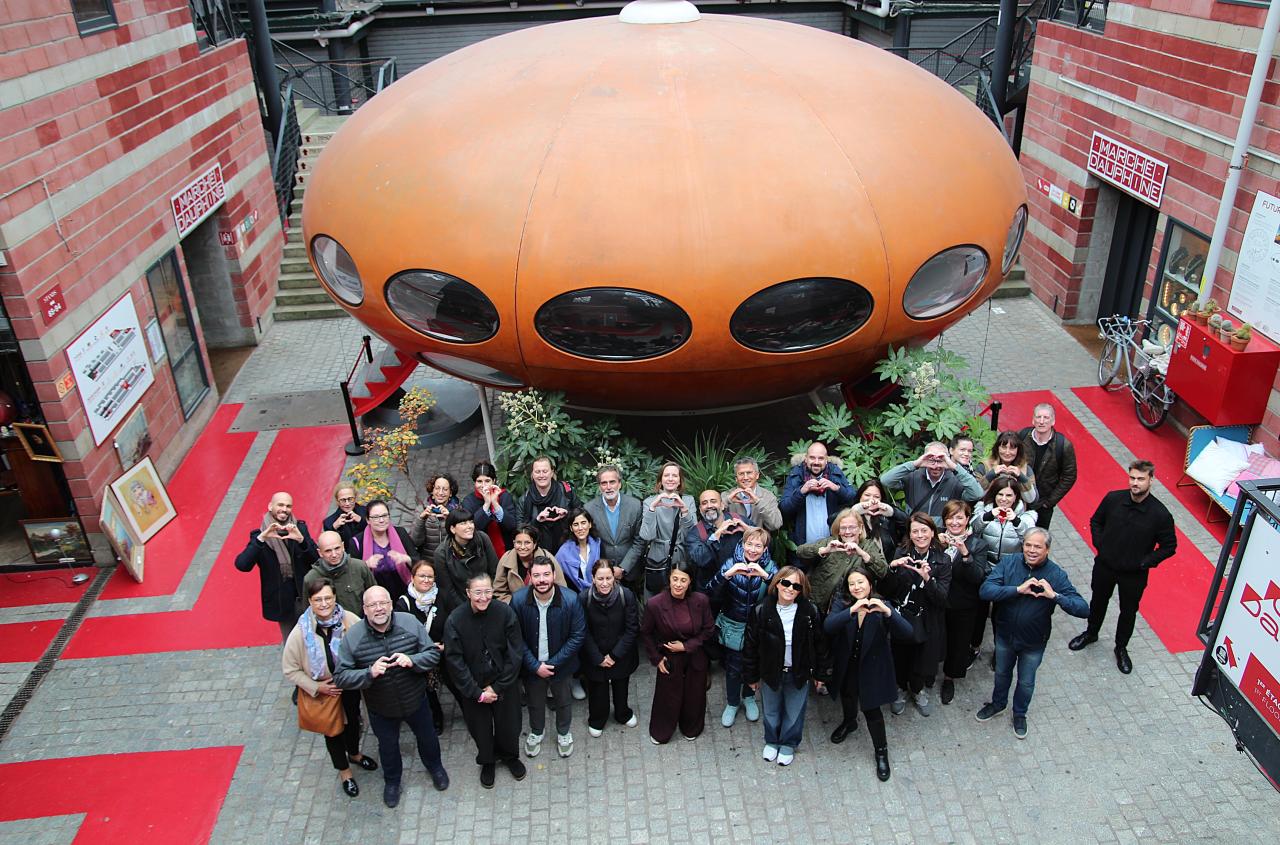
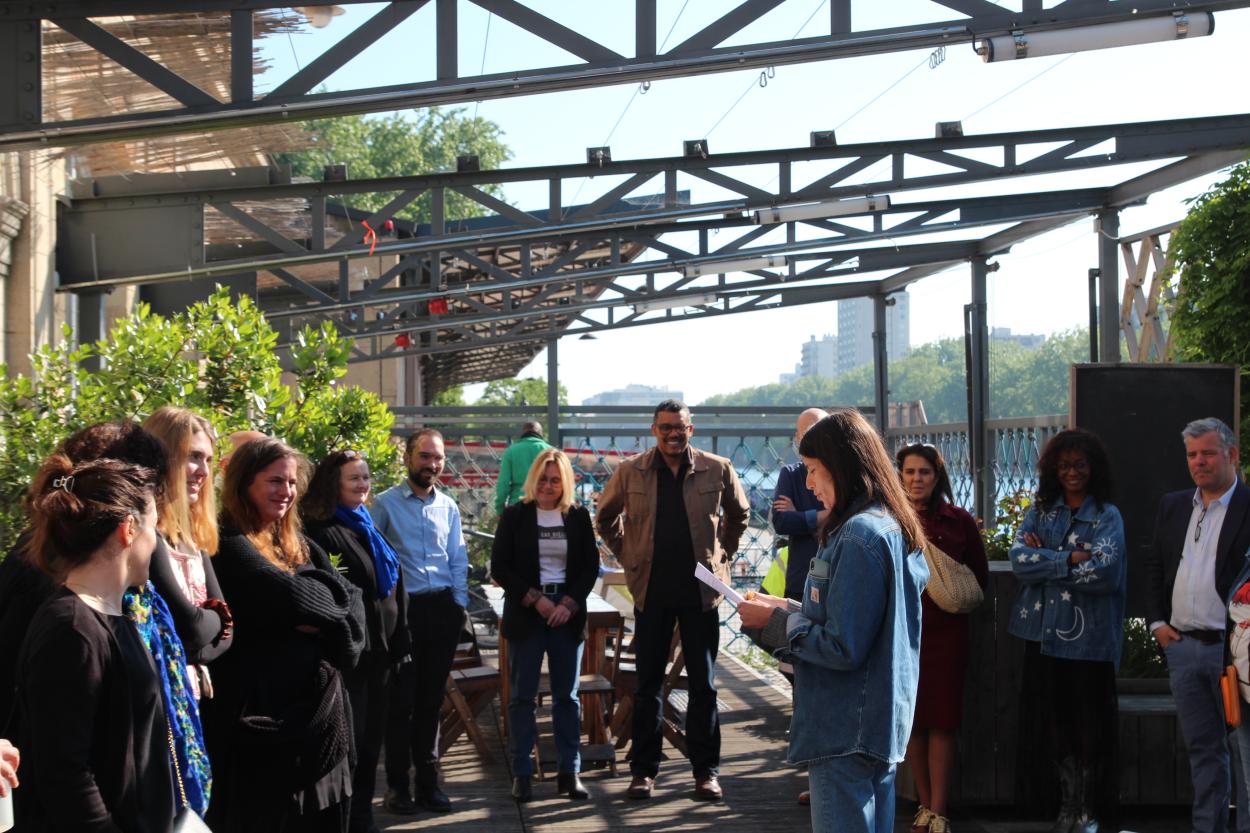
Transnational meetings in host cities (where local stakeholders joined partner representatives) proved to be one of the most effective knowledge-transfer mechanisms. You can read about how a city redesigned its market square. Standing in that square, listening to the project team describe the three moments they almost abandoned the idea, is something else.
Back home, URBACT Local Groups (ULGs) were the engine that converted this shared learning into grounded and place-specific action. These were not rubber-stamp committees. Lamia's ULG brought together municipal departments, academics and youth organisations to co-design the transformation of their main square. Krakow Metropolis developed a structured and multi-level model linking municipal services, the wider metropolitan area, schools and NGOs. Sligo ran dual task forces tackling vacancy and public-realm activation in parallel.
Each ULG was a microcosm of the city it served, evolving over 30 months, from consultation to genuine co-creation.
Testing for scaling up
One of the most valuable elements Cities@Heart embedded in its methodology was a culture of prototyping. Before any city committed to long-term transformation plans, teams were encouraged to test ideas at a small and manageable scale. The results were often more powerful than expected.
In Cesena, simple street furniture and an open-air gallery installation turned an ordinary stretch of pavement into a route people genuinely wanted to use. In Lamia, participatory workshops with schoolchildren generated a vision for their central square that the adults in the room had never considered. In Niepołomice (Krakow Metropolis), a smart traffic reorganisation around a primary school (modest in scope but significant in impact) served as a proof of concept for a much more ambitious mobility plan.
These were not side projects. They were strategic experiments, designed to generate evidence, build stakeholder trust and demonstrate the value of change before anyone had to commit large budgets or take political risks. They also created momentum: residents, businesses and local institutions who experienced even small improvements in their city centre became advocates for going further.
Ten action plans, one collective legacy
All ten partner cities have now completed their Integrated Action Plans: locally tailored, co-produced roadmaps for transforming their city centres. Together, they form one of the most comprehensive documented explorations of integrated city centre strategy in contemporary European urban policy.
The plans are diverse in focus and ambition. Fleurus has developed a nine-pillar framework spanning physical regeneration, cultural activation, housing, green space and citizen participation. Osijek is advancing sustainable mobility, climate resilience and cultural revitalisation simultaneously, guided by the principles of the New European Bauhaus. Sligo is using data-driven vacancy management and public-realm programming to rebalance a city centre caught between empty ground floors and a thriving events culture. The Greater Paris Metropolis is rethinking how 130 municipalities engage citizens in decisions about their own downtowns.
A playbook for every city
The network's final contribution to the wider URBACT knowledge ecosystem is a Policy Guide and Toolkit: practical, honest, and designed for cities outside the network that face similar challenges.
The Policy Guide presents a seven-step pathway from initial diagnosis to long-term implementation, anchored in the network's five levers and enriched with indicators developed collectively across the ten cities. The Toolkit provides ten ready-to-use instruments that municipalities can deploy with modest budgets, primarily relying on their existing human capital. These are not aspirational frameworks. They are tools that have been tested, revised and refined in real cities, under real constraints, by practitioners who needed them to work.
The work continues
As the formal project concludes, Cities@Heart leaves behind more than a collection of action plans. It leaves a community of practitioners who have debated city centres together, celebrated each other's small victories, and genuinely reshaped how they think about their work. URBACT Local Groups will remain active. Governance structures are in place. Monitoring frameworks are ready. The hard work of implementation begins now — but with an unusual advantage: plans co-written with local communities, and partners across Europe who remain connected.
At their best, city centres are places where the complexity of urban life becomes visible, manageable, sometimes even joyful. That is what Cities@Heart set out to prove. Ten cities have already made their case. The question now is: which city will be next?
Cities@Heart is an URBACT Action Planning Network co-funded by the European Union. The network's Policy Guide, Toolkit and Integrated Action Plans are available on the URBACT website.