From UIA experimentation to URBACT transfer
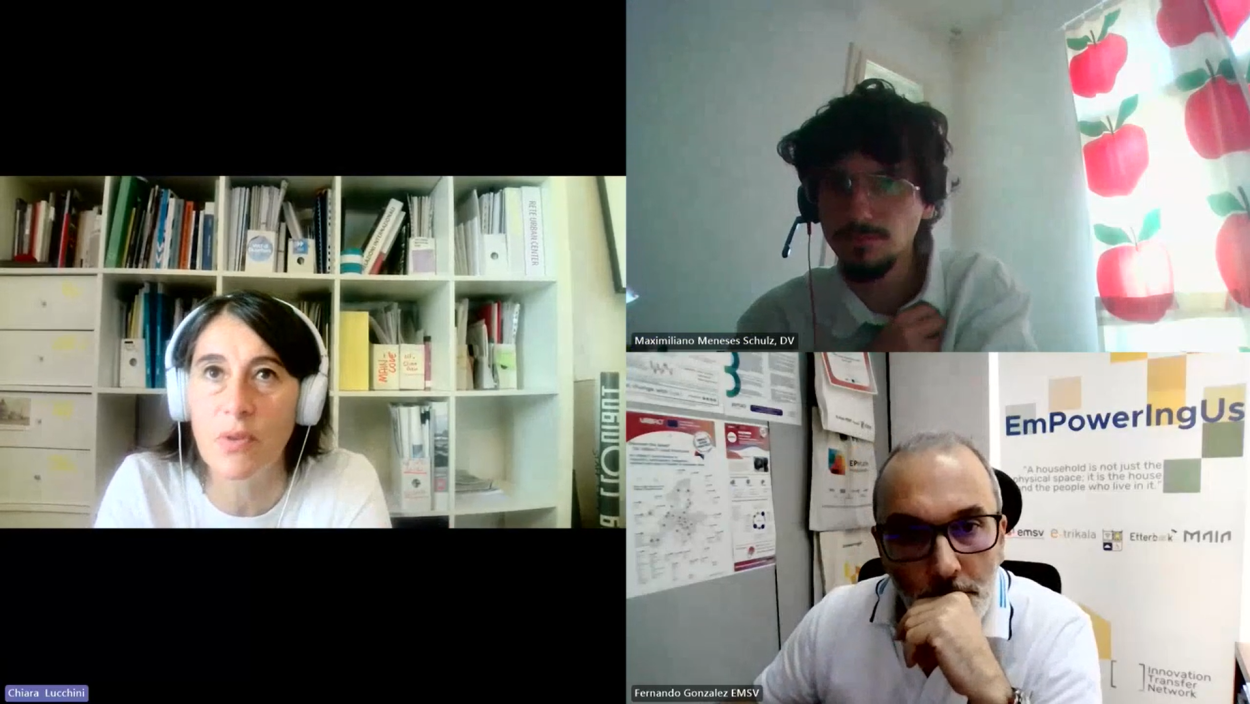
>> MAXIMILIANO: What motivated Getafe to take on the role of lead partner?
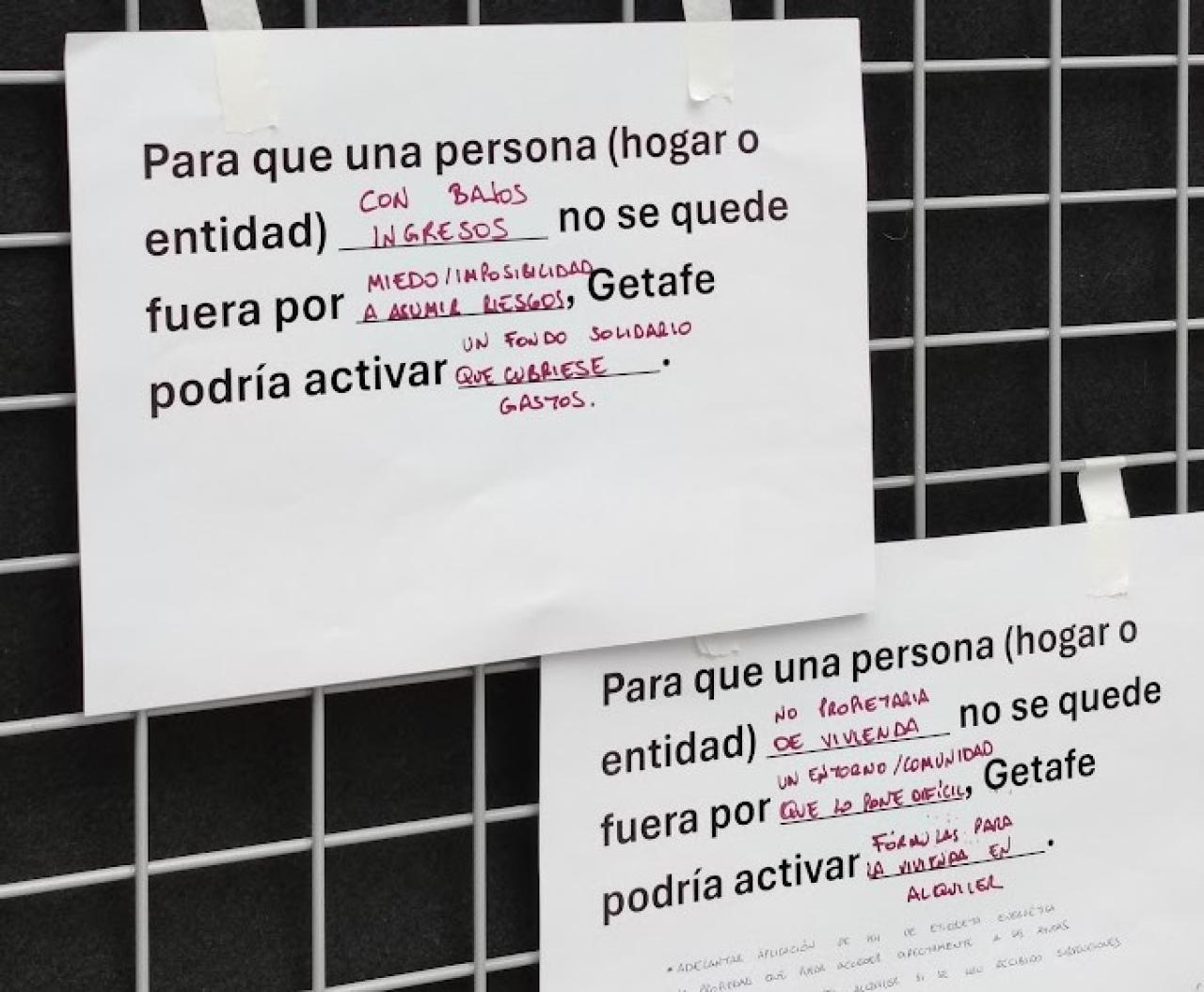
FERNANDO: Getafe’s decision to become lead partner grew out of a longer process that began in 2019, when the city decided to move from a largely reactive response to energy poverty towards a more systematic, innovative and data-driven approach. Through the UIA-funded EPIU project, Getafe developed an integrated model combining artificial intelligence and data analysis, coordinated social and housing services, building renovation, energy advice and awareness measures. Successfully managing this ambitious EUR 6 million project allowed the city to consolidate its expertise, embed several of the pilots into its day-to-day operations and build a committed professional team supported by clear political leadership. Taking the lead in an URBACT Innovation Transfer Network was therefore the natural next step: it offered Getafe the opportunity to share this good practice with four other European cities while further strengthening its own capacity. Our motivation was ultimately to consolidate what I call the “Getafe approach”: a locally rooted model of innovation that uses data to shape social policies for the residential built environment, supported by European institutions and by the professionals who make cooperation between cities possible.
>> MAXIMILIANO: Did URBACT allow Getafe to continue working on the same issue while also producing benefits for the city itself?
FERNANDO: Yes. URBACT and European projects in general bring together three resources that are rarely aligned in ordinary municipal work: a budget; a team and the organisations that can use it; and a fixed timetable for carrying out a shared action. Either you deliver within the deadline or you lose the money and the resources. When those three conditions come together, a municipality gains a window in which it can break out of the pressure of everyday work. Municipal staff are overwhelmed; whatever the causes, they work extremely hard and cannot simply stop. But if there is funding, a team and a deadline, they may be able to pause, "sharpen the axe" and return two years later to cutting the trees in a completely different way. Participating in a European project - and especially leading an URBACT network - can change how a city works.
CHIARA: I would add a fourth resource. Municipalities and project partners can use the European dimension strategically to move local processes forward. The European Union is not a single actor; it is a complex combination of people, institutions and programmes. Nevertheless, acting within a European framework changes the terms of local negotiation. Money, ideas and actions matter, but so do rhetoric and negotiation. Being able to say that a city is carrying out something important within a European framework changes the relationships among local actors. Cities and organisations that learn how to use that European dimension gain leverage in local policy discussions.
>> MAXIMILIANO: What elements of the URBACT method were most useful, and how did the experience influence local policy?
FERNANDO: European support can sometimes appear abstract because translating EU directives and general objectives into local action is difficult. URBACT makes this process more concrete through a well-established method that combines expert support, clearly defined deliverables and a demanding timetable. Although the toolbox can be complex and requires considerable effort, instruments such as the transferability matrix, transfer plan, mid-term review, continuity plan and investment plan help cities understand where they are and define their next steps. In Getafe, URBACT built on the momentum created by UIA: it enabled us to review and improve actions that had lost momentum or had not achieved the expected impact. Transferring a successful practice forces a city to examine, redesign and understand it more deeply, while cooperation with other experienced cities makes it possible to progress further. The knowledge developed through these European projects is now supporting Getafe’s urban agenda. Many of its proposed actions have already been explored in much greater detail within individual projects. By maintaining a consistent focus on energy poverty, energy efficiency and the residential built environment, Getafe has been able to accumulate expertise rather than disperse it across unrelated fields.
>> MAXIMILIANO: In a transfer network, does the lead partner mainly teach while the project partners learn?
FERNANDO: That is the formal expectation, but it is not what happens in practice. The partner cities grew outward by adopting elements of the practice. Trikala launched an energy office based on ours and used training blocks developed by our office. Pomorie developed a citizen-facing service inspired by our model. Etterbeek had not initially planned to use data extensively to drive social policy, but by the end of the project it was doing so. Meanwhile, Getafe grew inward: we became denser, consolidated our knowledge and understood our own practice better. A city may enter the network expecting to be the teacher and end up being the student - perhaps even the participant that learns the most - because it receives feedback, alternative approaches and direct knowledge of the difficulties faced by other cities. It is intense work, but very beneficial.
Connecting local experience with European policy
>> MAXIMILIANO: Energy policy involves several institutions and levels of government. Did the network try to contribute to the European debate on energy poverty?
FERNANDO: From the outset, we considered multilevel dialogue essential. The final event brought together representatives of DG Energy, the Spanish Ministry for the Ecological Transition through IDAE, and the municipality, creating a direct connection between European institutions and citizens. European strategies generally flow from the top down, while cities transmit local needs and evidence from the bottom up, acting as the main interface with residents. URBACT and other European forums strengthened this exchange by allowing municipalities to present local initiatives that could inform national and European policies, while also discussing how cities could better support and implement national energy-poverty strategies.
>> MAXIMILIANO: Can an exploratory project produce something tangible quickly enough?
FERNANDO: Yes. UIA, URBACT and EUI all require some form of pilot through which diagnosis and implementation can be quantified, measured and monitored.The pilot is often very small, however. Because we work on the built environment, our field naturally produces physical interventions. In areas such as culture, identifying and measuring a tangible result can be more difficult.
CHIARA:Part of the answer lies in how the budget is designed, and that is something learned through experience. Activities that look simple or secondary may be crucial because they create contact with people. Every project needs moments in which it shares what it is doing and responds to very short-term needs: when citizens give information or participate, they may expect the issue to be resolved immediately, but public action rarely works that way. Even when programmes do not finance major physical transformations - UIA did so more than URBACT - a project must find ways to build a culture of participation and accompany its actions. The ambition is not only to carry out actions for residents, but also to help them become more active, more confident and better able to ask for change. Participation is not just policy-makers asking citizens for input; it is also citizens initiating an active dialogue. That depends on trust, and the simplest mechanism for building trust is to keep promises. The promises may be small, but if an organisation says it will do something and then does it, people learn that they can rely on it. This is especially important when implementation is led not by an elected politician but by a technical public body that can survive electoral cycles: in the case of EMSV Getafe, the housing agency is connected to politics because it implements public policy, but it also provides services every day. It becomes the public face of the administration and one of the places where trust is either generated or lost - without that connection to local reality, projects risk merely testing attractive and innovative ideas that float above people's actual lives.
Networks that outlast projects
>> MAXIMILIANO: What longer-term value has the network created?
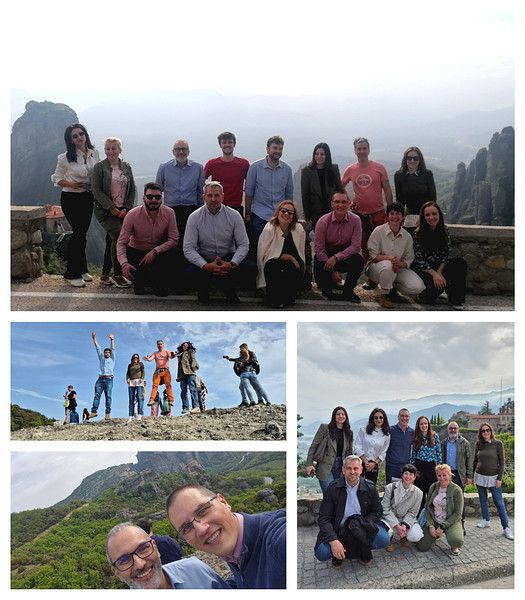
FERNANDO: The relationships created in a European project last. They lead to invitations to other projects. The knowledge has long-term value, as do the personal and professional relationships, talent retention, improved individual skills and stronger administrative capacity. The network also creates access to new funding, and it definitely extends beyond the five cities in our own ITN. There were around eleven ITNs in the call, and we have already contacted lead and project partners from other networks.
CHIARA: Networks create contacts both within and between projects. You do not necessarily continue with every partner: some relationships are stronger, some organisations lose interest, and that is normal. But something remains. Each partner belongs to a network, and each network belongs to the broader URBACT framework. The programme creates required moments of exchange. Those are the moments when people discover that their work overlaps and decide to combine their energy. That mechanism works very well.
>> MAXIMILIANO: Any closing reflection?
FERNANDO: I came to European projects relatively late in my career, but I have found the experience extraordinary. People sometimes portray Europe as weak or naive in a competitive world. Yet an architect speaking at the URBACT City Festival in Wrocław last year made a point that stayed with me: Europe's way of making cities does not exist anywhere else. The exchanges and relationships we build among cities are distinctive; the people working in these networks are often outstanding professionals; the potential for common creation - a form of collective intelligence with a strong social foundation - is remarkable. When someone asks me what URBACT is like for a person who has never attended a City Festival or a transnational meeting, I describe it as "Eurovision for urban-development professionals". Cities compete for a very small piece of the funding, but it is not a football-style competition. It is closer to rugby: fourteen cities may fight hard for the same opportunity, and afterwards they share a drink. In our case, the 'third half' is the next project.
** This is a reconstructed English version of the original interview in Spanish that took place on July 30th. Repetitions, false starts, brief acknowledgements and overlapping speech have been removed; questions have occasionally been consolidated for readability.