Why place attractiveness?
Intersecting city branding & marketing and economic development, attractivité is a well-established policy concept in France, where it is mostly focused on capitalizing the potential of the major cities worldwide, such as Lyon, Toulouse or Bordeaux. However, when applied to small and medium-sized cities, attractiveness can be rather instrumental to counterbalance the current economic and demographic polarisation around bigger urban centers. This is precisely the exploration we are undertaking through URBACT RESTART.
The concept is inherently multi-target, in the sense that it may cover all the different city´s target groups [investment, talent, dwellers, visitors], helping to build up a compelling value proposition for each of them. And it´s worth noting attractiveness also brings the capacity to retain. For instance —e.g. young people, to stay in the place they were born; firms, taking externalities and comparative advantages from the local environment where they operate; visitors, in the sense of reporting memorable experiences. That´s why place attractiveness entails, in essence, an integrated approach.
An inspiring experience from inland rural Portugal
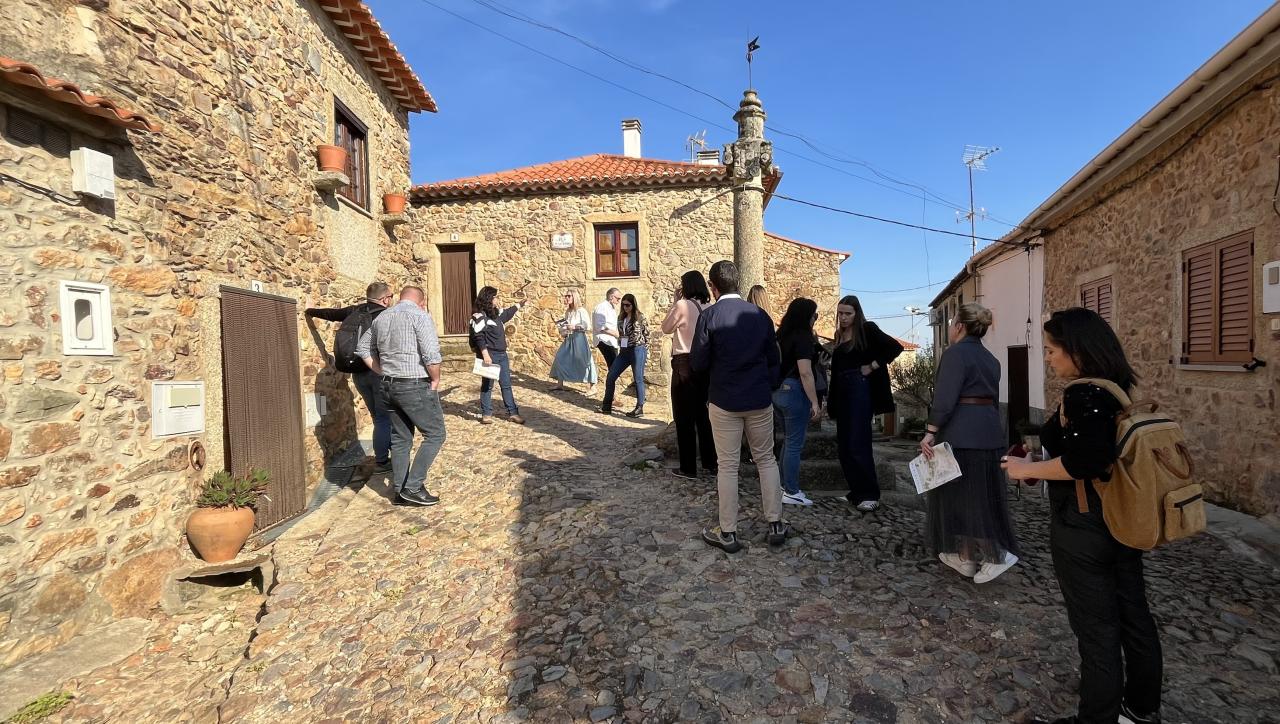
Recomeçar em Idanha, labelled URBACT good practice in 2024, has been a groundbreaking strategy on attractiveness, targeting talent, new residents, investment and the existing local population alike. Idanha-a-Nova [8,541 inhabitants distributed across 13 small villages] can be seen as the quintessential rural municipality, and as such, its main challenges had to do with agriculture-oriented economy, remoteness, serious depopulation and ageing.
Launched in 2015, the strategy has achieved what once seemed impossible: reversing negative population growth for the first time in 50 years. By combining the idea of rural innovation and new lifestyles [closer to nature], the initiative created a distinctive positioning for Idanha in the bioeconomy sector —coined as the captivating “Idanha Green Valley”— as a fertile ground to spark green projects, green investments and green jobs. In 2018, the area was officially recognised as Portugal´s first Bio-Region. Beyond numbers, the strategy successfully shifted perceptions on what can be expected from a rural area, reenergized the local community, and spread the message that Idanha has a bold, future-oriented plan.
Innovative place branding as a catalyst for change
Place branding was at the heart of the Idanha case. And it was innovative because it had nothing to do with logotypes and big campaigns, but rethinking the rural community´s identity to make it more updated, competitive and engaging. That is, getting a true, clear and understandable city narrative was a primary goal. In this perspective, place branding actually worked as a sort of communication-led, agile strategic planning, capable of driving transformation.
Nonetheless, narrative building is not enough if it is not effectively communicated and disseminated. And in this regard, cities must expand their understanding of what a communication action is or can be, stepping away from a [usually costly] campaign-based logic. There are also a number of unconventional ways —maybe subtler— to communicate the city. Significantly, Recomeçar em Idanha was publicly launched in Lisbon, at the Higher Institute of Agronomy.
An overarching concept to meet different policy challenges
Place attractiveness is instrumental to face stagnation or decline— economic, demographic or both, as normally people follow job opportunities— but also to provide direction to cities in transition or even growing. That´s the case for other URBACT RESTART network partners.
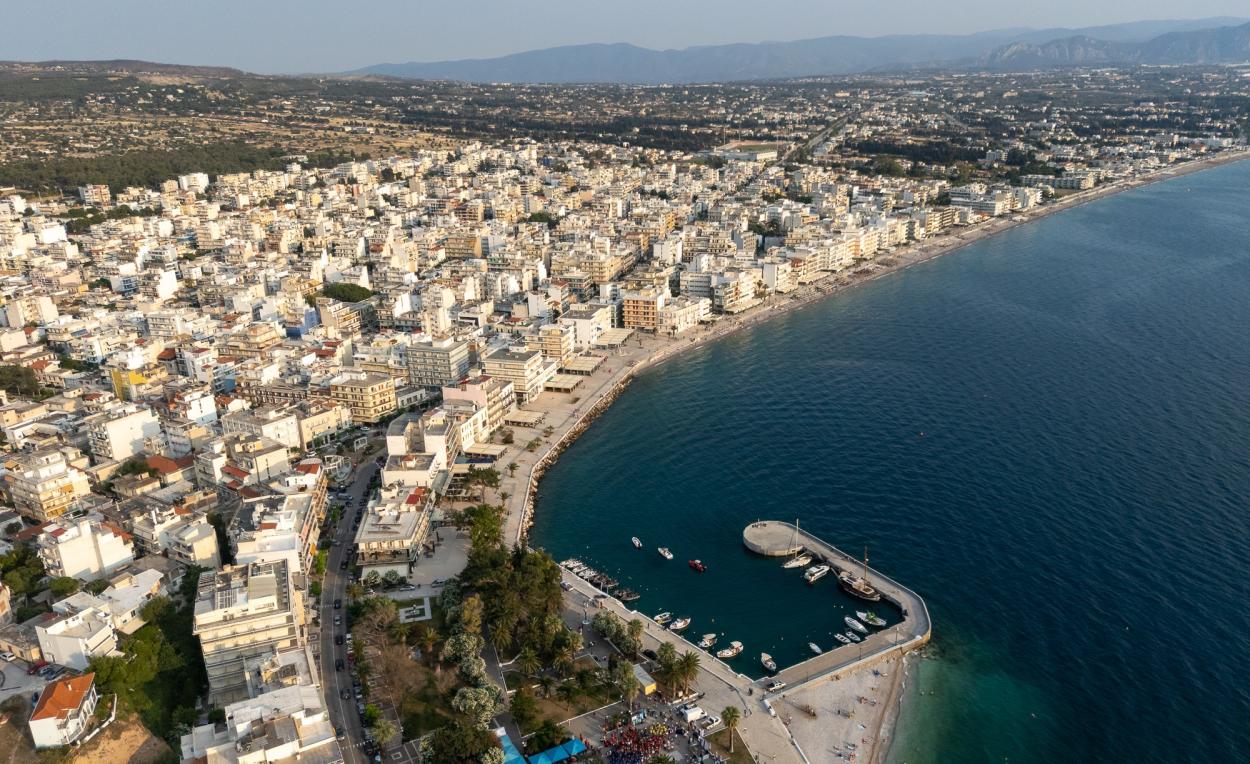
For instance Loutraki [22,016 inhabitants], 80 km from Athens, at the gateway to the Peloponnese, which is strongly linked to summer tourism peaks, while year-round vibrancy remains modest. The Municipality is now trying to transition towards a more balanced and liveable urban model, creating better conditions for permanent residents, entrepreneurial talent and innovation-led investments.

In a way, the challenge for La Marina Alta County, in Spain, is similar. The area is widely recognised as a Mediterranean coastal destination, but this image does not fully reflect the area’s complexity and its true aims and aspirations. The county authority, MACMA, which includes 35 municipalities, is seeking to move from a predominantly visitor-oriented image and narrative towards a broader, multidimensional concept of attractiveness. For MACMA, place attractiveness is primarily about the capacity to retain population, reconnect opportunities across space and support a more cohesive future for all municipalities in the county.
Making the Idanha experience transferable to other contexts
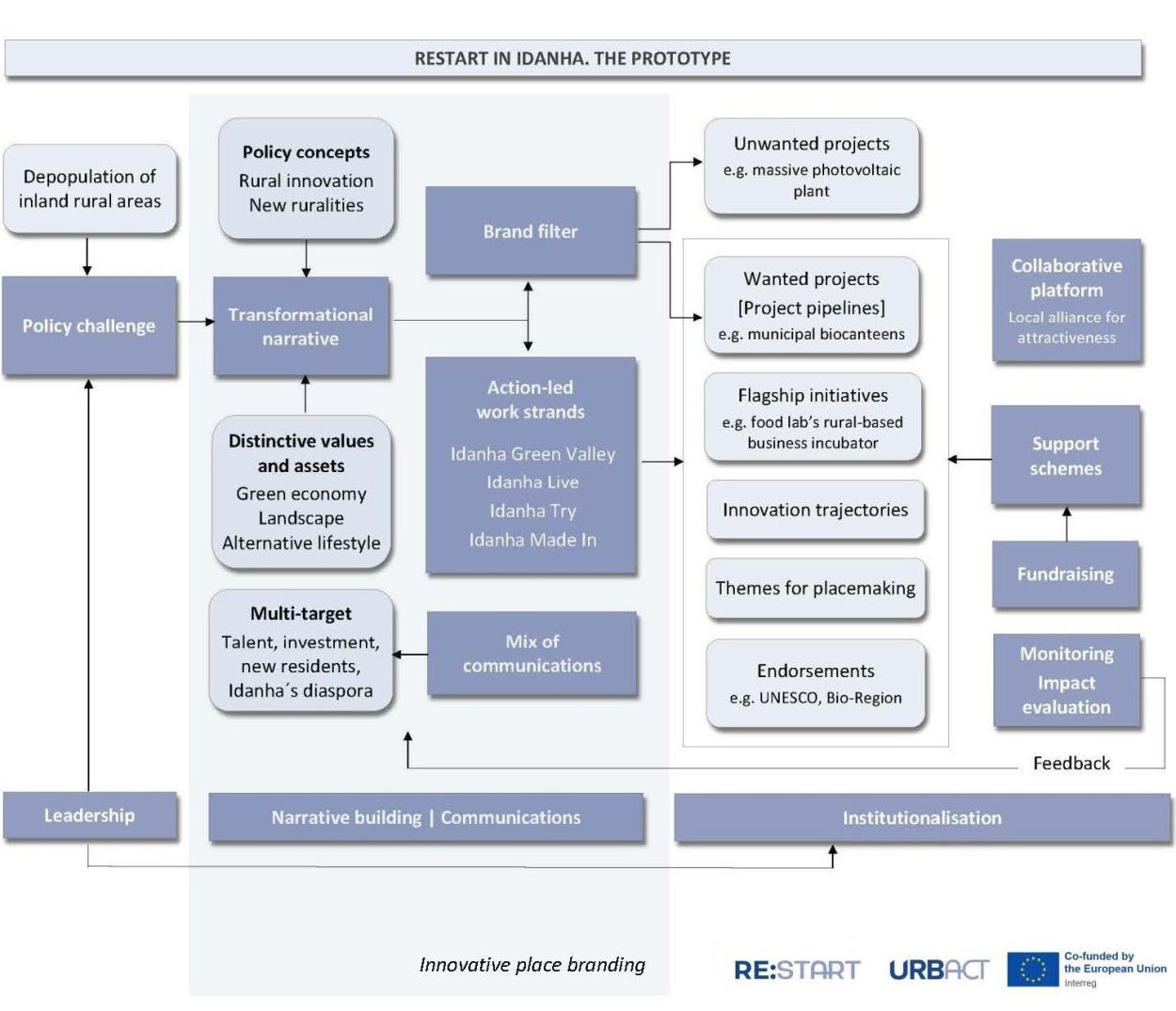
To truly understand how it worked, the Idanha-a-Nova experience has been deconstructed, leading to a prototypewhich actually draws place attractiveness´ value chain. Place branding sits at the core, yet other components are needed likewise to make the wheel turn and get an impact in terms of local development, in particular the following ones:
- Political momentum. It was key to ignite the change —from the simple willingness to face stagnation or decline to a firm determination to take action— and keep the implementation effort over a long-term period.
- Action-led work strands. Idanha´s core narrative was distilled into four operational programmes, serving as project pipelines and, in a way, local-based innovation trajectories.
- Embedding attractiveness into city government. This will likely ask for some adjustments, in terms of staff profiles and capabilities, dedicated teams, and workflows able to cross silos of competences.
- Dedicated stakeholder group. A strategic partnership with an eye to evolve into a duly mandated local alliance for attractiveness.
- Monitoring & impact evaluation, since attractiveness needs continuous feedback.

This is about who we want to be
RE:START is ultimately about action-led, transformational city narratives, drawing inspiration from a small rural municipality. It´s on mid-sized cities shaping forward-looking local strategies, by breaking away from path dependencies and looking into what makes them unique and distinctive.
Reversing stagnation or decline is entirely possible if we, collectively, renovate the way we look at ourselves and spread our voice outward. And this also works for cities that, even growing, are in need of greater or more consistent direction. The conversation is happening right now. It will last 30 months, at least, and you are warmly invited to join us.