
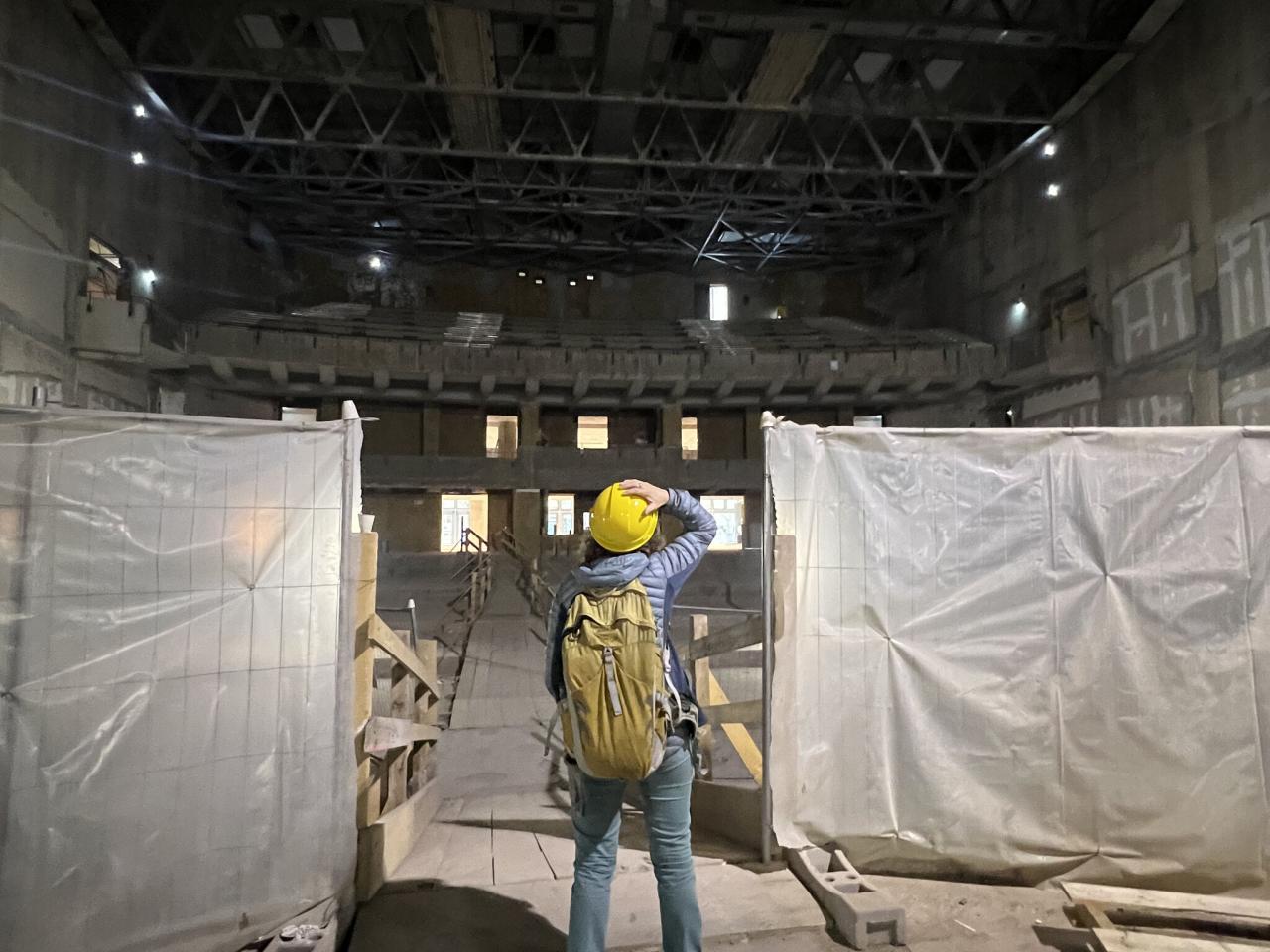
For many cities, the closure of a theatre would mark the gradual disappearance of cultural life from the public sphere. Fewer performances, smaller audiences, and less space for people to meet, reflect and create together. In Alessandria (Italy), however, the long closure of the municipal theatre became the starting point for a different story.
Instead of waiting for the theatre building to reopen, the city began asking a different question: What if theatre is not a place, but a way of bringing people together? This simple shift in perspective transformed a weakness into an opportunity to rethink the role of culture in urban life. Schools, neighbourhoods, community centres, prison and public spaces gradually became stages where theatre could connect people across generations and social backgrounds.
Today, Theatre4all is recognised as an URBACT Good Practice because it demonstrates how culture can become a driver of integrated urban development. By connecting professional theatre with education, social inclusion, community participation and local governance, Alessandria has shown that cultural policy can strengthen not only audiences, but also communities.
Today, six European cities have joined Alessandria in the URBACT Theatre4all Transfer Network to explore the story behind this Good Practice. Rather than replicating its activities, they are working together to understand the principles, partnerships and governance choices that made Theatre4all successful – and to discover how these can be adapted to their own local contexts.
From a cultural crisis to a new way of thinking
The closure of Alessandria's municipal theatre was more than the loss of a performance venue. It exposed a broader challenge shared by many medium-sized European cities: how can culture remain accessible when traditional cultural infrastructure is no longer available? How can new audiences be reached, social isolation reduced and local cultural life strengthened?
Rather than waiting for the theatre building to reopen, the City of Alessandria decided to invest in something less visible but ultimately more valuable – people, partnerships and communities. Theatre performances moved beyond the walls of a traditional theatre. Professional productions were combined with educational programmes for schools, activities for children and families, initiatives involving senior citizens, prison theatre, community social theatre and opportunities for local artists. Theatre became a tool for participation rather than simply entertainment.
This integrated approach is what makes Theatre4all different. Instead of treating culture as a stand-alone policy area, Alessandria connected it with education, social inclusion, urban regeneration, tourism and local development. Every activity contributes to a wider objective: building a stronger cultural ecosystem in which residents are not only spectators but active participants in cultural life.
The results demonstrate the potential of this approach. Early results already demonstrated the wider impact of the initiative. In 2024, ticket sales increased by almost 40%, while the city also recorded growth in overnight stays, highlighting how investment in culture can contribute not only to participation but also to local attractiveness and the urban economy. Every year, Theatre4all reaches more than 10 000 participants, involves over 700 students, works with local theatre companies and keeps ticket prices affordable to ensure that culture remains accessible to everyone. But perhaps its greatest achievement is less tangible: it has helped rebuild relationships between people, cultural organisations and the municipality, creating a shared sense of ownership over the city's cultural future.
The journey begins with understanding
Transferring a Good Practice is never about copying successful activities from one city to another. Every city has its own history, governance system, cultural ecosystem and social challenges. What works in Alessandria cannot simply be replicated elsewhere. It first needs to be understood.
This is the starting point of the URBACT Theatre4all Transfer Network, which brings together Alessandria and six partner cities – Braga (Portuga), Celje (Slovenia), Den Bosch (the Netherlands), Khotyn (Ukraine), Piraeus (Greece) and Plasencia (Spain). Although their local contexts differ, they share a common ambition: to explore how culture can become a driver of more inclusive, participatory and integrated urban development.
The network therefore began with the Understand phase. Rather than discussing future pilot actions, partners first focused on understanding the foundations of Theatre4all: its stakeholder ecosystem, methods of community engagement and the conditions that enabled the Good Practice to grow into an integrated urban policy. This shared understanding will provide the basis for adapting the practice to six very different local contexts over the coming years.
The first Transnational Meeting, hosted by Alessandria, allowed partners to experience Theatre4all first-hand. Through site visits, meetings with local stakeholders and discussions with the municipal team, participants explored the different elements of the Good Practice. The meeting also marked the beginning of stakeholder mapping, helping each partner city identify the local actors who will be essential for the transfer process.
The learning journey continued with the second Transnational Meeting in Den Bosch, where partners shifted their attention from understanding the Good Practice itself to exploring how culture can act as a cross-cutting element in urban policies and generate lasting social impact. Through a series of interactive workshops, they also analysed the root causes of their own local challenges and collaborated to develop practical solutions, using peer learning.
While Alessandria's Good Practice provides the foundation, the network is not built around one-way knowledge transfer. Each partner city brings its own experience, strengths and perspectives to the table. As the journey progresses, cities will increasingly learn not only from the original Good Practice, but also from one another. Theatre4all is no longer only Alessandria's story. It is gradually becoming a shared European story, where every city contributes, every city learns, and together they shape new approaches to culture-led urban development.
The next chapter: From understanding to adaptation
The Adapt phase of the Theatre4all Transfer Network will focus on turning shared learning into local action. Over the coming months, each partner city will work with its URBACT Local Group, a group of local stakeholders, to identify which elements of the Theatre4all Good Practice respond to its own challenges and how these can be realistically adapted to the local context.
Each city will develop its own version of Theatre4all, reflecting its cultural ecosystem, institutional capacities and community needs. The result will not be six identical models, but six locally rooted approaches inspired by the same principles.
As the network progresses, Theatre4all will continue to demonstrate that culture is much more than a programme of performances. It can become a catalyst for stronger communities, social change and more resilient cities. And perhaps this is the most important lesson that Alessandria is sharing with Europe: sometimes the most transformative cultural space is not a theatre building at all, but the relationships that culture helps create. A closed theatre became the beginning of a more open city. Today, six European cities are discovering how the same principles can help strengthen culture, participation and community in their own local contexts.