
How can cities turn complex security challenges into more integrated, community-informed urban strategies?
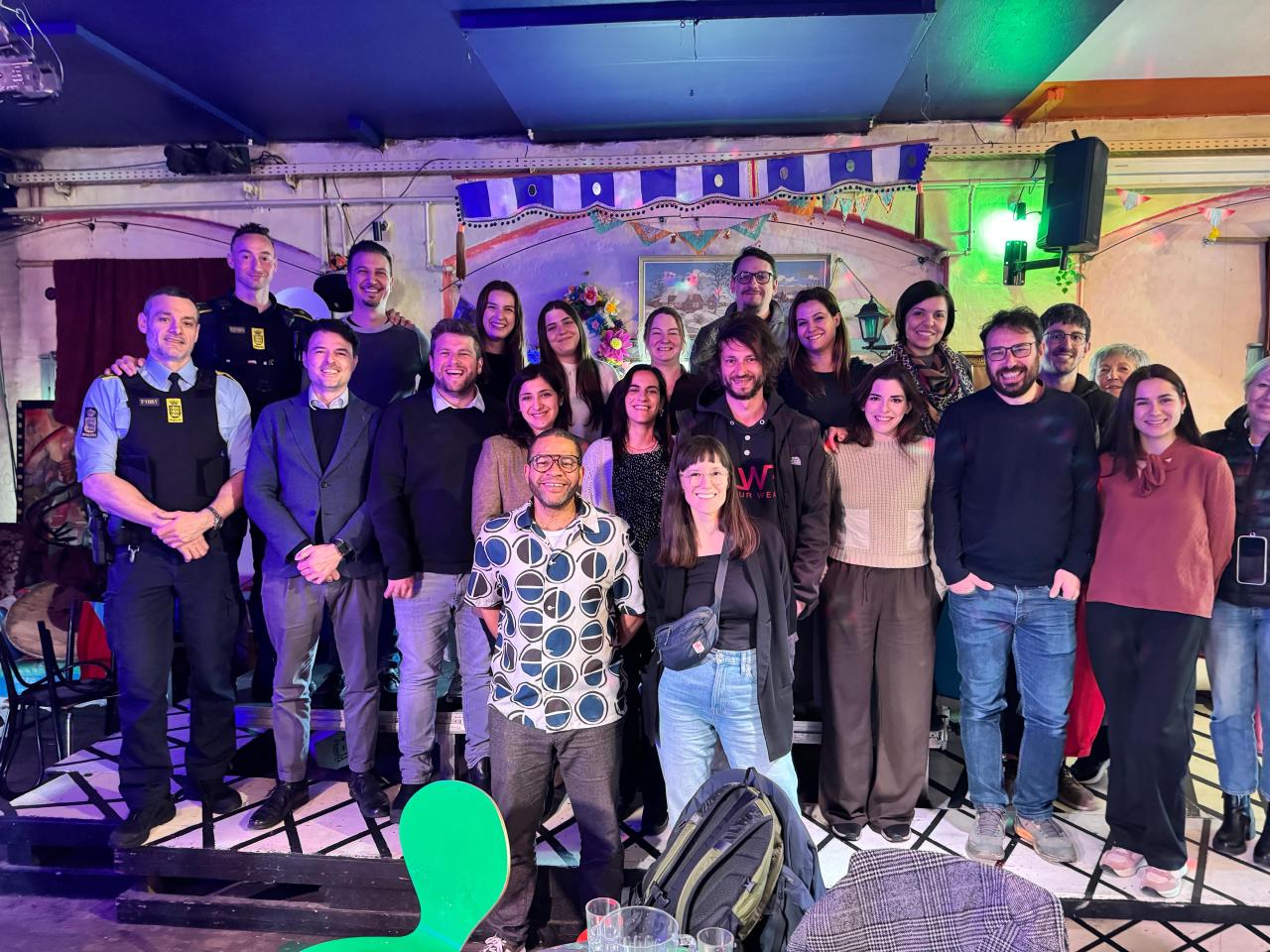
At the 5th Transnational Meeting of the CITISENSE network, hosted in Copenhagen on 15–16 April 2026, partner cities from Piraeus (GR), Manresa (ES), Geel (BE), Liepaja (LV) and Naples (IT) came together to explore exactly that question. Over two days, the meeting combined local exchange, field-based learning and a structured peer review process focused on partners’ Investment Plans.
The first day focused on Copenhagen’s experience of urban security, with particular attention to the transformation of Pusher Street in Freetown Christiania. The second day shifted to the network level, giving partner cities the opportunity to test their plans, questions and financing challenges through peer review.
A closer look at urban security in Copenhagen
The meeting opened in Freetown Christiania with a session that set the local context. Participants were introduced to the history and evolution of Christiania, helping them understand the social, spatial and political dynamics that continue to shape the area today.
Freetown Christiania is one of Copenhagen’s most unique urban areas, known for its strong community character, distinctive governance model and complex history. For the CITISENSE network, it represents a powerful real-life case study: a place where questions of urban security, public space, community involvement and long-term transformation come together in a very concrete way. The work around Pusher Street shows that addressing sensitive urban challenges requires more than short-term solutions — it calls for integrated action, local engagement and the ability to navigate complexity over time.
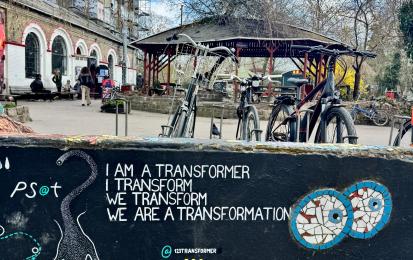

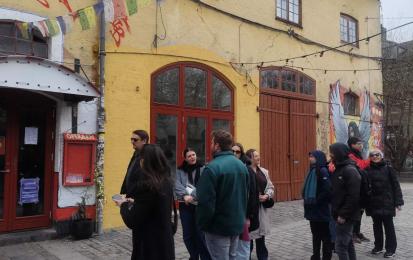
This was followed by a dedicated session on the transformation of Pusher Street, looking at the history of the site, the challenges behind the intervention, the strategy adopted, the involvement of stakeholders — including less conventional actors — and the impact observed over time.
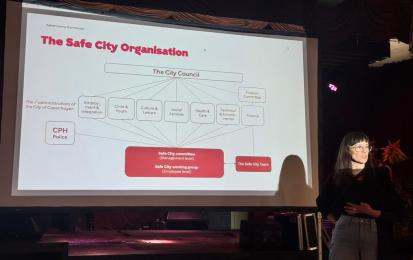
The morning also explored Copenhagen’s wider urban security approach. Drawing on the city’s safety programme and cooperation with local police, the discussion addressed responses to gang-related activity, strategic partnership agreements and approaches to nightlife security. Together, these sessions offered partner cities an opportunity to reflect on how urban safety can be addressed through governance, partnership and long-term transformation, as well as enforcement.
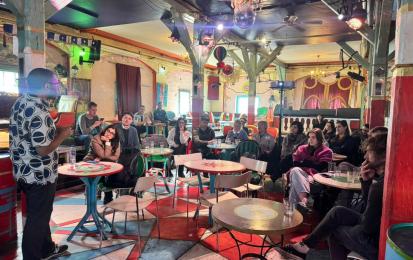
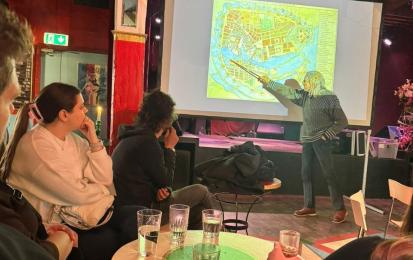
A guided field visit in Christiania brought this learning into direct contact with place. Led by a member of the Christiania Foundation Board, the visit enabled participants to experience the neighbourhood first-hand — its spaces, its stories and the community dynamics that continue to shape its future. The value lay not only in hearing about local practice, but in seeing how strategy, conflict, identity and urban change intersect on the ground.
From local inspiration to network exchange
The second day focused on collective learning across the partnership through a peer review of the partners’ Investment Plans. The aim was to help cities strengthen their strategic and financial planning through direct feedback from peers working in comparable urban contexts.
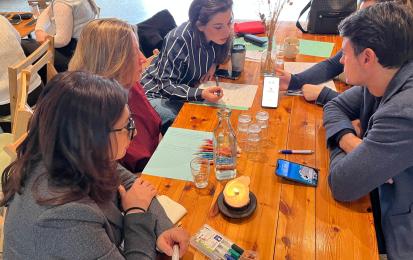
The peer review methodology, introduced by Lead Expert Pietro L. Verga, was designed to encourage both openness and practical value. Each city under review was represented by two delegates at a dedicated table, while participants from the other cities joined as peers. This ensured that every discussion benefited from a diversity of outside perspectives, while allowing the city under review to present its challenges without dominating the exchange.
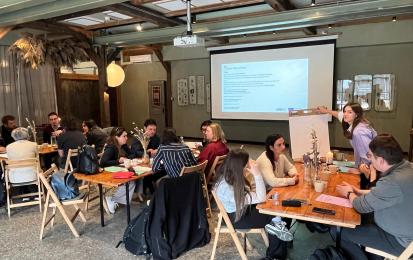
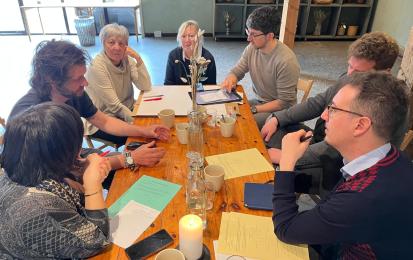
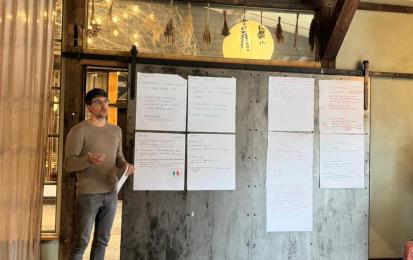
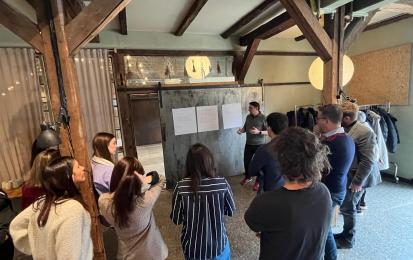
The format combined short pitches, thematic table discussions and plenary reporting moments. For each city, discussions first addressed open questions linked to the work plan and implementation pathway, before turning to financing challenges and possible funding strategies. The structure was designed to move from diagnosis to recommendation, helping cities identify concrete policy ideas and operational next steps.
Investment Plans under the spotlight
Ahead of the peer review, each partner was asked to prepare three key elements: a short presentation of its Investment Plan, three open questions linked to the work plan, and up to three core financing challenges. This reflects one of the strengths of transnational cooperation in URBACT-style networks: cities are not only invited to showcase progress, but also to expose uncertainty, test assumptions and benefit from the experience of others.
The meeting served as a working space for refining local action through shared intelligence. By asking cities to articulate both strategic dilemmas and financial barriers, the exercise encouraged a realistic discussion about implementation — one that recognised that urban change depends not only on good ideas, but also on timing, resources, partnerships and delivery models.
Why this meeting mattered
The Copenhagen meeting highlighted a core principle at the heart of CITISENSE: effective responses to urban security must be rooted in local context, informed by practitioners and strengthened through cross-city exchange. The combination of Christiania’s real-world lessons and the network’s structured peer review created a strong learning arc across the two days.
By bringing together site-based learning, policy reflection and practical peer support, the 5th Transnational Meeting helped partners move one step closer from inspiration to implementation. It showed how transnational cooperation can support cities not only in understanding complex urban challenges, but also in developing more concrete and actionable responses.