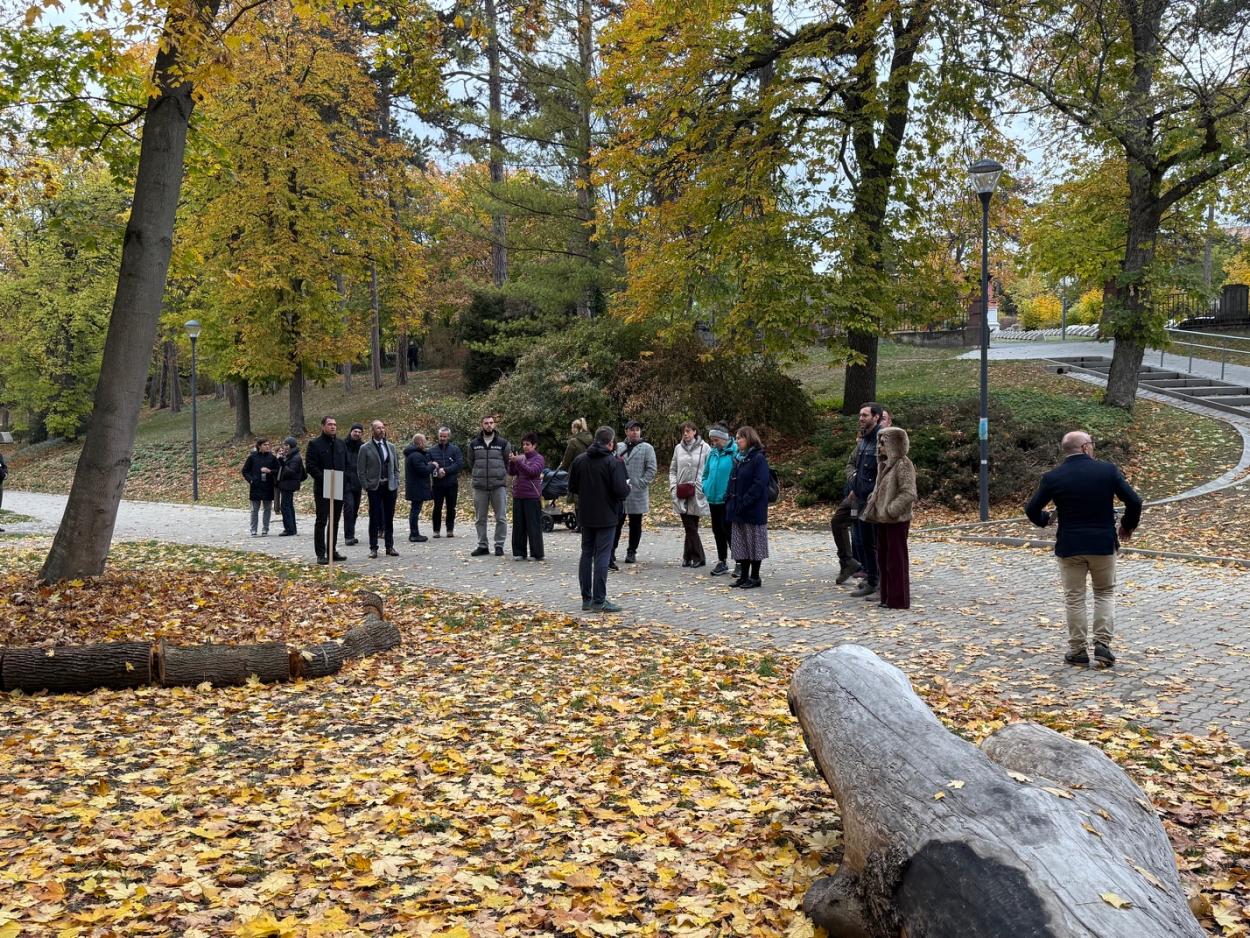
In Veszprém this autumn, something looked unusual around some of the city’s trees: fallen leaves were not swept away. Instead, they were gathered in small piles around the base of the trunks. These are the televényszigetek, or leaf-litter islands, launched this autumn. The idea is simple: leaves left on the ground create mulch that retains soil moisture and returns vital nutrients to the earth.
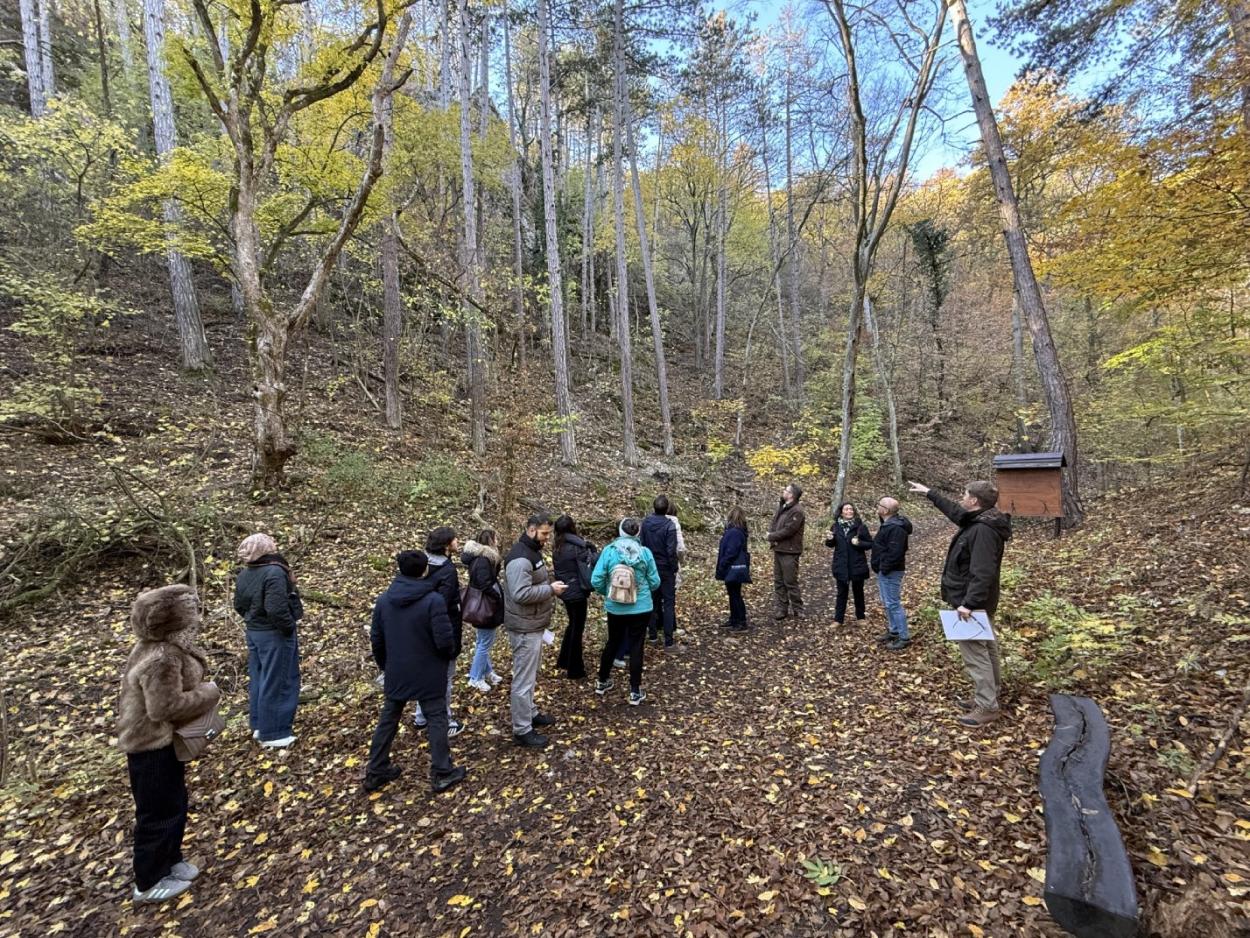
On a walk through the city, partners of the URBACT PARKS Transfer Network saw the initiative in practice. It was one of the moments that gave the network’s transfer meeting, held in Veszprém from 3 to 5 November 2026, its distinct character: ideas presented in a room, then verified directly on the ground.
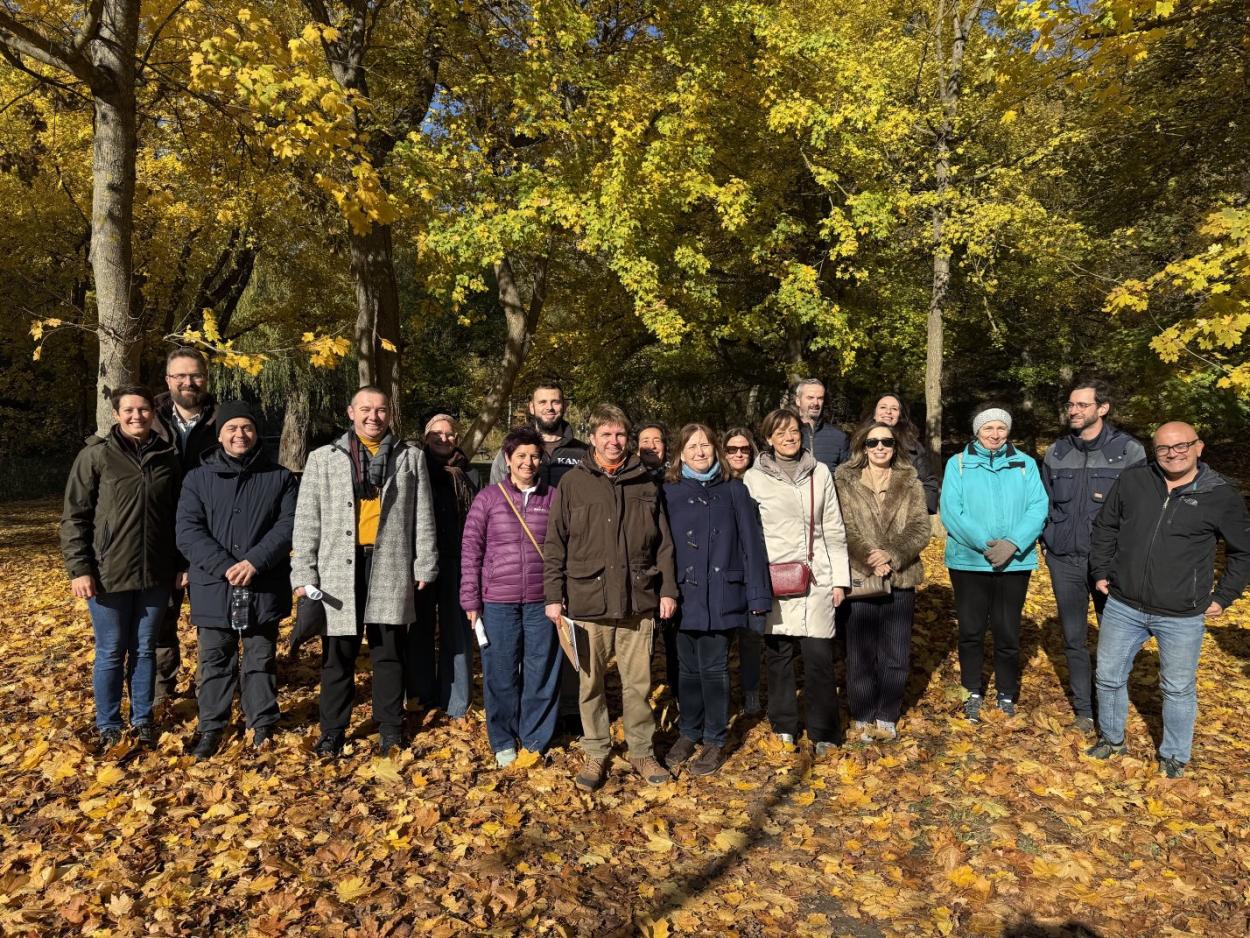
PARKS is led by the Municipality of Perugia and brings together partners from Italy, Hungary, Portugal, Spain, Ireland, Bulgaria, and Ukraine. The network stems from Perugia’s "Urban Forest" initiative a rich, multifaceted good practice that partners are testing and adapting to their local contexts while exchanging their own experience.
To make the transfer process structured and effective, the practice was divided into five thematic areas:
- Tree Inventory: to assess and manage public trees;
- Green Council: for more informed, participatory decision-making;
- Green Resource Strategy: to align and connect existing strategies;
- Participation: to involve residents, local communities, schools, and other stakeholders;
- Awareness Raising: through nature-centred education and communication.
In Veszprém, the meeting advanced discussions on these topics and featured the host city’s contributions on nature-based solutions and urban forest management.
A green council, from Perugia to Veszprém
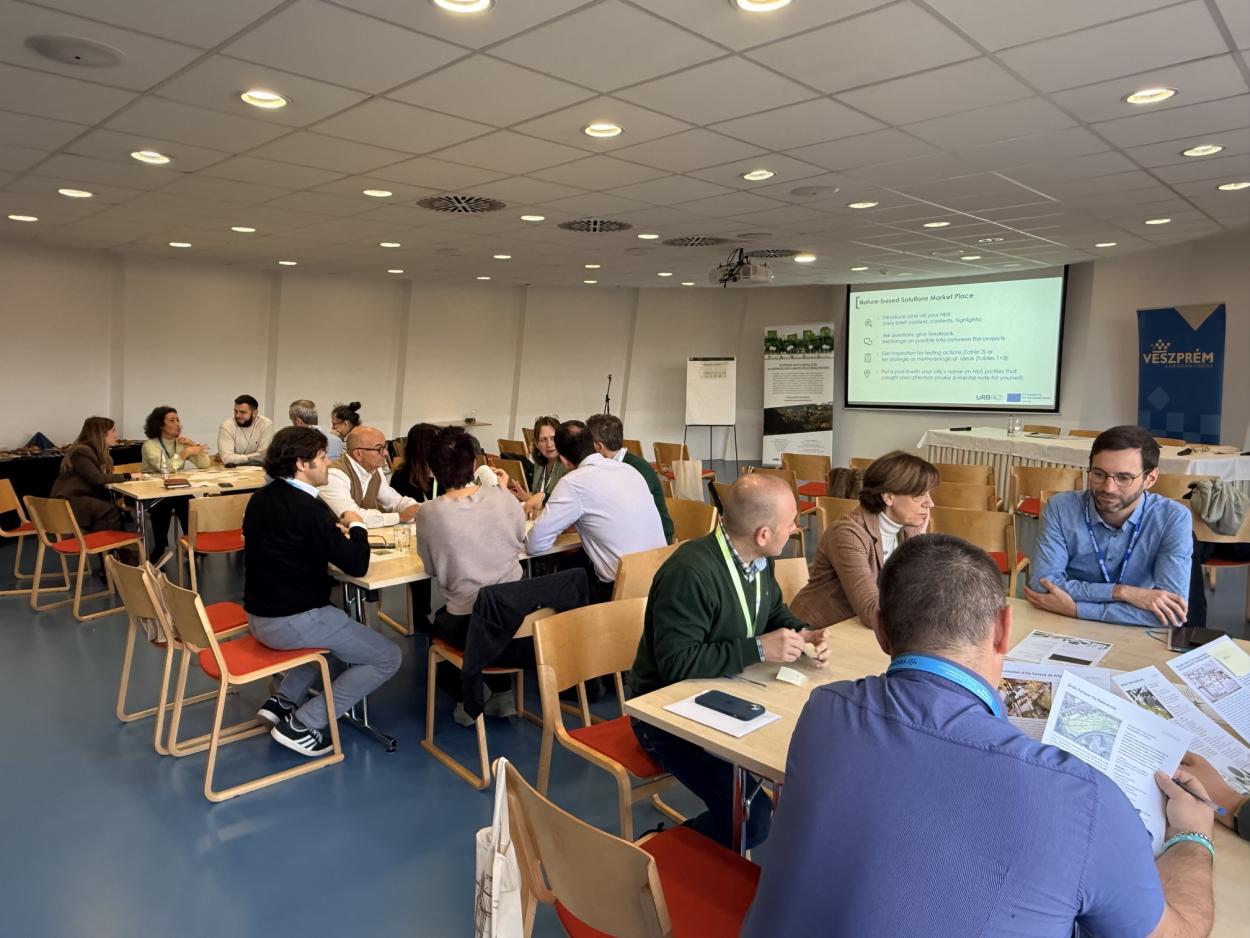
The Green Council was one of the central topics. Perugia presented its Consulta del Verde, while other partners shared their own progress and mechanisms. For Veszprém, explained Tamás Józsa, Head of Department, the foundations of a green council rely on a sustainability working group active within local projects since 2021. The topic is also closely tied to current questions regarding green transition financing: a committee will pre-evaluate proposed urban developments against 8 to 10 selected sustainability criteria. The system is currently under development and expected to launch by early 2027. The example from Perugia, he noted, "provides plenty of valuable ideas for implementation."
Áron Kovács, Municipal Councilor and Sustainability Commissioner, provided partners with an overview of solutions already widely implemented in Veszprém, including wildflower urban areas, urban beekeeping, rain gardens, and the new leaf-litter islands. "In Veszprém, we take adaptation to changing climate conditions seriously, and international collaboration is central to this effort," he emphasized.
Nature-based solutions leverage natural processes and elements to protect, restore, and enhance a city’s blue-green infrastructure. They help mitigate climate change, improve urban water management, and make urban spaces more livable. As highlighted during the meeting, the core philosophy is to cooperate with the ecosystem rather than dominate it.
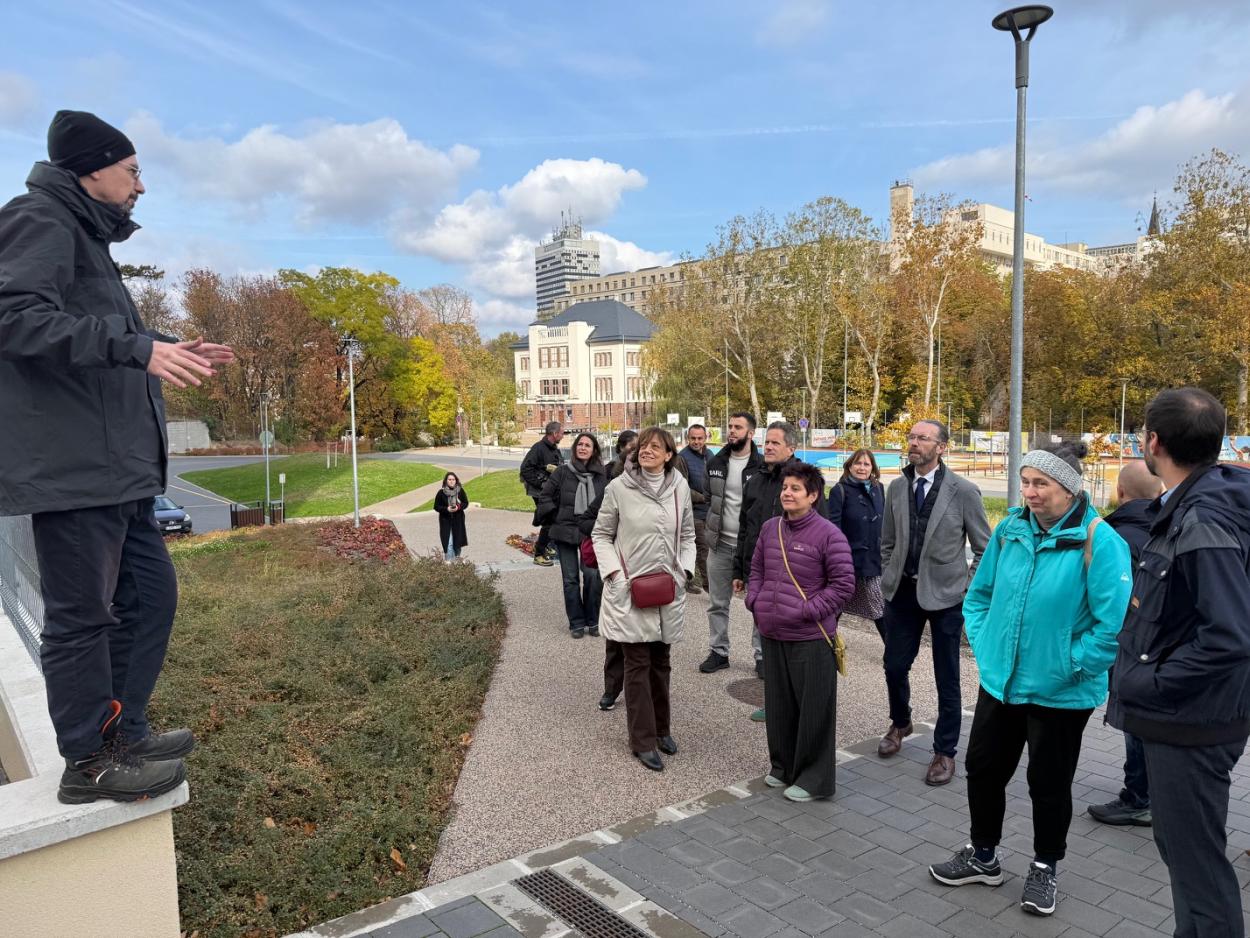
The meeting also explored how an urban-forest approach can operate beyond the city centre. Gergely Lomniczi, Forestry Engineer and Managing Director of Pannon Örökerdő Kft., presented the "Urban Forest Management Concept in Balatonfüred Koloska Valley", a study completed this spring at the request of Bakonyerdő Zrt. and developed in close cooperation with their team. The concept applies an innovative urban-forest model, assessing ecosystem services and establishing management goals based on local needs, climate adaptation, nature conservation, and recreation.
Delegations from Italy, Portugal, Spain, Ireland, Bulgaria, and Ukraine shared productive days with their Hungarian hosts. Many presentations sparked active debates that continued during breaks and site visits, a true sign of a successful exchange.
For a Transfer Network, this represents the core objective: not copying a model outright, but understanding, testing, and adapting it to diverse local contexts. This enables cities of all sizes and climates to render their urban trees and green spaces healthier, more accessible, and more valued. A leaf-litter island may seem like a small detail. However, it demonstrates that impactful urban green care often begins with a simple action and grows when cities share their experiences.