
![DSC09165[71].JPG](/sites/default/files/inline-images/image_131.jpeg)
Accessibility Beyond Infrastructure
What makes Komotini distinctive is not only what it built, but how it governed the process. Accessibility was embedded across strategic plans for urban development, tourism, mobility, and local operations, while disabled people were treated as equal partners in advisory boards and steering committees.
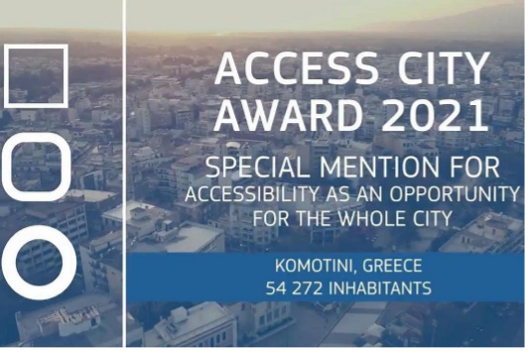
Rather than framing inclusion as a narrow welfare issue, the city approached it as a cross-cutting principle shaping public space, transport, services, and civic participation. This integrated model helped Komotini gain wider European recognition, including the Access City Award 2021, the URBACT Good Practice label in 2025, and finalist status in the European Capitals of Inclusion and Diversity Award 2025.
From a Personal Vision to City-Wide Change
For Komotini, becoming a city accessible to all was a journey that lasted almost twenty years. The turning point came in 2002, with the founding of the association “Perpato” for people with mobility impairments and their friends. Among the founders was Alexandros Taxildaris, a student who became quadriplegic after a sea accident in 2000. Later a Paralympian in Athens 2004, Alexandros is today a Doctor of Physical Medicine and Rehabilitation.
Reflecting on the early days, he recalls:
“Our success was helped by the fact that my father and other founding members were well-known and respected locally. At one of our first events, we showed a video highlighting the daily challenges faced by people with mobility impairments. Fortunately, we found a municipal administration willing to listen… and the city changed.”
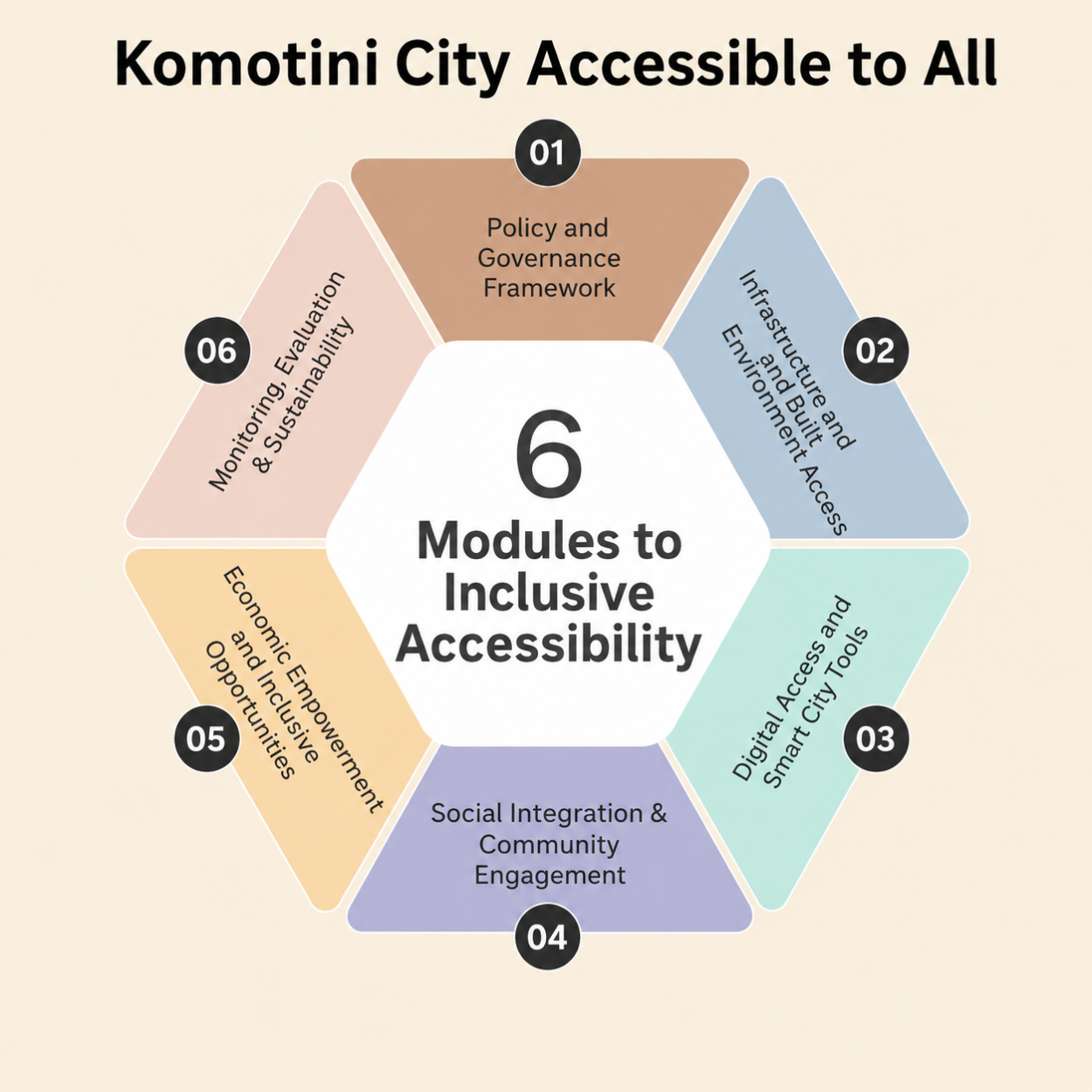
This grassroots advocacy sparked a city-wide transformation. With European funding and strong municipal commitment, Komotini moved from piecemeal interventions to a structured, holistic approach to accessibility based on six interconnected modules:
- governance and coordination,
- urban planning and mobility,
- digital accessibility tools,
- social integration,
- economic development and tourism,
- monitoring and long-term funding.
During the city visits conducted between February and March 2026, it became evident that, despite differences in scale, geography, and institutional capacity, all partner cities shared common ambitions around inclusive mobility and citizen participation. The visits showed that successful transferability depends less on financial resources than on governance quality, political commitment, and a strong participatory culture.
The network cities offered varied knowledge of how accessibility is being pursued in practice. Bratislava and Dubrovnik demonstrated advanced governance systems, accessibility audits, and digital tools that support inclusive planning; Galway explored accessibility through public space activation and the night-time economy; and Pentágono Urbano highlighted the value of intermunicipal cooperation and living-lab methodologies for mobility planning.
Meanwhile, smaller municipalities such as San Lucido and Jarosław showed how strong political commitment and operational flexibility can compensate for more limited resources, while Zrenjanin demonstrated particularly strong grassroots collaboration with disability organisations, underlining the importance of civic participation in shaping long-term accessibility strategies.
Transfer as Adaptation, Not Replication
A central lesson of the C.ALL network is that urban good practices cannot simply be copied from one city to another. Accessibility interventions must respond to local governance cultures, urban morphology, mobility systems, and social realities.
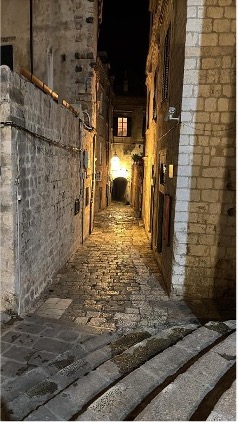
Historic urban environments, for example, present challenges very different from those faced by metropolitan regions or coastal municipalities. Narrow streets, protected heritage areas, fragmented public spaces, and seasonal tourism pressures all influence how accessibility measures can be implemented.
For this reason, the transfer methodology adopted by the network focuses on adaptation rather than replication. The objective is not to reproduce Komotini identically, but to translate its governance logic into locally relevant solutions.
The Transferability Study assessed each city’s institutional readiness, stakeholder engagement capacity, accessibility policies, and mobility systems to identify realistic pathways for implementation. This process allowed cities to define their own priorities while benefiting from shared learning across the network.
Importantly, the study also revealed that accessibility is increasingly understood as a transversal urban priority linked to climate resilience, sustainable mobility, demographic ageing, and social cohesion. Cities are no longer treating accessibility as a niche social policy but as a broader framework for improving urban quality of life.
Participation at the Core
A defining feature of Komotini’s success is its deep commitment to participatory design, where persons with disabilities are recognised not merely as beneficiaries but as co-designers, operators, and evaluators of urban interventions. Their active involvement in advisory boards, steering committees, and community consultations ensures that policies and projects are tested against real-life conditions, narrowing the gap between design intent and actual functionality.
This element is a core defining step that all partner cities are in the process of adopting and creating a structured ecosystem in their cities as well, linking municipal departments, civil society, and technical experts into concrete URBACT Local Groups.
Bringing together municipal departments, transport authorities, civil society organisations, disability associations, technical experts, local businesses, and residents, these groups collectively define accessibility priorities and embed them in local planning processes.
In this way, participation emerges not only as a democratic principle, but as a practical and strategic tool that enhances both the effectiveness and the legitimacy of urban interventions. The ULGs are also there to help create long-term ownership of the transfer process, ensuring that accessibility remains embedded within local governance structures beyond the lifespan of the project itself.
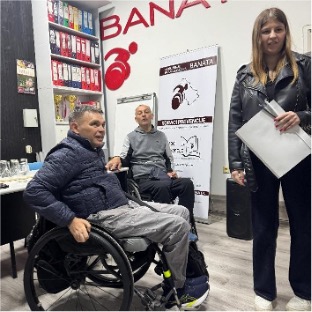
As highlighted by Nenad Krbavac, President of the Paraplegic Association in Banat:
“Urban designers often think that expensive solutions are needed to include parameters for persons with disabilities in their plans. We only need a few metres of bigger access points — that is all.”
Accessibility is not only about removing physical barriers; it is about removing institutional and participatory barriers as well.
Building a European Learning Community
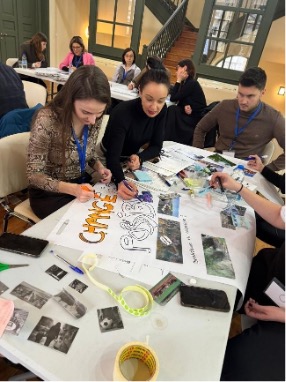
Beyond the transfer of technical practices, the C.ALL network is emerging as a dynamic platform for peer learning, mutual exchange, and collective urban experimentation. Through study visits, thematic exchanges, and trilateral meetings, partner cities are creating spaces for open discussion on the practical challenges of implementation, ranging from digital accessibility and public transport adaptation to funding frameworks and governance coordination.
In this sense, the network moves beyond conventional models of urban transfer, challenging the hierarchies that often privilege larger or more experienced cities and instead recognising that each partner contributes valuable knowledge, perspectives, and lived experience.
This collaborative direction has been actively reinforced by the Lead Expert and the Lead Partner through the design of thematic learning labs and tailored knowledge-sharing activities that respond to the specific needs and contexts of each city.
What is taking shape, therefore, is not simply a transfer process, but a participatory and adaptive European learning process; one capable of strengthening cooperation and facilitating the effective transfer of inclusive urban practices across Europe.
Accessibility as an Ongoing Urban Process
Perhaps the most important lesson emerging from the URBACT C.ALL Network is that accessibility should not be treated as a one-time infrastructure project or a specialised social policy. It is an ongoing urban process that requires continuous adaptation, political commitment, stakeholder participation, and long-term governance coordination.
The experience of Komotini demonstrates that accessibility becomes transformative when embedded systematically across urban planning, mobility systems, digital services, public space, and community life. At the same time, the partner cities of the network show that this transition is possible under very different territorial, economic, and institutional conditions.
For city practitioners, the message is increasingly clear: accessible mobility is not only about enabling movement, but about creating cities where all citizens can participate fully in social, economic, and public life.
As European municipalities continue responding to climate adaptation, demographic ageing, and social inclusion challenges, the experience of the URBACT C.ALL Network offers a valuable reminder that accessibility is not a secondary policy field, but a foundation for resilient, democratic, and inclusive urban development.