As lead partner of the Hydro-Heritage Cities Network, the Municipality of Chalandri aimed from the outset to expand further the integrated and participatory methodology employed during the Cultural H.ID.RA.N.T. project, which prompted this URBACT Innovation Transfer Network. As Chalandri’s Continuity Plan title states (to move on) From Project to Policy – (by) Building Integrated Urban Governance (capacities).
How to go and achieve this was the main concern of Chalandri’s ULG across the project. The goal was framed as the need to develop the institutional and technological capacities, in the form of an Urban Lab, which can facilitate a shift to more data-based, collaborative and holistic approaches to policy design and implementation. If the final end of the Continuity Plan is to apply an enabling operational framework and body capable of facilitating data-informed policy design, cross-department collaboration, and structured engagement with inhabitants and civil society, the challenge was how to test such an aim within the limited time and space of the URBACT Network cycle.
In line with the “learning by doing” approach Chalandri’s ULG opted for testing the working method of such a wanna-be enabling mechanism (a supporting to the municipality innovation and capacity building lab). The testing hypothesis was: To apply a data-informed, integrated and participatory method on facing (and deciding about) the issue of walkability in a designated -pilot- area of Chalandri.
Designing this testing action proved a demanding and learning exercise. Defining the area of application, the indicators of measuring and evaluating the quality of walkability, and translating them into (digital and visual) data were a process that opened before us the span of a Lab’s activity but exposed also the depth of the challenge (and the work) involved. In the end the ULG decided to test this method - with focus on the case-study of walkability in a Kato Chalandri area - in two ways. First, by developing a digital tool (a dashboard and its backend data-providing system) as a joint working instrument which can assist data-based decision making and planning, and foster cross-sectoral collaboration. Secondly, by holding two participatory processes: one aimed to engage the local citizens and the other involving municipal staff and elected city politicians.
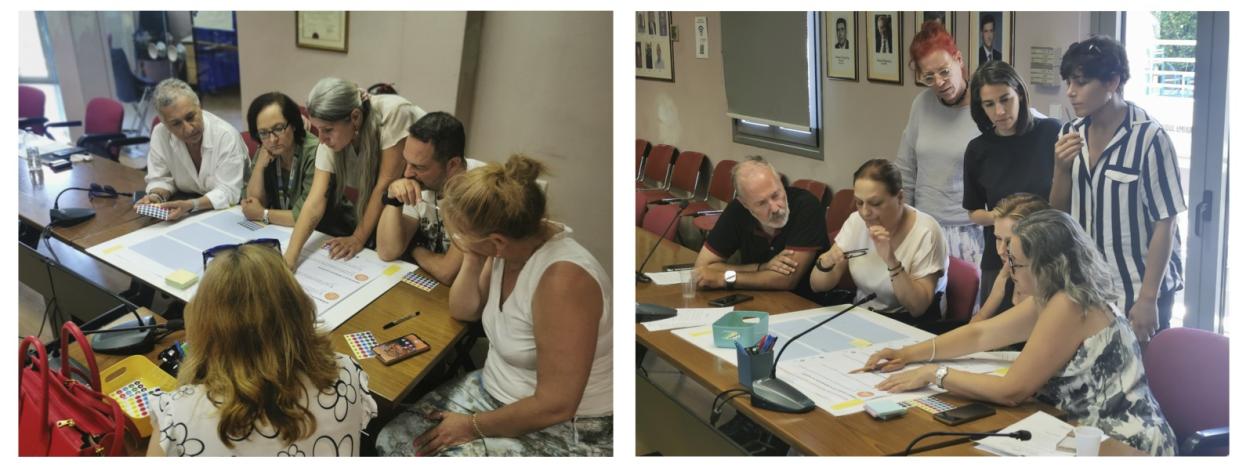
In this way our testing reached out to both the digital and physical worlds examining our method on the phygital realities and requirements of urban policy design today.
The digital tool we imagined -and designed- we wanted to be a. operable across policy areas and fields, b. useful for the city staff and administration and also c. act as an informative map of Chalandri’s condition (displaying actual city-data) accessible by its inhabitants. It’s development became a co-designing process between ULG members and GetMap - a geo-spatial company, also a ULG participant- and utilised and built upon the city’s existing GIS system. In a series of meetings, not only the initial concept – of the digital tool- was examined in detail and went under a process of technical translation, but the final outcome aquired further capacities not foreseen (e.g. replicability and expandability potential, monitoring features).
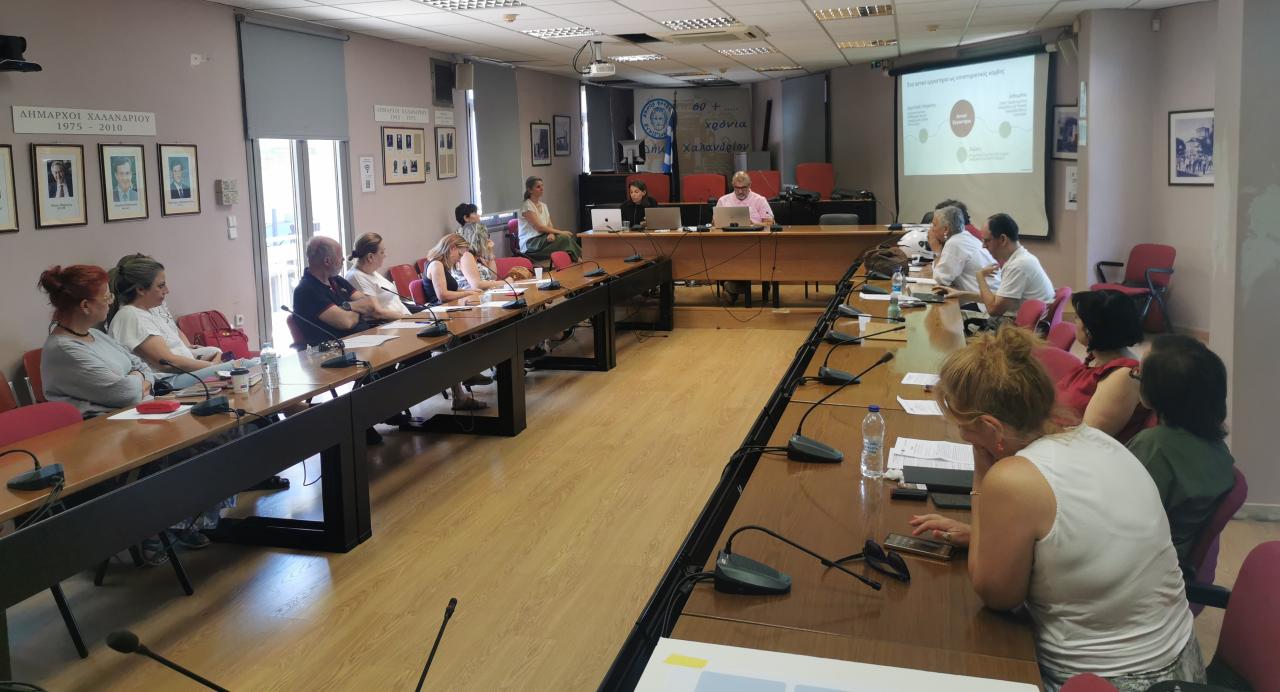
The resulted digital tool, and dashboard on walkability, became the subject of the participatory workshop organised with Chalandri’s municipality staff, heads of departments, city councilors and vice-mayors. The aim was double:
a. to display and explain the advantages of integrated, data-informed and participation based policy design, and
b. to collect opinions on the tool itself, problems and potential in order to be useful to anyone working for the city.
With 22 participants from 6 different departments (Technical, Environmental, Programming and Digital Governance, Social Services, Education & Sports, Cultural), including 4 vice-mayors and a city councilor, the workshop acted as an introduction to a ‘different way of working with the city’, as underscored by Chalandri’s URBACT project manager Ms Stefania Gyftopoulou. Besides the first positive impressions the collected feedback -on potential areas of utilizing such a tool and of developing the respective dashboards- has been important for specifying the next steps of post-URBACT project strategy and for updating Chalandri’s Continuity Plan.
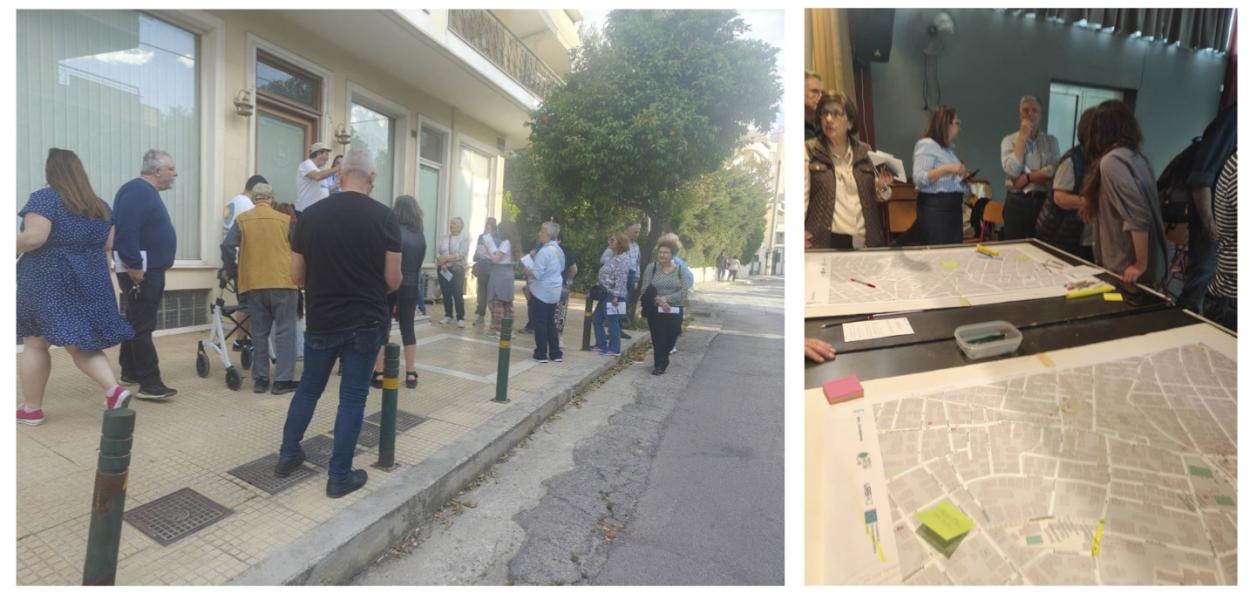
testYet, this was the second participatory workshop of Chalandri’s ULG testing actions. The first one took place earlier, in May, in the area under examination at Kato Chalandri. Over 30 residents, from children to elderly, walked together pointing out problems and impressions regarding the walkability status on a selected route. The walk ended in the neighborhood’s primary school were more information were collected through a collective mapping process. Such extra data, regarding not spatial and measurable data but inhabitants’ impressions and feelings on waklability formed inherent part of an integrated examination of the issue of walkability in the area. The resulting maps were compared with the digital mapping contacted for the digital dashboard and informed the discussion about the indicators one chooses to measure and/or monitor walkability. The aim has been to incroporate this layer of ground and experience-based information into the digital dashboard as valuable units for data evaluation and decision making. It is a search for a way to combine citizen participation and knowledge with data-based estimations, in our example around walkability but tomorrow about other urban issues and topics.
The cross-section of physical participation and digitally collected and evaluated data lies at the heart of Chalandri’s Continuity Plan. Along aiming to further the adoption of data-informed decision-making and integrated design, the participatory and collaborative style of work and design secures the people-centered deployment of new technological capacities. Although the proposed testing and its results, demonstrated the benefits of such a shift, the challenges ahead also appeared in force. The need of frequent data updating, check and monitoring, backend support for such a digital platform, the weight of everyday office-tasks pressure, scattered data, vaque responsibility areas (and regimes of decision-making), and the inadequate institutional frames are some of the challenges that our testing made apparent on the way for a different operational culture to occur.
Making explicit the blocks ahead has been a great contribution to better plan our future course, as much as it has been the scent of potential and change.