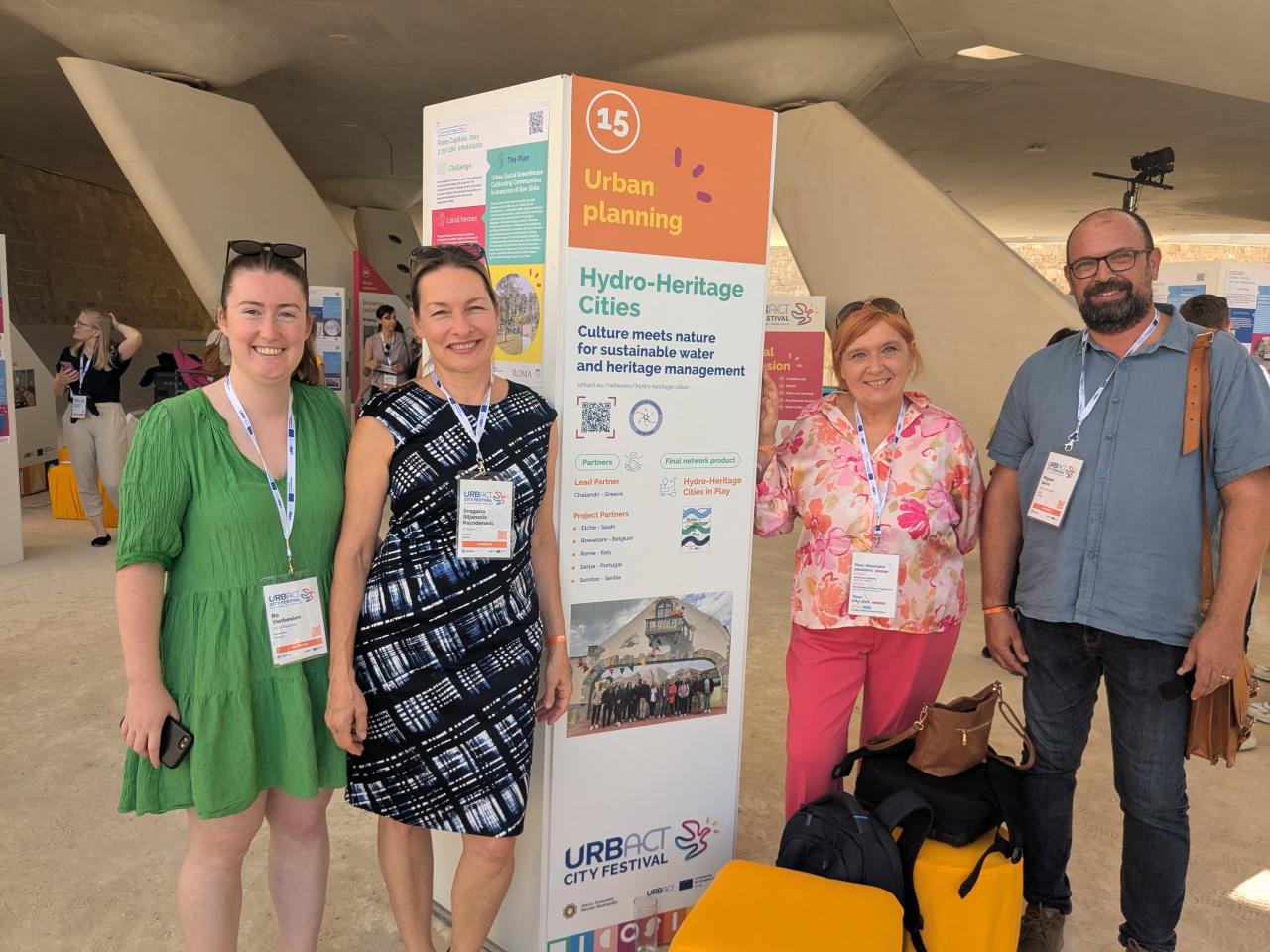
There are few better places to catch up with up-to-date urban innovation projects, at least in Europe, and to meet their protagonists than URBACT’s City Festival. Among dozens of cities from over 30 URBACT Networks, which took part in the 2026 City Festival in Nicosia, Cyprus, in late September, there were three Hydro-Heritage Cities: Sombor, Serpa and Roeselare. Besides representing the whole network, in the Urban Planning sector of the “Local actions marketplace”, our partners Dragana Silijanovic Kozoderovic, Miguel Serra and Bo Vanbesien (respectively) shared their Hydro-Heritage Cities ITN experiences as guest speakers in the festivals proceedings.
The Festival itself felt like a city-wide story unfolding across the open-air marketplace, decorated by the posters of 273 city-projects on the stands of their URBACT networks, that introduced you to the festival’s thematic sessions and informal encounters. Nicosia made the perfect place where city-makers, local residents and European partners could wander between practical experiences and new connections.
Bo Vanbesien, from the Roeselare city, Belgium, joined onstage during the preparatory session - before the festival's official opening - “Presenting your city and network in the marketplace”, where she gamely adapted her pitch about Hydro-Heritage Cities and Roeselare for two very different types of visitors. Faced with a mayor and an EU affairs project manager, Bo was quick to shift perspective and showed how the same urban story can be reshaped for different audiences without losing its central message.
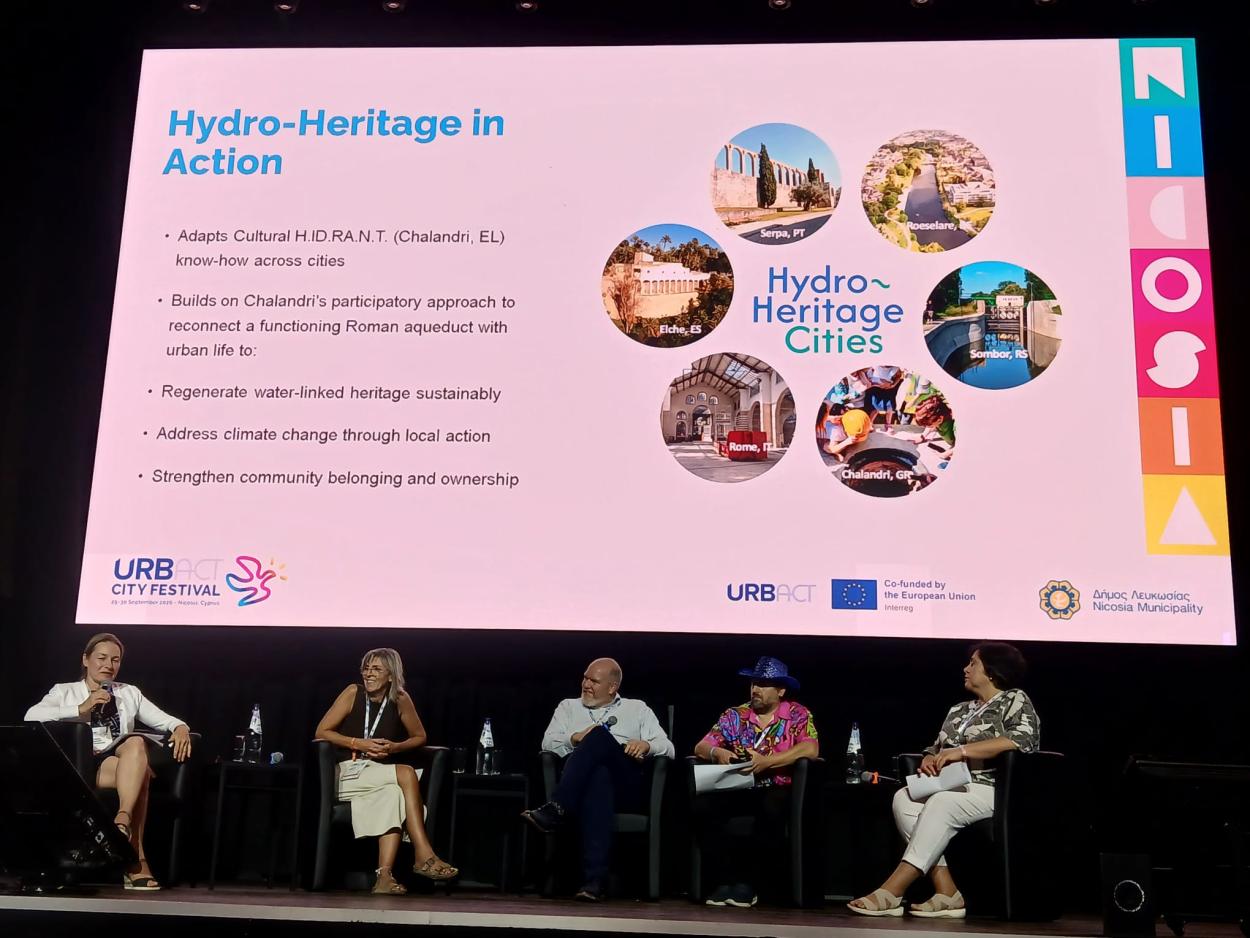
On the first day, Dragana Silijanovic Kozoderovic from the City of Sombor (Serbia) was one of the contributors in the “Storify the city: making hard stories tellable” session, which was hosted by our Network’s URBACT expert Sandra Rainero. Aim of the session was to illustrate the challenges and the power of storytelling as key component -and activator- of citizen’s engagement. Ms Silijanonic introduced the Hydro-Heritage URBACT Network and explained the implementation of a pilot activity: an open-air exhibition presenting the results of the most beautiful postcard of the Great Backa Canal competition as tool to engage people not directly involved in the project. A key takeaway from the discussion has been that by opening and stepping outside the project bubble, inviting everyday citizens to share their perspectives, one gains a much deeper, richer understanding of the heritage in question.
The second day, was the turn of Miquel Serra, from the City of Serpa (Portugal) to talk about the experience of engaging Serpa’s inhabitants in the preservation and regeneration of the aqueduct and “Nora” complex, in the session dedicated to “Culture and cultural heritage as a laboratory of participation and inclusion”. Mr. Serra highlighted the key initiatives on heritage preservation and connection with local community, mainly the educational activities promoted, to enhance Serpa`s hydro-heritage as a living part of community life.