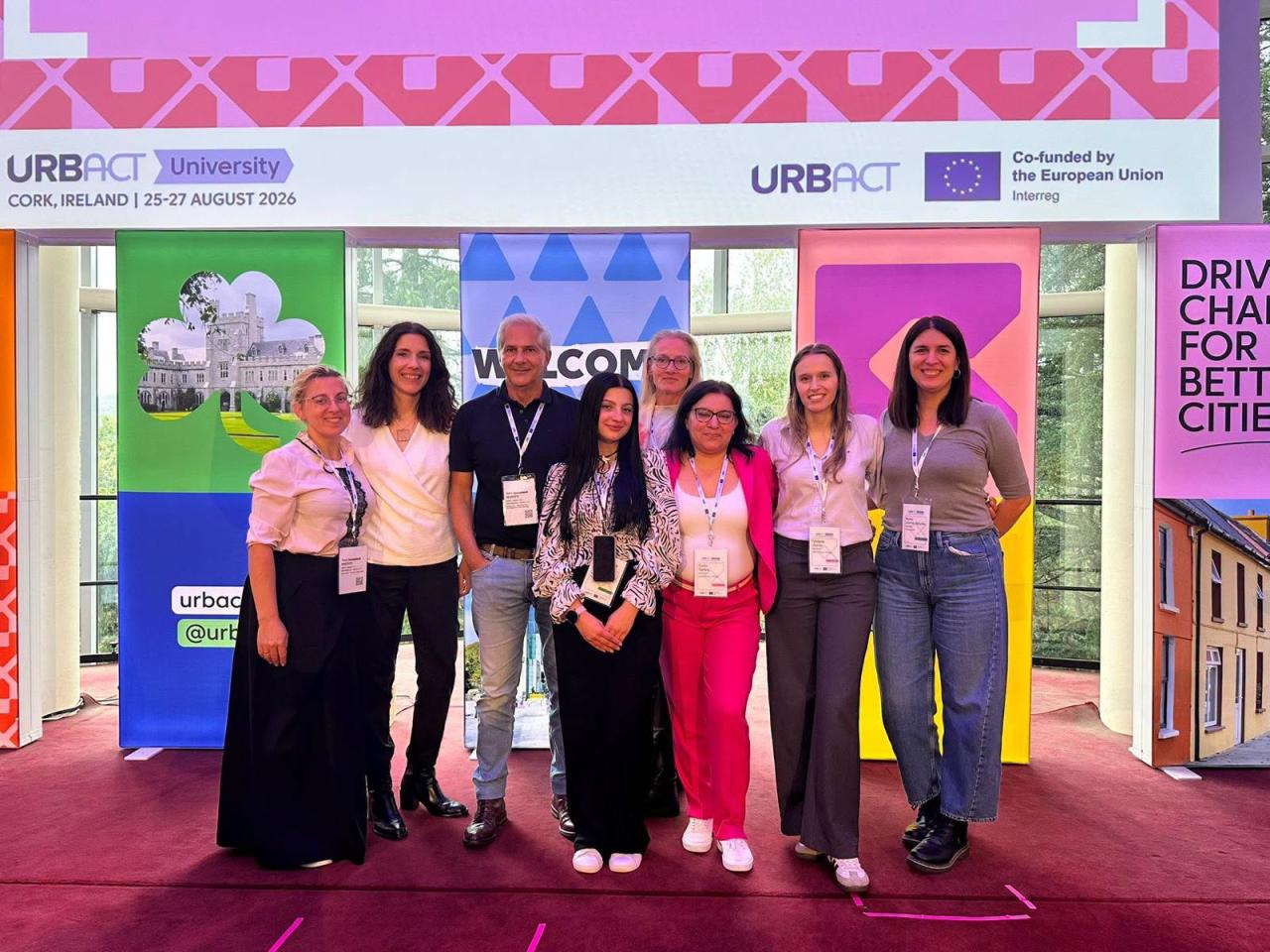
Partners from the RE Transfer Network took part in URBACT University 2026, held from 25 to 27 August in Cork, Ireland. The event brought together 292 participants from 156 cities across 28 countries, representing the 25 URBACT Transfer Networks.
Over three intensive days, RE partners joined cities and teams from across Europe in a shared learning programme focused on strengthening the skills, methods and collaborative approaches needed to support the successful transfer of good practices.
Through practical workshops, co-creation sessions, peer-learning activities and study visits, participants explored key URBACT principles such as integrated urban development, stakeholder engagement, participatory governance and the adaptation of solutions to different local contexts.
For the RE network, URBACT University represented an important milestone in the transfer journey. The tools, methodologies and knowledge shared in Cork will support partners in developing their Transfer Plans and in shaping local actions together with citizens, organisations, businesses and other relevant stakeholders.
The event also created valuable opportunities for partners to exchange experiences, compare different territorial realities and strengthen cooperation across the network.
This collective learning process is helping RE partners build local capacity, strengthen connections between cities and develop context-sensitive approaches to common challenges.
By working together, sharing knowledge and learning from one another, the RE network continues to advance a collaborative European approach based on participation, innovation and the transfer of practices that can contribute to more sustainable, inclusive and resilient territories.