
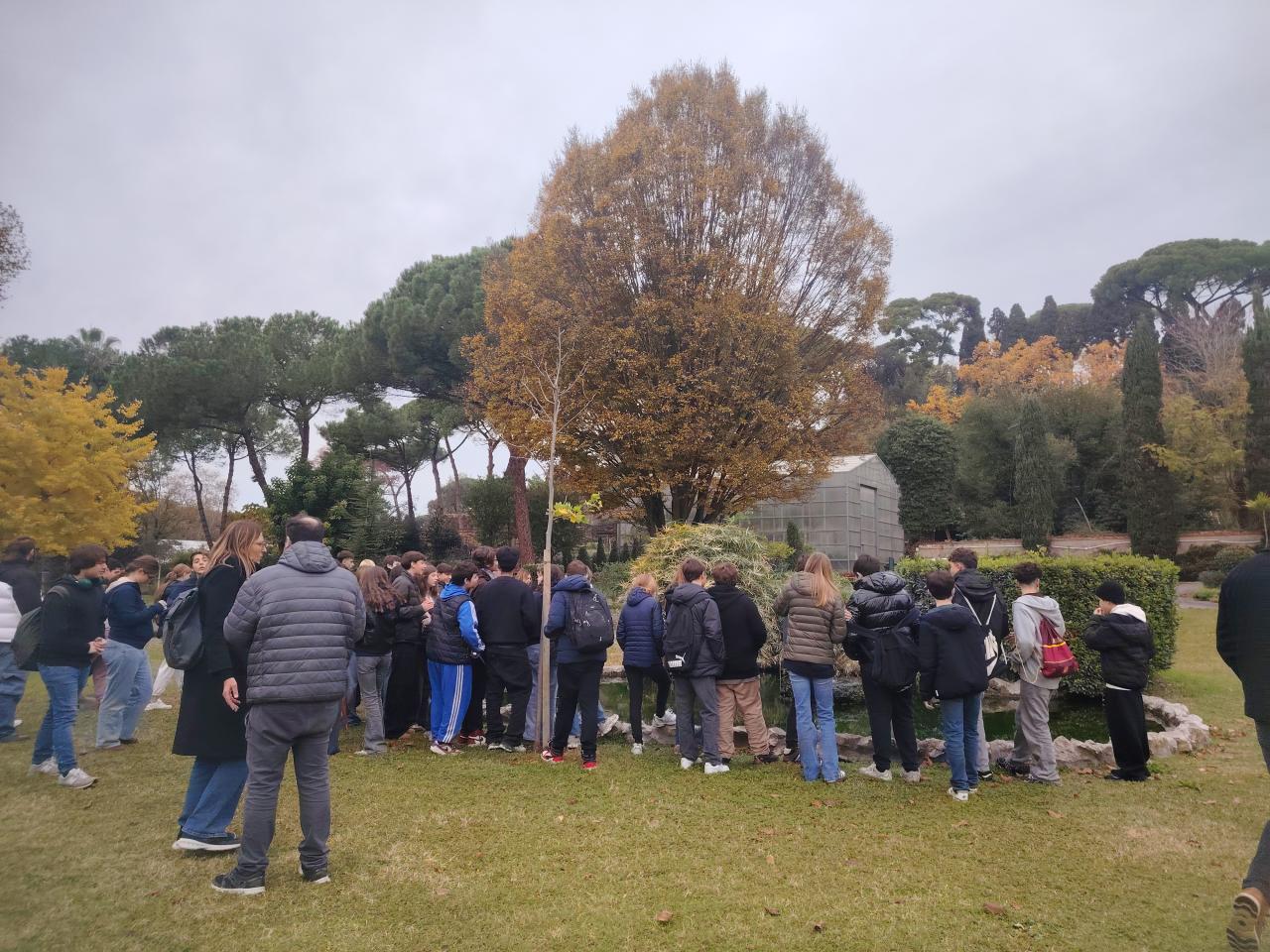
Among all the cities of our Network the city of Rome does not need introduction to its rich cultural heritage and the role of water, the river Tiber, its aqueducts and baths, in the city’s history and development. Yet, literary, under the shadows of Rome’s renowned sites and monuments exist some hidden gems, like the Aranciera di San Sisto (Orangery in San Sisto); currently the focus of a restoration project which blends historical preservation with modern ecological principles.
Established in 1810 by Napoleonic prefect De Tournon, the park of San Sisto was originally a nursery for cultivating plants to adorn Rome’s new avenues and public spaces. Located in the former garden of a convent the park was crossed by the Rivo dell’Acqua Mariana, a historic watercourse which powered water mills like the Mola di San Sisto Vecchio and Molella, that still stand in the park and flowed towards the Circus Maximus before joining the river Tiber. This hidden waterway exemplifies the park’s connection to Rome’s hydro-heritage, highlighting the city’s reliance on its water resource. The Aranciera, a later addition, was designed by the architect Raffaele De Vico a century ago, (1925 – 1927) and served as a semi-cold greenhouse to shelter decorative plants during winter.
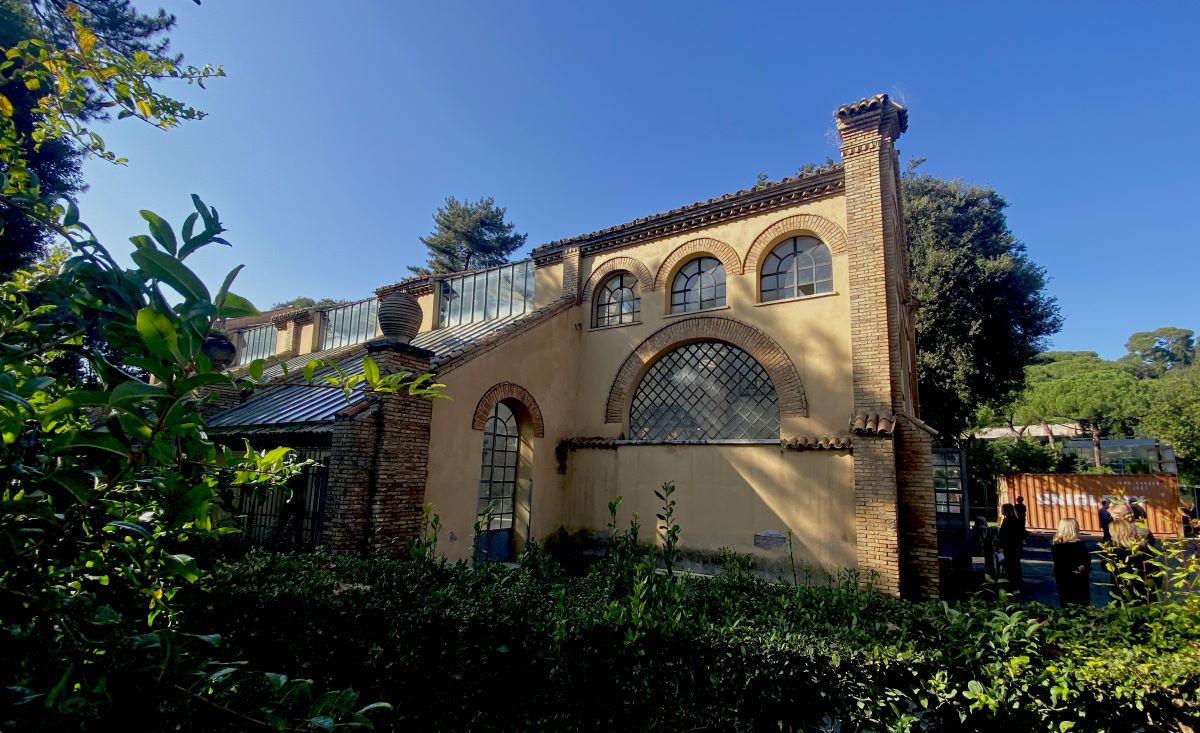
The city of Rome has embarked on an ambitious restoration project that aligns national and municipal sustainability strategies with eco-innovative features,like a rainwater harvesting system, echoing the site’s historical water management practices. By incorporating energy-efficient systems and promoting biodiversity through green spaces, the Aranciera aims to become a model of eco-friendly urban development today. However, the ambition is not only to preserve a piece of Rome’s hydro-heritage but also to transform the Aranciera into a lively community hub. The City of Rome plans to optimize the site by hosting cultural events, educational programs and workshops on sustainability and heritage conservation for schools and for the young Romans aiming the space of Aranciera to meet the community’s needs fostering a sense of ownership.
In this context, last December the Aranciera of Semenzaio di San Sisto became the stage for an inspiring milestone in the Hydro-Heritage Cities (HHC) project at Rome: the celebration of the first phase of the pilot action “Narrative Pathways: from School to the Aranciera.” Nearly one hundred enthusiastic students from the Regina Margherita and Domizia Lucilla schools, together with their teachers and members of Rome’s HHC’s Urbact Local Group, transformed the space into a vibrant hub of learning, discovery, and civic engagement.
This pilot action was designed to bring students closer to the hidden cultural and environmental heritage of their city, with a special focus on the role of water as a connecting thread. Thanks to preliminary lessons delivered by Sapienza University, students were introduced to the project’s themes and prepared to explore their surroundings with new curiosity. The activities unfolded in two engaging stages: first, a discovery walk around their own school neighbourhoods; then, a collective journey from the schools to the Aranciera, turning Rome itself into an open-air classroom.
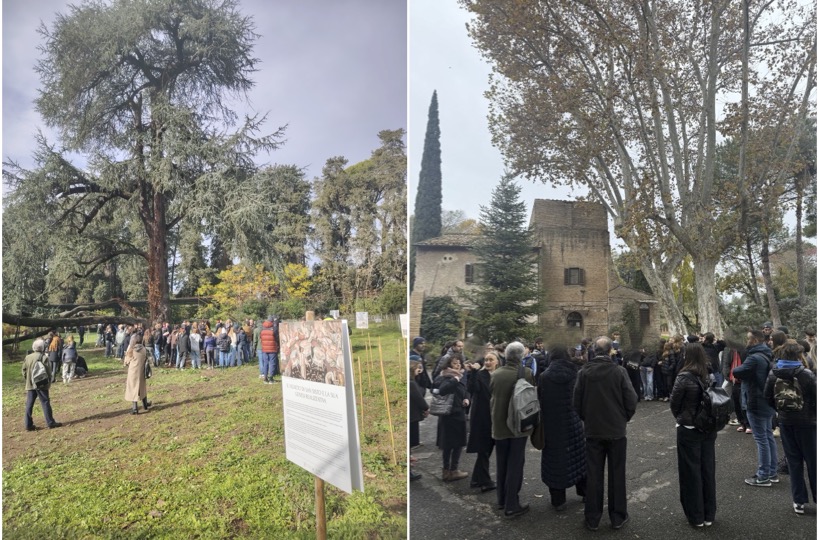
A key moment of the second stage was the visit to the Italian Geographical Society (SGI), located next to the Aranciera and an active member of Rome’s ULG. Here, students were guided through the Society’s historical and geographical heritage, strengthening the link between education, culture and the project’s mission.
The December event was enriched by the presence of the City Councillor Sabrina Alfonsi, who welcomed the students in the green spaces of the Semenzaio and expressed strong support for the work carried out by Roma Capitale within the HHC project. Her visit offered motivation and visibility to the entire ULG and to Sapienza’s coordination efforts. Students also had the opportunity to meet experts, guides and gardeners from the Department for Environmental Protection, discovering the botanical and historical treasures of the Semenzaio. A final visit to the restored secret garden of Villa Celimontana added a touch of wonder to the day.
The students’ excitement peaked when they received individual participation certificates and the educational game “We, Rome and the Aranciera,” which they will continue to use in class. These tools will support the creation of original educational outputs to be presented during World Water Day and the Night of Geography in spring 2026 — marking the next chapter of their Hydro-Heritage Cities journey.