
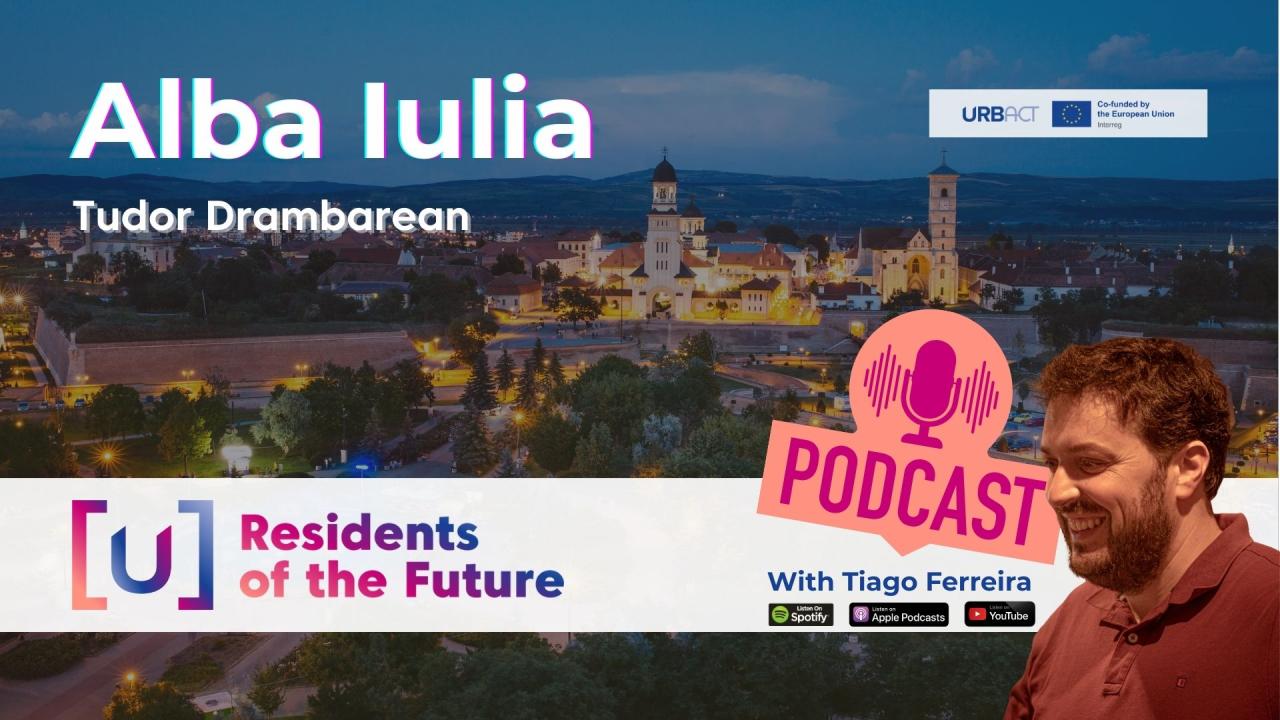
Alba Iulia is a historic city with more than 2,000 years of history and a strong symbolic role in the formation of modern Romania. Over the past two decades, the city has undergone a major transformation through strategic use of EU funds, turning its restored fortress and cultural heritage into a driver of tourism and urban development.
In the conversation, Tudor shares his personal story of growing up in Alba Iulia, working in Brussels at the European Parliament, and returning home to help develop the city through EU projects. He explains how the municipality built internal capacity for EU funding, with around 45 staff members working on project development and implementation.
The discussion also focuses on one of the key challenges facing many small and medium-sized European cities: urban shrinkage and brain drain. Young people often leave for larger cities with more opportunities.
Through the URBACT Residents of the Future network, Alba Iulia is exploring new ways to address this challenge by working directly with young people. Initiatives include workshops, public discussions, volunteer programmes, hackathons and large community events such as the “Table that Unites Us” gathering in the city’s historic fortress.
Looking ahead, the city’s Integrated Action Plan focuses on strengthening youth participation, supporting civic initiatives and developing new infrastructure for learning and creativity – including a proposed science and technology museum.
Alba Iulia’s experience shows how cities with deep historical roots can adapt to demographic change by investing not only in infrastructure, but also in people, community and youth engagement.