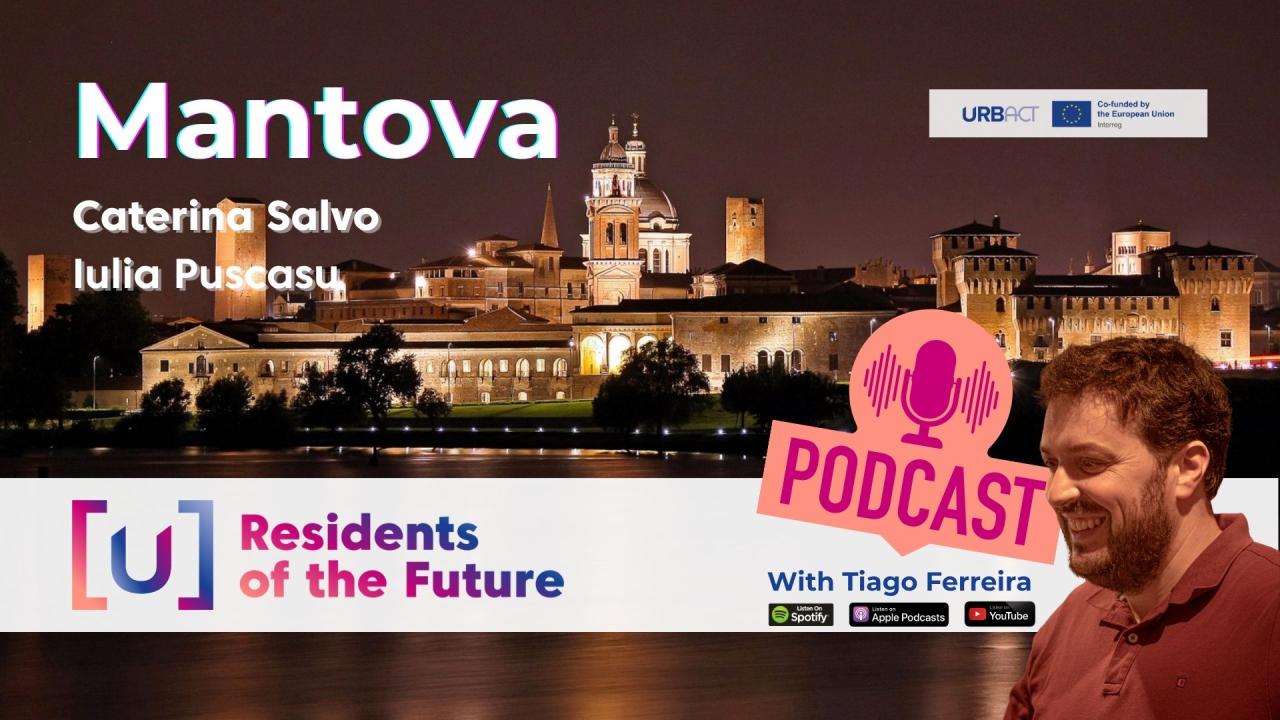
Although Mantova is internationally recognised for its architecture, pedestrian historic centre and unique landscape surrounded by three lakes, it faces many of the demographic challenges shared by small and medium-sized European cities.
When a beautiful city starts losing everyday life
Urban shrinkage in Mantova is not immediately visible through statistics. It is visible in the streets. Despite its exceptional historic centre, local shops are gradually closing and finding housing in the city centre has become increasingly difficult. These are among the first signs residents notice in their everyday lives. Competition for residents does not come only from other countries but also from nearby metropolitan areas such as Milan and Rome. Mantova therefore faces a dual challenge: retaining local people while convincing newcomers that a smaller city can offer an equally attractive future. For the project partners, the answer is not to imitate larger cities but to strengthen what makes Mantova different.
Having time for yourself
The central message of the episode is simple. Living in Mantova means having time. Time to walk instead of commute. Time to meet people. Time to participate in cultural life. Time to enjoy public spaces rather than simply pass through them. The city's compact scale makes everyday life easier while preserving access to culture, education and services. It is a place where residents can experience the Italian lifestyle in a pedestrian-friendly historic centre, while remaining connected to a vibrant cultural scene. Mantova also demonstrates that environmental quality can become part of a city's attractiveness. Despite being located in one of Europe's most polluted regions, the municipality has invested heavily in sustainability, receiving national recognition for its urban ecosystem. Extensive cycling infrastructure and an exceptionally high number of trees contribute to a healthier and more liveable environment. Together, these elements create a different definition of quality of life—one measured not only by economic indicators but also by time, accessibility and well-being.
Community makes people return
One of the strongest themes emerging from the episode is that demographic decisions are rarely based on employment alone. Through interviews conducted during the project, the partners collected stories of people who left Mantova, returned, or chose to settle there from elsewhere. Some came back because of family. Others because of friendships, cultural opportunities or simply because they wanted a different rhythm of life. One participant returned from Germany after accepting a position at the local hospital. Another moved from Denmark to establish a theatre company. Others discovered that Mantova offered opportunities to build careers while remaining part of a close-knit community. Although each story is different, they point to the same conclusion: emotional attachment, social relationships and cultural life often become decisive factors when people choose where to live.
Building networks instead of isolated projects
Mantova's URBACT Local Group developed gradually through interviews, workshops and collaboration with initiatives already active in the city. Rather than creating a separate project structure, the ULG connected existing organisations, professionals and community groups working on youth opportunities, culture, public spaces and innovation. This approach produced more than project outputs It created a local network that continues beyond the formal duration of Residents of the Future and has become a platform for discussing future policies and testing new ideas. For the participants, one of the project's greatest achievements was discovering how valuable regular face-to-face conversations remain, even in an increasingly digital world.
Keeping students in the city
The city's Integrated Action Plan places particular emphasis on university students and their transition into employment. Mantova already hosts around 2,000 students each year, including programmes delivered by leading universities such as the Politecnico di Milano. The challenge is no longer attracting students but encouraging them to stay after graduation. Future actions therefore focus on strengthening cooperation between universities and local companies, aligning study programmes with labour market needs and creating paid work opportunities that allow students to gain professional experience while completing their studies. The objective is to transform education into a pathway towards long-term residency.
A city where relationships matter
For Mantova, tackling urban shrinkage is not simply about increasing population numbers. It is about creating conditions in which people choose to remain, return or build a new life. The podcast shows that cultural heritage alone is not enough. Attractive public spaces, sustainable mobility, employment opportunities and affordable housing all matter. Equally important are community networks, personal relationships and the feeling of belonging. As one of the partners in the Residents of the Future network, Mantova demonstrates that the future of smaller cities may depend less on growing bigger and more on preserving what makes them unique.
Sometimes, the greatest luxury a city can offer is simply having time for yourself.