
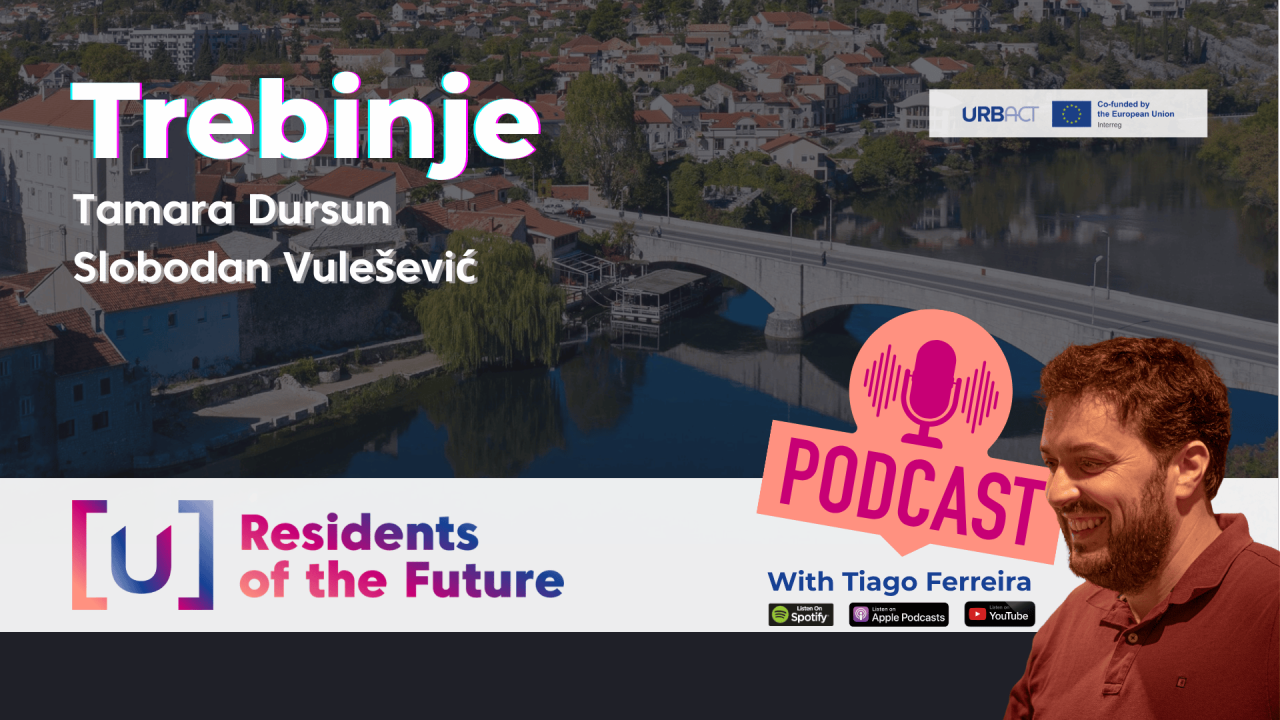
Trebinje, a small city in the south of Bosnia and Herzegovina, offers a high quality of life shaped by its Mediterranean climate, cultural heritage and proximity to the Adriatic coast. Yet, like many smaller European cities, it faces a persistent challenge: population decline driven by youth outmigration and limited local opportunities.
A key issue is education. As Trebinje does not offer a wide range of higher education programmes, many young people leave to study in cities such as Belgrade, Novi Sad, Sarajevo or Banja Luka. The challenge is not only that they leave, but that most do not return. Limited access to well-paid or specialised jobs reinforces this pattern, contributing to long-term demographic decline alongside low birth rates and an ageing population.
Within this context, Trebinje’s Integrated Action Plan focuses on improving everyday conditions for residents while creating a more attractive environment for young people and families. Measures include housing support for young couples, scholarships for students, and accessible healthcare initiatives such as publicly supported fertility treatments. These are not isolated actions, but part of a broader attempt to stabilise the population base.
However, one theme stands out across the discussion: digitalisation.
For Trebinje, digitalisation is not framed as a technological ambition in itself, but as a practical response to everyday inefficiencies. Reducing administrative burden is seen as a priority. The ability to access documents, submit requests or complete procedures online can significantly reduce time spent navigating public services. As highlighted in the discussion, this shift is particularly important for younger generations, who expect fast and simple digital interactions.
This perspective is shaping a broader understanding of digital infrastructure — not only as IT systems, but as a foundation for improving quality of life. In this sense, digitalisation becomes a retention tool. If everyday life becomes easier, more predictable and less bureaucratic, the city becomes more liveable.
At the same time, digitalisation is opening new economic perspectives. Initiatives such as a Mediterranean gaming conference and emerging digital and cultural events signal an interest in sectors that are not tied to physical location. These activities reflect a shift towards opportunities that allow people to live in smaller cities while working in global markets.
The URBACT process itself played a role in reinforcing this direction. Through transnational exchange and local co-creation within the ULG, Trebinje moved away from top-down planning towards a more participatory approach. Listening to citizens and understanding their everyday needs emerged as a central lesson.
As the city moves into implementation, the challenge will be to connect these different strands — social measures, digital transformation and economic diversification — into a coherent long-term strategy.
Trebinje’s experience underlines a broader point relevant to many shrinking cities: digital infrastructure is not only about connectivity or services. It is about enabling people to stay, return and build their future locally.