Madama Chiosco
This initiative aims to transform the Anglesio garden into an educational and recreational benchmark for the neighborhood. It converts a local newspaper kiosk into a permanent, continuous neighborhood presence. This civic hub delivers localised educational, cultural, and community-building services, including digital facilitation help desks, job orientation, legal and healthcare guidance, and listening counseling centers.
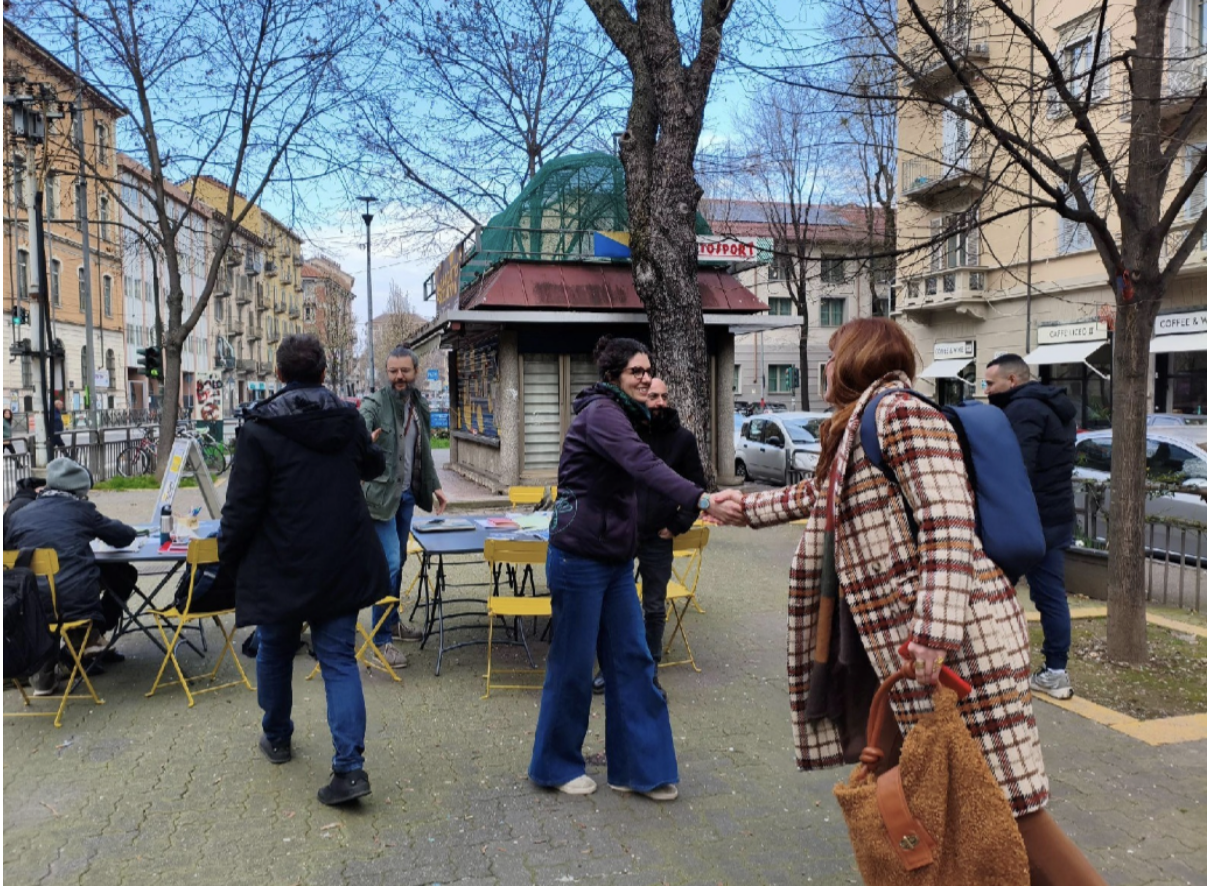
Grounded in participatory governance through a Collaboration Agreement framework, the Madama Chiosco project actively involved and collaborated with local institutions, local associations, informal groups, and other stakeholders to discuss needs, address concerns related to the use of the space, and co-design activities. Through periodic meetings and a shared neighbourhood calendar, the project coordinates initiatives and supports collective decision-making. It demonstrates a strong inclusive approach through intergenerational activities developed in collaboration with a local care home, open community events, and Italian language courses organised with the local parish. As the Angelesio garden and kiosk reuse and activate an existing public space, the project contributes to Torino’s sustainable urban regeneration through the flexible use of public furniture, shared management of resources, and ongoing discussions regarding infrastructure and utility responsibilities.
By transforming public space into a vibrant, recognisable, and well-used community hub, the kiosk strengthens the sense of place by becoming an identifiable reference point for cultural, educational, and social activities while supporting efforts to improve the space's accessibility, safety, and visual identity. Despite challenges related to kiosk infrastructure, communication and signage authorisations, lighting conditions, and uneven participation across some activities, the project has benefited from high levels of community engagement, increasing visibility, and a growing network of local partners. Combined with its strategic location near a metro station, the kiosk's potential to become a central hub for community identity and neighbourhood activities highlights the distinctive local benefits and future opportunities of this initiative.

2. SPAZIO BIANCO
This project regenerates and animates local community spaces, focusing directly on the square's sports fields and the former Lilliput Youth Center. This facility is transformed into a vibrant hub for community activities and hosts a localised social proximity office designed to listen to resident needs, provide orientation services, and mobilise local volunteers.

Spazio Bianco is strongly reliant on community participation and local partnerships. Supported by volunteer campaigns, fundraising initiatives, and a local association called Associazione Vivere Mirafiori which supports active citizenship, the long-term objective of the project is to strengthen collaboration between Spazio Livio Bianco and Cascina Roccafranca and coordinate community support in both locations. The general aim of Spazio Bianco is to strengthen social inclusion and community cohesion amongst families and residents living in public housing who do not often participate in social initiatives and may experience forms of hidden social vulnerability and isolation. Community-based social services promote social cohesion and inclusion through a proximity support service managed by a psychologist and supported by volunteers as well as intergenerational initiatives, a social carnival, and educational activities for children aged 0–3. Additional actions included the creation of a community garden, volunteer groups supporting both community services and the maintenance of green spaces, and the planned installation of play equipment. Together, these activities contribute to the regeneration, activation, and collective management of neighbourhood public spaces, progressively transforming Piazza Livio Bianco into a welcoming environment for residents and families.
This project has a five-year collaboration agreement signed in March 2025, allowing partners to use the space and its facilities. This agreement is intended to support the transformation of the space into a community hub, combining social services, cultural activities, neighbourhood gatherings, and community workshops. So far, there have been Halloween and Christmas celebrations and the inauguration of the oasis area. Although there have been administrative delays affecting infrastructure works and difficulties engaging some groups of residents, the presence of active local associations, committed volunteers, and the possibility of strengthening cooperation among multiple projects within the neighbourhood presents a valuable opportunity for future programming and the long-term sustainability of social services and community activities.

3. L’Intreccio
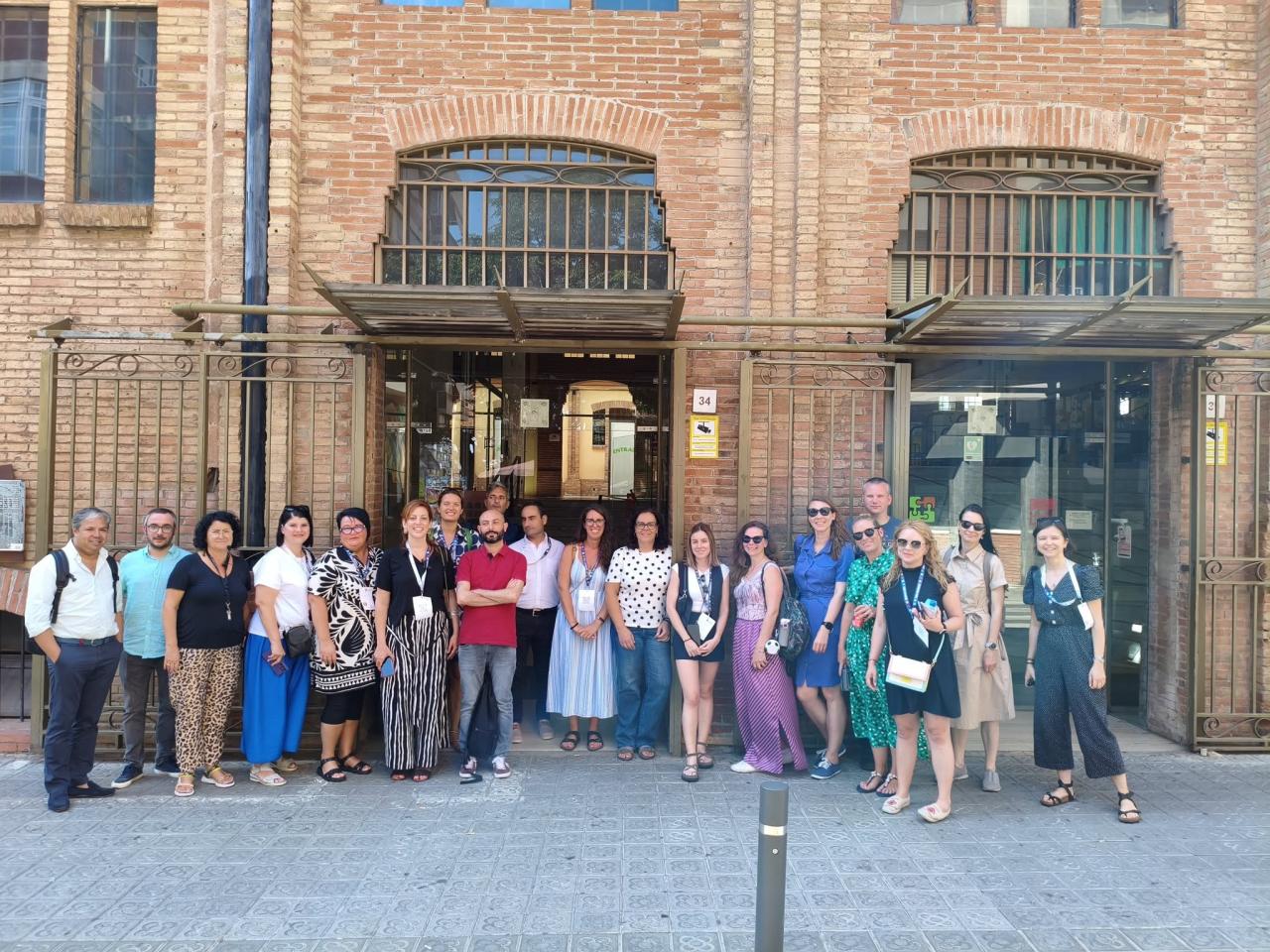
Concentrating on the socio-relational needs of the Aurora district, the project establishes a visible and constant presence at the Madre Teresa di Calcutta garden and opens a dedicated "Participation Laboratory" (Laboratorio di PartecipAzione) on the ground floor of Corso Giulio Cesare 34. Activities foster neighborhood participation by involving residents, local schools, and businesses to improve security and public quality of life, focusing specifically on women, youth, and people with a migration background.
Centred in community participation and collaborative governance, the project seeks to maintain an open and accessible public space through the active involvement of residents, local organisations, and neighbourhood networks. Through regular public programming, grassroots initiatives, and the exploration of recreational and community activities, the project promotes inclusion while creating opportunities for broader participation in the life of the garden. At the same time, it acknowledges the complex social dynamics of the space, including the presence of vulnerable populations and people experiencing homelessness.

Environmental sustainability is pursued through initiatives that combine care for the public space with environmental awareness, including the involvement of young people in the maintenance of the garden and the exploration of recycling and sustainable water-use projects. The project also seeks to enhance the quality and usability of the garden through small infrastructural improvements, technical equipment to support activities, and the strengthening of recreational spaces. In particular, the sports area functions as an important site of inclusion and positive engagement, supporting activities that encourage regular and constructive use of the space.
Despite challenges related to limited infrastructure, safety concerns, waste management, and tensions arising from a variety of groups using the park, the project benefits from a dedicated community presence, strong local partnerships, and opportunities to expand environmental, educational, and recreational programming. Through fostering shared responsibility for the care of the park and strengthening connections between neighbourhood initiatives, the project highlights the potential of collaborative stewardship to improve public space and support long-term community engagement.

4. RI-CREIAMO
This initiative undertakes a functional architectural and social upgrade of the Amendola garden. Physical regeneration includes the installation of new urban furniture and a shared, community social oven. The space is activated through a broad, weekly schedule of cultural events and programs, featuring film screenings, neighborhood gardening workshops, and community arts courses.
Through a participatory redesign process, Ri-Creiamo aims to transform the garden into a multifunctional space for social interaction, cultural exchange, and environmental learning. Residents, local associations, and multicultural organisations have been actively involved in shaping the project through questionnaires, participatory meetings, and digital tools that collect local stories, memories, and experiences. Particular attention is given to groups that are currently underrepresented in public space, including adolescents and active elderly citizens, while initiatives such as the monthly Human Library events foster intercultural dialogue and community participation.

The redesign combines environmental and social objectives through community gardening, biodiversity-enhancing interventions, environmental education activities, and the creation of shaded green areas that can function as an urban climate refuge during the summer months. New gathering spaces, educational facilities, and recreational areas are intended to support a wider range of everyday uses while improving the overall quality and accessibility of the garden.
While the project faces challenges related to engaging some target groups, coordinating a diverse partnership network, and delivering some planned infrastructure, strong resident participation and collaboration with cultural organisations, academic institutions, and city-wide networks provide a solid foundation for future activities. The garden's potential to host artistic residencies, performances, educational programmes, and intercultural initiatives demonstrates how public space can support both community life and local cultural expression.

5. Negarville
The project addresses youth exclusion and public space activation by deploying intensive street-level education teams. Spatial interventions include installing a mobile info-desk point alongside an open-stage musical totem, designed to encourage spontaneous community use and host local artistic events.
Negarville targets children, young people, and families who are not participating in formal programmes, with a particular focus on those from migrant backgrounds, especially North African communities living in nearby social housing. Outreach through flyers and social media, intensive educational programming, sports tournaments, and digital literacy courses delivered across eight cycles of eight meetings together form the core of an inclusion strategy that recognises the specific barriers faced by these groups. Collaboration with local associations, including Cooperativa Mirafiori, Cooperativa ET, and the Parish of San Luca, broadens participation and diversifies the range of activities offered.

The project is anchored around a public garden, which serves as the primary space for educational, cultural, and recreational activities. Artistic workshops, a piano course for young participants, theatre activities, and sports tournaments contribute to making the garden a welcoming and functional environment for residents and families. These activities are complemented by planned tactical urbanism interventions, developed in tandem with the project Piazza Ragazzabile, aimed at improving the usability and attractiveness of the space. The current Collaboration Agreement (Patto di Collaborazione), however, covers only a limited section of the garden, and expanding this agreement to include a larger area remains a key condition for the project's broader ambitions.
Although engaging parents in parenting support programmes has proven difficult and the social complexity of the surrounding housing areas presents an ongoing challenge, the strong presence of active local organisations and the possibility of expanding the network of partners presents a valuable opportunity for future programming and the long-term community stewardship of the space.

6. Barriera Unite
This project focuses on building a dedicated community stronghold within the Saragat gardens to provide sports, cultural, educational, and aggregative opportunities for residents. The equipped outdoor hub serves as a street-level base offering community orientation to local public services and resources, alongside informal socio-health counseling.
In the Barriera di Milano neighbourhood of Turin, Barriera Unite proposes a new way of inhabiting public space grounded in welcome and grassroots participation. The space is activated through listening and information points, offering guidance and support on everyday needs such as housing, local services, bureaucratic procedures, work and consular services, alongside recreational, playful, educational and sporting activities.

Photo: Barriera Unite
The project aims to activate community spaces in places perceived as unsafe, improving the liveability of public space and developing proximity services for residents and for the most disadvantaged groups. Programming combines support and community-building through listening and information desks, alongside workshops and opportunities for participation designed to foster relationships and wellbeing through play, creativity, sport and sharing. Sessions with experts address themes of interest to the community and create occasions for dialogue between people and services, while special events and appointments, spanning music, cinema and culture, remain open to everyone.
Strong engagement from residents, children, young people and families provides a solid foundation for future activities, demonstrating how the Giardini Saragat can support both community life and the shared care of the territory.

Photo: Barriera Unite
7. QUA.NTE
Intended to counter spatial anxieties and improve safety perceptions, the project stimulates public use and develops a cohesive local community. The strategy balances material actions, such as site-specific public art installations, with social programming like community sports tournaments and outdoor film screenings. Interventions are concentrated along the pedestrian axis of via Pagano and via Rapallo, directly adjacent to the Baraca Multifunctional Center.
The project promotes inclusion through a broad offer of activities accessible to different age groups, including after-school programmes, Italian L2 courses developed with a gender-sensitive approach, sports activities such as basketball, boxing, and skateboarding, and hands-on workshops. A formal collaboration pact with a local youth group formalises shared responsibility for the care of public space, and outreach efforts have successfully engaged new groups of students from nearby areas. Residents of the nearby public housing complex, however, remain difficult to involve in a consistent and co-responsible way.

The project operates through a shared governance model in which multiple associations coordinate activities through a common calendar. Woodworking workshops oriented toward producing urban furniture and planters —including a "social table" — create tangible, community-built outputs that reinforce ownership and visibility of the space, while community events such as a neighbourhood festival serve as recurring entry points for broader engagement.
While seasonal limitations affect outdoor activities and ensuring long-term continuity remains an ongoing concern, the expanding network of local partnerships, the potential to extend sports activities to adult participants, and the possibility of developing a shared calendar across neighbouring districts present valuable opportunities for future programming and the sustained activation of the pedestrian axes and surrounding space.
8. MYFARINI
This project implements an urban regeneration framework to transform a transit zone connecting to the city center into a major social and cultural hub. The programming focuses on evening hours and targets local university students and young residents to reclaim the riverfront as a safe, vibrant space. MyFarini undertakes a cultural and social regeneration of the area around Corso Farini and Viale Ottavio Mai, a connecting space between the Luigi Einaudi Campus, OFF TOPIC and a residential context marked by strong multicultural and student presence. Physical and social activation includes placemaking interventions, tactical urbanism, and the rearrangement of urban furniture. The space is activated through a broad cultural programme featuring live music, multidisciplinary performances, talks, outdoor cinema, and community workshops.
Through an initial phase of participatory mapping and community workshops, MyFarini aims to transform an underutilised space into a place of encounter, sociality, and cultural production. The project has involved hundreds of citizens, students, and residents through concerts, workshops, family activities, and actions for the care of public space. Particular attention is given to young people between 18 and 30, especially university students around the Luigi Einaudi Campus, alongside residents of the Aurora-Vanchiglia neighborhood, families, children and adolescents from nearby social housing, and young artists and emerging cultural professionals.

Photo: MyFarini
The programming combines cultural and social objectives through live music by emerging and national artists, live shows and multidisciplinary performances, cycles of talks on public space, participation, urban democracy and sustainability, and outdoor cinema and collective viewings open to wider citizenship. Community workshops dedicated to children, adolescents, families and women support social inclusion and active participation, while placemaking actions and care of public space, including participatory maintenance and urban gardening, help root the transformation in everyday community life.
An ongoing summer programming is open and accessible to everyone, increased by the offer of outdoor cinema and further workshops to encourage active participation. Strong engagement from students, residents, and cultural professionals provides a solid foundation for future activities, demonstrating how public space along Corso Farini can support both community life and local cultural production.

Photo: MyFarini
9. Baleno LAB
The project transforms an existing family facility into a dedicated proximity hub through a co-design process with local citizens. Beyond expanding current family support paths—specifically targeting single-parent households at risk of social marginalisation and educational poverty through mother-child workshops and study support—the hub activates a public guidance desk for territorial services. It also organises neighborhood recreational sessions, community labs, and live performances.
The project promotes inclusion through activities targeting multiple age groups and backgrounds, including youth, children, elderly, and migrant families from Southern Italy, North Africa, and Nigeria. A guidance desk provides school orientation, educational support, and community mapping, though its use has been limited during autumn and winter months. The Collaboration Pact, signed by both local organisations and residents, formalises community involvement in the management and programming of the space, with many activities directly proposed by residents and community groups, although the pact is still awaiting formal institutional approval.
Tactical urbanism workshops structure community participation in two phases: an initial exploration of the garden and the emotions it evokes, followed by a participatory process to define functions and possible uses of the space. Artistic installations, reading activities organised with the local civic library, and colored paths connecting the garden to nearby community spaces and services together contribute to transforming the garden into a welcoming and multifunctional public space. Monitoring tools including questionnaires and QR codes installed in the garden collect ongoing feedback from users, while potential collaboration with local technical schools to experiment with CO₂-absorbing materials points toward more innovative sustainable practices.
Regulatory constraints on public space interventions and the administrative complexity of improving lighting present ongoing challenges. However, strong community interest in the quality and safety of the space, combined with a growing network of cultural, educational, and institutional partnerships, presents valuable opportunities for future programming and the long-term community stewardship of the garden.

10. Le Portinerie di comunità sul bordo
This initiative scales up the presence of Italy's first "Community Concierge" (Portineria di comunità). The spatial actions are structured across three layers: a main central hub in Porta Palazzo outfitted with mobile public tribunes, reading spaces, social activities, and market display stalls; a youth-specific "Portineria-scuola" located between the Lagrange Institute and the Gilardi Garden; and a capillary city-wide expansion using local newsstands (edicole) as neighborhood antennas to broaden service access.

Photo: Rete Delle Portinerie di Comunita
The community concierge is positioned to act as facilitators of proximity space and social organising in order to provide opportunities for social inclusion and activation of public and social spaces. Actively grounding themselves in the territory, the community concierge strengthens the network of local youth and engages in experimental forms of the collective governance of public spaces. The target audience are inhabitants of the Porta Palazzo, Aurora, Borgo Dora and Quadrilatero Romano neighborhoods. However, a specific focus has been placed on youth and adolescence with migrant backgrounds, those at risk of dropping out of school, others who are not in school or actively working or training, and the unique cultural and linguistic communities and families present in the area.
The overall aim of the initiative is to add to the social regeneration of the neighbourhoods and contribute to the creation of shared practices for the care of urban common goods, promoting a more accessible, participatory and intercultural city. In order to realise this objective, the project conducted a series of actions centring around activities for the community and the regeneration of squares and public spaces.
The project extends Community Concierge hours into evenings, co-designs a public-space observatory, temporarily and through a participatory process requalifies squares and meeting places, and runs artistic workshops, cultural events, and festivals with schools and local entities; it also includes bike workshops and sustainable mobility activities, reading groups, linguistic aperitifs, educational paths, and communication tools such as a magazine and participatory urban signage. In doing so, this project contributes to increasing social cohesion of the neighbourhood and revival of public spaces.

Photo: Rete Delle Portinerie di Comunita
11. SpOnde
SpOnde designs spaces and services favoring youth autonomy and self-determination, operating during strategic afternoon and evening hours for the 18–35 demographic of the Barriera di Milano neighborhood. The space maintains a constant, reassuring presence of street educators and intercultural mediators, offering low-barrier community activities such as open-air radio broadcasts, outdoor gaming setups, live music entertainment, and artistic performances.
Active in the afternoon and evening, SpOnde creates a community hub seeking to promote the well-being of Barriera di Milano’s youth population and improve the livability of public space. Central to the proximity intervention is active listening in order to be attuned to actual needs of the target audience, community welfare services which are horizontal and generative, flexible and relevant public spaces able to can function as accessible spaces for facilitated activities, and a renewed construction of social relations and social bonds through the community hub.
Each factor of the intervention aims to engage the target audience and their personal network, including siblings and parents or grandparents. Although in a public space, the project seeks to reach young people without accessible or consistent safe social and physical contexts. Through investing and activating public spaces, this project provides new opportunities for neighbours and young people to interact and engage with each other in a positive and healthy environment.
The community hub is able to facilitate light collaborative engagement initiatives, street educational activities such as sports in the street and open educational opportunities, entertainment and cultural events such as dance and theatre, and finally relevant proximity services which seek to provide social and legal counselling as well as cultural mediators. This diverse activities list, all of whom seek to shepherd expanding social networks and healthy engagement with neighbours, is possible due to the community hub’s integrated and close ties to the community and their needs.