
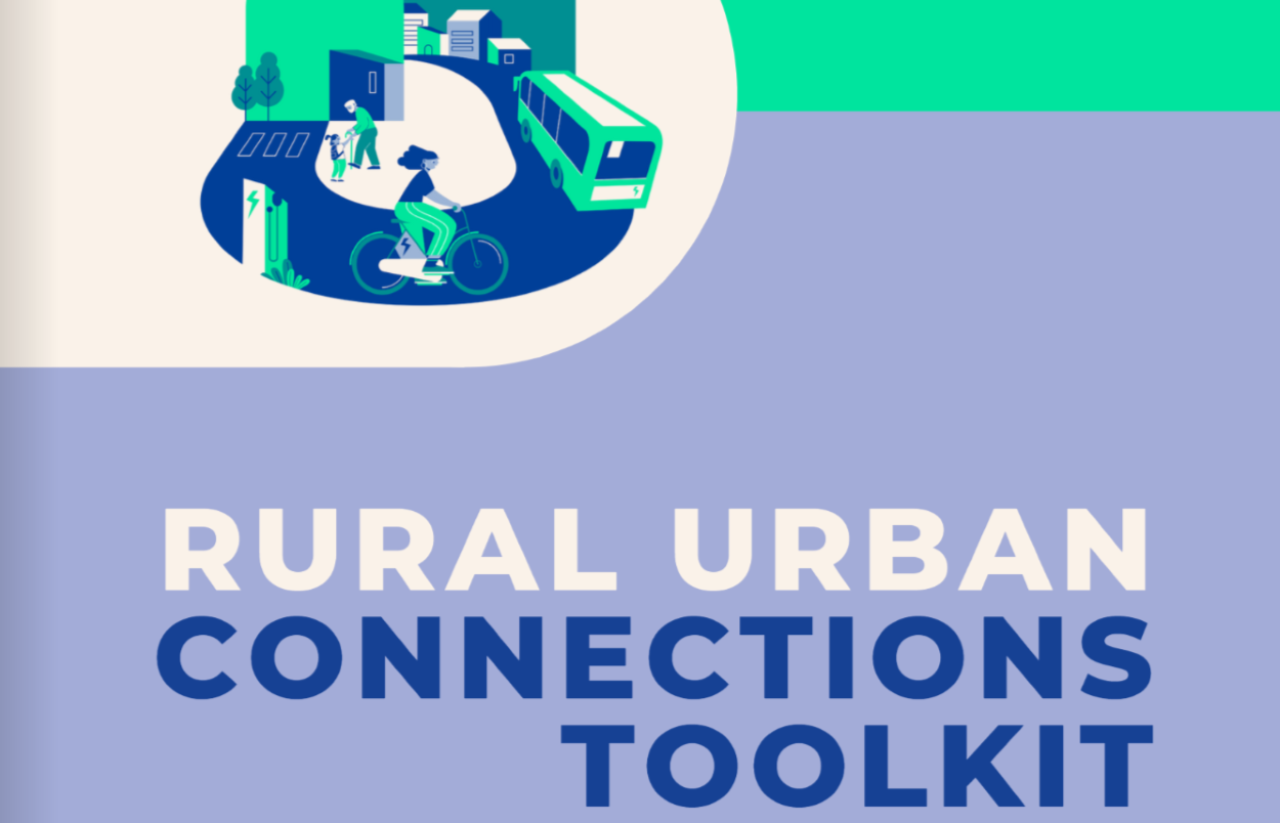
Starting from the idea that people living in villages, small towns and peri-urban areas have strong connections to cities for work, education, health, shopping and culture, the toolkit highlights the fact that policies and transport systems are still too often designed as if these were separate worlds. This publication invites local and regional authorities to reconsider mobility, services and public spaces from an integrated rural–urban perspective.
It introduces the concept of "rurbanism" as a planning approach that considers everyday life, including village squares, weekly markets, school routes, informal paths, local networks, and the journeys people undertake. It then suggests ways to reduce car dependency, make walking and cycling safer and more appealing, and improve access to public transport across territories.
Drawing on the experience of the ten Beyond the Urban partner territories — Bram, Tartu, Treviso, Osona, Szabolcs 05, Hradec Králové, Santa Maria da Feira, Machico, Bucharest-Ilfov and Kocani — the toolkit showcases concrete examples of action: mobility games for children, safe school routes, rural mobility hubs, digital platforms for public transport information, regional cycling corridors, and intermodal terminals connecting buses, trains and bicycles.
The Rural Urban Connections Toolkit is structured into three main sections:
- An introduction to the key challenges of car dependency and changing rural realities.
- A central section provides examples of interventions that strengthen rural–urban connections through public transport, active mobility, and digital tools.
- And a methodological section on moving from ideas to action, providing guidance on diagnosis, stakeholder involvement, co-creation, pilot testing, roadmaps, and policy integration.
The document also includes practical resources and tools to support local teams in their work.
While the toolkit is primarily aimed at municipalities, counties, regions and other local authorities, it is also useful for schools, NGOs and community organisations working on sustainable mobility and territorial development. The main message is that small, well-designed interventions rooted in local identity and everyday life, supported by participatory processes, can have a strong impact when combined with coherent mobility policies.
Download the Rural Urban Connections Toolkit in PDF format here