Partner City Insights
📍 Bratislava, Slovakia
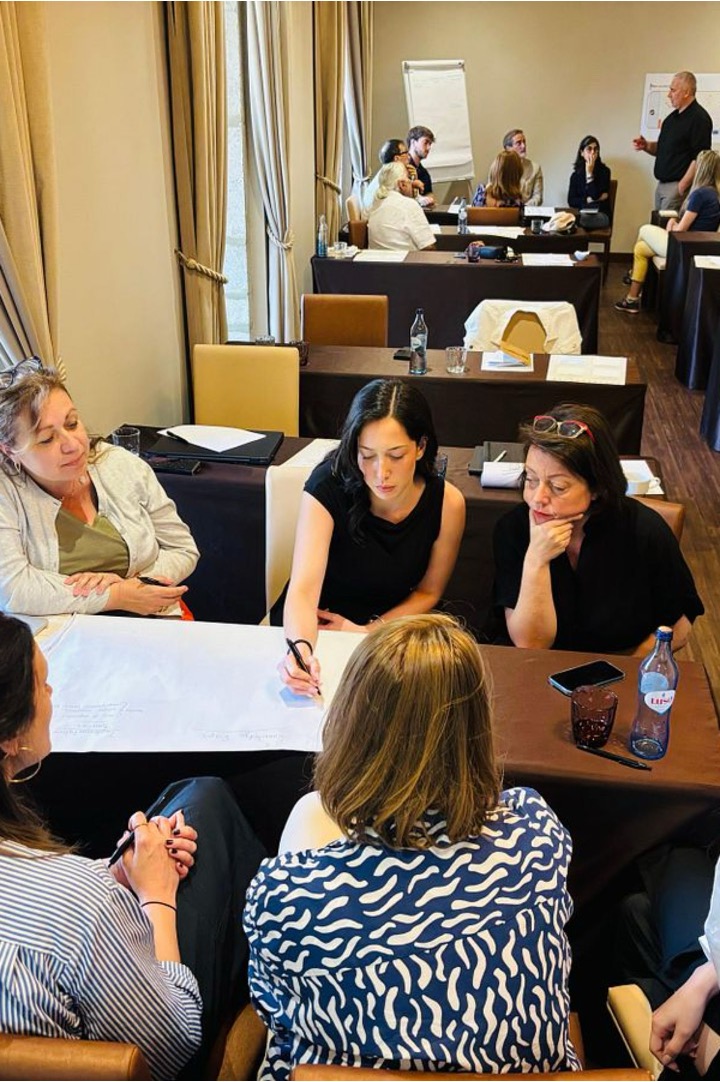
"The peer-to-peer evaluation workshop stood out; an interactive process where partners could analyze city strengths and weaknesses, offer immediate feedback, propose tailored improvements and share working solutions."
📍 Jarosław, Poland
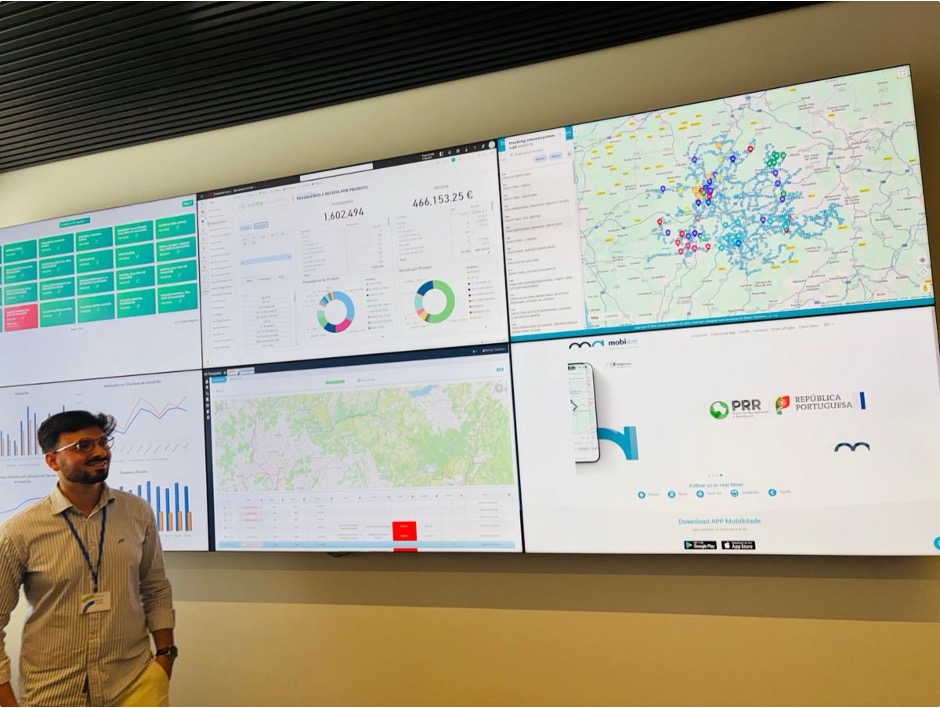
"We were inspired by the digital coordination of transport between municipalities, the Landscape Laboratory in Guimarães and the way UNESCO heritage preservation is being integrated with climate action and accessibility."
📍 Dubrovnik, Croatia
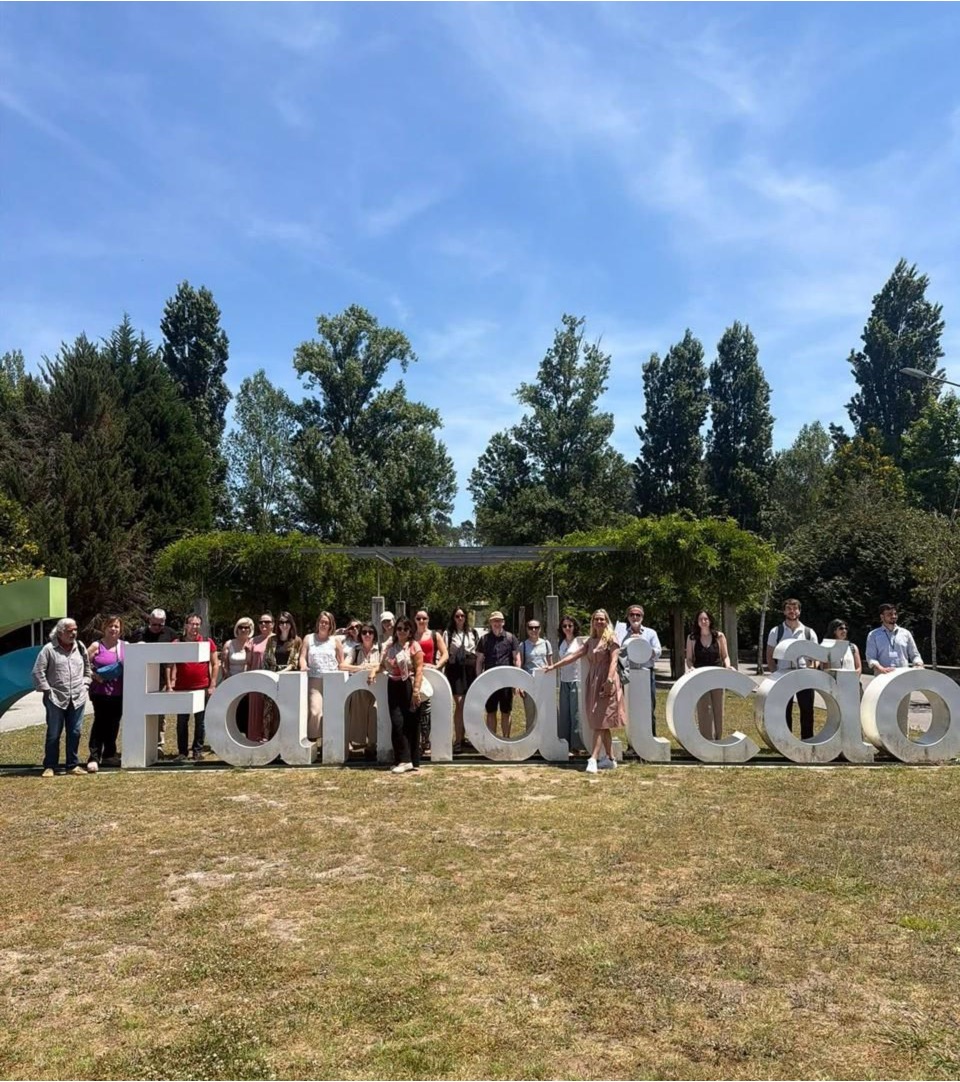
"The smart solutions at Famalicão Bus Station impressed us; a modern space used for activities, smart mobility encouraging transport use, well-connected and fully accessible for all users including persons with disabilities."
📍 Zrenjanin, Serbia
"The accessibility solutions from the study visits were eye-opening; public transport accessibility, barrier mapping and cooperation with organisations of persons with disabilities all integrated into a coherent planning approach."
📍 Komotini, Greece
"Accessible pedestrian crossings with traffic lights, audiovisual info systems at bus stations, accessible playgrounds, digital mapping of accessible routes and reduced car traffic in the city centre: a comprehensive vision."
Partner Voices
"The peer-to-peer evaluation workshop was the most innovative part: seeing other partners immediately give us feedback and share their own working solutions was truly refreshing." — Bratislava, Slovakia
"Accessibility should not be viewed only as infrastructure adaptation. Effective planning requires cooperation between local authorities, transport providers and organisations of persons with disabilities."— Zrenjanin, Serbia
"Urban transformation is not only about infrastructure investments, but mainly about cooperation between different stakeholders."— Jarosław, Poland
"Accessibility is not only about physical infrastructure but also about digital tools and community participation. Involving children in the planning process was the most interesting discovery."— Komotini, Greece
"The concept of a modern and user-oriented transport hub can be applied in Dubrovnik — smart mobility, better connectivity and more frequent lines improve efficiency."— Dubrovnik, Croatia
Partner Diary — Bratislava
What impressed you most?
"I was highly impressed by the peer-to-peer evaluation workshop. The most innovative part was the interactive way we analyzed our city's strengths and weaknesses, allowing other partners to immediately give us feedback, propose tailored improvements, and share their own working solutions."
What new knowledge did you gain?
"I realized that the topic of accessibility can be looked at from entirely different perspectives. I truly understood the importance of diversity and how refreshing and beneficial this kind of traveling and idea-sharing can be to spark new inspiration for our work."
Can this practice be adaptable for your city?
"Yes, definitely. We can replicate this workshop format with our ULG members. It will be an excellent tool to deeply understand the diverse issues, perspectives, and challenges that individual local NGOs and stakeholders face in their daily work."
Partner Diary — Zrenjanin
What impressed you most?
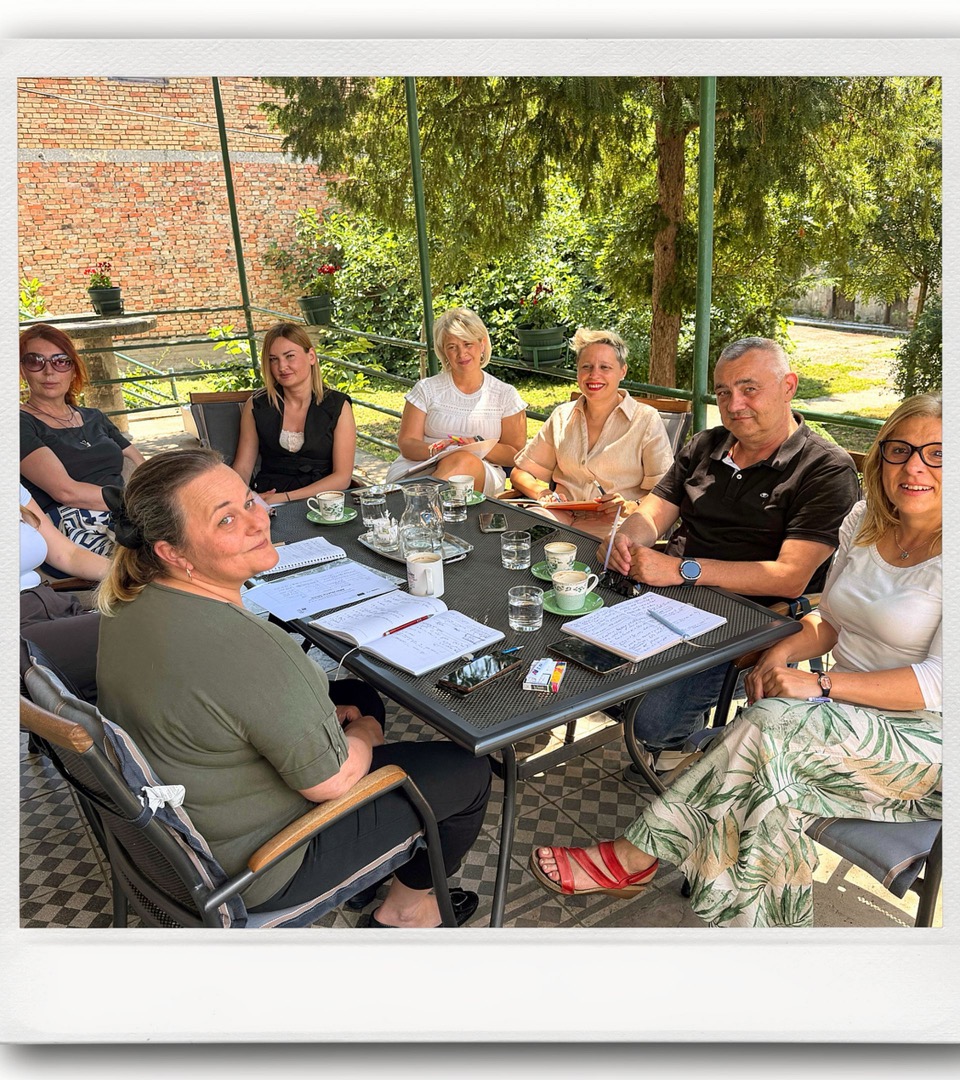
ULG members were particularly impressed by the accessibility solutions presented during the study visits, especially those related to public transport accessibility, barrier mapping and cooperation with organisations of persons with disabilities. The integrated approach to accessibility planning was recognised as a practice that could inspire future actions in Zrenjanin.
What new knowledge did you gain?
Accessibility should not be viewed only as infrastructure adaptation. Effective accessibility planning requires cooperation between local authorities, public institutions, transport providers and organisations of persons with disabilities. Continuous stakeholder involvement is essential for creating sustainable and inclusive solutions.
Can this practice be adaptable for your city?
Yes. Following TNM#2, the Zrenjanin ULG identified several areas where these practices could be adapted locally, including accessibility mapping, improved accessibility of public institutions, stronger cooperation with organisations of persons with disabilities and future improvements in public transport accessibility.
Partner Diary — Jarosław
What impressed you most?
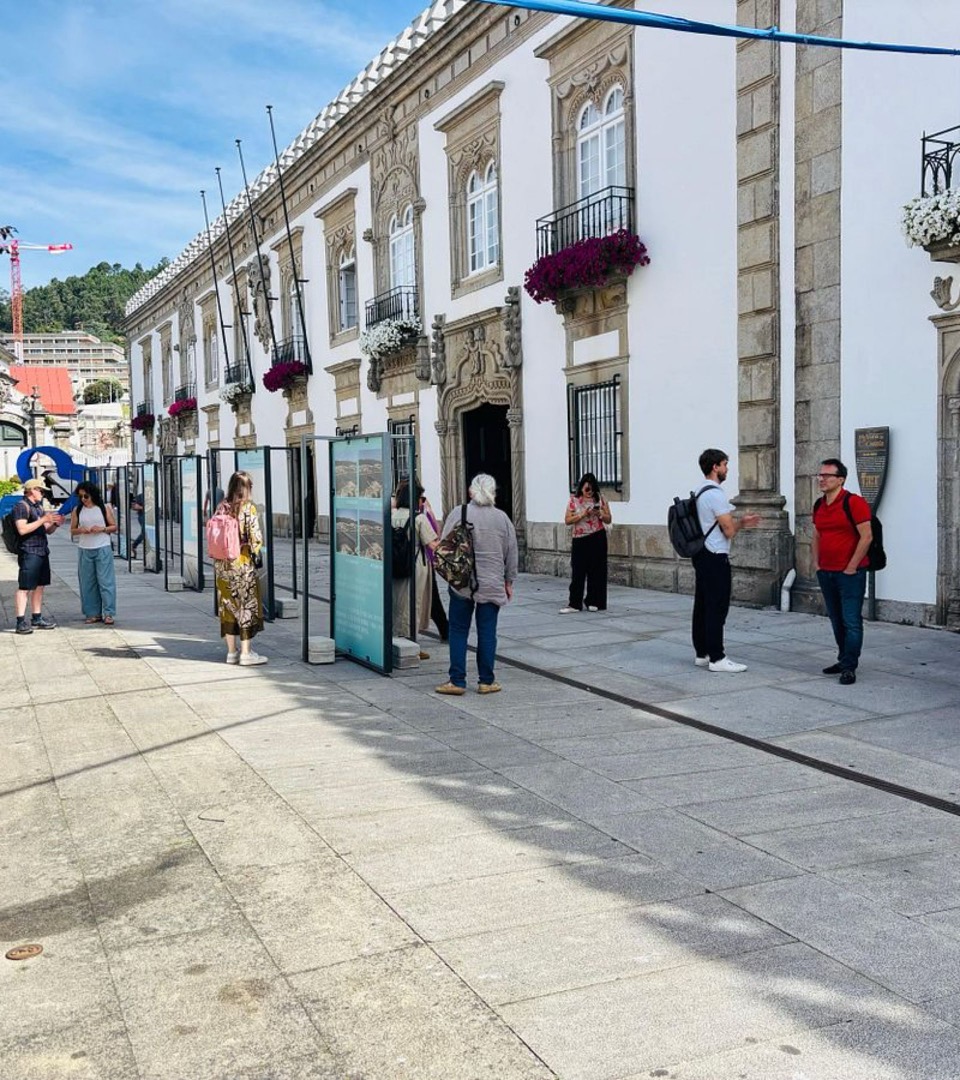
Digital coordination of transport between municipalities; Landscape Laboratory in Guimarães; Integrating UNESCO heritage preservation with climate action and accessibility.
What new knowledge did you gain?
I learned that urban transformation is not only about infrastructure investments, but mainly about cooperation between different stakeholders.
Can this practice be adaptable for your city?
Yes. Jarosław can combine the protection of its historical heritage with climate action and accessibility measures.
Partner Diary — Komotini
What impressed you most?
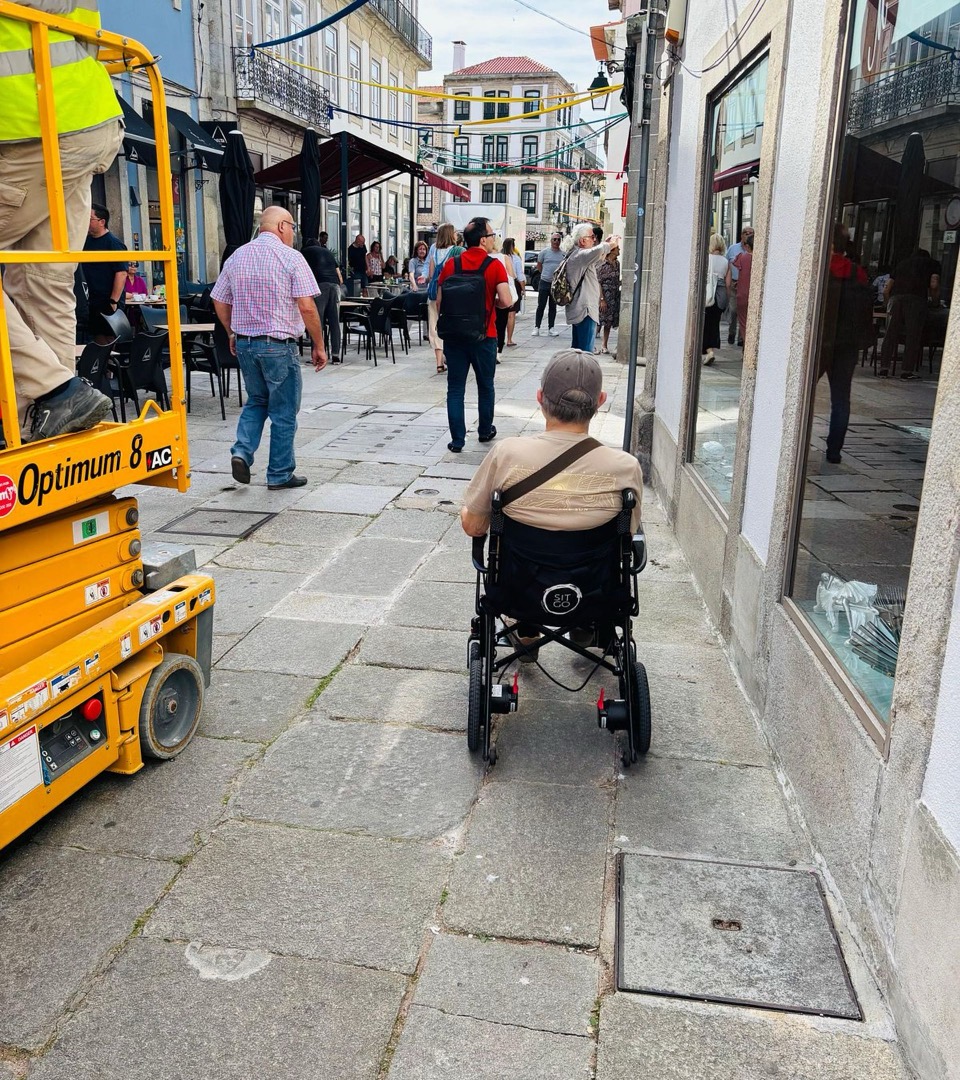
Innovative practices included accessible pedestrian crossings with traffic lights, audiovisual info systems at bus stations, accessible playgrounds and the mapping of accessible routes through digital tools. Stopping traffic circulation in the city centre is also an impressive practice."
What new knowledge did you gain?
"I learned that accessibility is not only about physical infrastructure but also about digital tools and community participation. What I found most interesting is involving children in the planning process."
Can this practice be adaptable for your city?
"Yes, most of these practices could be implemented in my city. Digital accessibility maps, safer pedestrian crossings and cooperation between NGOs and citizens."
Partner Diary — Dubrovnik
What impressed you most?
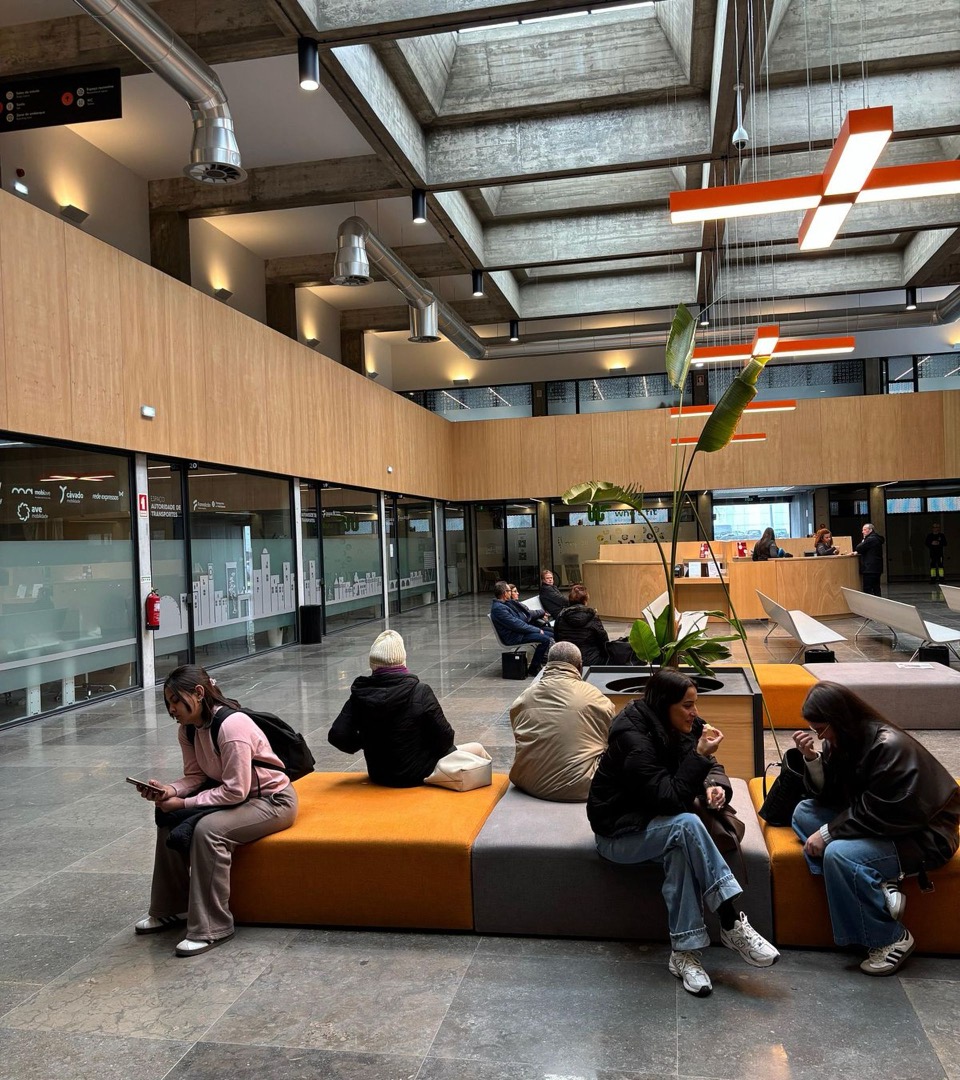
Smart Solutions at Famalicão Bus Station: Modern station used as a space for activities, not just waiting. Smart mobility encouraging transport use. Well-connected and efficiently organized transport system. Accessible and inclusive for all users, including persons with disabilities. Digital and infrastructure solutions improving user experience.
What new knowledge did you gain?
Application of smart mobility in public transport. Transport hub as a multifunctional and user-oriented space. Role of digital solutions in improving passenger experience. Importance of incentives for public transport use. Accessibility and inclusive design. Better connectivity and more frequent lines improve efficiency.
Can this practice be adaptable for your city?
The example from Famalicão is partially transferable to Dubrovnik with adaptation to local conditions. The concept of a modern and user-oriented transport hub can be applied in Dubrovnik. Public transport should be improved through more frequent lines and benefits for locals. In the long term, modernization of the existing infrastructure is needed.
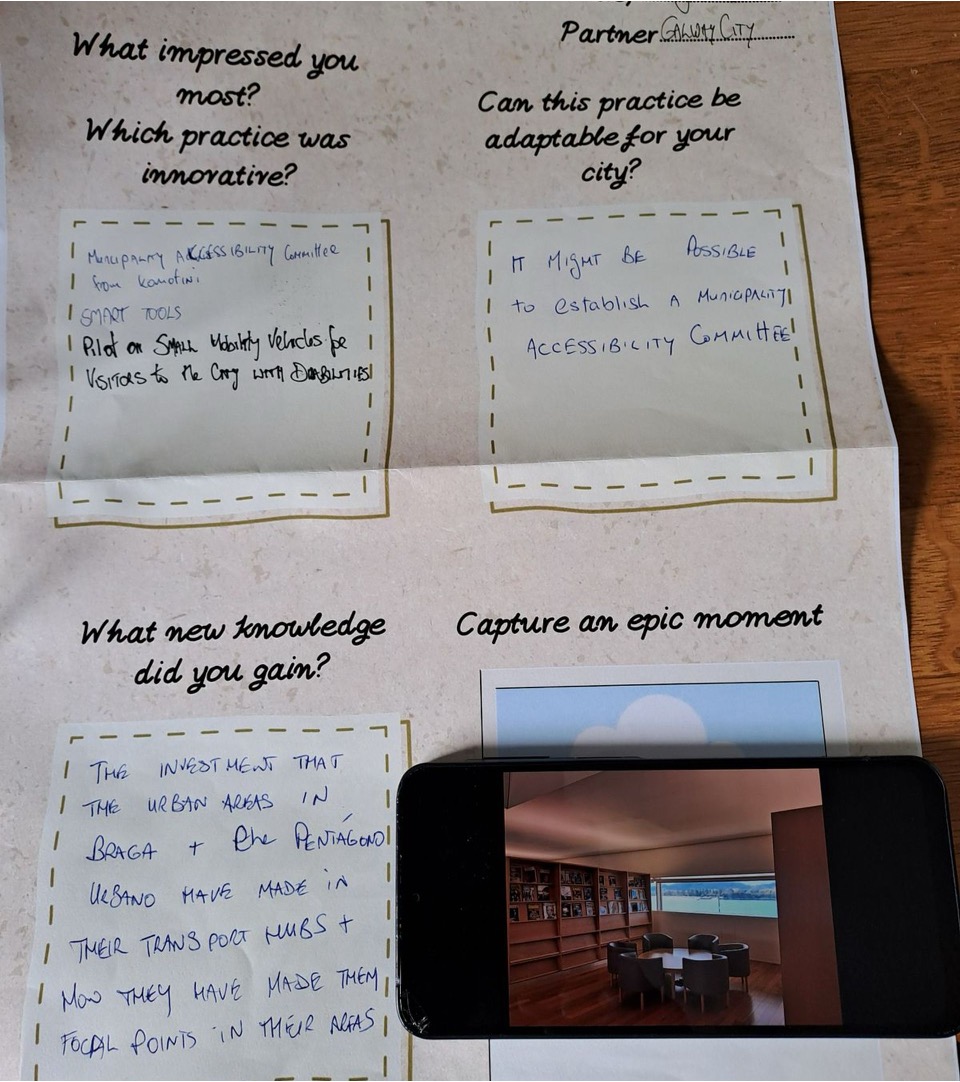
Partner Diary — Galway
What impressed you most? Which practice was innovative?
Braga's Accessibility Centre, Smart Tags, and the Ride on Small Mobility Vehicles for visitors & the city enabling people with disabilities to navigate the city with greater independence
What new knowledge did you gain?
The investment that the urban areas in Braga & the Pentágono Urbano have made in their transport hubs — and how they have made them focal points in their NBS.
Can this practice be adaptable for your city?
It might be possible to establish a Municipal Accessibility Committee in Galway to drive similar inclusive mobility initiatives.
Partner Diary — San Lucido
What impressed you most? Which practice was innovative?
"The transformation of the city of Guimarães has truly achieved a masterpiece of urban transformation and the removal of architectural barriers."
What new knowledge did you gain?
"The interactive library, we received funding to improve energy efficiency and digitally transform our municipal library, and we'd like to add the conversion of books into Braille for the blind."
Can this practice be adaptable for your city?
"All four cities we visited implemented innovative practices that put citizens at the center; engaging people is essential for improving the city."
Can This Travel Home?
After two days of site visits and peer exchanges across the Pentágono Urbano, partners assessed which accessibility and smart mobility practices could realistically be adapted in their own cities — and what conditions would make that transfer possible.
Barrier-Free Public Space Design
Systematic removal of physical barriers in streets, squares and public buildings — combining tactile paving, ramp infrastructure and accessible street furniture. Observed in Braga and Guimarães, this approach is directly replicable in most partner cities.
⬆ HIGH TRANSFERABILITY
Digital Accessibility Mapping
Real-time, citizen-contributed mapping of accessible routes, barriers and facilities using open digital tools. Lightweight, low-cost and immediately applicable,several partner cities expressed intent to pilot this approach.
⬆ HIGH TRANSFERABILITY
Accessible Public Transport Hubs
The Famalicão Bus Station model: a multifunctional, digitally equipped and fully accessible transport hub, offers a compelling blueprint. Transferable in principle, though dependent on infrastructure investment and political commitment.
↔ MEDIUM TRANSFERABILITY
Co-governance with Disability Organisations
Structured, ongoing involvement of organisations of persons with disabilities in planning and evaluation processes ; not as consultees, but as co-designers. Requires institutional will and dedicated resources to sustain.
↔ MEDIUM TRANSFERABILITY
📌 A Note on Transfer
No practice travels unchanged. What transfers is not the solution itself, but the logic behind it ; the commitment to designing cities where everyone can move, participate and belong.
What Caught the Partners' Eye
Accessibility & Smart Mobility Highlights
These are the moments that made us stop, pull out our notebooks, and think: this is what inclusive urban design actually looks like in practice
The Accessible Pedestrian Network
A city-wide system of tactile paving, audible traffic signals and dropped kerbs: not as isolated interventions, but as a coherent, mapped network. Designed with and for persons with visual and mobility impairments.
Famalicão's Smart Bus Station
A transport hub reimagined as a public living room: real-time digital displays, audio announcements, step-free access throughout, and seating designed for all body types. Mobility infrastructure as civic architecture.
The Barrier Mapping Workshop
Partners and local stakeholders walked the city together, logging physical barriers in real time using a shared digital tool. Crowdsourced, immediate, and deeply revealing ; the city seen through the eyes of those it excludes.
Children as Accessibility Auditors
In one neighbourhood, schoolchildren were trained to assess the accessibility of their daily routes; identifying barriers adults had long stopped noticing. The youngest voices, the sharpest observations.
🗒️ Field Note
What these practices share is a refusal to treat accessibility as an afterthought. In each case, inclusive design was the starting point — not the retrofit.
Notes to Take Home
- At the close of two intensive days, partners distilled what they were carrying home — not souvenirs, but professional convictions forged through observation and honest peer exchange.
- Accessibility is a system, not a feature.
- Isolated ramps and tactile strips are not enough. Inclusive cities require end-to-end thinking — from the front door to the public square.
- Digital tools amplify, but don't replace, human-centred design.
- Smart mobility platforms are powerful — but only when co-designed with the people who depend on them most.
- Disability organisations are planning partners, not stakeholders.
- The most effective interventions were those where organisations of persons with disabilities sat at the table from day one.
- Stopping traffic is an accessibility act.
- Pedestrianisation and traffic calming directly improve accessibility for wheelchair users, people with visual impairments, and older adults.
- Transfer begins with honest self-assessment.
- Before adapting any practice, partners must map their own city's barriers — physical, institutional and political.
Closing Note
These are not conclusions — they are the first entries in a new chapter that each partner city will write in their own streets.

Before We Close This Diary...
Commitments & Next Steps
The diary closes but the work begins. Each partner city leaves TNM#2 with a clearer picture of what inclusive accessibility demands and a set of concrete commitments to carry that knowledge home.
Report Back to the ULG
Each partner will present the key accessibility and smart mobility practices observed at TNM#2 to their Local Urban Group within 30 days grounding the transfer process in local stakeholder dialogue.
Start a Barrier Mapping Exercise
Partners will initiate a participatory barrier mapping process in their own city; involving organisations of persons with disabilities, local NGOs and citizens as co-mappers.
Connect with Disability Organisations
Where not yet in place, partners commit to establishing a formal working relationship with local disability organisations; as co-designers of future accessibility interventions, not as consultees.
Keep Writing the Diary
The transfer process is a journey, not an event. Partners are encouraged to document their local adaptation efforts — building a living record of what inclusive urban change looks like from the inside.
"The most important thing we learned in Pentagono Urbano is not a practice or a tool. It is a posture: the willingness to see our cities through the eyes of those they have failed and to act on what we find."
