
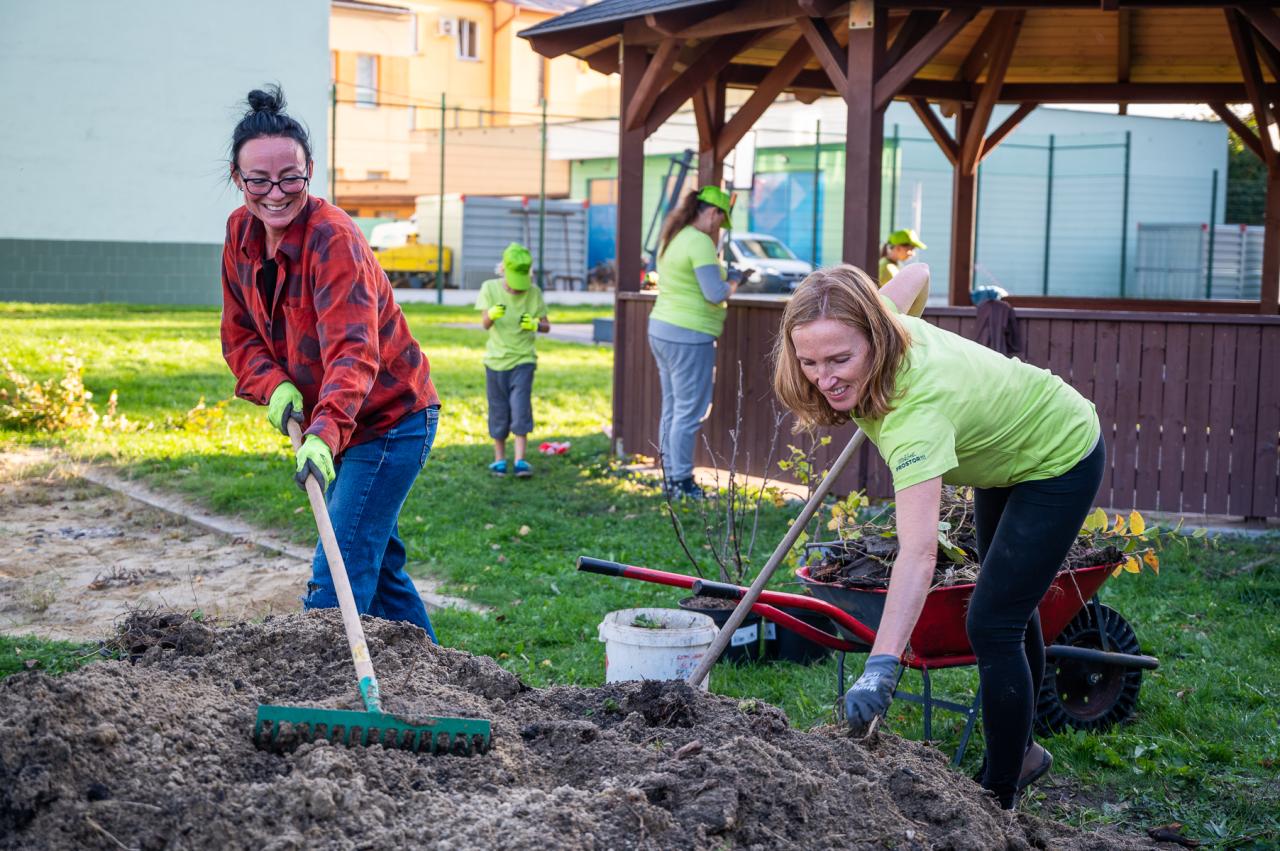
Launched in 2017, the programme enables residents and local communities to take an active role in shaping their neighbourhoods. At its core lies a simple but powerful principle: public spaces are most sustainable and meaningful when they are created and cared for by the people who use them.
The programme therefore works as an accessible funding tool for small-scale, non-commercial projects with clear public benefit. It opens participation to a wide range of actors from individuals to community organisations such as NGOs or homeowners’ associations and allows interventions in diverse types of locations, from municipal land to publicly accessible private spaces. This flexibility makes it possible to respond to local needs while ensuring that spaces remain open, shared and inclusive.
The programme provides grants of up to EUR 20,000 per project, supporting implementation over 12 months, followed by a two-year sustainability phase. Since its launch, nearly 70 projects have been implemented out of more than 150 applications, with total funding close to EUR 890,000. These projects range from community gardens and shared courtyards to small public meeting spaces, such as playgrounds, outdoor meeting areas, and cultural or educational spaces – places designed not just to look better, but to be used and cared for by local people. The Tvoříme prostor programme is also a flagship project of the Ostrava City Strategic Development Plan 2024-2030 fulfilling Strategic goal nr. 5: Supporting communities and helping citizens become involved in Ostrava’s development.
What makes Tvoříme prostor particularly effective is its combination of structure and support. The application process is organised in three stages, guiding participants from an initial idea to a fully developed proposal over three months. This step-by-step approach helps improve project quality while keeping the programme accessible to non-professionals. The city’s role goes beyond funding: it provides consultation, feedback and coordination, acting as a partner throughout the process.
Over time, the City of Ostrava has refined the programme based on practical experience. Early editions showed that projects focused only on physical aesthetic improvements often lacked long-term sustainability, especially in areas without regular community presence. In contrast, initiatives built on strong community involvement, where residents take ownership and use the space regularly, proved far more sustainable. This is confirmed by the results. A recent evaluation of supported projects showed that 83% remain active even after passing the formal sustainability period. Today, these lessons are reflected in the evaluation criteria, which emphasise public benefit, volunteer engagement and long-term use as much as design quality. This highlights a key insight for urban practitioners: lasting impact in public space comes less from the scale of investment and more from the strength of community ownership.
For municipalities and URBACT projects, Tvoříme prostor offers a practical and transferable model. It shows how cities can activate underused spaces through small, manageable interventions while strengthening citizen engagement. By combining modest funding, clear rules and a structured guidance for applicants, Ostrava demonstrates how meaningful urban change can be driven by community initiative.
Recognised as an URBACT Good Practice in October 2025, the initiative has further gained European visibility. The City of Ostrava is now leading the We Create Space URBACT Transfer Network, sharing the approach with partner cities Koszalin (PL), Pescara (IT), Granollers (ES), Bucharest District 6 (RO), Niš (RS) and Métropole Rouen Normandie (FR), confirming its adaptability to different governance and cultural contexts. Its combination of a well-structured framework, flexible implementation and strong citizen involvement makes Tvoříme prostor a compelling model for municipalities seeking to activate public spaces through participatory approaches.