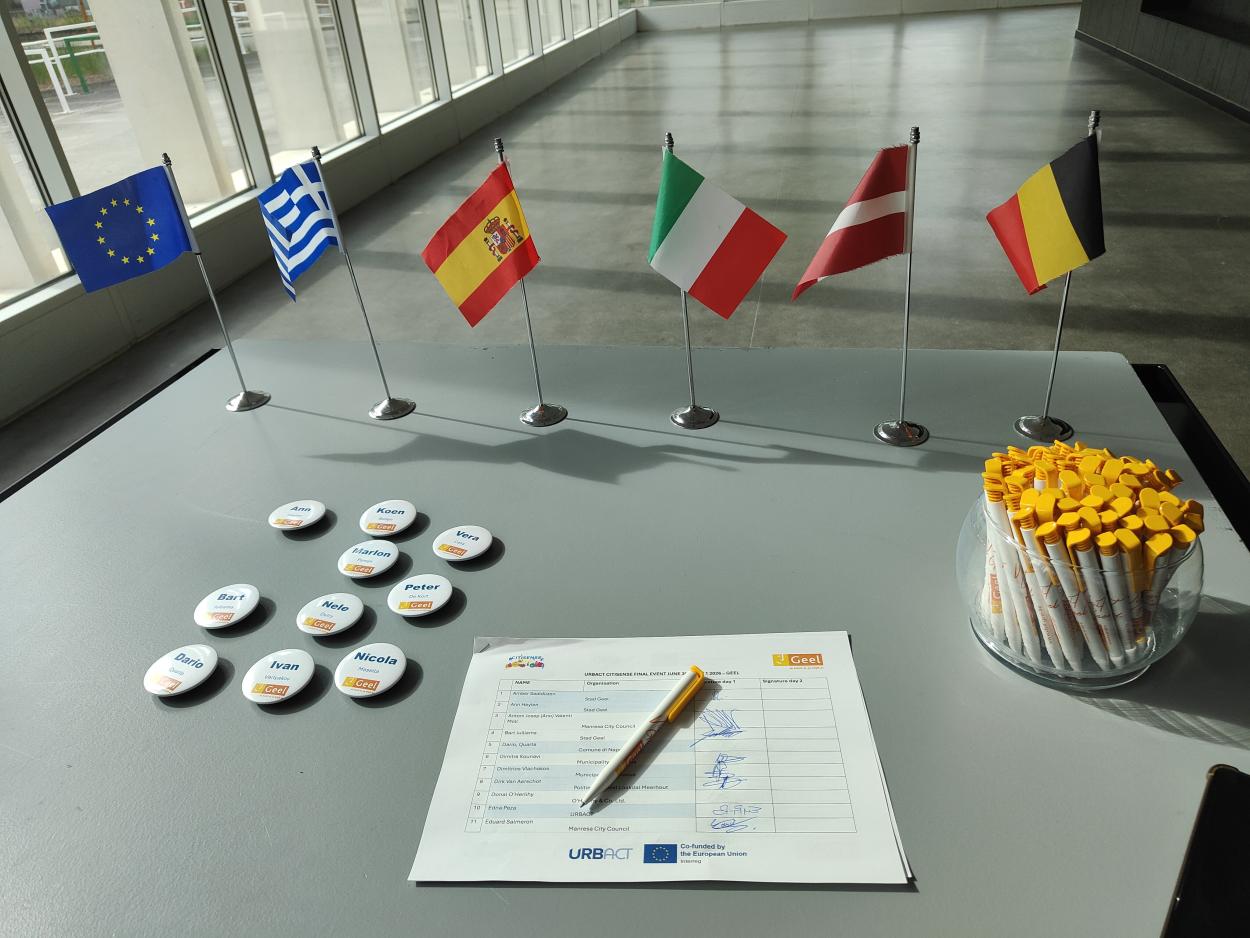
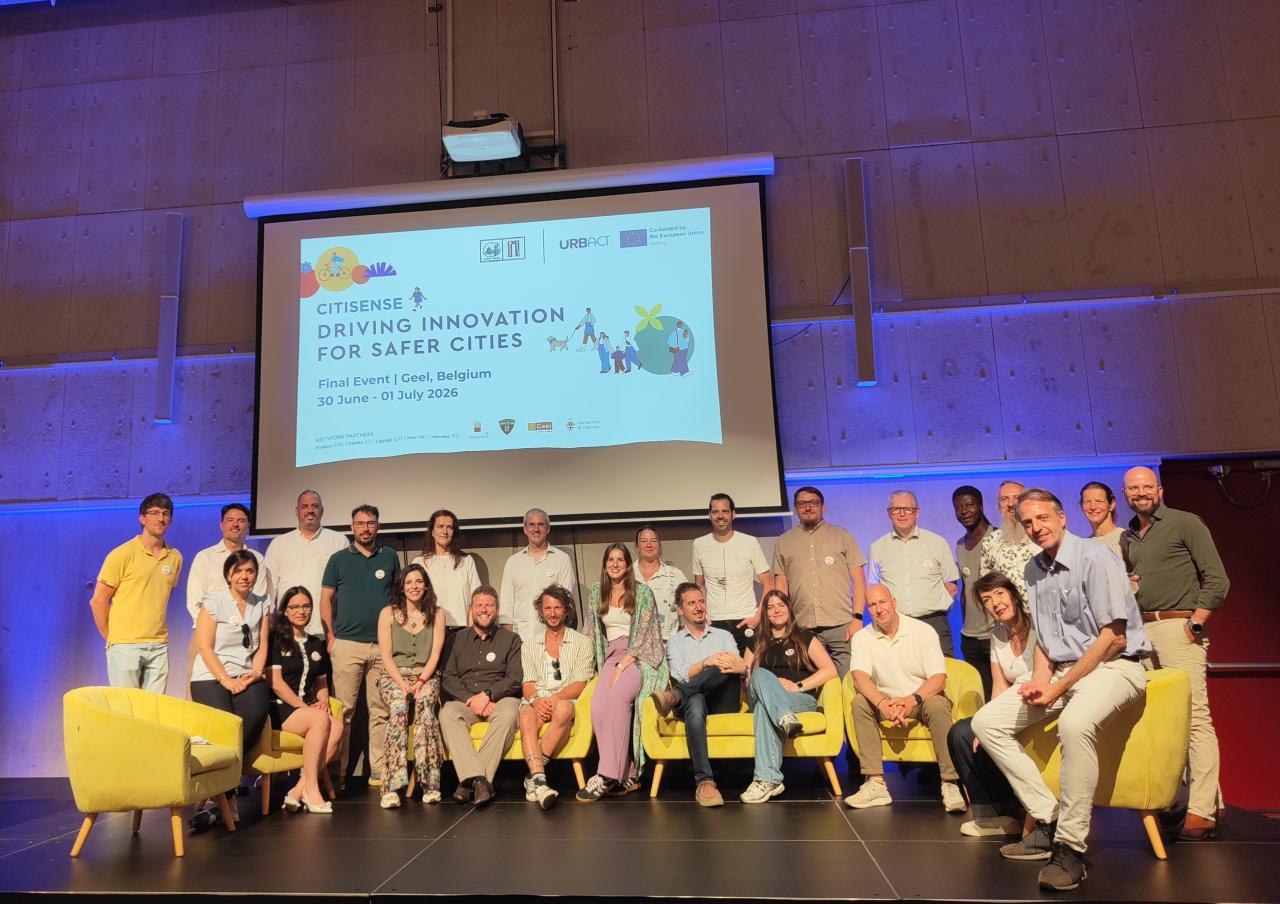
On 30 June and 1 July 2026, CITISENSE partner cities met in Geel for a final two-day exchange that moved between public spaces, political discussion, service coordination, community care and partner reflections on what makes urban safety work in practice.
By the time CITISENSE partners arrived in Geel, the network had already travelled through different urban realities: port cities, historic neighbourhoods, public spaces under pressure and communities testing new ways to feel safer. This final meeting was a moment for the partner cities to come together, revisit the questions that had shaped their work and discuss what they had learned from testing different approaches to urban safety in different local contexts. Geel offered the setting and concrete examples, inviting the network to look at urban safety where it actually takes shape - in streets, institutions, local partnerships and everyday encounters.
For CITISENSE, this was an appropriate way to close the meeting cycle: not through a simple presentation of results, but through a shared look at how urban safety is experienced, organised and discussed by the people and institutions involved in it.
Starting from the places where safety is felt
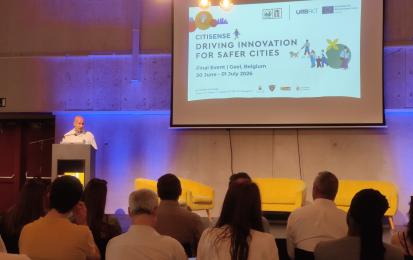
The public event on 30 June opened with a greeting from Bart Julliams, Vice Mayor for Sports & Urban Development of the City of Geel. The welcome was followed by Geel's account of its CITISENSE journey: the challenges identified, the solutions developed and tested, and the outcomes emerging in the city's target areas. The morning did not stay indoors for long. The city itself became the next speaker.
Participants joined a guided field visit to Geel's CITISENSE target areas, using the city as a working example for the network discussion. The field visit followed a short route through several local reference points: City Park, where measures have been taken to reduce nuisance and improve the sense of safety; Den Alleman, a neighbourhood meeting place in a social housing area; ’t Gelijkvloers, an accessible reception point connecting people with support services; and OverKop, a safe meeting place for young people and young adults up to 25.
This was where broader ideas became easier to talk about: the design of public spaces, the perception of safety, the presence of social vulnerability and the small details that influence whether a place feels welcoming, neglected, controlled or shared.
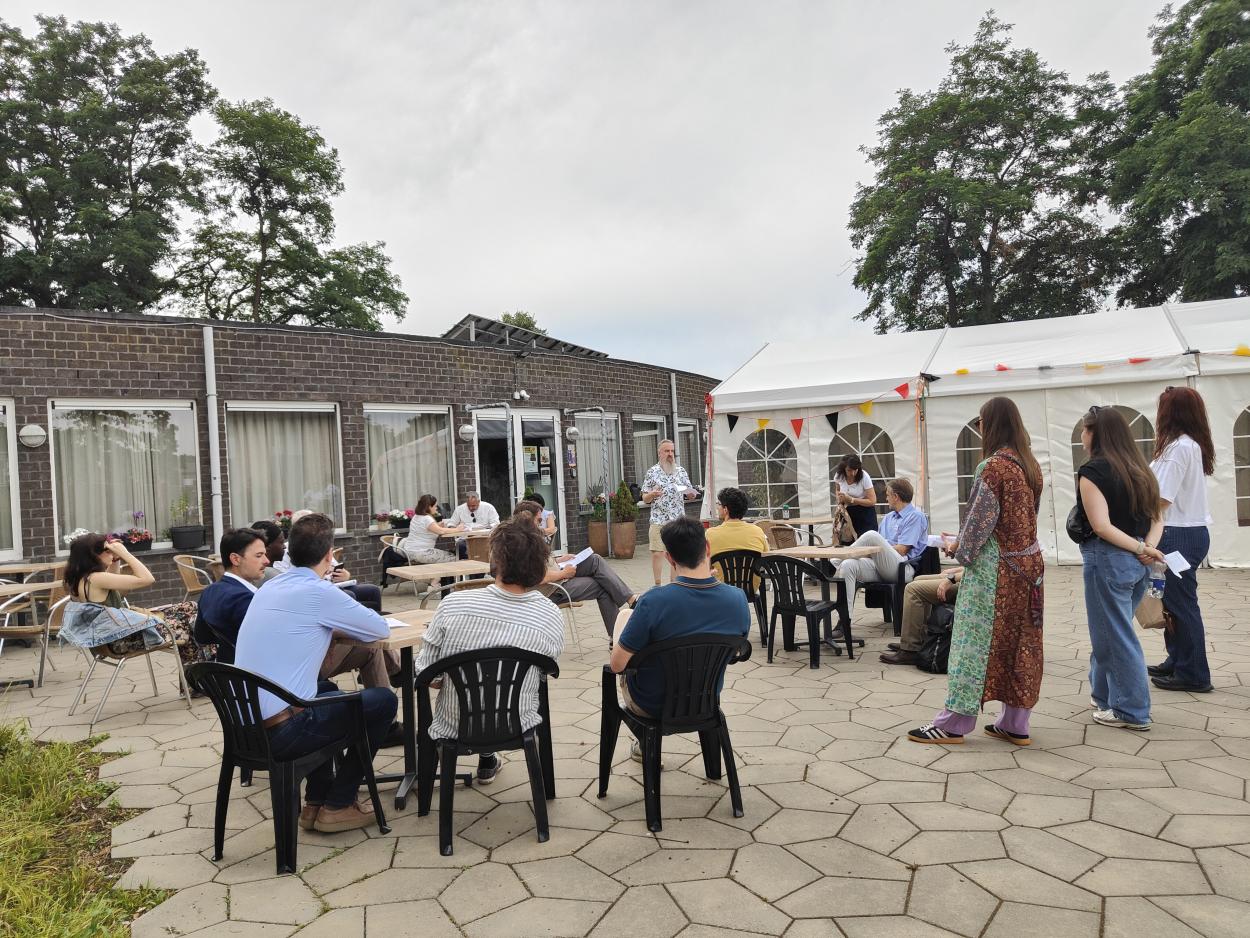
Seen in this way, the field visit was less about presenting finished answers and more about creating a common point of reference. Partners could compare what they saw in Geel with their own work in Piraeus, Liepāja, Manresa and Naples. They could ask what is transferable, what needs to be adapted, and how different cities can approach similar concerns through their own local conditions.
From local examples to policy choices
In the afternoon, the public event moved from the streets to a high-level panel on innovative approaches and opportunities for urban security policymaking. The session was moderated by Pietro L. Verga, URBACT-CITISENSE Lead Expert, and brought together Marlon Pareijn, Mayor of Geel; Anjo Valentí Moll, Vice Mayor of Public Safety and Civil Protection at Manresa City Council and Vice-President of Eurotowns; and Dimitrios Vlachakos, Vice Mayor of Information Technology at the Municipality of Piraeus. Their exchange was complemented by perspectives from experts on urban safety.
The panel followed the main lines of the CITISENSE work. It explored how social issues and vulnerabilities shape the perception of security, how the transformation of public spaces can support a stronger sense of safety, and how digital solutions can help cities identify and respond to urban security challenges. Just as importantly, it opened a discussion on governance: who needs to be involved, how responsibilities are shared, and how cities can move beyond isolated actions.
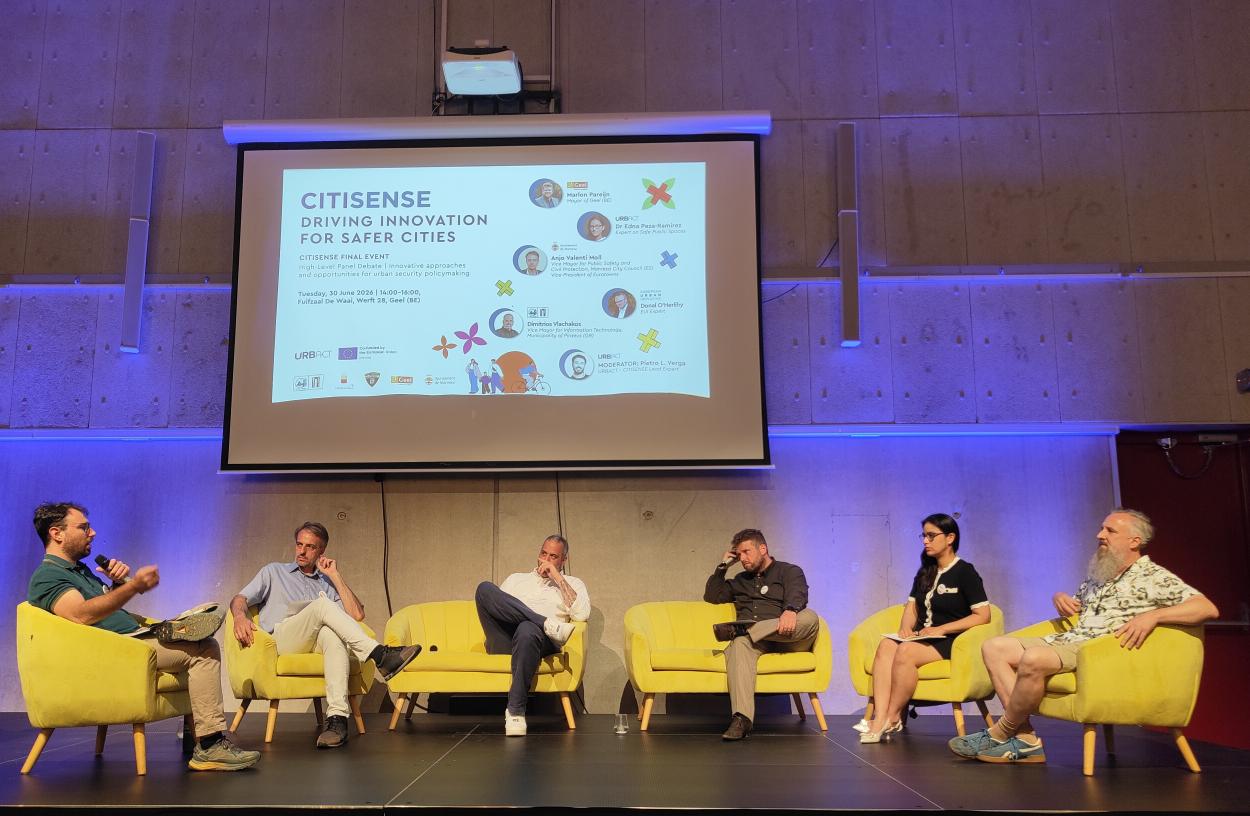
What emerged was a practical view of urban safety. It is not only a matter of enforcement, nor only a question of design or technology. It is often found in the links between them: a public space intervention that is connected to local needs; a digital tool that supports, rather than replaces, human judgement; a municipal strategy that brings together departments, services, practitioners and communities around the same problem.
This is where the network dimension became visible. Each city entered the discussion from a different angle, but the questions overlapped. How can safety policies be more inclusive? How can public space be improved without ignoring the social causes of insecurity? How can technology be useful and accountable? And how can cooperation continue once the first project activities are over?
One roof, many responsibilities
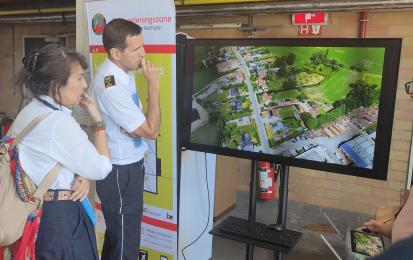
The second day continued the conversation in a different setting. Partners visited Geel's Security House and Control Room, where the local police zone, the fire service, the Red Cross and the municipal administrative sanctions unit are brought together under one roof. The shared control room offered a concrete example of coordination across services in real time.
After a day of discussing integrated governance, the visit offered its practical counterpart. Information can move faster, responsibilities can be understood more clearly and interventions can be coordinated instead of fragmented. Yet the deeper lesson was not about a building or a control room. It was about the relationships and routines that allow different organisations to act as parts of a common system.
Care as part of the safety story
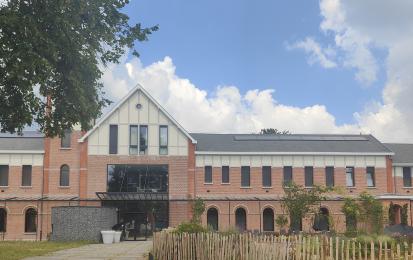
From the Security House, the meeting moved to the OPZ, the Public Psychiatric Care Centre, and to a dimension of Geel's identity that broadens the meaning of urban safety. For centuries, the city has developed a community-based model in which people with mental health conditions are hosted within local family life. In 2023, UNESCO inscribed the safeguarding of this foster care heritage on its Register of Good Safeguarding Practices.
Placed within a meeting on urban safety, this story was more than a local historical reference: it added an important layer to the discussion. It reminded participants that safety is also connected to care, belonging and the way a city responds to vulnerability. Urban security policies that ignore vulnerability may respond to symptoms while leaving underlying causes untouched. Geel's care tradition offered a different perspective: community capacity itself can be a form of urban infrastructure.
Keeping the conversation open
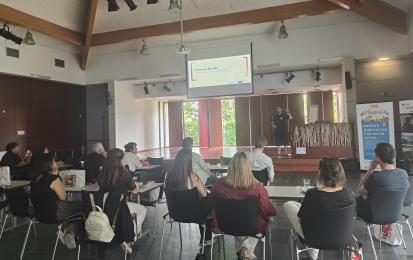
After the OPZ introduction, partners moved into the network results and final reflections roundtable. Each city was invited to share the results it valued most, what it might approach differently with hindsight, and the lessons it would take forward. The format encouraged a direct exchange between partners rather than a formal reporting exercise, keeping the focus on what had been useful, what had been difficult and what still needed work.
That same spirit shaped the closing workshop on what comes after CITISENSE. Partners identified local challenges, presented the kinds of future projects they are seeking and formed new conversations around shared interests. The work of the network has been to transfer and adapt innovation, but the final workshop showed that transfer is not a one-off act. It continues when cities retain relationships, keep testing ideas and find new reasons to work together.
The final gathering did not produce a single definition of a safe city. It produced something more useful: a shared understanding that urban safety is not simply delivered to people. It is built with them - through public spaces that invite participation, services that cooperate, technologies governed by purpose, and policies attentive to vulnerability.
For Piraeus, Manresa, Liepaja. Naples and Geel, the closing meeting offered a grounded way to look back and a practical starting point for the conversations that may continue next.