What if your city was ready for Plan Einstein?

Edited on 29/09/2026

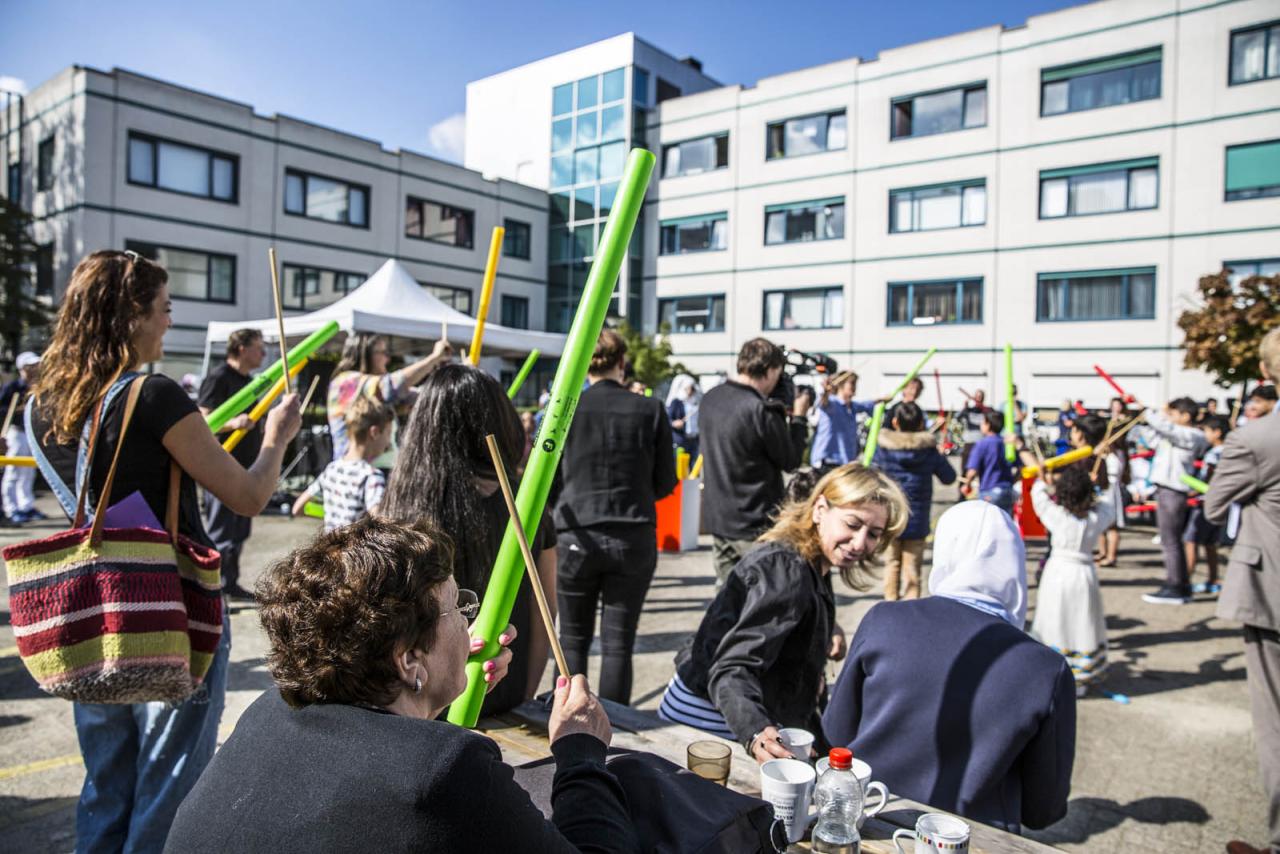
Group of people outside at a festive event

Catching Cultures Open day (Bas van Setten, 2017)

Not every city gets to benefit from EU funding to carry out an Urban Innovative Action. Which makes it all the more interesting when the lessons learned from such a project are found to be usable in any urban context - and without needing to wait for investment finance. 


This is the message of Plan Einstein Academy, a two-year Innovation Transfer Network supported by URBACT. The network directly supported five European cities to plan the transfer of the innovative ‘Plan Einstein’ model of local social cohesion from Utrecht (Netherlands) to their own specific context. But in doing so, it has also demonstrated how other cities can do the same: whatever their characteristics and context.

Plan Einstein is relevant for any social context


Plan Einstein was created in Utrecht in 2016 in response to a specific social challenge: how to welcome new arrivals, while also responding to the needs and concerns of existing neighbourhood members. But its underlying question is much broader: how can we create places where diverse individuals can live, learn, work and develop together in a socially cohesive way.


The response it offers, by creating activities and spaces for people to connect as equals through meaningful encounters and opportunities for personal development can be relevant whatever form that local social diversity takes.


For Utrecht, the key challenge was fostering social cohesion and opportunities for all in neighbourhoods with migrant reception facilities. Yet some of our network partners showed that the approach could apply just as well in very different local circumstances. For example, both Coimbra (Portugal) and Suceava (Romania) developed plans for transferring Plan Einstein without having any such shelters – just a desire to create more inclusive, welcoming and cohesive places for the full diversity of people living locally.


It is not necessary to have the same social situation as Utrecht to explore the approach. What matters is a desire to strengthen social cohesion and support opportunities for all.

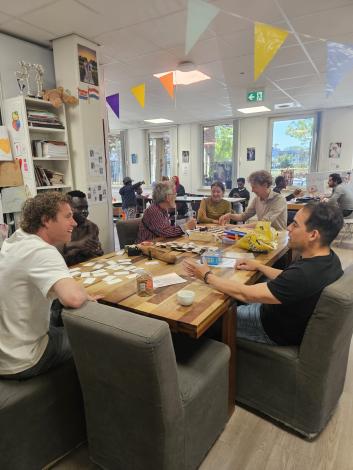
People sitting and talking at a table in a communal space

Open welcoming spaces can be created in any urban neighbourhood. 

Plan Einstein is relevant for every type of city


Whether a city is large or small, rich or poor, by the sea or in the mountains or anywhere in between, this practice has something to offer. The principal reason for this is that Plan Einstein is best understood as a neighbourhood-based approach. Even in Utrecht, where Plan Einstein has been city policy since 2019, its implementation has been taking place neighbourhood by neighbourhood. This is where social interactions take place and the realities or challenges of social cohesion most sharply reveal themselves. 


We also saw what this meant for our partnership during the lifetime of our network. Both Zagreb (Croatia) and Thessaloniki (Greece) started off thinking about how to transfer Utrecht’s approach at city scale, before realising it would be much more productive to implement Plan Einstein in pilot neighbourhoods selected for their social mix - aiming to demonstrate the added value of the approach for replication in other neighbourhoods over time.


On the other hand, a smaller partner city, Suceava (population 84,000) took the approach of planning spaces and activities for meaningful encounters in the heart of the city – taking advantage of vacant premises in the city centre to create new community spaces that could bring all-comers together.


Whether a city decides to implement Plan Einstein in one neighbourhood or many, different targeted approaches can be applied in different types of urban area, whilst still being true to the Plan Einstein philosophy.

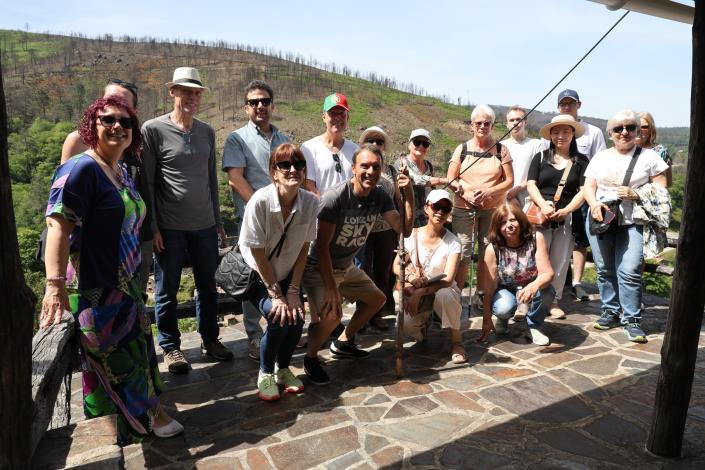
Group of people standing outside on a terrace with mountain backdrop

Plan Einstein activities to bring people together as equals can be organised in any local context

Don’t copy the model. Understand the principles


One of the clearest lessons from the network and one that underlines the above observations is that transferring the Plan Einstein social innovation is not about reproducing a defined set of activities. The visible elements demonstrated by Utrecht are only part of the story. 


The neighbourhood-based approach means that all activities need to be developed according to the local context, rather than being pre-defined from above or from Utrecht. Whether that activity is a book club, a surf school, a marching band or a computer course does not matter so much as the fact that is has been designed in response to local needs, preferences and opportunities and in ways that make it open, welcoming and inclusive.


Some of the activities developed under Plan Einstein approaches are primarily social in nature. For example, creating spaces for people to meet or facilitating activities for people to come together over food or music, sport or culture. Such social activities have an important role to play in bringing people together, creating social connections, overcoming mistrust and improving social cohesion. 


But the approach is about more than just meeting up and having a nice time. Offering specific training and other opportunities for the personal development of all is also key. This can include skills training, guidance and coaching, as well as psychosocial support services.


In Utrecht, this has meant offering business and entrepreneurship courses - such as ‘Build Your Own Future’ and ‘Women in Business’ – as well as CV building courses, IT/computer classes, language courses and job coaching. A key idea here is that while newcomers may have specific additional needs, most of these activities can be provided in ways that bring everyone together as equals, whether they have lived in the neighbourhood all their lives or they arrived yesterday.


Implementation requires an ecosystem approach


Not only do urban authorities have limited resources, but they are often not perfectly placed to know exactly what each local community needs. Finding, supporting and enabling community actors with a shared vision for local social cohesion is key. 


More than one partner started working with national or international organisations specialised in key topics around inclusion before realising the critical importance also of local community actors for delivering local responses. Thessaloniki, Zagreb and Warsaw all identified key local ‘anchors’ for developing Plan Einstein-aligned activities: ranging from a local school to a community café and from a library to a cultural centre. Local anchors can provide a starting point for engaging a broader group of interested bodies and groups.


Finding and engaging such actors who are already active in their local community can quickly generate positive dynamics for testing new types of local activity and approach for fostering local social cohesion based on local needs. Sometimes this can mean thinking beyond organisations with explicit social cohesion objectives. For example, Suceava is working to engage local sports clubs and cultural organisations to make their activities more open and inclusive.


The City of Utrecht works with an ever-increasing array of local partners to implement Plan Einstein, both connected with migrant reception facilities and in other ‘hubs’ across the city. This includes NGO partners, local associations, training bodies, housing companies, cultural bodies and sports clubs.
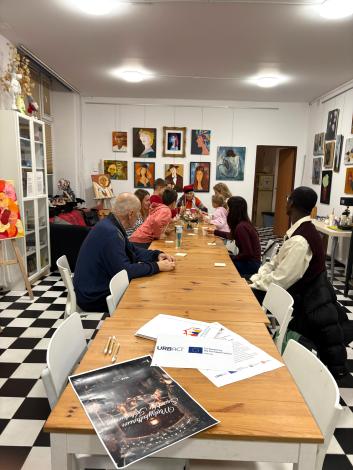
People sitting at a table in a communal living room

Making progress can be about starting small and building momentum with engaged local people.

Start with what you have


Connected with the neighbourhood-based approach and the need for an ecosystem approach is the message that starting small and building on what is already happening can be the best way to make progress. It is not necessary to wait for that one big project, some critical investment funding or the perfect overarching strategy. Rather, it is important to take the first step in a new direction.


In this context, one of the more encouraging discoveries of the Plan Einstein Academy network was the number of activities and engaged actors already working on topics linked to local social cohesion in the partner cities. From a local library in Zagreb and a community café in Warsaw to an intercultural surf festival in Coimbra, local authorities were often pleasantly surprised to discover what local people were already doing to support inclusion in their communities.


Meanwhile, cultural organisations, sports clubs, NGOs and other community organisations are often actively involved in their local communities, but with varying understandings about how and why to more inclusive. The challenge is then not necessarily how to invent a new activity, but how to adapt what is already there to make it more open and inclusive.


Similarly, another critical challenge is almost always how to connect what is already happening into something more coherent and cohesive to make a bigger impact. Could two organisations that rarely work together collaborate? Could pooling complementary resources (e.g. spaces, volunteers, skills…) enable greater outreach? Plan Einstein can develop organically over time. At the same time, it is important to remember that it takes more than a handful of ad hoc activities to truly respect the overall philosophy.


In this context, it is hopefully clear that the role of the local authority may be to convene, connect, enable and create the conditions in which others can contribute, rather than centrally planning every intervention or one big overarching programme. The City of Utrecht now uses municipal funding to support diverse community actors through open calls for activities and spaces in line with the Plan Einstein philosophy as well as bringing stakeholders together in coordination meetings.


So where could your city begin?


If your city is interested in exploring the approach, remember that you do not need to wait for the perfect conditions and you do not need to know exactly where the journey will end. You could start by asking:

  • Which neighbourhood(s) could benefit from a renewed approach to local social cohesion?

  • Who is already working to make that neighbourhood more welcoming and connected?

  • Where are there opportunities for people who would not normally meet to do something together as equals?

  • Which existing spaces and activities could become more inclusive?

  • What small action could we test now — and what could we learn from it?

  • Which additional community actors could we seek to engage in taking a more inclusive approach?


You do not need to copy Utrecht or any of the partners from the Plan Einstein Academy network – but we hope their stories and experiences can help inspire action in your local context.
 

  • Read our final network publication “Plan Einstein: A Model of Social Inclusion for European Cities – Lessons from a two-year transfer journey” for a presentation of Plan Einstein in Utrecht and the transfer stories of each of the five partner cities.
  • Read the first network article to get a more detailed introduction to Plan Einstein and its core principles as well as the initial expectations for transfer.
  • Read the second network article for a detailed overview of the transfer journeys of the network partnership and the lessons learned along the way.
  • Visit the project webpage for all these resources, as well as the four Network Journals produced during the course of the project and each city’s local implementation plan.
  • Join the conversation and follow the latest news and updates by following Plan Einstein Academy on LinkedIn.
  • Visit the homepage of Plan Einstein in Utrecht for the latest news and development in our original innovative practice city and for contact details.
Submitted by on 29/09/2026