Fundão: not a project, but a system
The starting point of SHIFT-R is Fundão’s Good Practice. The SHIFT-R Transferability Study
describes how Fundão faced challenges common to many rural and small and medium-sized
cities: depopulation, youth outmigration, ageing, low territorial attractiveness, economic
stagnation, limited innovation capacity and weak collaboration between public institutions,
businesses, academia and civil society. At the heart of the problem was a “systemic failure of
integration” between education, economic development, governance and infrastructure.
Fundão’s response was not to copy metropolitan innovation models. Instead, the municipality
built an integrated territorial innovation ecosystem rooted in its own assets. It connected
digital skills, entrepreneurship support, public asset regeneration, collaborative governance,
housing, quality of life and European cooperation into a long-term place-based strategy.
This matters because many smaller cities do not lack potential. They often lack connection.
Talent, empty buildings, local companies, schools, community organisations and public
authorities may all exist in the same territory, but they do not always work as one system.
Fundão’s experience shows that the value lies in the links between these elements. Its
ecosystem includes innovation and entrepreneurship structures such as the Digital Innovation
Lab, a distributed co-working network, fab labs, creative labs, business support facilities and
digital experimentation infrastructures. Talent attraction is also treated in an integrated way:
the “Move to Fundão” initiative connects quality of life, digital connectivity, affordable living,
entrepreneurship opportunities, community integration and access to innovation ecosystems.
Six modules, one ecosystem logic
To make Fundão’s experience transferable, SHIFT-R organises the model into six modules:
integrated innovation ecosystems; talent attraction and digital skills; regeneration of public
assets and innovation spaces; smart rural and AgroTech innovation; inclusive governance and
community integration; and internationalisation, branding and European networking.
These modules are not a menu of isolated actions. They are connected. Innovation spaces
support entrepreneurs. Digital skills help companies grow. Housing and quality of life help
attract and retain people. Governance brings stakeholders together. European cooperation
gives visibility, funding, learning and scale.
This is why SHIFT-R is not asking partner cities to copy Fundão. It is asking them to Understand
the system logic behind the Good Practice and Adapt it to their own realities.
The network brings together cities with different contexts, including Kymi-Aliveri (EL),
Mostar (BA), Żory (PL), Macouria (FR), Skellefteå (SE), Nykarleby (FI) and Trostyanets
(UA). Some are dealing with depopulation and ageing. Others are managing rapid growth,
industrial transition or social inclusion challenges. Some are building the foundations of an
innovation ecosystem; others already have strong assets but need better coordination. What
they share is the need to connect local actors and gain European scale.
Why meeting METACITY mattered
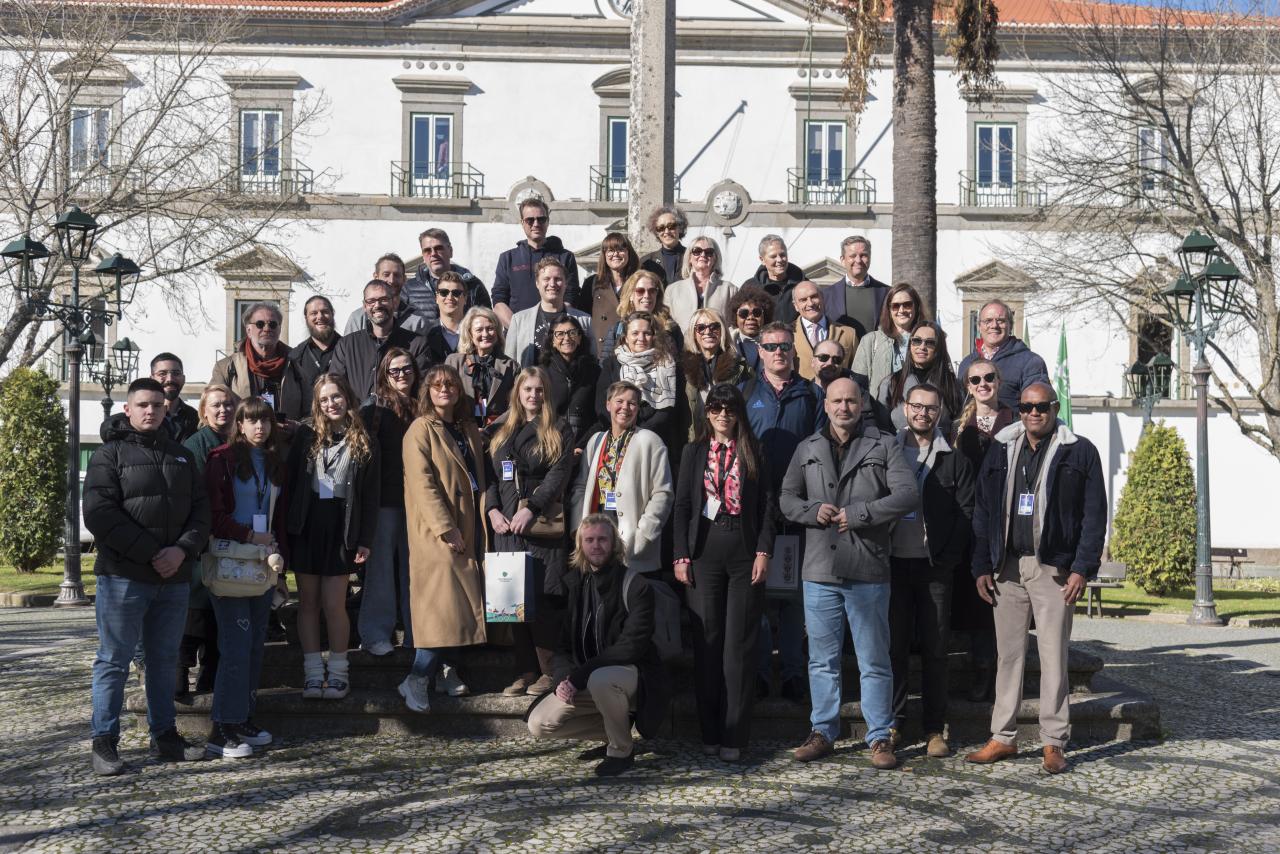
The first SHIFT-R Transnational Meeting took place in Fundão on 26–27 November 2025. It
launched the network and opened the “Understand Phase” of the URBACT Transfer Network
methodology. Partners visited Fundão’s innovation ecosystem, including spaces linked to
migration support, AgroTech, science education, business support, housing, co-working, digital
innovation, health and wellbeing, creative manufacturing and rural innovation.
Yet one of the meeting’s most important features was that it was organised together with the
final event of the URBACT METACITY Action Planning Network. This gave SHIFT-R partners
the opportunity to meet cities that had already developed Integrated Action Plans and tested
Small Scale Actions.
This was valuable because SHIFT-R cities were just beginning their transfer journey. METACITY
cities, by contrast, had already gone through the action-planning cycle. They had faced practical
questions that every city eventually meets: how to involve stakeholders, how to test ideas, how
to move from ambition to implementation, and how to deal with local capacity constraints.
For SHIFT-R partners, METACITY made the URBACT learning cycle visible. Transfer was no
longer an abstract methodology. It became a conversation with cities that had already tested,
adjusted and learned.
Why CITE and Society Expo changed the scale
The second SHIFT-R Transnational Meeting took place in Skellefteå (SE) from 8 to 10 June
2026. This meeting moved the network from understanding Fundão’s Good Practice towards
assessing how it could be adapted in each local context. But again, SHIFT-R did not meet in
isolation. The meeting was organised alongside Society Expo 2026 and the founding meeting
of Cities in Transition Europe (CITE), a new European alliance of medium-sized cities facing
systemic economic, industrial and demographic transitions.
This changed the scale of the conversation!
SHIFT-R partners were no longer only discussing how to transfer one good practice from
Fundão to other cities. They were engaging with a wider European community dealing with
similar pressures: skills shortages, housing needs, industrial change, demographic
transformation, social inclusion and the need for new governance models.
During the Skellefteå meeting, partners reviewed the Transferability Study, explored the
relationships between the six transfer modules and completed transfer assessment canvases.
They reflected on each module’s relevance, implementation capacity, local barriers, adaptation
needs and priority actions. These exercises became the first building blocks for future Local
Transfer Plans.
The study visits added another layer. Sara Kulturhus showed how architecture, sustainability,
culture, innovation and urban regeneration can reinforce place attractiveness. The Skellefteå
Universities Alliance illustrated how municipalities, universities, research institutions and
industry can work together on skills, talent attraction, applied research and lifelong learning.
Creative Crowd and Jörniverse, in the rural community of Jörn, demonstrated how creativity,
entrepreneurship, place-making and culture can revitalise smaller communities.
For SHIFT-R partners, these examples confirmed that innovation ecosystems are not only about
technology. They are also about places, people, culture, governance and long-term alliances.
Scale comes from connection
The emerging message of SHIFT-R is clear: small and medium-sized cities do not need to become
smaller versions of large metropolitan innovation hubs. They need to build ecosystems rooted in
their own assets — and then connect those ecosystems to other cities, European networks
and wider transformation agendas.
This is especially relevant for less developed, rural, post-industrial or peripheral territories.
Acting alone, they may struggle to attract talent, investment, companies and visibility. Acting
together, they can exchange knowledge, test solutions, improve local capacity and position
themselves as active contributors to Europe’s digital, green and social transitions.
That is why the meetings with METACITY and CITE were so important. METACITY helped
SHIFT-R partners learn from cities that had already tested URBACT action-planning processes.
CITE and Society Expo helped them see themselves as part of a wider European movement of
cities in transition.
SHIFT-R is therefore more than a transfer network. It is becoming a platform where small and
medium-sized cities learn how to build innovation scale together.
Scale does not always come from size. Sometimes, it comes from connection.
Through SHIFT-R, small and medium-sized cities are discovering that innovation
ecosystems grow stronger when they connect with other cities, networks and European
alliances.
For small and medium-sized cities, innovation is rarely only about ideas. It is also about scale.
A city can create a co-working space, launch a startup programme, regenerate an old building
or attract a technology company. But if these initiatives remain isolated, their impact may stay
local and fragile. To compete with larger metropolitan areas, smaller cities need more than
individual projects. They need connected ecosystems.
This is one of the main lessons emerging from SHIFT-R, the URBACT Transfer Network led by
Fundão (PT). The project explores how small and medium-sized cities can become more
innovation-friendly by connecting talent, entrepreneurship, digital skills, public spaces,
governance, housing, quality of life and European cooperation.
But the first months of SHIFT-R have also shown something equally important: a transfer
network becomes stronger when it looks beyond itself. That is why the encounters with the
URBACT METACITY Network in Fundão and Cities in Transition Europe (CITE) during
Society Expo 2026 in Skellefteå were not side events. They were central moments in the
learning journey of SHIFT-R partners.