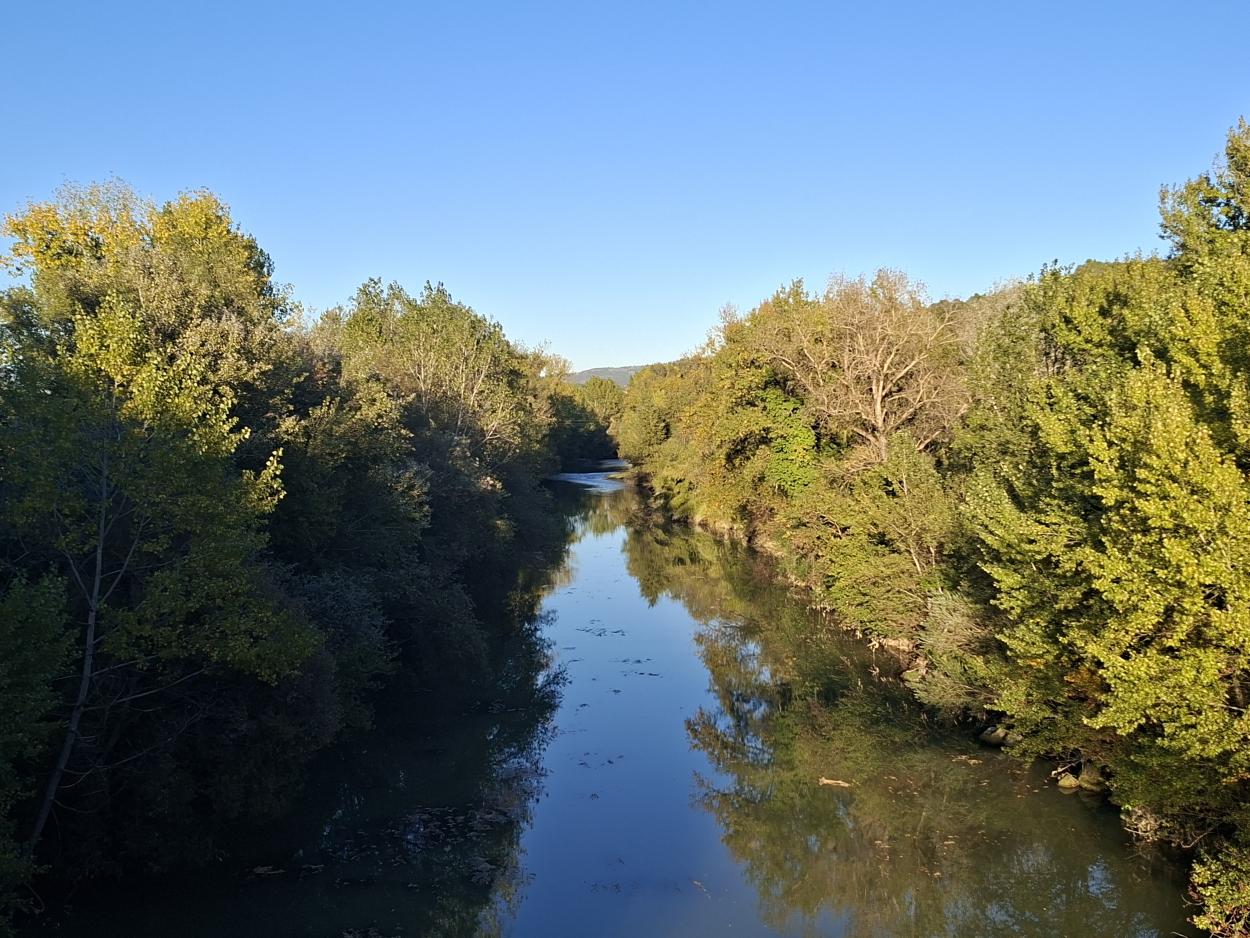
On the right bank of the Tiber, along the old canal that once carried water to the hydroelectric works of Ponte Felcino, lies the Bosco Didattico, a green area of about six hectares owned by the Municipality of Perugia. The Municipality created it at the end of the 1980s and in the early 1990s as an arboretum, a botanical garden devoted mostly to trees.
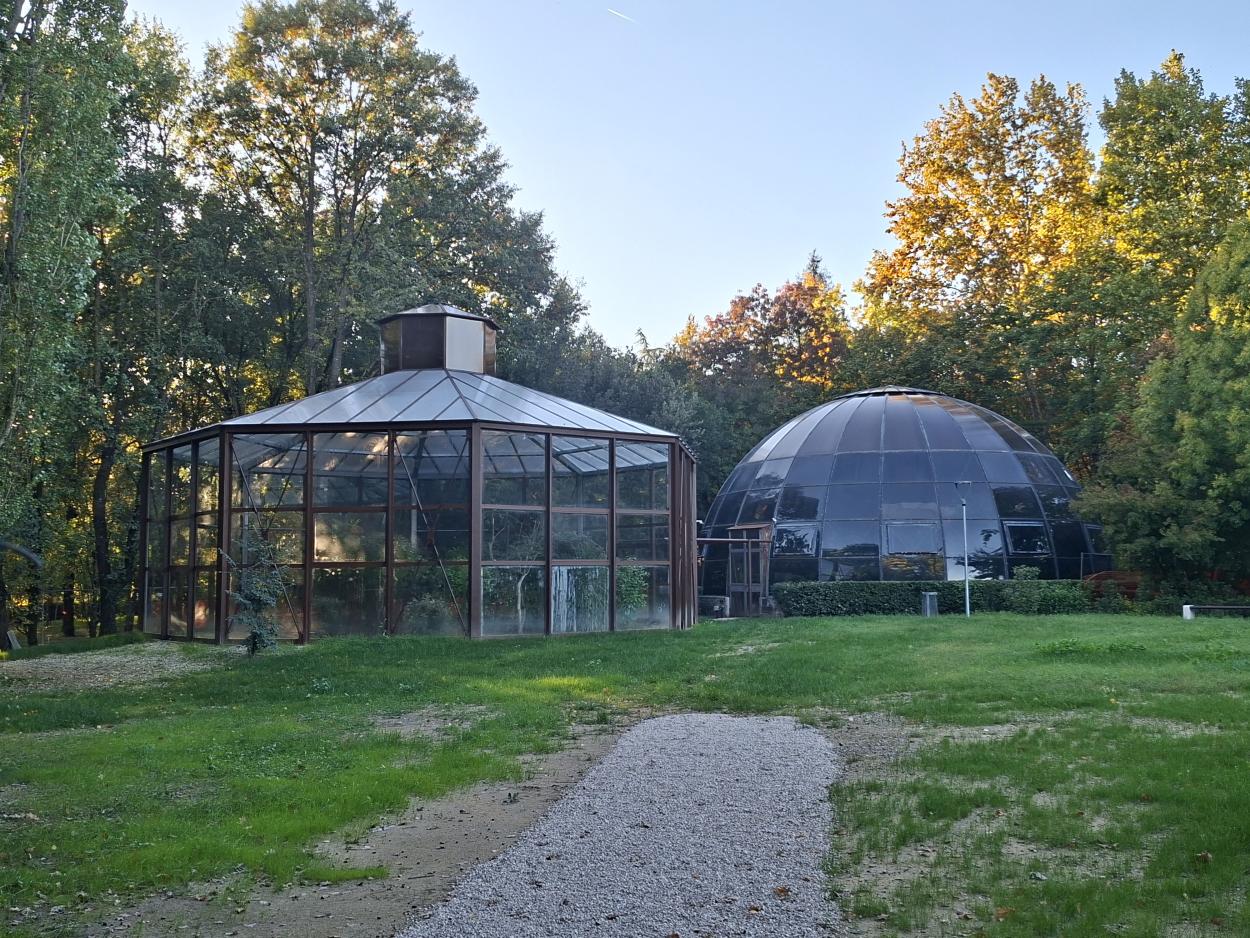
Today the park holds around 500 species of trees and shrubs, arranged largely by botanical family: legumes in one area, maples and elms in another. Greenhouses shelter succulents, citrus trees and tropical plants. There is an orchard of old fruit varieties, a collection of ancient roses and a model of a floodplain woodland, the original forest of Europe’s lowlands, among the first to be cleared since Roman times.
The Bosco has long been a place where the community takes part. In the early 1990s it was run through a management committee bringing together the neighbourhood council, local associations, schools, the University of Perugia, the Municipality and expert volunteers: a very advanced and participatory model for its time.
The committee helped restore the oldest part of the mill tower, which dates back to the 14th century, and the greenhouses, one of which reuses a dome once used to maintain Perugia’s Fontana Maggiore.
Today that spirit lives on in the Association of Friends and Volunteers of the Bosco Didattico, led by Mauro Frattigiani, a volunteer in the park for years, together with vice-president Pierluigi Tamperlini, who lives in the neighbourhood.
A place to learn
The variety of the collections opens the door to people. With schools, volunteers organise environmental education and sometimes involve foreign students by presenting the plants typical of their home regions, a simple way to bring young people together around diversity. The Bosco also offers training, from basic courses on grafting an olive tree or taking a peach cutting, to professional courses for green-space maintainers and arborists.
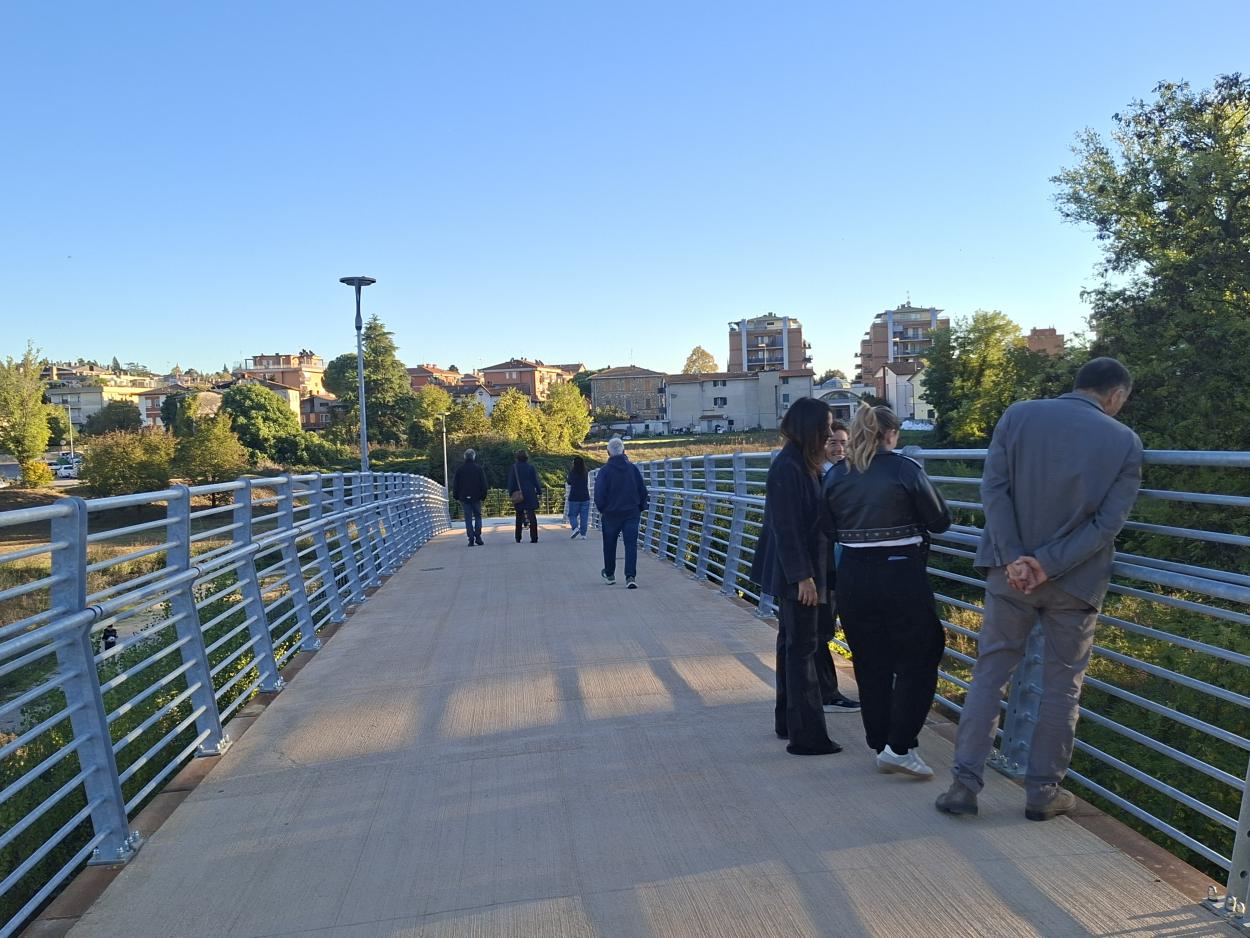
Recent years have brought major works, partly through Italy’s national recovery plan: an area for farmyard animals, an amphitheatre and a cycle and pedestrian bridge over the Tiber from Via Mastro di Casa. The Municipality has committed to acquiring land on the other side to create a new one, and the bridge ramps will be planted with 400 plants of seven or eight species.
More is on the way. The former mill building will become a large classroom, keeping its overhead crane and industrial character, with a modest refreshment area and accessible ramps. A tool shed, a duck area and a redesigned rose garden are planned. The park will also extend onto the left bank: the purchase price has been agreed and an urban planning variant is being completed to secure access.
In March 2026 the association and another group working in the park, Giardini Maestri, prepared a proposal to enhance the whole area, combining maintenance of the woodland, now carried out by the regional forestry agency, with training, outreach, environmental education and public enjoyment. An official presentation is planned for November with the association Alberi della Vita and the local comprehensive school. The association also works closely with the Ecomuseum.
What PARKS brings
The park is the pilot site of Perugia’s work in PARKS, the URBACT Transfer Network led by Perugia with Sofia, Arteixo, Veszprém, Monaghan County, Valongo and Chernivtsi. The network focuses on shared governance of urban green spaces. The pilot action will renew the park’s plant labelling system and add an app, so visitors can read the description of each species, to be tested with schools and the wider community.
URBACT supports participation, teamwork and bottom-up approaches, and the experience of Ponte Felcino is going in that direction. The challenge for Perugia is to export this model to other associations caring for the city’s green spaces, showing that there is a way of working with the Municipality that does not start from “we need funding to do this and that.”
“I hope we can complete the restoration of the mill and rebuild the floodplain woodland on the new land. Above all, I hope that associations, the school, the Ecomuseum and the Municipality will keep working together, because the Bosco will only grow if everyone takes part.”
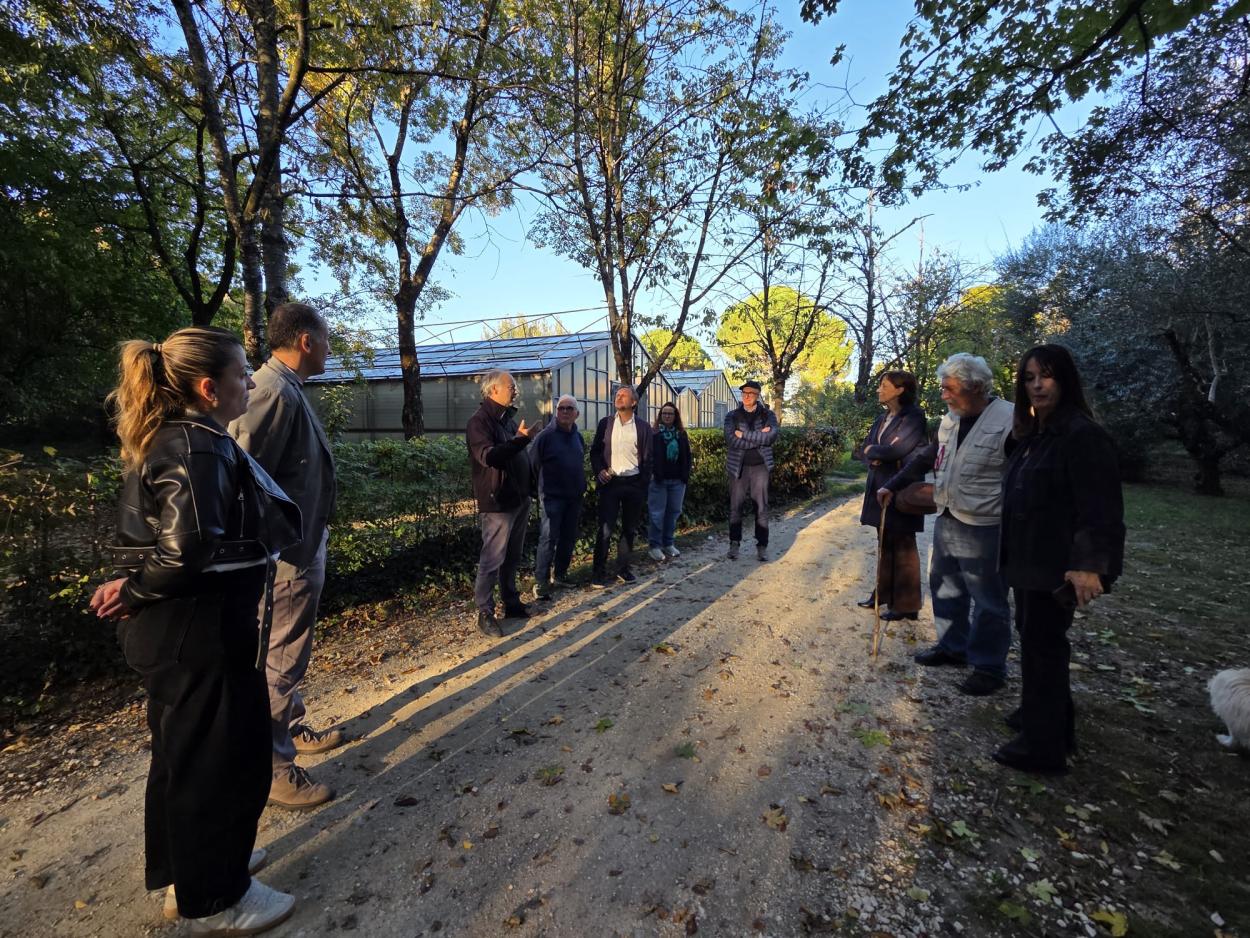
These are the words of Mauro Frattigiani, President of the Association of Friends and Volunteers of the Bosco Didattico, who accompanied the PARKS Urban Local Group of Perugia on its visit to the park.