Day 1: Cooperation Strategies, Community
Engagement, and Financial Sustainability
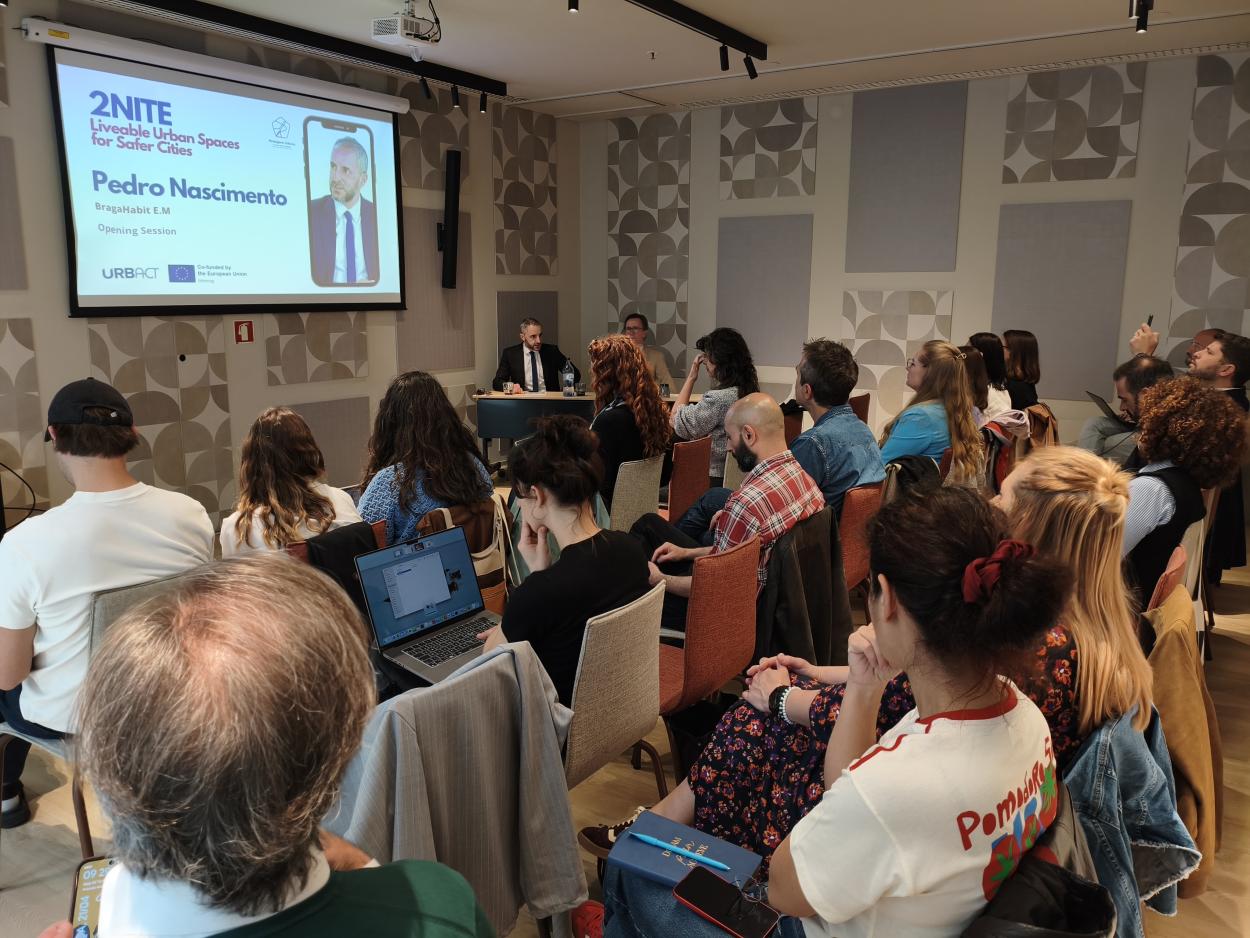
The first day of the transnational meeting in Braga opened with an institutional welcome by the representatives of the City of Braga, with a brief overview of the approach adopted to better manage the public space, seen not as a problem to be
solved, but as a fertile territory for inclusion, safety and urban vitality.
In this context the experience of Pentágono Urbano explored how cities need to be prepared to respond to community needs within the public space, through engagement and new policies.
Here it was visible how the mission has evolved from the preservation of buildings to the preservation of entire neighbourhoods through institutional and citizen collaboration.
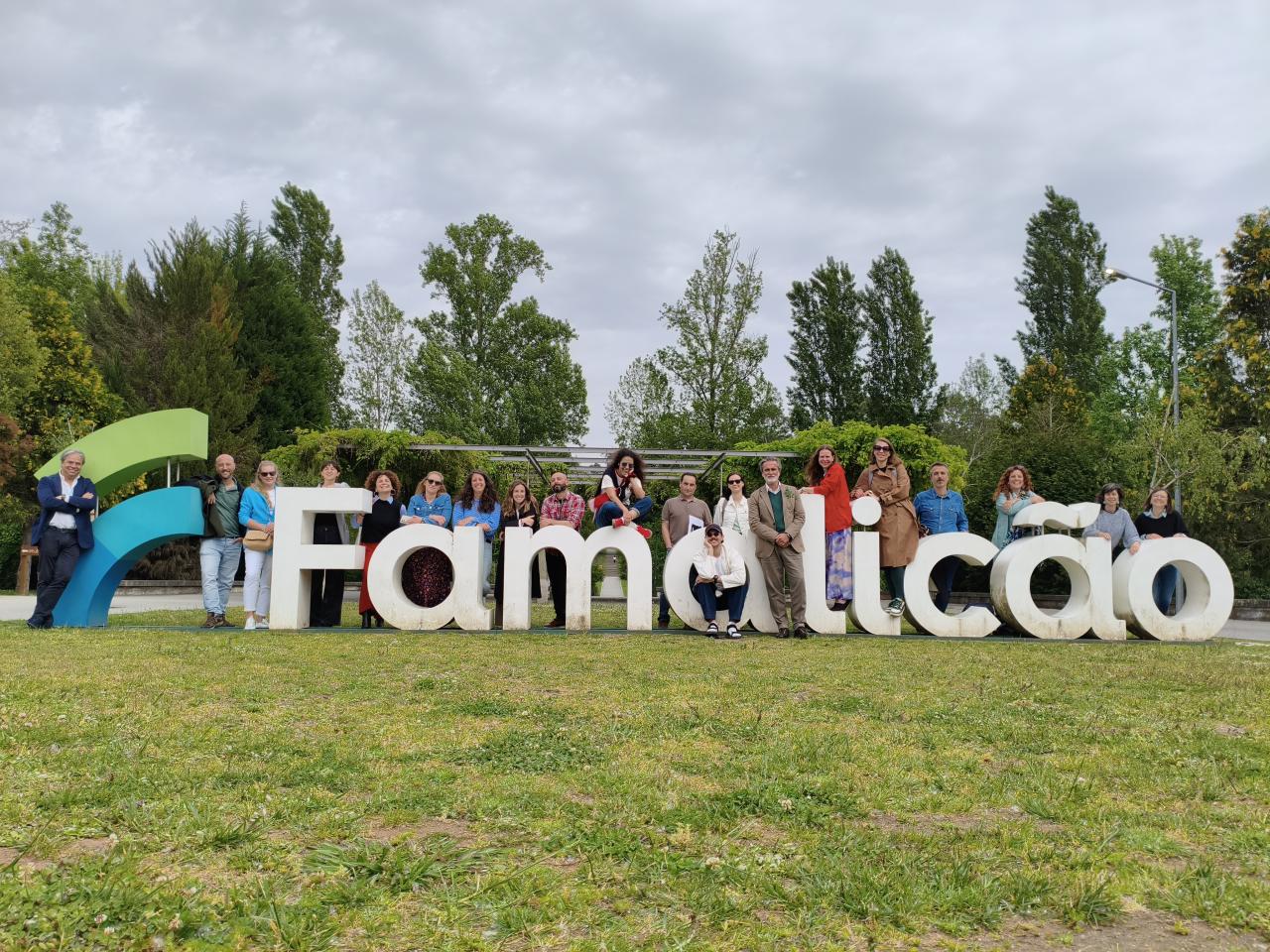
More generally speaking, the central objective of the day was to provide partners with the necessary tools to keep URBACT Local Groups (ULGs) dynamic, exploring innovative participatory methodologies to involve even the hardest-to-reach profiles and build a shared project vision; an overview on funding sources followed with lively discussions among the partners who shared their experiences other topics addressed during the day. The afternoon session brought the participants to a visit in Famalicão.
Keeping Local Groups (ULGs) Dynamic and Expanding Inclusion
Led by the Ad Hoc expert Laura Sobral, this session tackled the common challenge of sustaining Urban Local Groups (ULGs) once initial excitement and project funding fade. To prevent participation fatigue and keep these groups dynamic, organizers must establish a clear shared vision and grant members genuine decision-making power. It is equally important to offer flexible ways to get involved and actively seek out voices that are missing from the room. Instead of relying on standard open calls, leaders should bring activities directly into communities, leverage trusted local networks, and use food or celebrations to draw people in.
To foster deeper inclusion, the session introduced several hands-on methodologies designed to build trust.
For instance, “Photo voice” allows residents to visualize their lived experiences, while “bodystorming” uses physical role-play to explore complex urban issues. Communities can also use collaborative graffiti walls for open expression, or playful approaches like LEGO® Serious Play® to inspire residents to actively contribute to their neighborhoods rather than passively demanding services.
Structuring Cooperation, Securing Funding, and Planning the Legacy
Following the discussions on community engagement and participatory methodologies, the morning sessions transitioned toward the practical frameworks needed to sustain these initiatives. The focus shifted to formalizing cooperation, securing the necessary financial resources, and defining the project's long-term political impact at the European level.
Empowering Local Governance: Cooperation Ecosystems
To transition from informal participation to structured shared ownership, the concept of "Cooperation Ecosystems" was explored. The City of Torino narrated its experience with "Collaboration Pacts," which formalize the scope of cooperation between citizens and NGOs and municipal institutions. These pacts establish a joint plan detailing how goals will be achieved, with what resources, and within what timeframe. It was emphasized that true collaboration takes a few years of dedicated work and requires not only political will but also funding and power. While this model is relatively simple to apply to small spaces with small groups, it becomes significantly more complicated when multiple actors have different goals for the same
urban area.
From Vision to Action: Investment Plans and Funding
Securing resources is the next critical step to ensure local initiatives do not fade. The Ad Hoc expert Sabina Reichert guided the partners through the process of turning their nighttime and public space visions into funded actions. The core strategy requires building a transformative mindset: cities were reminded that they are not merely applying for a grant, but rather proposing an urban transformation. Because not everything can be funded by a single program, the strategy involves a "game of matchmaking," mixing various funding streams—ranging from community donors for small-scale pilots to EU and financial institution funds for larger regenerations. Cities must plan for both intangible actions (such as storytelling and engagement, which have
relatively low costs but require sustained commitment) and tangible actions, keeping their plans flexible if a particular funding source falls through.
Shaping the Legacy: Final Conference and the Inclusive Public space pamphlet
The final morning session looked ahead to the project's conclusion and its broader political legacy. Partners discussed the upcoming final event in Riga, using it as an opportunity to invite other networks and stakeholders to share the work accomplished. Central to this legacy is the possibility of drafting a "Inclusive Public space pamphlet" to bring local learning points to a wider european level. This document was figured as a call to action, positioning public spaces as a "neighbourhood democracy academy". Key discussions for the pamphlet focused on the tension between the privatization of spaces and their use as public areas, as well as balancing the "right to fun" and thriving nighttime economies with the respect for silence and the specific needs of local residents. Ultimately, the goal would be to advocate for policies that ensure public spaces remain accessible, ethical, and livable for everyone.
Site Visit: The Vila Nova de Famalicão Experience
The field visit showcased practical examples of urban regeneration and social inclusion on public space and common areas, illustrating how community collaboration and spatial transformation can directly improve the perception of safety.
Transport Coordination Centre
The central bus station was previously an empty, non-functional area where people did not feel safe.
It has since been transformed into an open space that connects Famalicão with other cities via 500 buses. To promote a safe flow of people, especially
between 6:00 PM and midnight, the station now hosts numerous activities. The facility features a 24-hour waiting room, shops, a café, and a Municipal office. Furthermore, due to the proximity of the Polytechnic Institute, study rooms have been integrated onto the first floor. Real-time bus schedule information is displayed on a large board, making the space highly functional and welcoming for all users.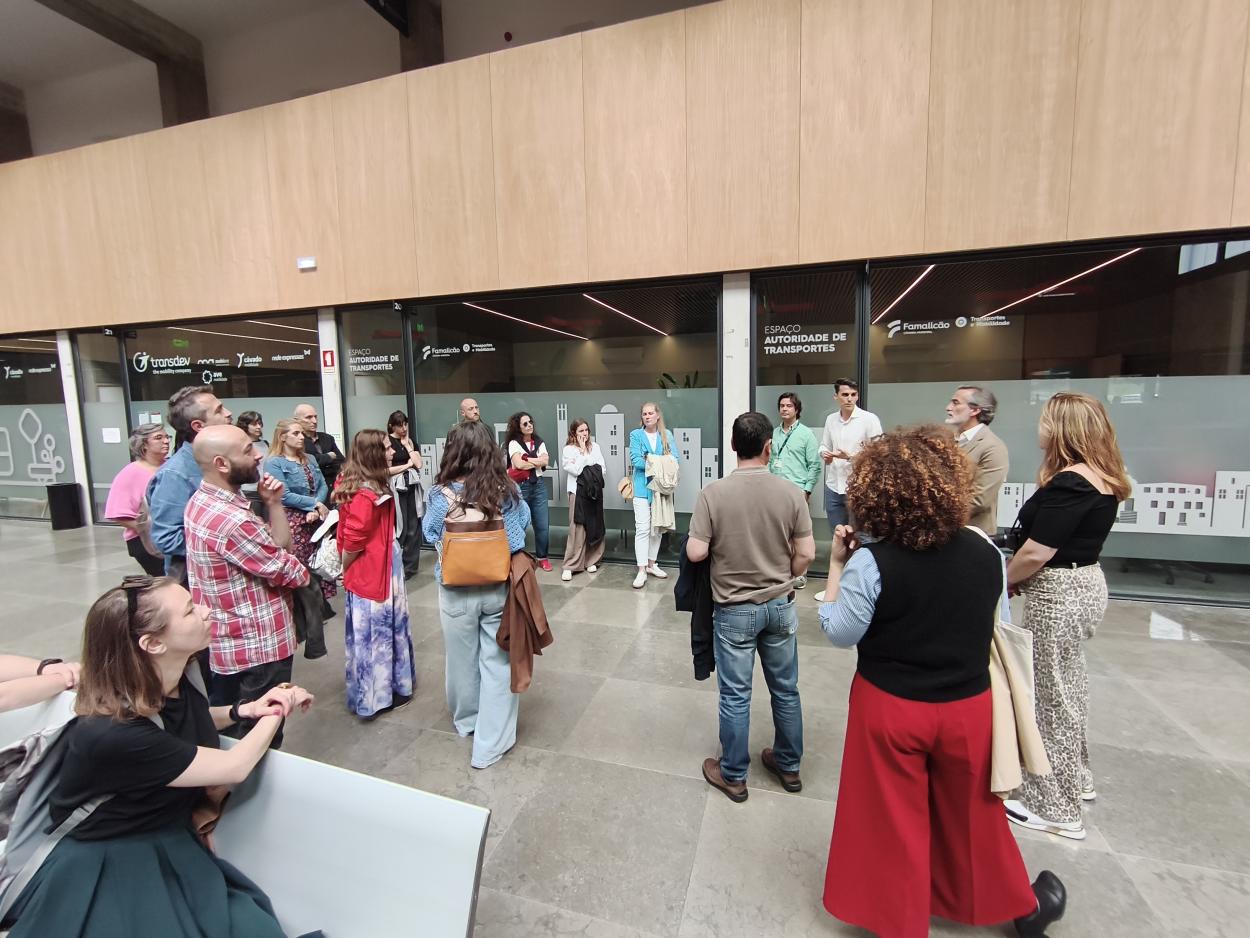
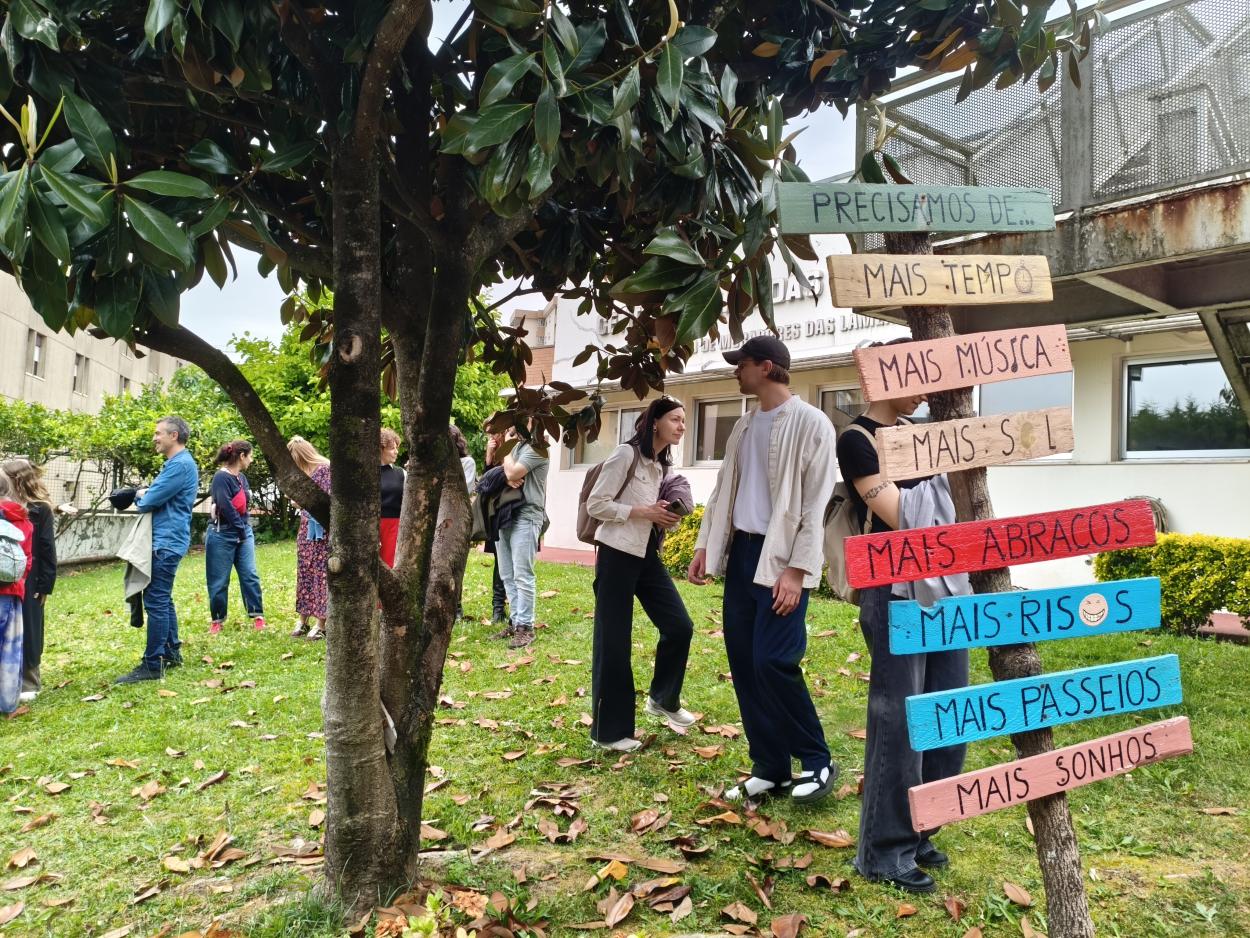
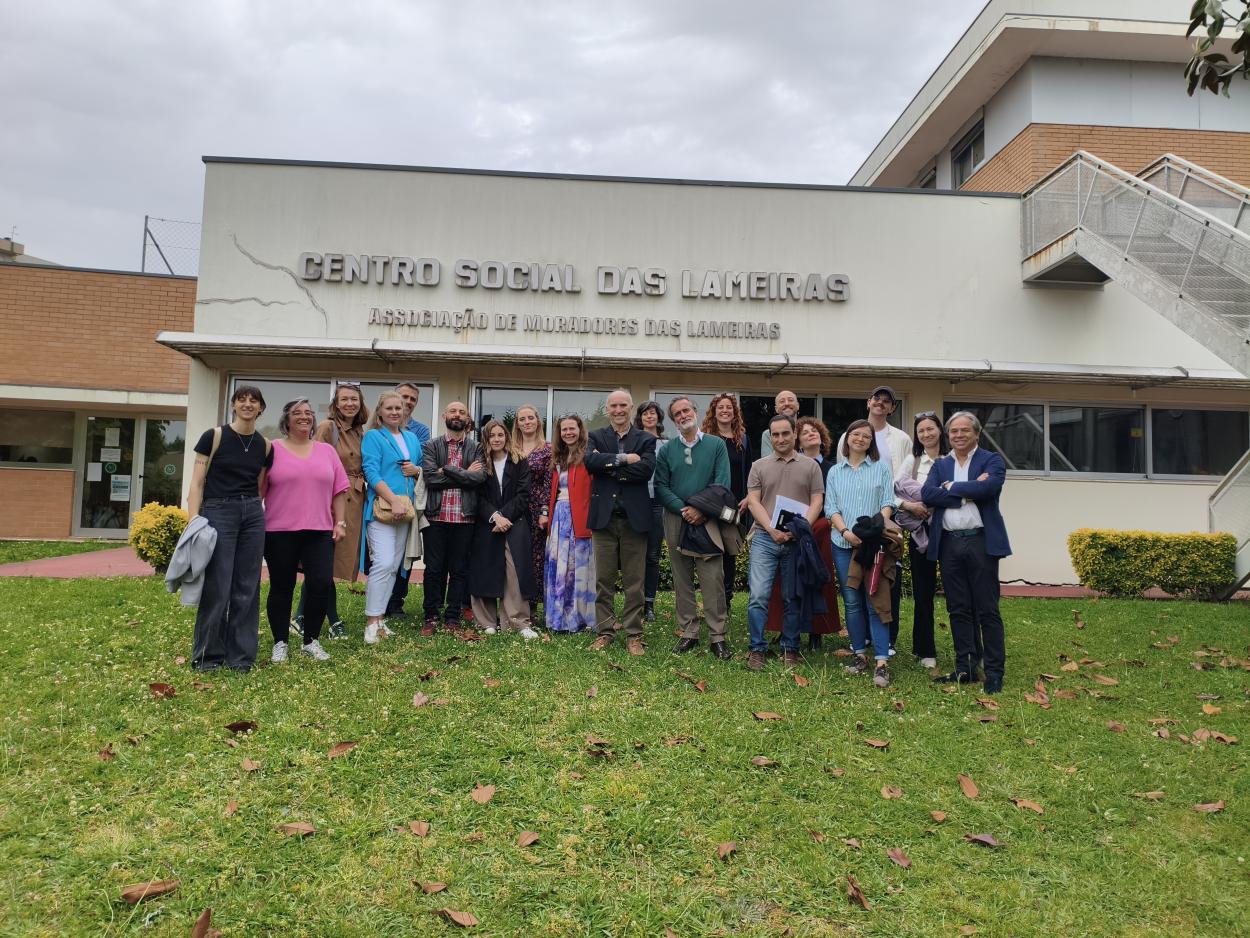
- Lameiras Residents' Association (Associação de Moradores das Lameiras)
Built in the 1980s, this social housing complex of 220 apartments initially struggled with vandalism and was not considered a safe place to live.
Residents initiated a strictly bottom-up approach, taking action without political power to change the area's living conditions. Recognizing a lack of
childcare, the community built a kindergarten, which eventually expanded into a school for children up to 13 years old. The social center, built
entirely by the neighborhood, now features a common laundry, a kitchen, a small church, and a day center for the elderly. Social and sports services are accessible on-site, drawing people from other neighborhoods to utilize them. The complex is now a safe, multicultural area equipped with a stage for community celebrations, such as the traditional St. Antonio events in June.
- Market and Public Square
The old market building was renovated to support local meat and vegetable producers while incorporating greenery into the open public space. The adjacent northern square, formerly a parking lot lacking pedestrian paths or accessible routes, was historically associated with security issues and unsafe streets. Through collaboration with the municipality, the space was redesigned between 2017 and 2019 and implemented from 2020 to 2022. The area is now a barrier-free pedestrian zone featuring fountains, successfully transitioning from an unsafe parking area into a functional, accessible space utilized by all citizens.
Day 2: Civic Initiatives and New Narratives
The second day of the Transnational meeting shifted the focus toward local civic innovation and the power of shifting urban narratives. Through a series of presentations detailing Braga's approach to the night economy and neighborhood regeneration, the sessions underscored how community-led initiatives and cultural activation can fundamentally alter the perception and reality of urban safety.
Night Economy and Safety Perception in Braga Emídio Meireles, the coordinator of Cities After Dark explained that the night is not an issue to be fixed but a territory to be governed. By activating public spaces and ensuring "alive" streets, safety becomes a natural outcome of urban vitality. Notable activities in Braga include "night tours" co-created with residents and the "Braga After Dark" festival.
"Viva o Bairro" and Residents' Assembly Carlos de Sousa Santos presented strategies for vulnerable neighbourhoods facing social inequality. The "Residents' Assembly" (Assembleia de Moradores) acts as a living lab for bottom-up innovation, while the "Viva o Bairro" mechanism provides public funding to turn community-driven ideas into real interventions.
Espaço CADI and Community Revitalization Ricardo Sousa of Associação Synergia presented the renovation of an old municipal building into a center for inclusive arts and sports. The activation of this building successfully revitalized the surrounding square, making it a safer and more attractive space for families and young people.
Investment Plans Peer Review
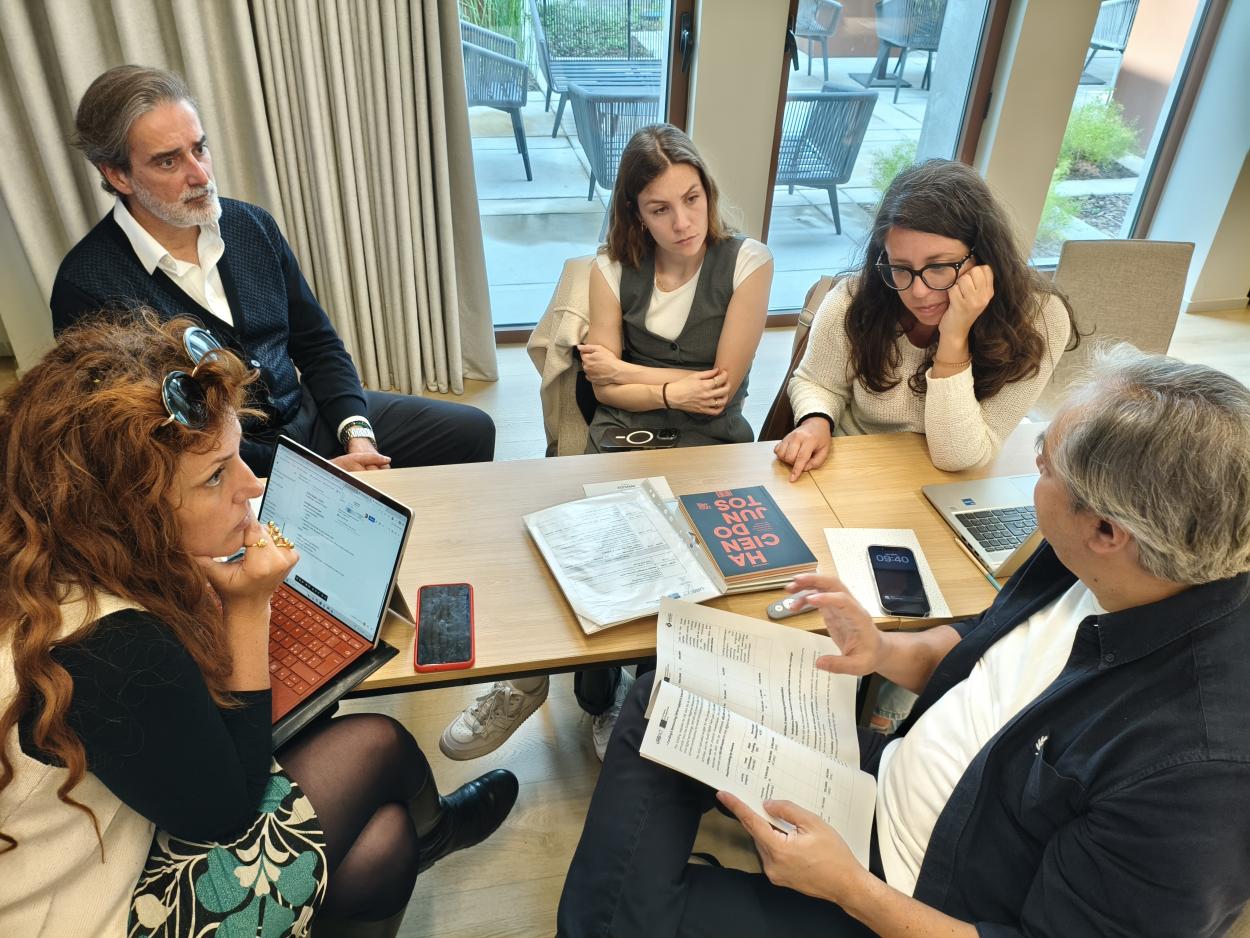
In addition to exploring local initiatives, the meeting included dedicated peer review sessions where partner cities collaborated with ad hoc experts in parallel workshops to evaluate and refine their respective investment plans.
Finally, the consortium dedicated time to further discuss the possibility of drafting a shared pamphlet. This document is intended to serve as a call to action, bringing together the network's local learnings on social inclusion to propose a common, ethical vision for the accessibility and use of public spaces at a broader European level.
Conclusions
The 3rd Transnational meeting reaffirmed a core principle of the project: the night and public space more in general should not be considered a challenge to be "fixed," but rather an opportunity to be guided. It was clearly established that urban safety is the natural outcome of the vitality and activation of public spaces.
When streets and squares are alive and populated, safety becomes an organic component of the urban fabric rather than a matter of forced control.
Key lessons from the sessions highlighted that:
- Culture acts as a powerful governance tool, and narratives shape behavior and perceptions of the city.
- Prevention is systematically more effective than control.
- Public space must remain public, accessible, and livable for everyone. It serves as a "neighborhood democracy academy," where the mission shifts from the physical preservation of buildings to the preservation of the social fabric through active use and shared ownership.
- The activation of public spaces directly correlates with inclusion; as spaces become more active with community events, they naturally become safer and more welcoming for diverse groups.
The experience in Braga demonstrated that reframing both the nighttime economy and the daily use of public squares through co-created initiatives can reshape urban identity and improve collective well-being.
Next Steps
The consortium is now entering the final implementation phase, with several key milestones and deadlines leading to the project's closure:
- 9-10 July: The Final Conference will be held in Riga, serving as the culminating moment to share the work accomplished, invite
stakeholders, and finalize action plans. - August: Final deadline for the completion of local projects and for the submission of Investment and Continuity Plans and final deliverables.
- September: Participation in the URBACT City Festival in Cyprus, which is a vital opportunity for disseminating results and networking at the European level, alongside the completion of expense and budgeting checks.
- Long-term Sustainability: Partner cities will coordinate with other platforms to advocate for public space policies, regulation, and funding at the EU level beyond the project's lifespan.