
On April 10, on the occasion of “GeoNight 2026: The Night (and Day!) of Geography”, Rome’s URBACT Local Group (ULG) organised the event "The Seedbed and Orangery of San Sisto and Villa Celimontana", curated by the Department of Planning, Design and Architectural Technology of the Sapienza University. The event was held at The Semenzaio (seedbed and plant nursery), in the Aranciera (Orangery) of San Sisto park and in Villa Celimontana.
The event saw the active involvement of Roma Capitale, ULG members, in particular the Italian Geographical Society, the Center for Modern Studies (CSSM) and 15 y.o. students from the Agricultural department of the Domizia Lucilla" Institute of Higher Education.
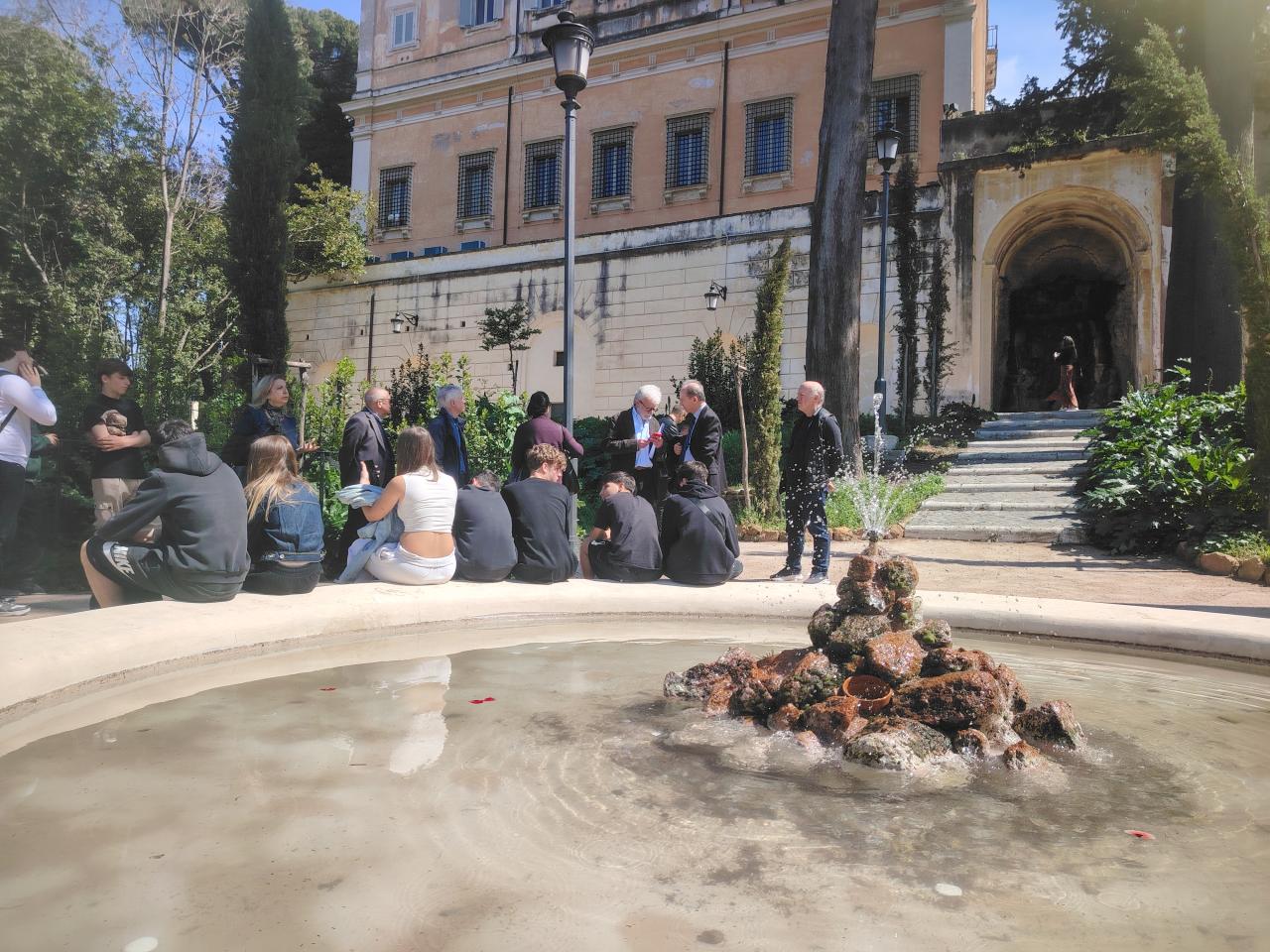
The day started with architects from CSSM welcoming the students at the Villa Celimontana and guiding them on a brief tour of the hidden water features housed within the Villa: the "Fontanelle della Lupa" and the "Fontanella dei Dolmen"; two fountains which mark the modern history of the Villa and its opening to the public as a renovated urban garden in 1928.
Researchers from the Italian Geographical Society, then, previewed the exhibitions set up on the occasion of GeoNight in Palazzetto Mattei, within the Villa Celimontana, for the students and the public: one dedicated to the Italian explorer Ermanno Stradelli, marking the centenary of his death, and a second one called "FARMO. Farms on the Move. Contemporary Transhumance: a Visual Investigation."
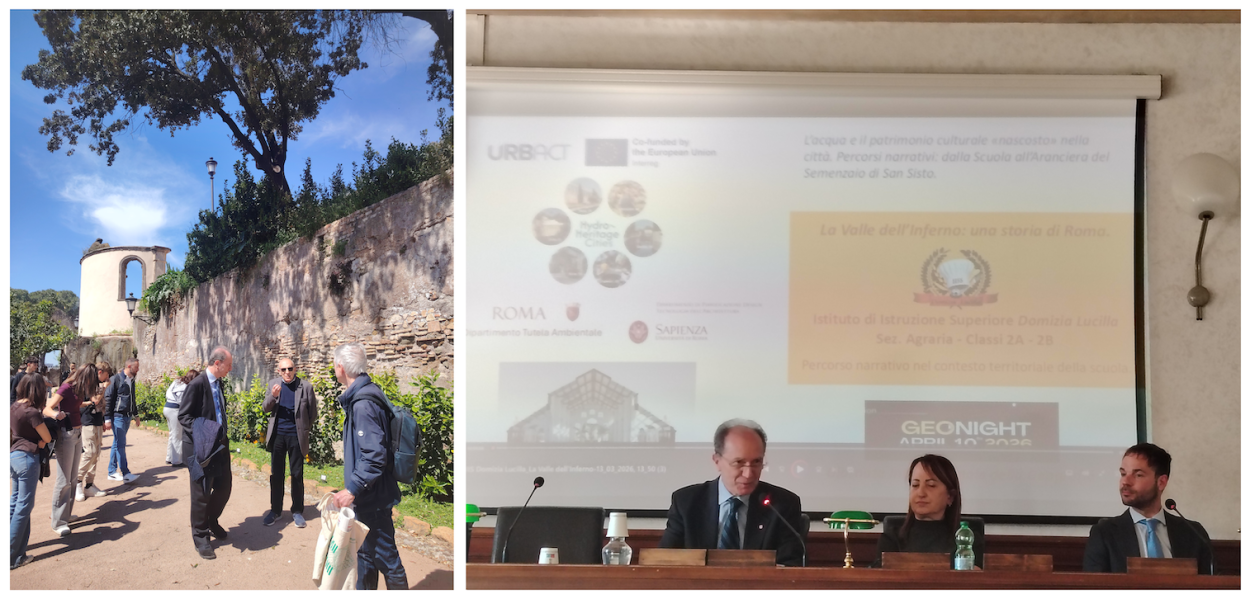
The central moment of the morning was the presentation of "The Valley of Hell. A Roman Story" video, that the students created in the frame of Rome’s Hydro-Heritage Cities action: "Water and the 'hidden' cultural heritage of the city. Narrative journeys from the school to the Orangery of the Semenzaio di San Sisto." The boys and girls presented the story of a now-hidden urban historical and water heritage located near their school. The Valle dell'Inferno (Hell Valley) takes its name from the ditch that ran through this area, once rich in springs, which had been inhabited by Roman brickmakers who, using the clay and water of the Valley, produced the bricks that built Rome until the 1970s. The screening was the event’s highlight because it encapsulated the communal and participatory spirit and perspective of the Hydro-Heritage Cities project.
A second tour, organized also by the CSSM, followed, from the Palazzetto Mattei to the Semenzaio di San Sisto passing through the recently restored "Clivio" and the oldest fountains along the route. Thanks to the assistance of Rome’s Department of Environmental Protection, it was also possible to visit the Secret Citrus Garden, a terraced area of the villa ideal for growing rare citrus fruits; an outdoor version of what was once the Orangery. Here, in a corner of the garden, the ancient "Hercules with the Hydra" fountain is what remains of a heritage of fountains transformed or lost over time.
The event concluded at the Aranciera (Orangery) with a kind welcome from Sabrina Alfonsi, Rome’s Councilor for Agriculture, Environment and Waste Management, who expressed great interest and involvement in the HHC project and her hope for the full development of the actions undertaken so far.
The event was the final testing action of Rome’s Hydro-Heritage Cities project, which sought to explore and co-design the ways in which citizens, and particularly the younger ones, could be actors in generating initiatives that enhance the historical, natural, cultural and civic value of the Aranciera of the Semenzaio di San Sisto