
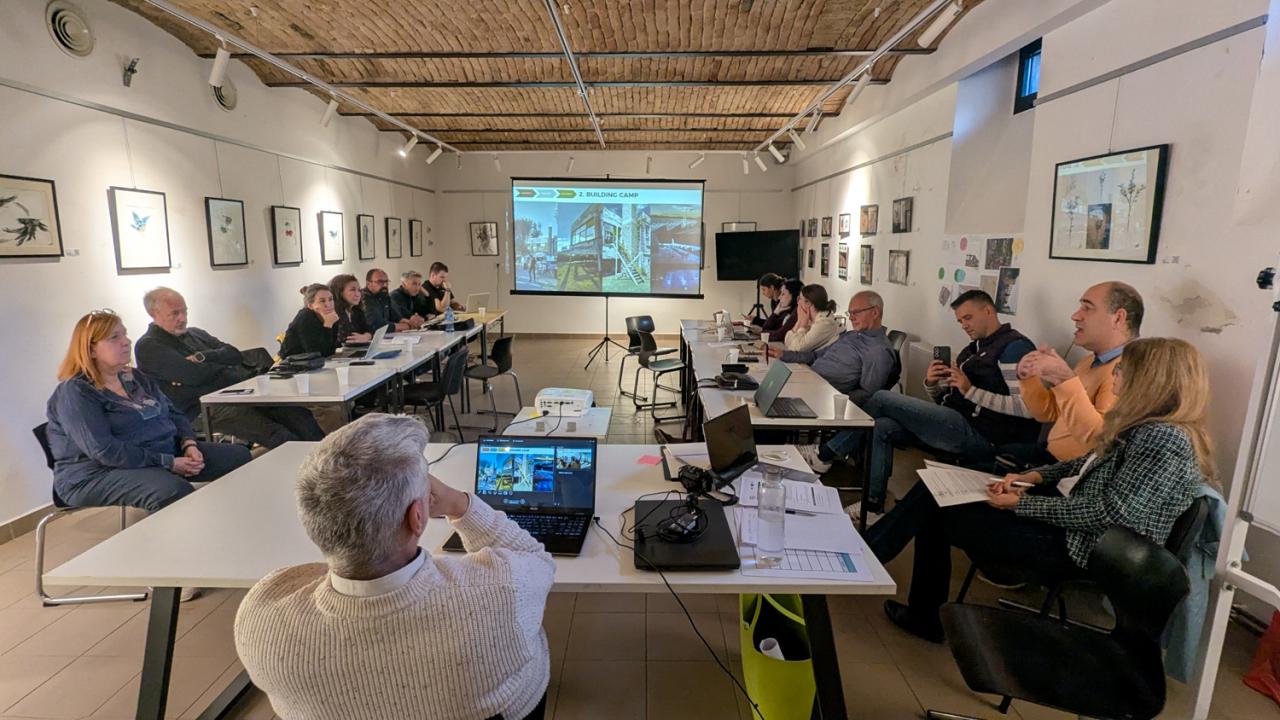
Six large posters cover the walls of the room in the City's Historic Museum in Sombor, Serbia. Each one is crowded with words, arrows, photos, sketches and fragments of stories. Sparks, flows, turbulence, sudden realisations and ripples into the future are all contained in these creative boards. Together, they form a collective portrait of the Hydro-Heritage Cities network at mid-journey - not a checklist of achievements but a map of urban experiences.
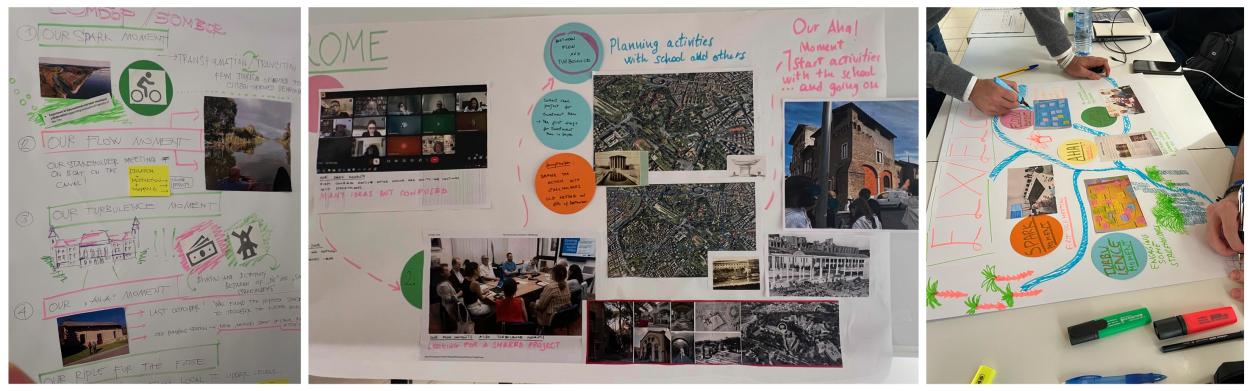
These artworks are the outcome of the Memory Clouds exercise, a moment during the Network’s Midterm Reflection when Chalandri, Elche, Rome, Sombor, Serpa and Roeselare were asked to step back from reporting and instead reflect on what has really shaped their journey so far. What has emerged is honest, sometimes messy, often insightful … and deeply human.
Halfway through the network’s journey, the question is no longer whether hydro-heritage can act as a lever for sustainable urban development. That debate has already been settled. The real challenge now is how to make this kind of leverage last within complex institutional settings, political uncertainty and limited resources that increasingly represent daily issues in many European cities.
A different kind of midterm moment
Our Midterm reflection was deliberately designed as a space to step back and ask: What has really changed so far? And, taken together, these reflections reveal a network that has moved beyond exploration and is now operating in a space of informed experimentation.
What is emerging after the first year of working together is not a neat or linear picture. Instead, cities describe a journey marked by experimentation, hesitation, frustrations, discovery and recalibration. Spark moments have been often linked to the first time when actors from different departments or sectors sat around the same table. Flow moments appeared when ideas turned into concrete actions, when the Investment Plans started to take fluid shapes. Turbulence revealed structural obstacles such as silos, political uncertainty and also participation fatigue. Aha moments have been generated by doing and testing rather than planning. And the ripples pointed towards futures and actions beyond the project itself.
When testing creates momentum
The real shift in the network has taken place when cities stopped explaining the idea of resilient hydro-heritage and started testing it on the ground. Across contexts, this has been the moment when engagement and understanding of the cross-cutting value of hydro-heritage deepened almost instinctively. “Testing actions are not mini-projects, they are learning devices.” This sentence, shared during the reflection, captures the essence of the moment.
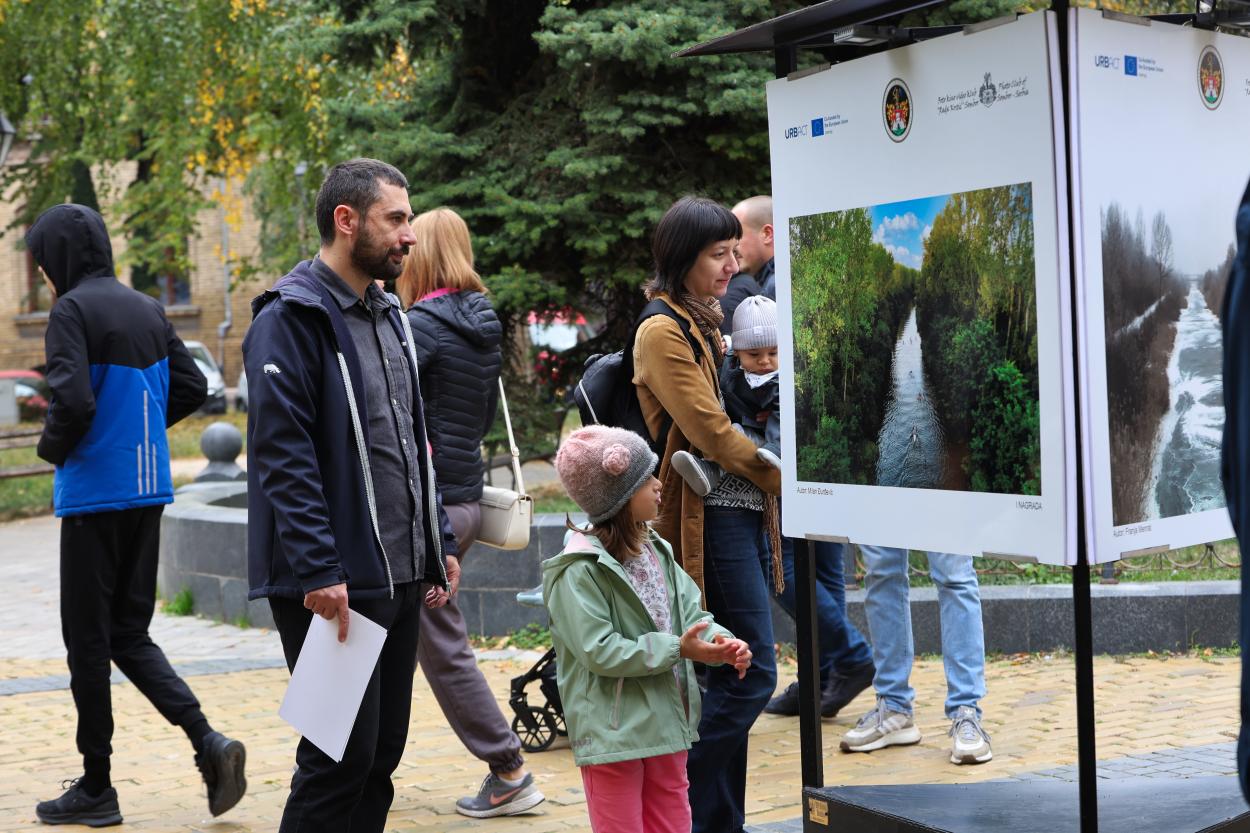
In some transfer cities, this began by simply inviting people to look again at familiar places. In Sombor, a photography competition along the Great Backa Canal has motivated residents to record overlooked spaces, even those in plain sight. This initiative led to a subsequent mapping process and fostered a collective reassessment of the canal, leading to an appreciation of its role as a shared cultural and ecological narrative. Similar acts of walking, observing and storytelling in Serpa and Roeselare have produced the same effect, trunign passive assets into places of meaning.
Education has proven to be another powerful entry point. In Rome, working with schools has transformed hydro-heritage into a lived experience. Narrative walks, lessons and the temporary opening of previously inaccessible paths around the San Sisto Aranciera have allowed children and teachers to physically inhabit the story of the place. These actions have subtly reshaped how the local institutions themselves perceive the site, opening conversations about its future civic and educational role.
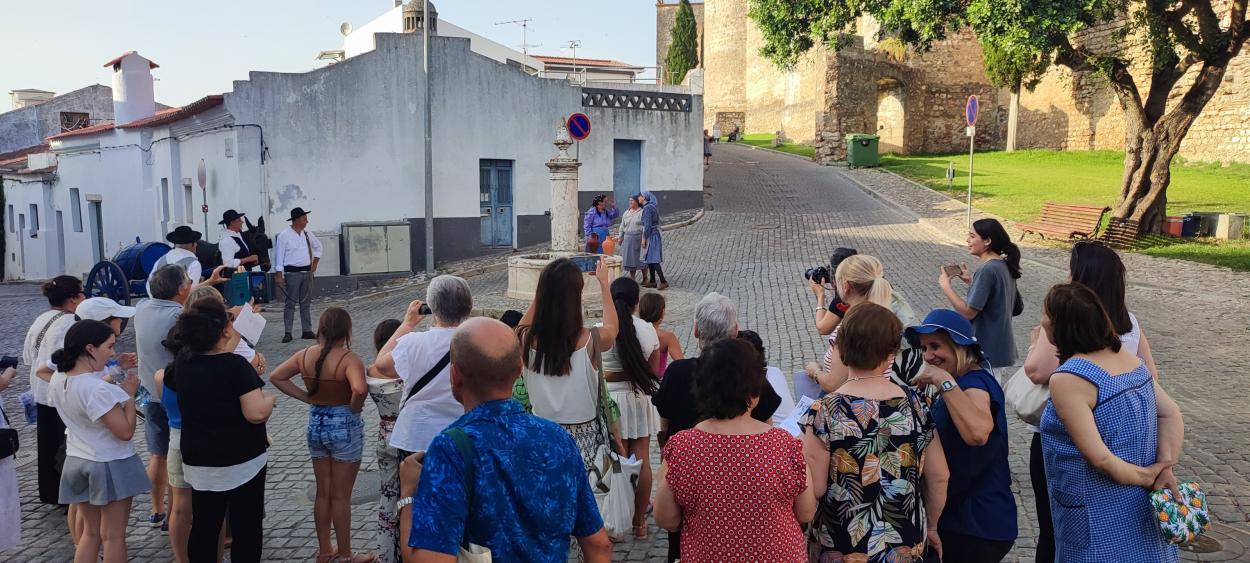
In other contexts, testing actions created space for intergenerational dialogue. In Serpa, ULG-led activities around the fountains have brought together seniors and residents, revealing hydro-heritage as a social connector rather than a static reminder of the past. Here, the insight has been less about a single site and more about a shift in mindset.
Testing has also helped cities confront their limits. In Elche, The Water Day activities have generated momentum and – eventually – an initial political interest in the project, but it has also exposed participation fatigue, rooted in earlier negative experiences of residents and stakeholders.
Cultural storytelling offers yet another pathway. In Roeselare, performances, archaeological work and heritage walks have opened unexpected entry points to water heritage, while fostering new collaboration between cultural and water management departments. As one partner reflected during the midterm meeting :“Once people experience the place together, the conversation changes … and so does the project.” Culture is slowly softening technical boundaries and creating a shared language across sectors.
Taken together, these experiences show that even small-scale testing actions are powerful policy planning devices. They surface assumptions, expose constraints and generate narratives that can later support governance choices, funding strategies and continuity.
The (sometimes) quiet engine of change
Behind these testing actions lies a less visible but decisive factor, the URBACT Local Groups (ULGs). Where these have been active, diverse and supported, progress has accelerated. Where they struggle to form or find legitimacy, even strong ideas remain fragile. The midterm reflection has confirmed what many cities already sensed, that is, innovation transfer is not only about methods or themes, but about people, leadership and trust.
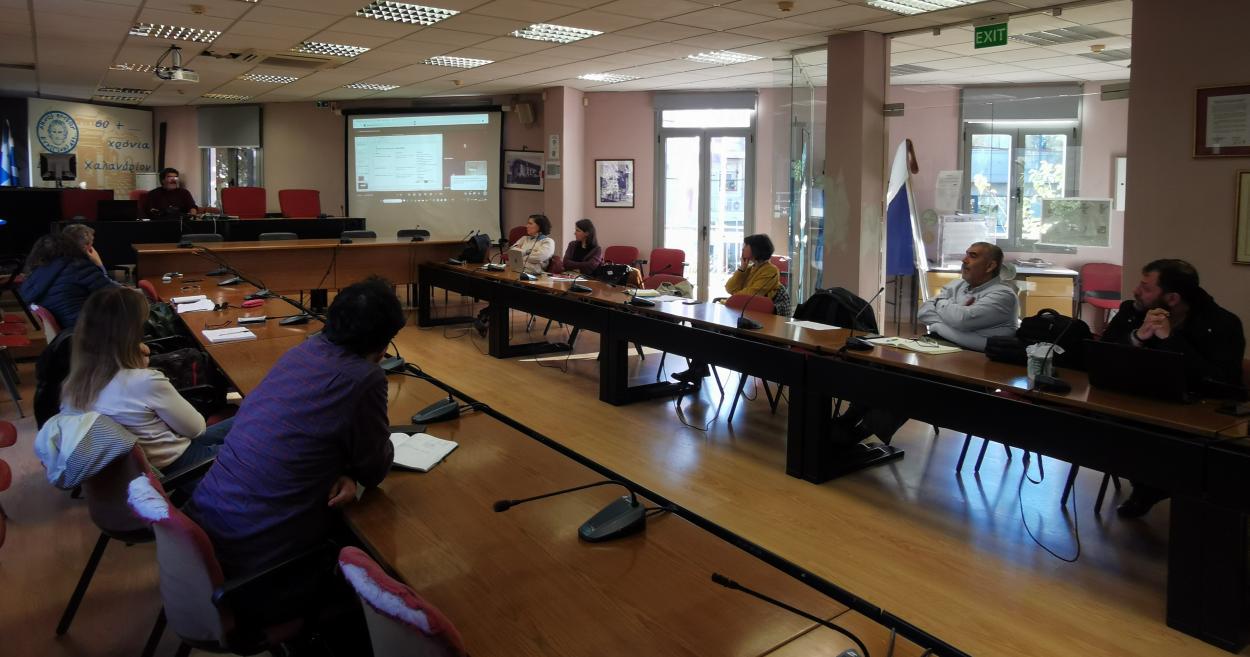
Halandri’s own journey illustrates this well. Starting from a municipal context with little tradition of cross-departmental collaboration, the city has faced a late and challenging ULG activation “We started from below 0 in this regard”- affirms Stefania Gyftopoulou project coordinator of Hydro-Heritage Cities. Yet bringing together staff from different departments for the first time proved transformative in itself “Once people see that the work is concrete and useful, they stay. Abstract discussions don’t hold a group together, shared work does,” continues Stefania. The walkability pilot action in one of Halandri’s neighborhoods, supported by participatory walks and a GIS-based dashboard, intends to create a shared working ground and pave the way for a future Urban Lab.
Beyond water heritage, what transfer really means
While water and heritage are the visible and innovative entry points of the network, what the midterm reflection has also revealed refers to something deeper. What cities are really transferring is not a project or a great idea, but a way of working.
Across contexts, partners are increasingly framing hydro-heritage as part of broader urban resilience, linked to climate adaptation, well-being, education, sustainable tourism and public space. This shift has important policy implications. It moves hydro-heritage out of narrow silos and into integrated urban strategies. Equally important is the methodological transfer. Cities are gaining capacity in participatory design, cross-sector collaboration, data-informed decision-making and storytelling. They are building partnerships that did not exist before and learning how to navigate political uncertainty without waiting for perfect conditions.
The last leg - from learning to legacy
The Hydro-Heritage Cities network is now entering its most decisive stretch and the focus is clear. Less inspiration and more consolidation, fewer new ideas and stronger structures. The task ahead is to translate moments of insight into investment logic, governance models and monitoring frameworks that can survive beyond the project.
At the end of the Sombor meeting, the six Memory Cloud posters were still on the walls. No one tried to tidy them up or to turn them to conclusions. That felt right. As the network moves into its final phase, the task is not to smooth these clouds away, but to take stock of what has been learned for the drafting of the Investment Plans, so that the “aha!” moments, sparking stories, partnerships and (sometimes turbulent) practices that have emerged during this leg of the journey can continue to flow into the next wave.