
Testing actions as evidence labs
By the time partners met in Sandyford, the network had moved well beyond studying Újbuda’s experience. Each city had started to test its own hypothesis of transfer.
The testing actions were small, local and time-limited, and they functioned as “evidence labs”: practical ways to understand how people respond when culture is used to reconnect communities.
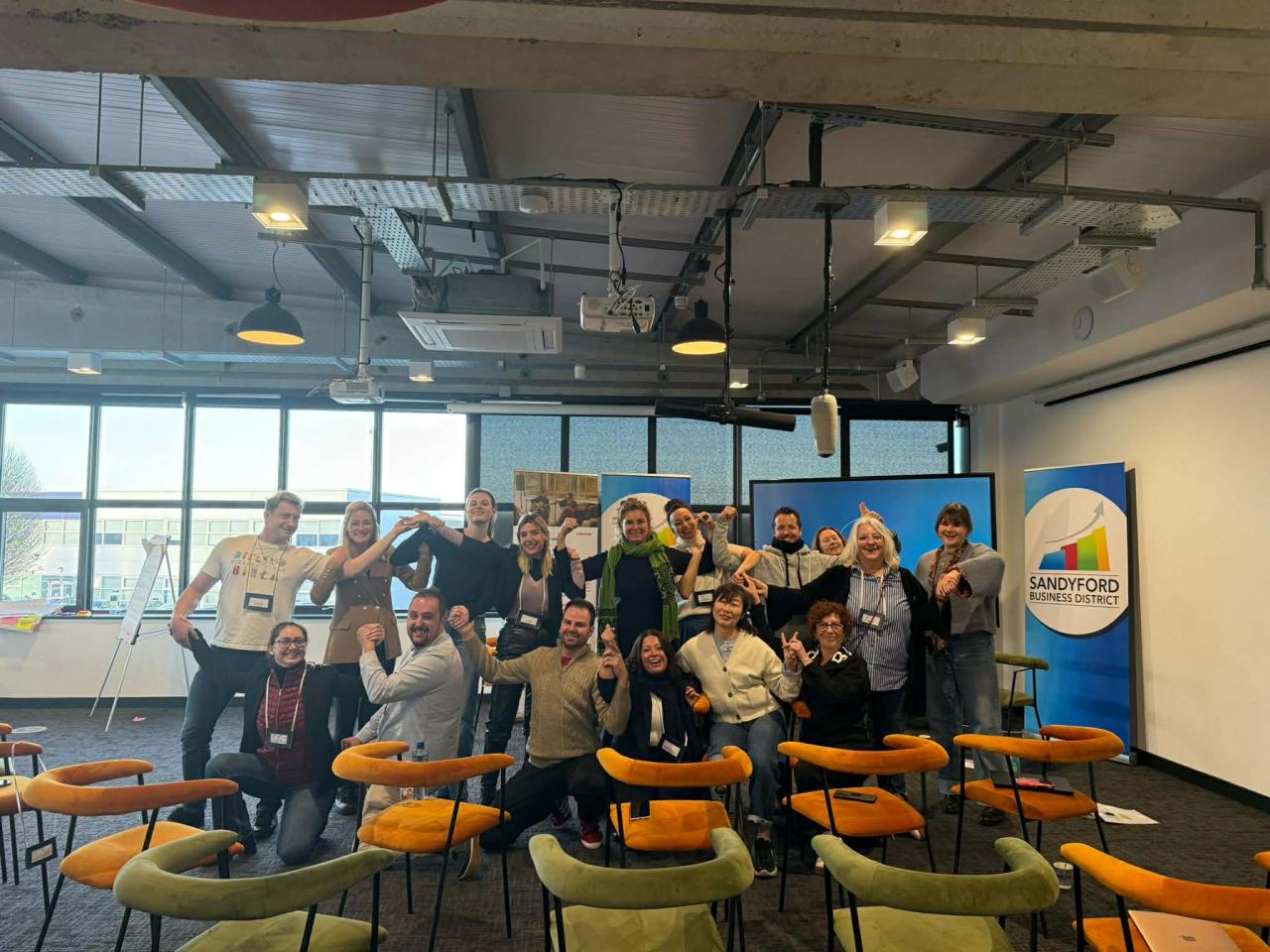
In Sandyford Business District (IE), the testing action used storytelling to explore the challenge of “parallel societies”. The district is diverse and highly educated, with almost 6 000 residents and a strong international profile. Yet many people live side by side without real opportunities to meet or build lasting connections. Through preparatory workshops and a final public event, residents and workers from different backgrounds shared personal stories about belonging, friendship and everyday life. The storytelling action revealed that the need for community is not limited to those usually described as vulnerable or isolated. As Diletta Panero, story-telling’s expert, put it, “Although they came from abroad and worked in technology or finance companies, they wanted to belong to a concrete place, to a community where they could be recognised.”
In Bielsko-Biała (PL), loneliness was traced and explored through trees, streets, myths and drawings. All started with the isolation felt by many young people and a general fragile emotional connection to public and natural spaces. The city tested two linked approaches. The first mixed tradition with technology. They used street art and Slavic mythology to invite young people to reinterpret local identity through contemporary visual language and a digital urban trail. The second, the “Loneliness Tree”, used a tree as a social connector: residents and stakeholders came together through guided walks, sound recordings and ecological observation. Nature and art became tools to understand loneliness as something rooted in places and relationships.
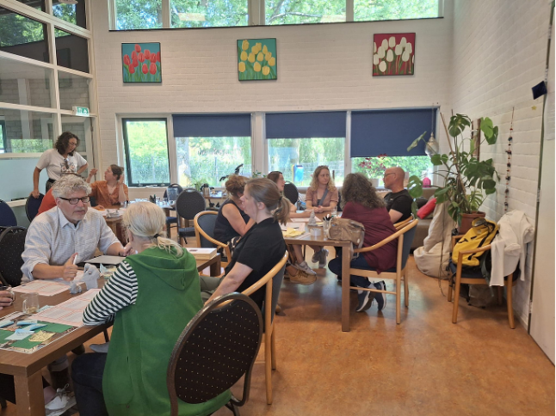
In Amersfoort (NL), a dynamic and quite prosperous Dutch city, almost half of residents report feeling lonely. Within RECUP, the city explored loneliness through creative methods and tested a more direct response through Maatjesfoort, a buddy-to-buddy support prototype. Vulnerable residents were paired with local volunteers for regular, informal contact, from small repairs to shared activities in community centres. In three months, 12 buddy-matches were realized. “Reach out, make a difference” was the message behind the action: before formal care becomes necessary, everyday social connections can help people feel more stable and less lonely. And the evidence was found also in small moments: an unexpected phone call or a “Hi, how are you?” in the street. For one person, that can make not only the day, but the whole week.
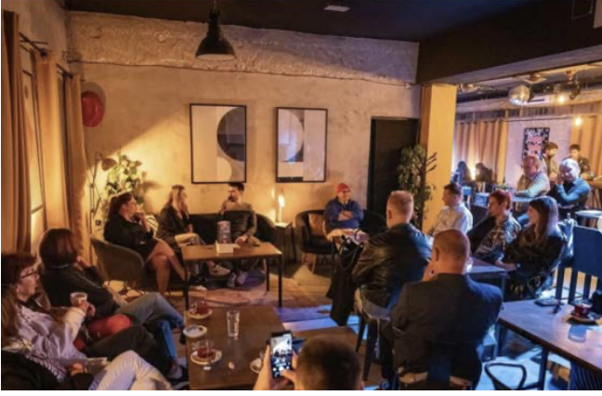
In Dubrovnik (HR), the testing action took place into the former TUP factory, a site that still carries the memory of industrial work and of the city’s last socialist cooperative. In a city where much of the cultural offer is shaped by tourism, Dubrovnik raised a different question: can a former industrial space become a place where residents produce culture? During the “Grad od riječi” festival, the site hosted creative workshops for children, a writing workshop, a Human Library with artists and cultural workers, and a “TUP Mailbox” to collect citizens’ ideas.
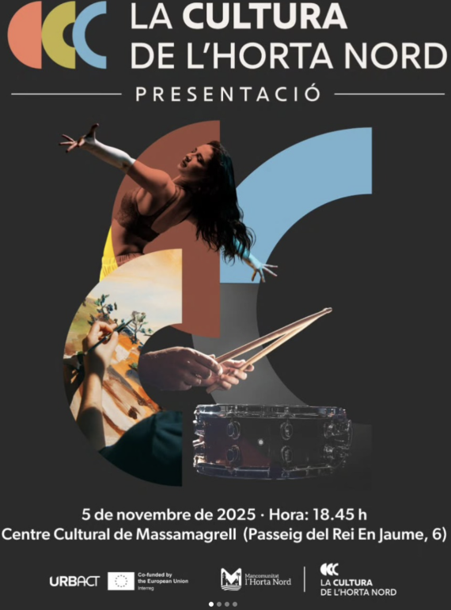
In Mancomunidad de l’Horta Nord (ES), where culture, arts and music are rooted in every single village, the challenge was not culture’s production, but its fragmentation. Ten municipalities, many traditions and cultural actors, but not a common cultural identity and shared communication tools. The testing action created Cultura Horta Nord, a common digital platform and Instagram channel to make cultural activities visible across the territory. The launch event, with theatre and music, was itself a small act of territorial identity-building. The platform is now a first step towards stronger coordination between municipalities, associations, artists and residents.
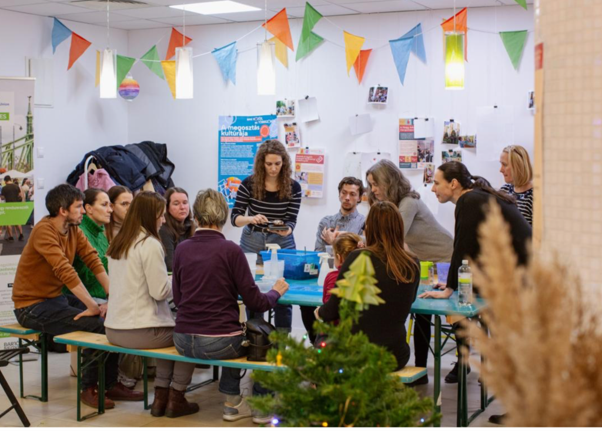
In Újbuda (HU), the original good-practice city, RECUP became an opportunity to transfer the spirit of CUP4Creativity to a different neighbourhood: Gazdagrét. Through an Advent event series, the city tested how a dense, co-created programme could activate different target groups. Creative workshops, charity runs, serenades, sustainability activities, pop-up community spaces and local fairs took place across schools, libraries, parks and community spaces. The aim was to understand how residents can concretely become co-producers of neighbourhood cultural life.
What these experiments tell us
Diversity was a key element in the transfer and adaptation process held in REinventing Culture in Urban Places URBACT Network. The same inspiration travelled from a cultural district in Budapest to a tourist city on the Adriatic, a Polish post-industrial city, a Dutch welfare-oriented municipality, a Spanish inter-municipal territory and an Irish business district. In each place, it changed shape.
Yet, when partners compared their experiences, two common lessons became clear.
The first is that culture can help cities shape policy. A city can use culture to build trust, reveal hidden needs and give residents a stronger role in shaping their neighbourhoods.
The second lesson is that experimentation is becoming a method of policy. Before going to structural investments, we need to test and observe. This is especially important when dealing with loneliness. Data matters, but they do not tell the whole story. To understand it, cities need to complement surveys and indicators, with stories and carefully observed experiences. In RECUP, emotion is part of the evidence.
Challenges ahead
Learning through experimentation also means exploring what remains unresolved.
Indeed, when it comes to turning successful experimentation into effective strategies, one of the biggest challenges is funding. Many cultural and social initiatives still rely heavily on public resources, often under pressure. One of RECUP’s masterclasses focused directly on this issue. Two messages were clear. Monitoring and evaluation are crucial to make impact visible and attract potential investors, whether public, institutional, philanthropic or private. If cities can show how cultural actions reduce isolation, strengthen local networks, they can make a stronger case for investment. Cities can also act as connectors and enablers. By involving businesses, foundations and local communities, they can also mobilise spaces, skills, materials and voluntary time.
Towards Reflective cities as a model of policy
On that November day in Sandyford, RECUP partners stepped inside the story-telling exercise themselves. The collective performance made one thing clear: when culture is made by citizens and with citizens, it can help cities feel what they are trying to change.
For cities facing loneliness and fragmentation, effective policy may therefore require becoming more “reflective cities”, able to listen, test and observe before investing. In some way, RECUP suggests that culture can offer cities something close to what psychologists call a “corrective emotional experience”: a lived situation, even small, that makes people concretely feel different and perceive themselves or others in a new way.
Perhaps this is RECUP’s most practical lesson for cities: fighting loneliness sometimes begins with a chair kept free or a name remembered. With a small cultural action that makes someone feel invited, expected and recognised, as if their presence will change the room.