
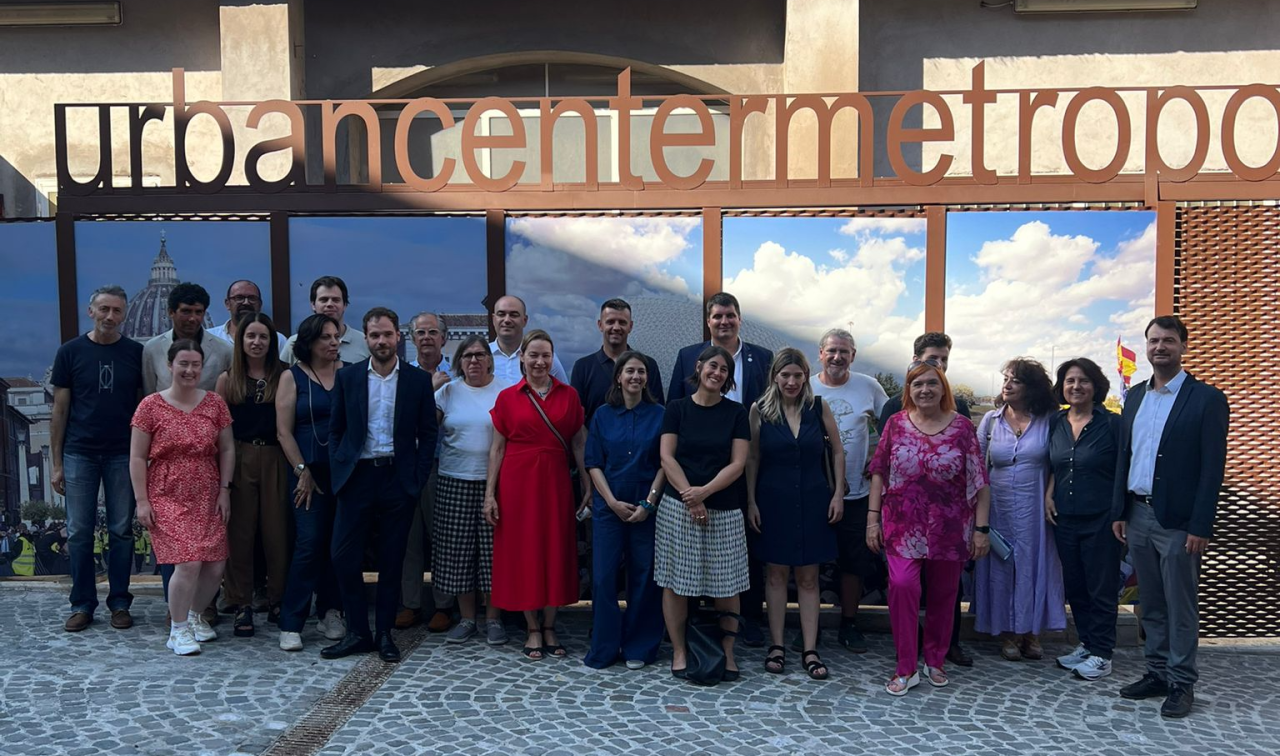
Emotions were high in the two-day Hydro-Heritage Cities' meeting, June 17-18, in Rome. It was the last time the Network partners would come together in the frame of the URBACT project, at least. The joy of seeing the progress and the fruits of a two-year journey in adapting the initial Cultural H.ID.RA.N.T. practice and increasing each city’s potential, added an air of satisfaction for the Network's currency to generate broader water and culture sensitive policies. Yet, it was the aura of a moving farewell between friends -and the wishful desire to meet in new adventures- that left a bitter-sweet aroma to everyone leaving Rome’s brand-new Urban Centro Metropolitano, which hosted the Network’s event.
During the meeting, the Network partners had a great chance to experience first-hand Rome’s policies on re-integrating in the everydayness of the 'eternal city' its hydro-heritage assets. Although water (as resource, infrastructure and culture) had been always a prominent pillar of ‘building Rome’, for decades it was taken for granted remaining hidden and not valorised -including the river Tiber- as architects Chiara Cuccaro and Eleonora Rogato underlined in a sight-visit. The Hydro-Heritage Cities project provided a frame for Rome to highlight and open to the community, with focus on younger Romans, one of the city’s hydro-heritage sites: the Aranciera di San Sisto. This semi-cold greenhouse, part of Rome’s plant nursery, where trees and plants for the city's streets and public spaces were cultivated, has gone a process of restoration transformed into a model of circular ecological building, equipped with rainwater harvesting and bioclimatic energy systems.
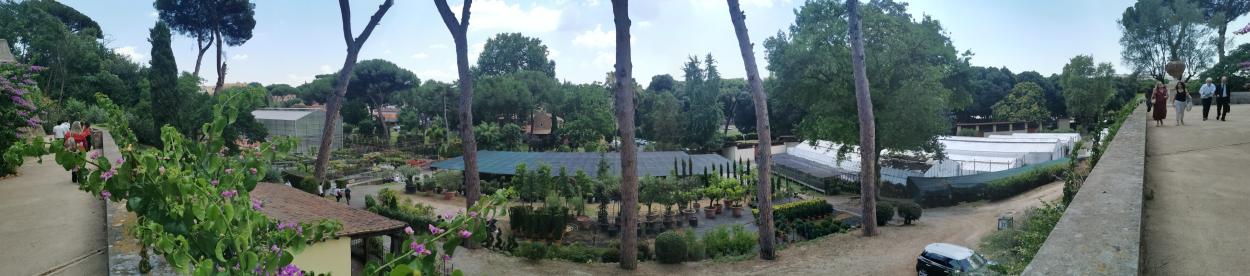
The ‘Orangery’ is located within the San Sisto park, forming a complex with the Semenzaio (seedbed and plant nursery), the Villa Celimontana and numerous fountains between these sites indicating the area’s rich hydro-heritage. During construction, next to Aranciera, an old bridge was excavated revealing more hidden water-ways that Rome wants to highlight with the site’s proposed development. However, the city’s ambition is not just to preserve a piece of Rome’s hydro-heritage but also to transform the Aranciera building into a lively community hub for the cultivation of an eco-friendly culture.
Working with this aim Rome’s URBACT Local Group (ULG) presented its findings, pilot activities and results in the first day of Hydro-Heritage Cities meeting, June 17. The meeting was held, appropriately, in the Palazzetto Mattei, home to the Italian Geographical Society (SGI), one of Rome’s ULG members, in the heart of Villa Celimontana, and included a curated visit to Semenzaio and the Aranciera di San Sisto. After the greeting brought to all the participating cities by the SGI and Roma Capitale, Bruno Monardo, Maria Teresa Cutrì e Dalila Riglietti, for the Department of Planning, Design and Architectural Technology of the Sapienza University of Rome (ULG coordinator on behalf of Roma Capitale) presented their research and activities carried out in HHC project on Rome’s hidden hydro-heritage treasures and how those are dealt with, cared and brought to light in the frame of other large urban interventions, e.g. a “C” Metro-line expansion, in an attempt to formulate a hydro-heritage narrative and route in the city. In addition, the two-year procceses of restoring and re-introducing Aranciera di San Sisto in the community, was also explained: as a pilot on how hidden hydro-heritage could be made known, utilised as green-blue infrastructure and cultural asset by the citizens and (re-)connect with the local memory and everyday life. The screening of the video "The Valley of Hell. A Roman Story", made by students of the Agricultural department of the Domizia Lucilla" Institute of Higher Education (ULG member) was a concrete example of both the central role of water in modern Rome’s life and development and of how citizens and community can unearth the historical, social and cultural value of water-heritage in the city. Finally, the Centro Studi sul moderno, one of Rome’s last ULG members, presented its contribution to the final part of the project.
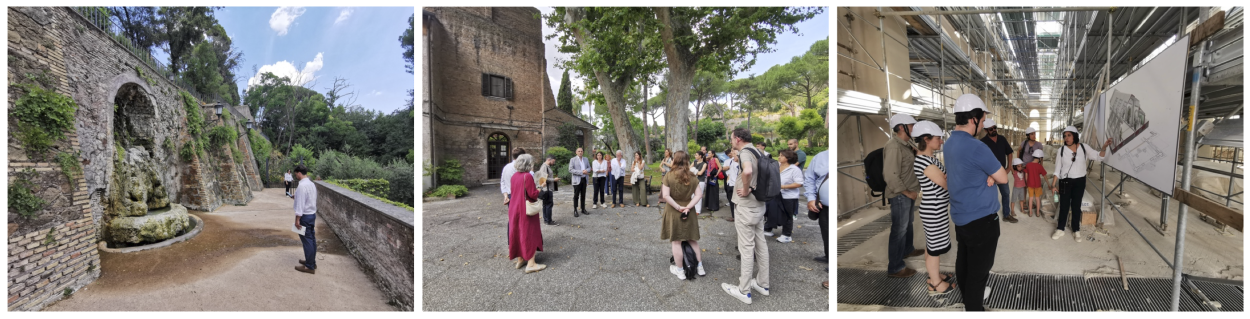
Along these manifestations of Rome’s hydro-heritage interventions, the meeting gave the last chance to the Network for a collective exchange and feedback on each partner’s investment and future plans. Always an inspiring and productive moment. But this time, as the investment plans nearing their final form, one could detect the leaps achieved and sense the fruits of the transfer process; what new and innovative aspect each city brought in, what leaps had it made compared with its initial aspirations, how a ‘good practice’ manifests its potential to generate a policy blueprint tested in diverse contexts and hydro-heritage assets. The project’s final output, a playbook titled, what else, “Hydro-Heritage Cities in Play”, which was presented in the meeting captures all the progress, experience, challenges, learnings, good practices and potential in city and Network levels. Stay tuned to enjoy it soon yourselves.
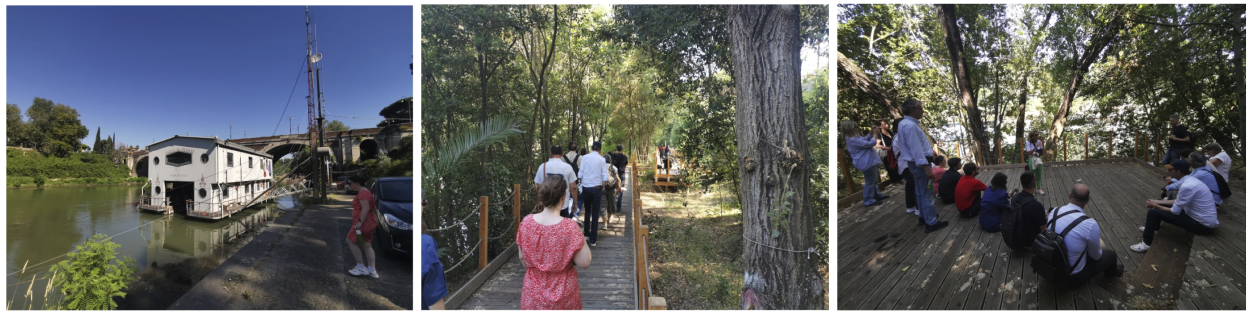
The second day was an opportunity to see – and learn from- Rome’s other projects for reconnecting the city’s water and heritage assets with the everyday life and contemporary needs of its population. More remarkably, we visited one of the 5 Tiber ‘riverside parks’, the Parco d’Affaccio – Lungotevere delle Navi, an example of the city’s attempt to remake accessible Tiber's banks by creating green shelters and increase micro-climate and biodiversity in the city. As said by our guides, the over a century old construction of the 16 meters retaining walls along Tiber’s banks, aimed to contain its waterflow and protect the city, in effect it separated the river from the city’s life and fabric. By creating new cool and leisure spaces along Tiber’s banks, and by highlighting cultural heritage spots that were re-discovered during this process, the City of Rome is on the path of reclaiming its river banks as a new green-blue infrastructure. Besides the ‘riverside parks’ the city aims to make accessible also Tiber’s waters for sport activities by building new quays along its path. The plan to reintegrate Tiber in communal life has been also an exercise in citizen participation. In designing the Lungotevere delle Novi park, for example, took part students of the nearby School of Architecture and a local citizens association. Not coincidentally, the cool 600 m. long pathway under thick vegetation hosts 6 platforms made to act as outdoor classes for the architectural students.
In the afternoon it was hey time for the Hydro-Heritage Cities Network public event, which was hosted in Rome’s newly opened -last December- Urban Centro Metropolitano. A multipurposed building in a renovated old industrial site near Termini, Rome’s central train station, which functions as conference and exhibition space, and as an open to all library and learning space dedicated to urban and architectural matters. Besides our delight to host the Network’s closing event there, both the composition of the two panels and the quality of the contributions made the event at once the best farewell and an inspiring moment to carry on.
As in first day, the presentations of the Network’s partners managed to illustrate the diversity of contexts (small, medium-size and capital cities), hydro-heritage sites, infrastructure and culture, and urban challenges in which the initial best practice of Chalandri’s UIA – Cultural H.ID.RA.N.T. project was adapted. Once again, the application and growth of the initial practice in each city demonstrated the immense distance that the Network and each partner covered during the URBACT phase. Cultural H.ID.RA.N.T.’s methodology not only found fertile ground but it was tested, enriched and turned into a Hydro-Heritage management policy brief for other cities, too.
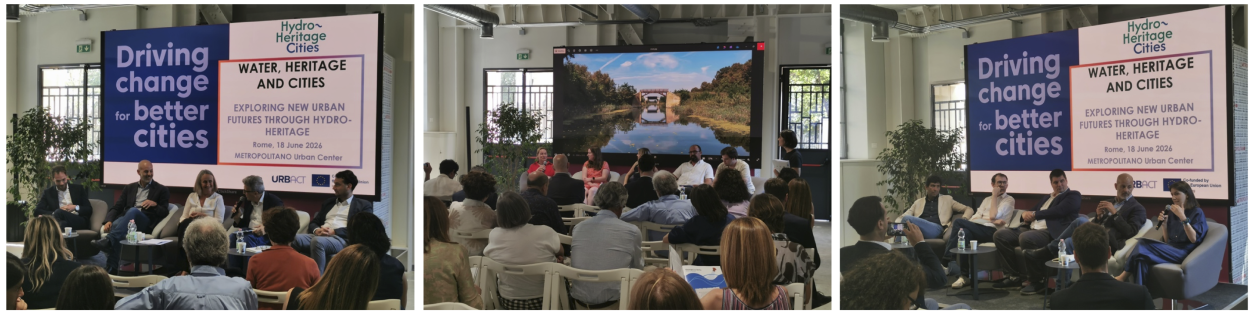
A legacy that was reflected also by our quest panelists that included vice-mayors, city councilors and heads of departments: Rome’s Sabrina Alfonsi - Councillor for Agriculture, Environment and Waste Management Cycle, Raffaele Barbato - Head of N.R.R.P. and European Funds Department & former director of EU’s UIA, and Fabrizio Mazzenga - Director of the Territorial Environmental and Green Area Management - Department of Environmental Protection; Chalandri’s Alexis Mavraganis, Vice-Mayor of Digital Governance - New Technologies & Citizen Service Centers, and Roeselare’s Tom Vanblaere - Head of the Heritage & Archives team; as well as experts Gábor Dóka representative of EU’s URBAN AGENDA Water Sensitive Cities Partnership and Elisa Filippi, Lead Expert of the URBACT ITN RECUP.
We want to thank them all once more, and of course many many thanks to our beloved URBACT Lead Expert Sandra Rainero, for her priceless, worm and fun, we must say, support all along the Hydro-Heritage Cities journey, to our meeting facilitators and collaborators EUI experts Chiara Lucchini and Branislav Antonic and to our Rome partners for their collaboration and hospitality Daniele Cecchi from Rome’s Department of European Funds, Maria Elana Lioy and Sara Lamonarca from the Environmental Department (Offfice for Authorizations and Green Space Enhancement and Office for the Coordination of European, International, NRRP & Jubilee Projects, respectively).