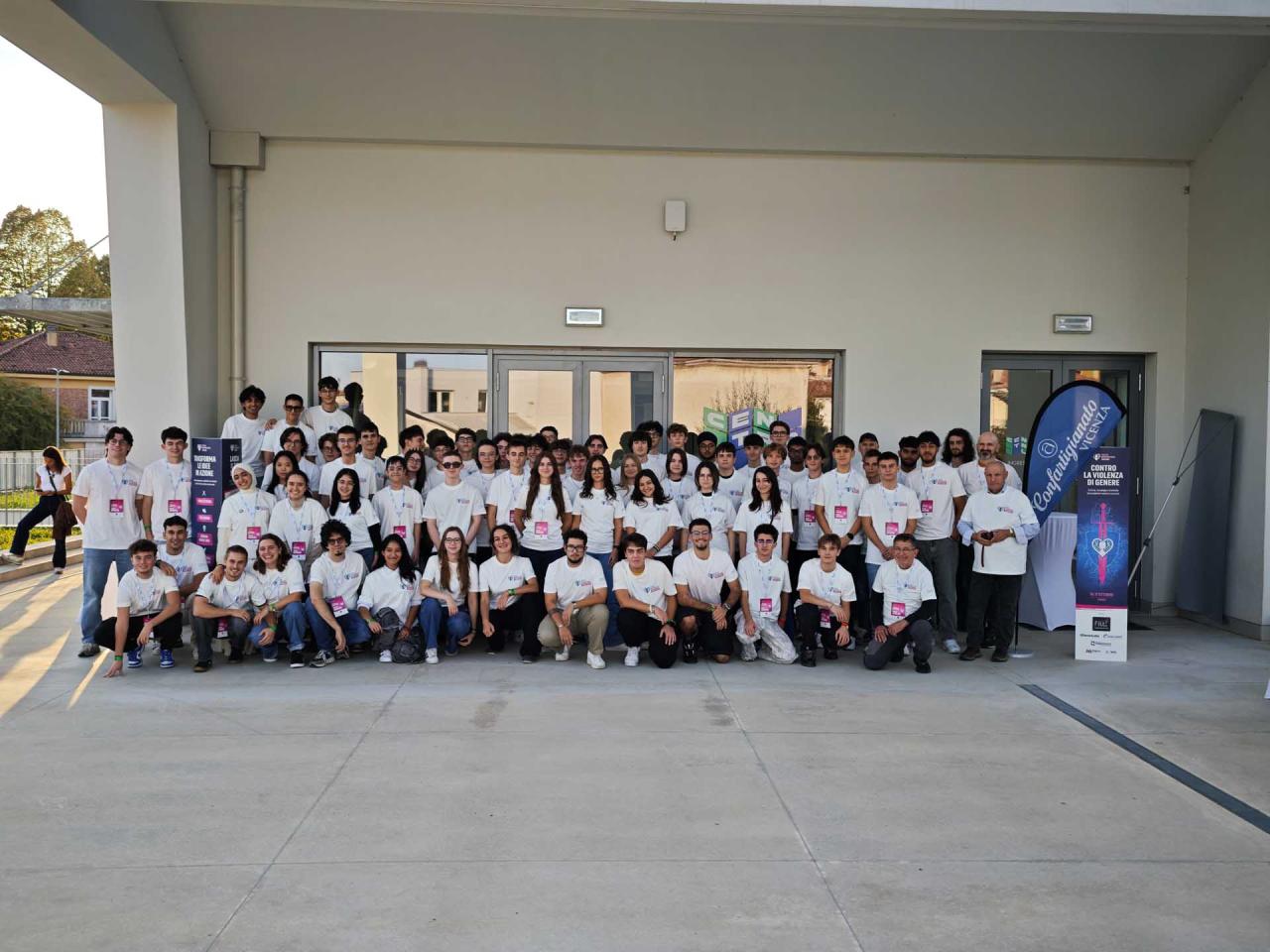
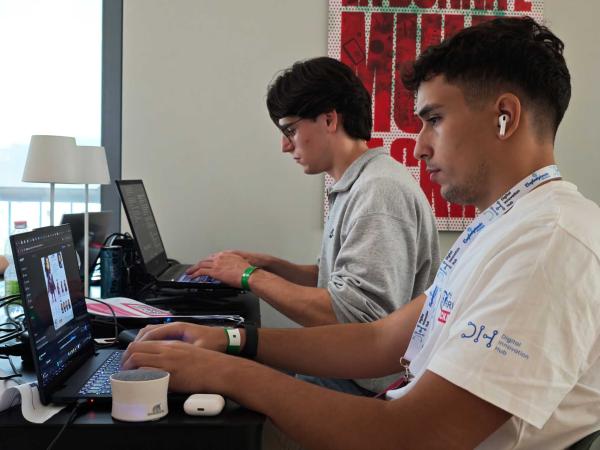
It all began on a Friday morning at 6:00 a.m. at the former Milk Center in Vicenza, a space today dedicated to creative and civic energy. When the lights went down on Saturday evening after 36 continuous hours, 71 people aged 15 to 66, including participants from abroad, had spent a day and a half working side by side. Students and entrepreneurs, developers and social workers, had come together to build concrete solutions to a complex challenge: tackling gender-based violence through innovation.
It was called TechWarriors, the first hackathon in the Veneto region dedicated to this theme. It took place on 16 and 17 October 2026, organised by Confartigianato Imprese Vicenza, through the Movimento Donne Impresa and the Digital Innovation Hub, in collaboration with UNIDAS4EU, the URBACT transfer network of which Vicenza is a member.
The figures help us understand the scale of the problem. According to Istat, almost one woman in three in Italy has experienced physical or sexual violence in her lifetime. Behind these percentages there are everyday experiences and choices: a street to avoid, a behaviour to tolerate, a freedom limited by fear.
Faced with this reality, TechWarriors chose a Tech for People approach, putting people and their needs at the centre. An intersectional perspective guided the work, considering gender in relation to age, origin, disability, work and economic condition. Nine thematic categories steered the teams: from public space and mobility to language, from work-life balance to prevention and support services.
For Vicenza and for UNIDAS4EU, the hackathon was also an opportunity to put into practice a core URBACT principle: cities can develop more effective responses when they involve the people, organisations and skills present in their territory.
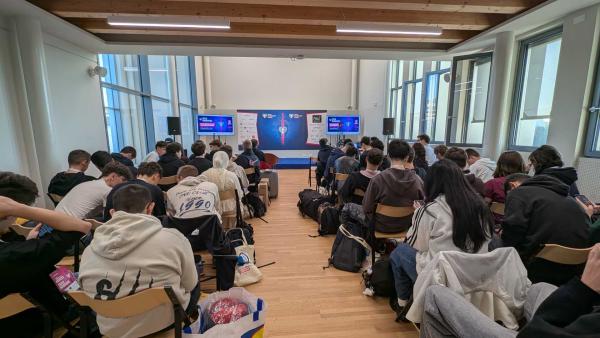
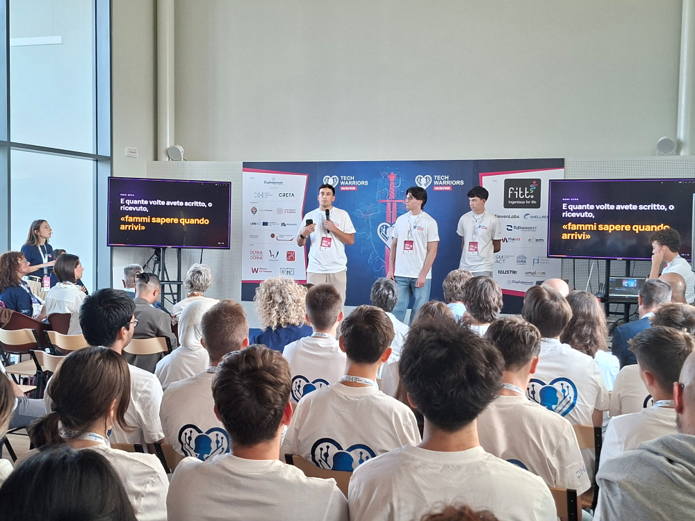
The 36 hours began with motivational talks, including one dedicated to UNIDAS4EU and to the challenge of gender-based violence in urban contexts. The underlying message was simple: innovation is not measured only by the ingenuity of a solution, but also by the people it manages to reach and those it risks leaving out. Technology can become a tool for listening better, recognising needs and testing new responses. The city is the place where this listening can turn into concrete action.
For URBACT, one of the most significant aspects of the experience was the involvement of the members of the UNIDAS4EU URBACT Local Group (ULG) in Vicenza, who for the occasion supported the teams as mentors. Representatives of local institutions, associations, businesses and services sat alongside the participants to help them test their ideas and compare them with the real needs of the territory. The questions were concrete: would it work in our neighborhoods? Who could use this solution? What conditions would be needed to implement it?
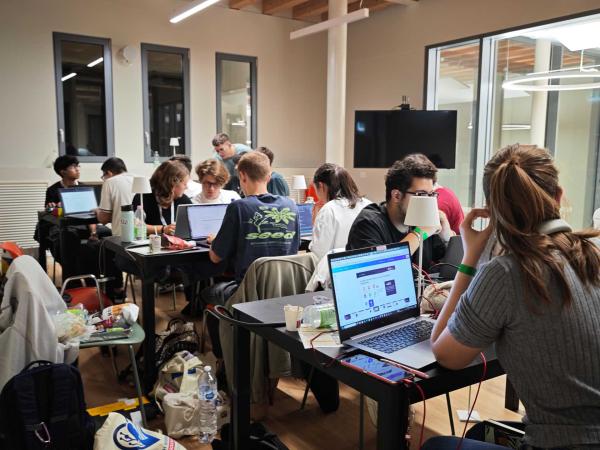
The result was a change of perspective. The local group, normally engaged in discussion and planning, became a space for experimentation. The participants, no longer merely recipients of policies, took on an active role in designing possible responses. It is a concrete example of a participatory and integrated approach: connecting different skills to address a common challenge.
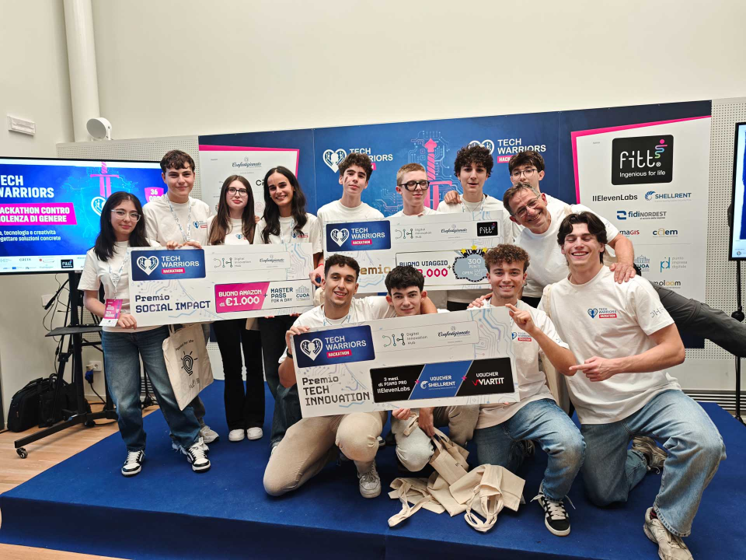
After the final presentations on Saturday afternoon, two juries evaluated 13 projects on the basis of technological innovation and social impact. Among the awarded proposals, three approached the issue from different perspectives.
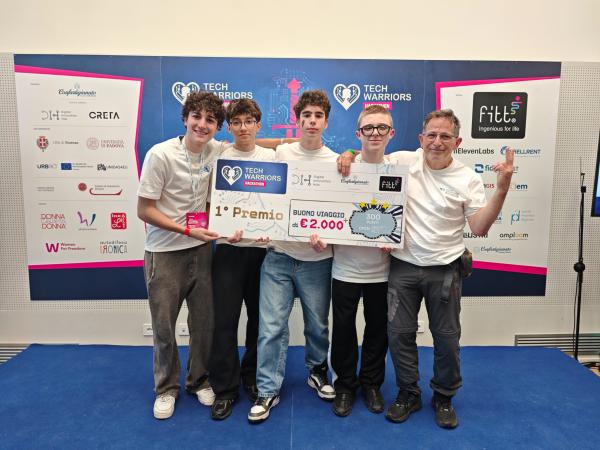
“Era solo una battuta” (“It was only a joke”) – team noAge, first prize.
A seemingly harmless phrase can contribute to normalising stereotypes and disrespectful behaviour. Starting from this observation, the team developed a narrative video game aimed at middle-school students. Through everyday situations, from the classroom to group chats, players are invited to recognise the role of language in shaping relationships and in normalising a lack of respect. The proposal brings prevention into a space familiar to teenagers, using play as an educational tool.
FRIENDlyZONE – team “Ai can do it”, Tech Innovation award.
I personally followed this group in the role of mentor. The project proposes a digital map of perceived safety on the streets of Vicenza. Citizens can rate places, submit anonymous reports, identify routes perceived as safer and use an SOS function in case of danger. The idea is to turn individual experiences into shared information, which could help inform future reflections on the quality of public space, lighting and urban mobility. For it to become an effective tool, it will also be important to consider data protection, accessibility and the ways in which reports are managed.
WeBalance – team WorkLifeWarriors, Social Impact award.
WeBalance addresses work-life balance through an app that connects workers and job opportunities, considering elements such as remote work, flexible hours and car sharing. The project starts from recognising the importance of economic autonomy and of being able to reconcile work and care responsibilities. Reducing the practical obstacles to entering and staying in the labour market means acting on some of the factors that can affect people’s autonomy and their freedom of choice. A special mention for the best use of AI voice tools was awarded to team SOR with “Evidence Please”, testifying to the variety of approaches through which technology can help address the same challenge.
A hackathon can end up as the memory of an intense weekend, or become the starting point of a longer journey. In Vicenza, the aim is to give continuity to the ideas that emerged. The three winning teams have been invited to present their projects again during the URBACT transnational meeting that Vicenza will host in September 2027, sharing the experience with European partner cities.
In the meantime, the winning proposals can be supported in their development and connected with organisations active in prevention and support. Artes 4.0 offers the teams orientation and mentoring services, while the ULG members who supported them can continue to act as a link with the local ecosystem.
The European perspective adds further value to the experience: solutions developed in one context can feed into exchanges with other cities, be tested and, where appropriate, adapted to different needs. Violence against women cannot be solved with an app. It takes prevention, accessible services, cultural change, effective policies and a continuing commitment from institutions and society.
Technology can, however, help recognise needs, test new tools and open spaces for collaboration. A hackathon like TechWarriors allows these possibilities to be put to the test, bringing together generations, skills and viewpoints that do not normally work together. This is the value of the experience for Vicenza and for UNIDAS4EU: not only the ideas developed in 36 hours, but the relationships activated, the skills shared and the possibility of continuing the work over time.
In September 2027, the exchange with European partner cities will offer a new opportunity to share the results and reflect on how to develop these proposals further. Because building safer and more inclusive cities requires tools, but above all collaboration, listening and the ability to turn ideas into action.