
Across Europe, cities are facing an increasingly difficult housing reality. Rising housing costs, growing inequalities, ageing populations, demographic change and pressure on public resources are forcing local authorities to rethink how affordable housing is planned, financed and managed.
At the same time, cities are searching for practical solutions that go beyond simply delivering housing units. Questions of affordability, social cohesion, participation, care, sustainability and long-term community resilience have become central to housing policy discussions.
This challenge sits at the heart of the URBACT Cities4Co-Housing Innovation Transfer Network.
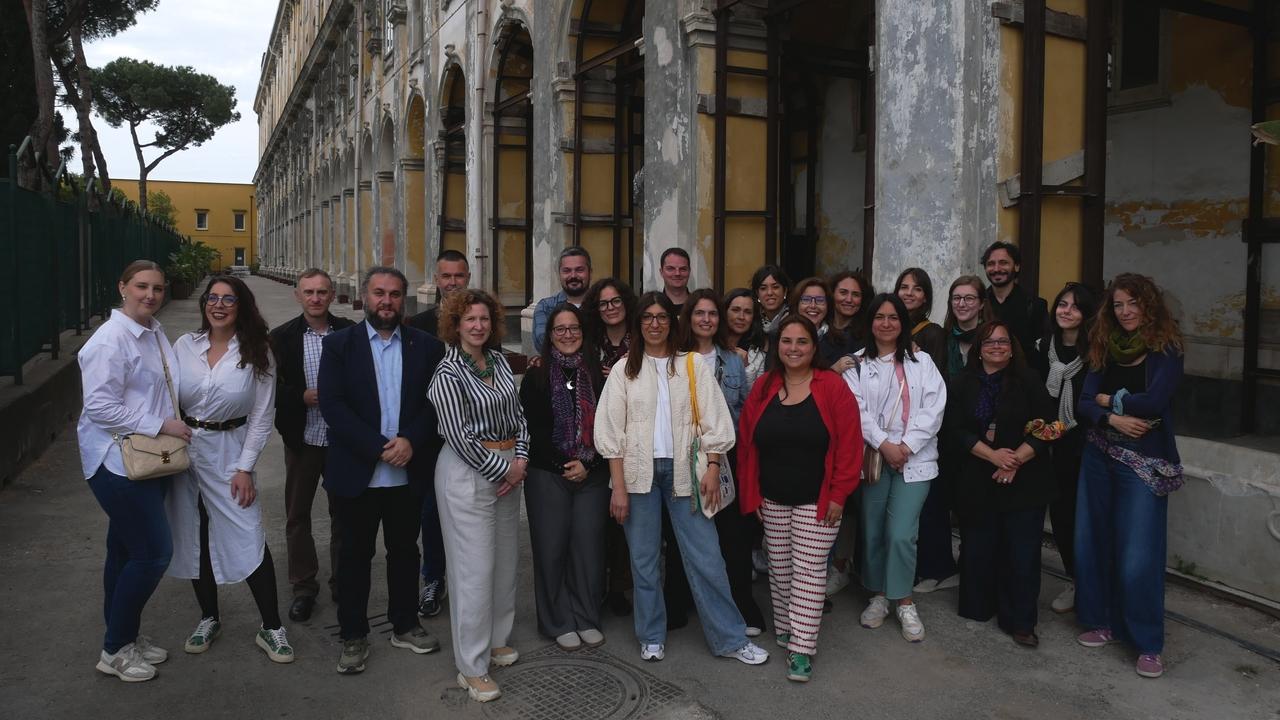
Inspired by the CALICO, an award-winning collaborative housing project in the Brussels-Capital Region, the network brought together the cities of Fuenlabrada (Spain), Naples (Italy), Nikšić (Montenegro), Thessaloniki (Greece) and Vila Nova de Gaia (Portugal) to explore how the principles behind CALICO could help address local housing challenges.
Over twelve months, the network moved beyond understanding the CALICO model and focused on a more difficult task: transforming inspiration into implementation.
The experience revealed important lessons not only about collaborative housing, but also about how complex urban innovations can be successfully transferred between cities.
Understanding CALICO as a Housing System
At first sight, CALICO appears to be a housing development. In reality, it is a housing system.
The Brussels project combines four interconnected dimensions: governance, social, legal and financial arrangements, and building design. Residents participate in decision-making, community life is actively supported, affordability is protected through innovative legal mechanisms, and the physical design of the building encourages interaction and mutual support.
For many partners, the initial challenge was understanding how these different components work together.
The second challenge was even greater.
How do you transfer such a complex model into cities with different housing systems, legal frameworks, governance traditions and institutional capacities?
At the beginning of the Adapt Phase, several partners expressed doubts about the transferability of some CALICO modules. Community Land Trust principles appeared particularly difficult to adapt. In some contexts, there was no equivalent legal framework. In others, housing institutions operated very differently from those in Brussels.
Yet over time, cities discovered that successful transfer was not about reproducing CALICO modules as they exists in Brussels.
Cities increasingly asked:
"Which principles of CALICO can help us solve our local housing challenges?"
This shift proved decisive as the cities began to explore how CALICO modules be translated into practical, locally relevant housing solutions?
This galvanised the cities to move beyond inspiration and begin making concrete decisions. Sites had to be identified. Governance arrangements had to be designed. Stakeholders had to be engaged. Actions needed to be tested. Funding opportunities had to be explored.
The result was a shift from learning about CALICO to actively adapting it. Their journey provides important lessons about how complex housing innovations can be successfully transferred between cities.
Lesson One: Community Comes Before Buildings
One of the strongest messages emerging from the network is that collaborative housing begins long before residents move into a building.
Across the partnership, cities increasingly recognised that creating a successful community requires deliberate preparation, participation and relationship-building.
In Vila Nova de Gaia, this thinking influenced the development of a housing allocation model for thirty housing units in Grijó. Rather than treating allocation as a purely administrative exercise, the municipality developed criteria designed to create a balanced and supportive community from the outset. The city also proposed a dedicated Social and Housing Transition Team to support residents before and after moving in.
Fuenlabrada reached similar conclusions through its work on the SHARE project. Local testing actions focused on engaging both young and older residents in discussions about future governance arrangements, voluntary time-banking and the use of shared spaces. The objective was not simply to design a building, but to understand how future residents might interact and support one another.
In Naples, resident participation became central to the development of the Stadera 1.3.7 Solidarity Condominium project. Through surveys and engagement activities, future users contributed directly to shaping elements of the project design.
Across all three cities, a common lesson emerged: successful collaborative housing starts with people, not buildings.
Lesson Two: Governance Is the Hidden Infrastructure of Collaborative Housing
At the beginning of the network, many partners assumed that the most difficult aspects of transfer would be legal and financial.
Community Land Trust principles, affordability safeguards and innovative ownership structures appeared challenging to adapt across different national frameworks.
While these issues certainly required attention, a different challenge quickly emerged.
Governance emerged as the most complex challenge.
- How are decisions made?
- How are responsibilities shared?
- How are conflicts resolved?
- How can resident participation be maintained over time?
These questions proved fundamental across the network.
Thessaloniki placed governance at the centre of its local approach. Through the development of a "Statute Starter Kit", the city began creating practical tools that future residents could use to manage collective living arrangements. Work also focused on defining decision-making procedures, house rules and conflict-resolution mechanisms.
Nikšić approached governance through the establishment of management boards in residential buildings within the Stara Varoš neighbourhood. While initially linked to future energy-efficiency investments, the initiative also created the foundations for collective decision-making and community management.
The importance of governance became particularly clear during the network's final meeting in Naples, where partners engaged directly with CALICO residents with finalised proposals. These conversations revealed that successful collaborative housing is not characterised by the absence of disagreements. Rather, it depends on having structures capable of managing differences and supporting collective decision-making.
For many partners, these exchanges provided some of the most valuable learning of the entire network journey.
Lesson Three: Testing before Investing
One of the most important features of the Cities4Co-Housing approach was the use of Testing Actions.
Rather than moving directly from ideas to implementation, partner cities used small-scale experiments to explore how proposed solutions might work in practice.
These actions allowed cities to engage stakeholders, test assumptions and identify potential barriers before committing significant resources.
In Naples, affordability mapping provided new evidence to support future housing policy decisions.
In Thessaloniki, testing actions helped refine governance arrangements and resident matching processes.
In Nikšić, work on management boards and energy communities highlighted the institutional foundations required for future investments.
In Fuenlabrada and Vila Nova de Gaia, testing actions helped cities understand how future residents might engage with collaborative housing arrangements and shared community spaces.
The Testing Actions demonstrated that innovation transfer is not a linear process. It requires experimentation, learning and adjustment.
Most importantly, they can act as risk-management tools that help cities move from innovation to designing implementation ready solutions with greater confidence.
Lesson Four: Housing Innovation Requires Institutional Innovation
The network also highlighted that housing innovation cannot be delivered by housing departments alone.
Many of the challenges addressed through CALICO sit at the intersection of housing, social policy, urban planning, community development, energy transition and local governance.
As a result, successful transfer required new forms of collaboration.
Throughout the Adapt Phase, partner cities worked closely with their URBACT Local Groups, bringing together municipal departments, housing providers, social organisations, community representatives, experts and residents.
A number of partners reported that participating in the Cities 4 Co-Housing ITN, lead them to experimenting with new ways of doing things locally, opening their silos and reaching out to other stakeholders to form partnerships and alliances to deliver affordable housing.
This collaborative approach proved particularly important when addressing issues such as legal adaptation, funding mechanisms, resident support services and governance arrangements.
The process demonstrated that innovative housing solutions often depend as much on institutional cooperation as on technical design.
Lesson Five: When Investment Plans Became the Transfer Mechanism
If there was a turning point in the network journey, it came during the development of the Investment Plans.
Throughout 2025, partner cities worked intensively to transform testing actions into coherent implementation frameworks – their investment and continuity plans.
Over the course of twelve months, partners worked intensively to transform ideas into implementation frameworks -– their investment and continuity plans.
Actions were refined, governance structures clarified, funding opportunities explored and monitoring systems developed. Cities moved beyond discussing what collaborative housing might look like and began defining how it could be delivered.
The process required cities to define objectives, identify stakeholders, estimate costs, explore funding opportunities, establish governance arrangements and develop monitoring systems.
In many ways, the Investment Plans became the mechanism through which transfer took place.
Earlier discussions often focused on what could not be transferred.
During the investment planning process, the conversation changed.
Cities began identifying what could be adapted, modified and implemented.
This shift was particularly visible during the transnational meeting in Thessaloniki in February 2026. Partners pitched their Investment Plans, challenged each other's assumptions and participated in intensive peer-review exercises. Funding strategies, implementation risks, governance arrangements and monitoring frameworks were scrutinised and strengthened through collective learning.
The result was a set of increasingly mature and implementation-oriented investable proposals.
By December 2025, the Cities4Co-Housing network became the first URBACT Innovation Transfer Network to submit its Investment Plans ahead of schedule, demonstrating the level of commitment and preparedness achieved by the partnership.
While each city has followed a different pathway, all have developed investment-ready proposals that build on the principles explored through the CALICO model.
From Transfer to Transformation
Between May 2025 and May 2026, Cities4Co-Housing demonstrated that transferring housing innovation is not about copying successful projects.
It is about understanding why they work.
The network began with a shared interest in the CALICO project in Brussels. It concludes this phase with five locally adapted housing strategies, strengthened institutional partnerships, tested approaches and concrete investment-ready plans.
Most importantly, partner cities learned that innovative housing models become truly transferable only when they are adapted to local realities. Through the transfer process, cities moved beyond seeing collaborative housing as a single project, building type or legal model. Instead, they increasingly came to understand it as a housing system that combines governance, participation, affordability, care and community-building.
The network also highlighted a lesson that extends well beyond collaborative housing. Delivering innovative housing is not only about designing projects; it is about creating the governance conditions that allow those projects to be implemented, managed and sustained over time. Successful housing innovation requires institutions capable of working across sectors, engaging stakeholders, coordinating investment, supporting residents and adapting to changing circumstances.
In this sense, the most important outcome of the network may not be the transfer of a housing model itself, but the strengthening of local capacity to govern its implementation.
The result is five investment-ready housing strategies shaped by local needs, local partnerships and local ambitions, each reflecting a different pathway towards collaborative and affordable housing.
As European cities continue searching for responses to the housing affordability crisis, this may be the most important lesson of all. The future of affordable housing will not be built through replication. It will be built through adaptation, experimentation, local ownership and the governance capacity to turn innovative ideas into lasting reality.