1.The RECUP Network in Dubrovnik: Turning Heritage into Living Culture
The fifth Core Network Meeting of the RECUP network took place on 13–14 May 2026 in Dubrovnik, hosted by the Dubrovnik Development Agency (DURA). At this stage of the journey, the network was entering its final stretch: after months of under standing, adapting and testing, the focus was on making the Integrated Investment Plans stronger, resilient and ready for long-term implementation.
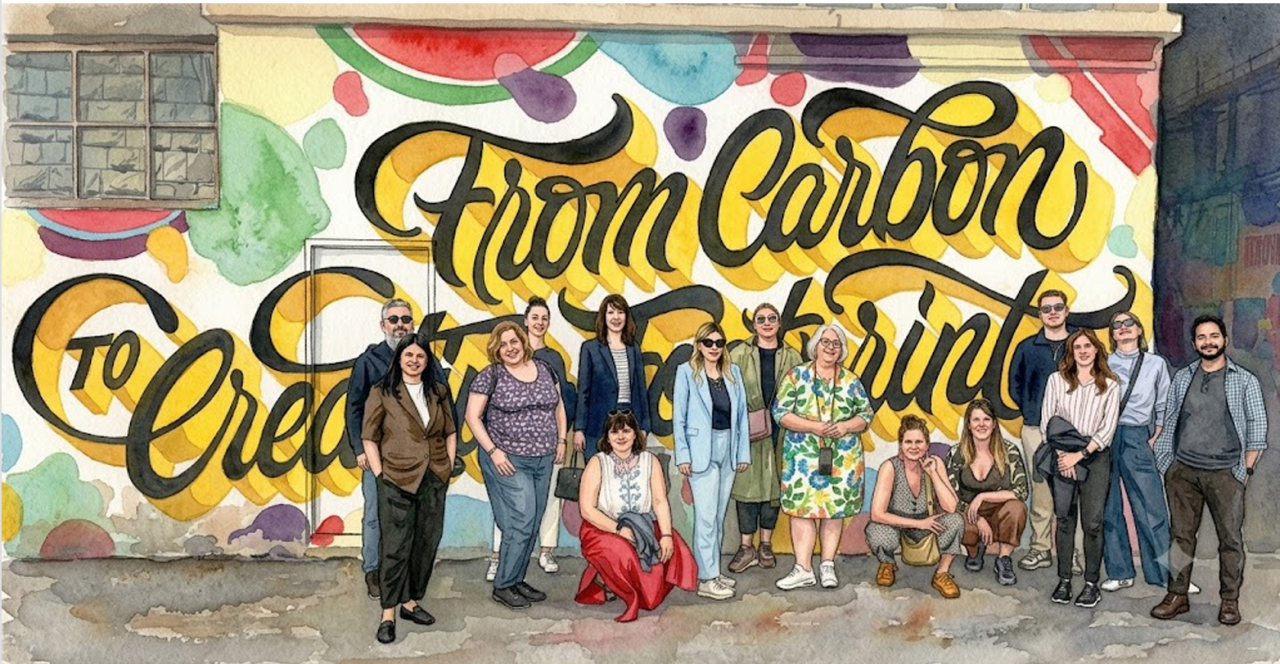
The location could not have been more meaningful. The meeting opened at the former TUP Factory, once a carbon graphite and electrical contact products factory in the Gruž district, near the port. For decades, TUP was part of Dubrovnik’s industrial iden tity, employing around 700 workers at its peak. After production ended, the site gra dually became home to creatives, NGOs and community actors, before being acquired by the City of Dubrovnik in 2022 and transformed into a cultural and community hub. Today, it hosts technical culture organisations, community spaces, creative industries, a future public library and a free co-working hub.
TUP offered RECUP partners a powerful lesson: regeneration begins by using spaces, even when the entire process is not yet completed. As Luna Polić Barović from DURA explained, “the programme does not wait for the building to be finished”. The communi ty is already building the place by using it.
In a city of around 42,000 residents facing up to 1.5 million tourists in peak season, Du brovnik is under strong pressure from overtourism, rising rents and the displacement of cultural life from the historic centre. In this context, Gruž and TUP represent a fun damental alternative urban space for residents.
Day 1: Making Investment Plans implementable
After the welcome from DURA, the Lead Partner and the Lead Expert, Elisa Filippi framed the meeting around one key question: what makes a plan truly implementable?
Quoting Abraham Lincoln — “Give me six hours to chop down a tree and I will spend the first four sharpening the axe” — Elisa reminded partners that the time used so far was mostly dedicated to “sharpening the axe”, meaning the tools that will allow those documents to become action. Five conditions were identified as crucial: ownership, small achievable steps, relevance to local priorities, scalability, and early attention to funding.
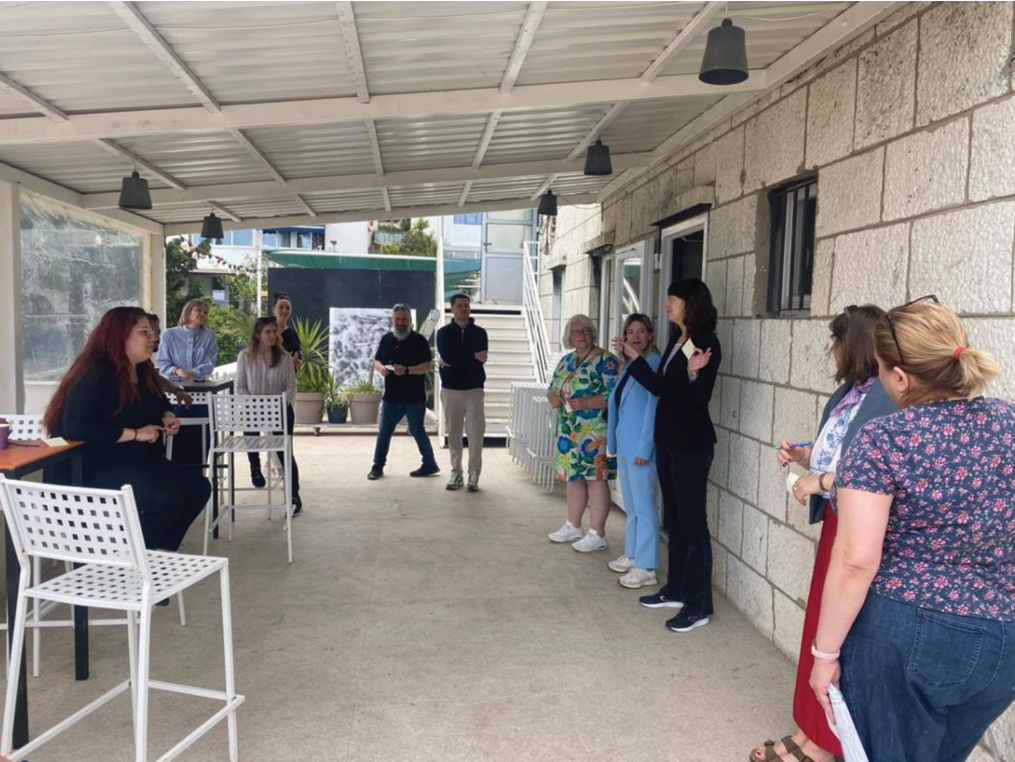
The first workshop, the IIP Quality Check Lab, invited partners to stress-test one con crete action from their Investment Plan. Each action was assessed through these lens es: scalability, sustainability, integration and transferability. Partners discussed how actions could grow beyond a pilot, how they could be financially and organisationally sustained, and who needed to be involved for implementation to be credible.
The exchange brought out the di- versity of local ap proaches. Mancomu nidad de l’Horta Nord reflected on the need to involve residents more directly through platforms and com munication tools. Dubrovnik present ed its “venue menu” approach, mapping different locations for community ac tivities. Amersfoort shared its idea of us ing street theatre to open conversations around loneliness. Bielsko-Biała pre sented digital and cul tural tools for youth engagement, while Újbuda shared its work on micro-grants 5 in Gazdagrét.
TUP as a living cultural hub
The study visit through TUP took place in the afternoon and made the morning’s re flections tangible. Partners moved through a former mono-industrial site that has be come a multi-use cultural campus.
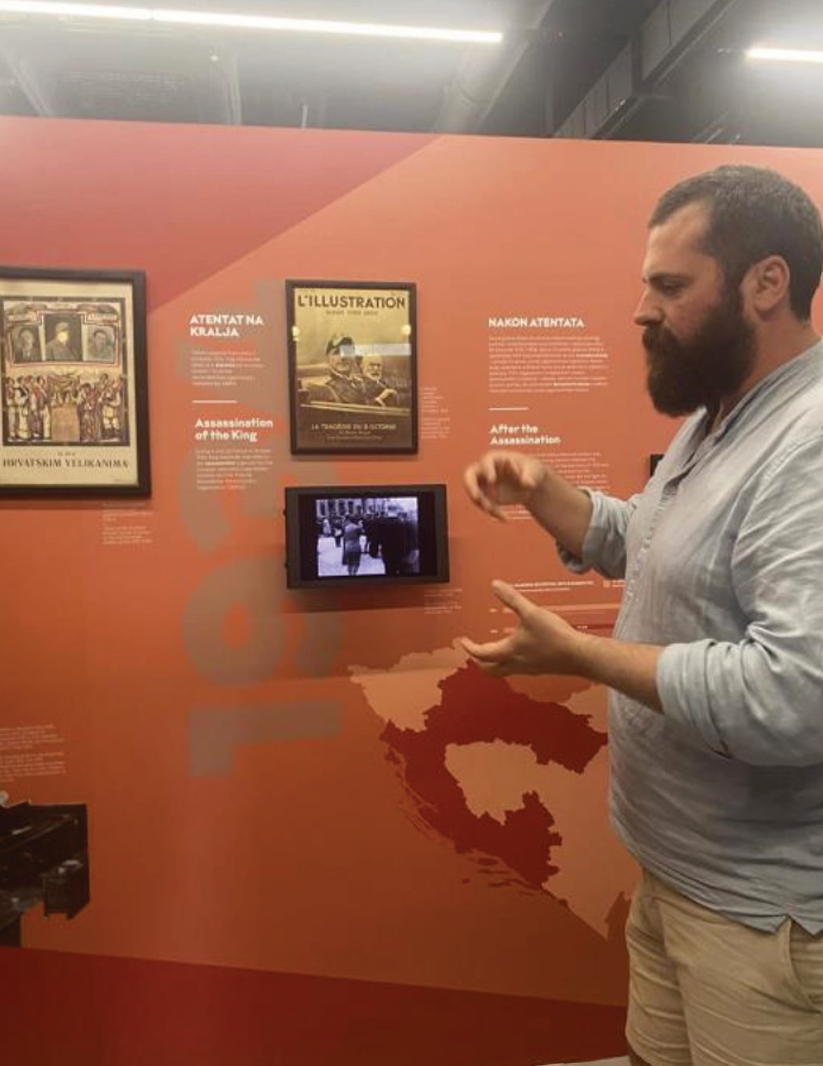
They met the Kolarin Theatre Company, a local theatre group performing in dialect and combining artistic activity with a humanitarian mission. They visited the TUP Factory Exhibition, where photographs, products and memorabilia preserved the memory of the workers who once animated the site. At Maritimo Recycling, they saw how plastic waste collected from the seashore is transformed into practical objects, from furniture
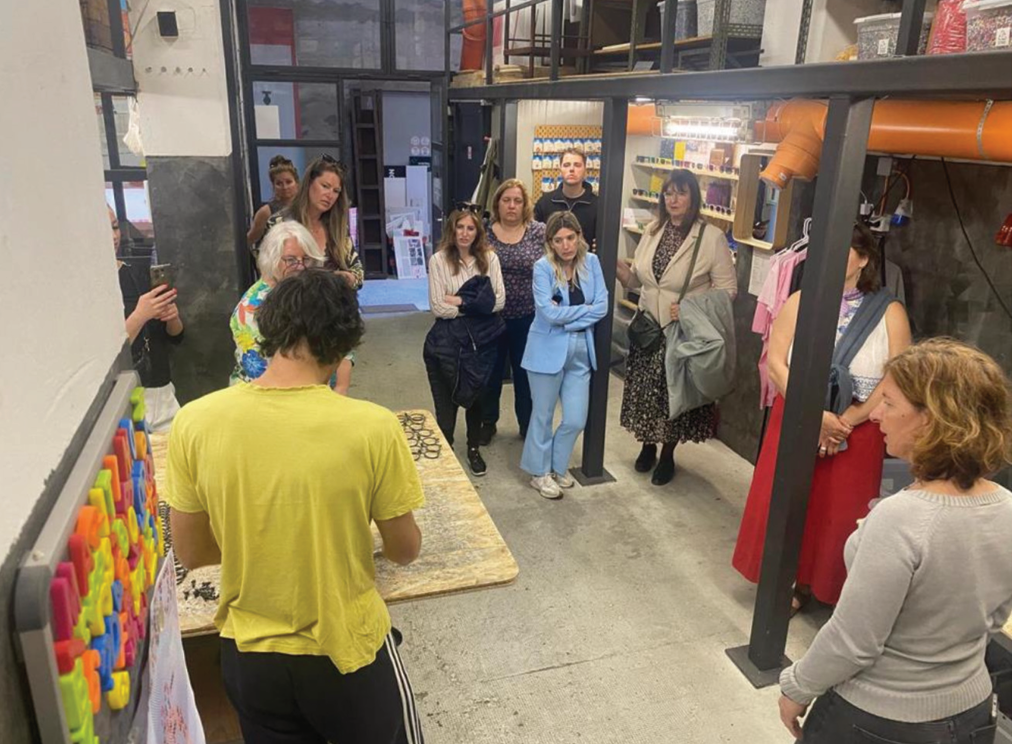
components to sunglasses and jewellery, combining circular economy with environ mental awareness. At the Red History Museum, everyday life under socialism was ex plored through objects, design, images and domestic spaces.
Taken together, these stops showed the strength of TUP’s “diversity of use” where no single actor defines the site.
Culture-led regeneration: who is included?
The afternoon workshop, facilitated by Ad Hoc Expert Dina Ntziora, opened a broad er reflection on culture-led urban regeneration. How can culture drive positive urban change? Who benefits? Who risks being left out?
Through discussion and case studies from Bristol and Aarhus, partners explored cul ture as a catalyst for transformation requiring political awareness. Regeneration is never neutral. It can create inclusion and belonging, but only if diverse communities are actively engaged, including newcomers and marginalised groups.
The workshop invited partners to return to basic but essential questions: What values guide our plans? How well do we know our communities? For RECUP, these questions are central. In this perspective, an Investment Plan can become a statement about the kind of city each partner wants to build.
Day 2: Turning plans into stories
The second day shifted from planning to communication. Led by Elisa Filippi the Public Speaking for IIPs workshop focused on how partners can present their Investment Plans in a way that speaks not only to logic, but also to emotion.
The session introduced tools such as metaphor, analogy, data and counter-argumen ts. Partners were invited to transform one action from their plan into a three-minute story, using a clear structure: hook, evidence, proposal, counter-argument and echo.
Some of the metaphors captured the spirit of the network particularly well. Újbuda described its plan as “an oiled machine”; Bielsko-Biała connected culture and youth through the image of “roots and forest”; Dubrovnik used “acupuncture” to describe tar geted interventions able to activate the right points in the city; Amersfoort evoked “the garden they water” to describe care, attention and personal investment.
The exercise confirmed an important lesson: a good plan needs story that people can understand, remember and believe in.
The Communication Lab led by Fanni Kosztolányi, RECUP Communication Officer, continued this work by helping partners prepare materials for the upcoming City Festi val and local dissemination activities.
Heritage as contemporary urban life
In the afternoon, partners explored Dubrovnik’s historic landscape: the City Walls, La zareti and the House of Marin Držić.
Walking the City Walls offered a direct view of the beauty and pressure of Dubrovnik’s Old Town. Cameras installed at the gates help monitor visitor numbers, showing how heritage management has become inseparable from urban governance. Lazareti, once a quarantine station outside the city walls, showed how historic infrastructure can be repurposed into a cultural hub. The House of Marin Držić connected literary heritage to the city’s cultural identity.
Together with TUP, these visits revealed two faces of Dubrovnik’s cultural infrastruc ture: the globally known heritage of the Old Town, and the emerging resident-oriented cultural ecosystem of Gruž. The challenge — and opportunity — lies in connecting them without allowing one to overshadow the other.
Ready for the final step
Across the two days, Dubrovnik offered a powerful message for the network. Cul ture-led regeneration is about activating places, distributing opportunities, creating ownership and making sure that cultural life remains connected to residents.
2. Masterclass on Measuring Cultural Impact: From Counting Activi ties to Understanding Change
On 23 April 2026, RECUP partners gathered online for the third and final Masterclass of the network, dedicated to a question that sits at the heart of every cultural policy: how do we measure the impact of culture and creativity on cities and communities? The webinar focused specifically on the impact of cultural and creative activities at the urban level and combined an expert presentation with a hands-on exercise linked di rectly to the development of the RECUP Integrated Investment Plans.
Why measuring culture matters
The session was opened by Anita Horvat, RECUP Lead Partner from Újbuda, and Lead Expert Elisa Filippi, who framed the challenge facing many cities. While culture is increasingly recognised as a driver of social cohesion, measuring its effects remains difficult. Participation numbers, attendance figures and event statistics are often easy to collect, but they only tell part of the story. How can cities capture less tangible out comes such as belonging, social connections or community resilience? These questions are becoming increasingly important as cities seek funding, justify investments and de monstrate the value of cultural policies.
Learning from the European Commission: the Cultural and Creative Cities Monitor
The keynote contribution was delivered by Michaela Saisana, Head of Unit at the Eu ropean Commission’s Joint Research Centre (JRC), who presented the Cultural and Creative Cities Monitor (C3 Monitor), one of the most comprehensive frameworks available for assessing cultural performance across European cities. The tool was orig inally developed to help policymakers better understand the contribution of culture and creativity to urban development and currently covers nearly 200 European cities.
Saisana explained that the Monitor goes far beyond counting museums or cultural ve nues. It assesses cities through three interconnected dimensions:
Cultural Vibrancy, measuring cultural infrastructure, participation and attrac tiveness;
Creative Economy, looking at jobs, innovation and creative entrepreneurship;
Enabling Environment, examining factors such as education, openness, gover nance, connectivity and trust.
One of the key messages of the presentation was that culture should not be understood as an isolated sector. Cities that perform well culturally often benfit from broader positive effects, including stronger economic performance, higher educational attainment, greater openness and more attractive urban environments.
The discussion also highlighted the limits of purely quantitative approaches. While indicators are essential, they cannot capture everything. Trust, sense of belonging, com munity ownership or the quality of social interactions often require qualitative meth ods and direct engagement with citizens.
From European indicators to local realities
Following the presentation, partners reflected on how a European monitoring frame work could inspire monitoring systems at the neighbourhood and city level.
A recurring theme emerged quickly: many of the changes RECUP seeks to generate are precisely those that are hardest to measure.
Partners recognised that they can relatively easily monitor outputs such as:
number of participants; number of cultural events; new partnerships created; cultural spaces activated; stakeholder involvement.
However, they also identified several dimensions that matter deeply to RECUP but are much harder to quantify:
quality of participation rather than simple attendance; sense of belonging and community ownership; changes in social relationships; trust between citizens and institutions; inclusion of previously disengaged groups and long-term be havioural changes.
The discussion revealed an important shift in perspective. As Elisa Filippi noted, choos ing indicators is also a political act: it means deciding what kind of impact matters and what kind of city we are trying to build.
The RECUP Monitoring Lab
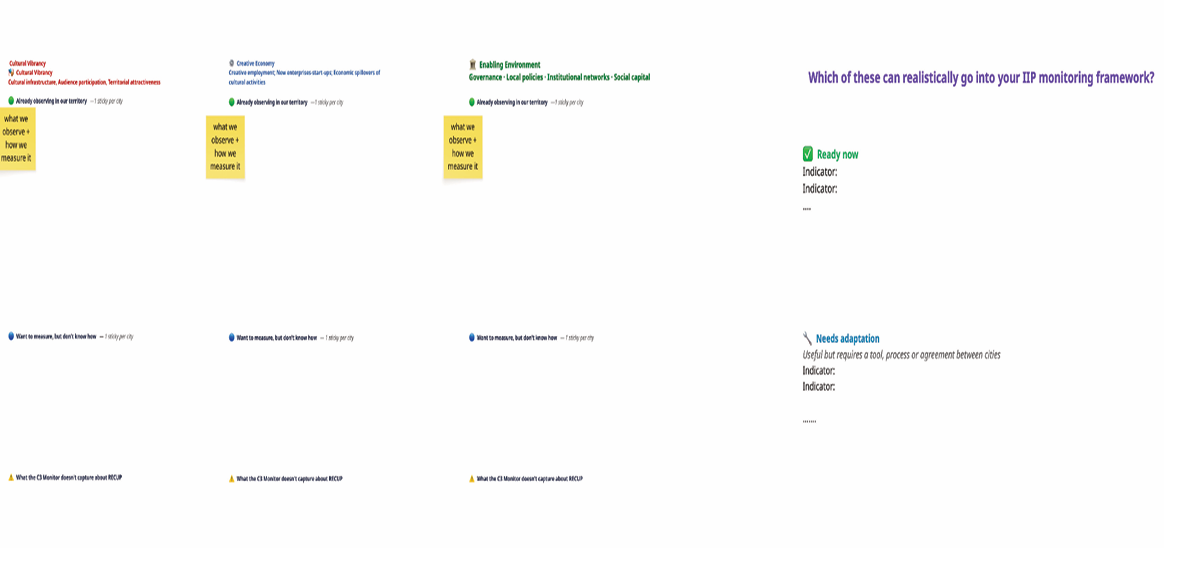
The second half of the webinar moved from theory to practice through an interactive exercise facilitated by the Lead Expert. Using a framework inspired by the Cultural and Creative Cities Monitor, partners were invited to reflect on their own Testing Actions and Investment Plans across three dimensions: Cultural Vibrancy, Creative Economy and Enabling Environment.
The exercise generated a rich discussion. Several partners emphasised the importance of establishing baseline data before implementation, allowing future changes to be measured meaningfully. Others highlighted the need to combine quantitative indica tors with qualitative evidence gathered through interviews, surveys, stakeholder map ping and community conversations.
The experience of Dubrovnik offered a particularly interesting perspective. Participan ts reflected on how standard cultural indicators can sometimes produce paradoxical results in cities affected by overtourism. High visitor numbers may indicate cultural at tractiveness, but they do not necessarily reflect local cultural participation or residen ts’ well-being. This led to a broader discussion on the importance of adapting indicators to local realities rather than applying them mechanically.
Methods and tools
To support cities in moving from inspiration to implementation, the RECUP network combined expert inputs with a series of practical tools specifically designed by the Lead Expert. These tools aimed to help partners reflect critically on their local context, iden tify priorities, and translate ideas into actionable investment proposals.
RECUP Cultural Impact Monitoring Grid. Inspired by the JRC Cultural and Creative Cities Monitor, a dedicated workshop canvas was developed to guide cities through the challenge of measuring cultural impact. The tool invited partners to reflect on three dimensions—Cultural Vibrancy, Creative Economy and Enabling Environment—and distinguish between what they already measure, what they would like to measure, and what remains difficult to capture through conventional indicators.
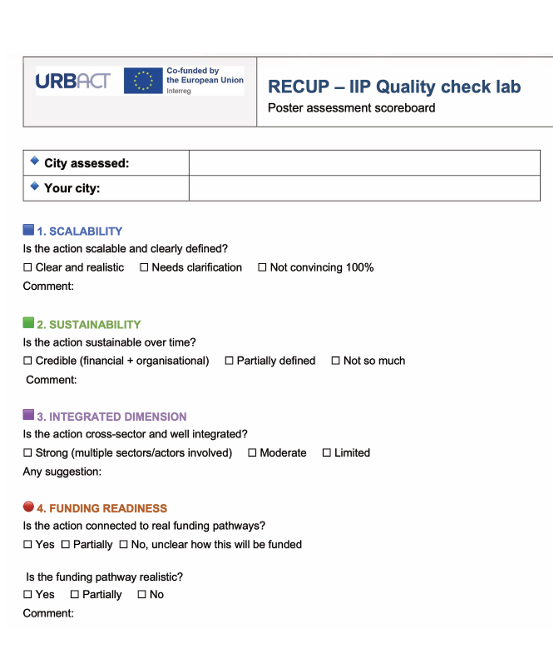
Funding and Scaling Analysis Framework. As cities progressed in the preparation of their Integrated Investment Plans, a structured assessment tool was introduced to evaluate the maturity, relevance, scalability and funding readiness of proposed actions. The framework encouraged partners to think strategically about how pilot initiatives could evolve into larger programmes, how governance and partnerships could be strengthened, and which funding opportunities could support implementation. The exercise helped cities identify realistic pathways for scaling their ideas over time.
Action Description Templates. To facilitate the transition from broad strategic ambi tions to concrete interventions, cities were asked to describe their priority actions through a common template. The exercise proved particularly useful in transforming early concepts into more mature and funda ble project ideas.
Voices from the stage: getting to know Bielsko-Biala
//coming soon//
What’s next?
The meeting in Dubrovnik was an important opportunity to refine, strengthen and stress-test the Integrated Investment Plans that will represent the main legacy of the RECUP network.
Yet the journey is not over.
One final milestone awaits the partners in Amersfoort, where the RECUP Final Confe rence will bring together cities, stakeholders and European practitioners to reflect on two years of learning, experimentation and collaboration. On 9 July, the session “Cities in eMotions” will provide a unique opportunity for partners to present their Invest ment Plans and share the stories, challenges and ambitions behind them.
And then?
In many ways, that is when the real journey begins.
The official end of RECUP will not mark the conclusion of the network’s work, but the start of a new phase. Across six European cities, the ideas, partnerships and actions developed during the project will begin to take shape through the implementation of the Integrated Investment Plans. New cultural initiatives will be launched, new collabo rations will emerge, and new opportunities for connection, participation and creativity will be created.
The network may be approaching its final chapter. The story of change, however, is only just begin.