Culture as social infrastructure
One of RECUP’s main conclusions is that culture should not be seen only as a sector or a collection of events. Throughout the network, culture was increasingly understood as a form of social infrastructure: a tool that creates opportunities for people to meet, participate, build trust and develop a stronger sense of belonging.
Partners discovered that while loneliness is experienced individually, the conditions that influence it are often shaped by the urban environment. Accessible public spaces, cultural venues, community initiatives and opportunities for participation can all contribute to stronger social connections.
From audiences to co-creators
A key lesson inherited from CUP4Creativity and confirmed across the network was the importance of moving from a culture of consumption to a culture of participation. The most successful initiatives were those where residents became active contributors rather than passive audiences.
This took different forms across partner cities: storytelling activities in Sandyford, community events in Gazdagrét, heritage-based programmes in Dubrovnik, intergenerational creative initiatives in Bielsko-Biała, and territorial cultural coordination in Horta Nord. Despite their differences, all these experiences demonstrated that participation generates ownership, strengthens relationships and creates more resilient communities
Small experiments, big lessons
RECUP's Testing Actions proved that small-scale experimentation can be a powerful policy tool. Rather than investing immediately in large interventions, partners tested ideas on a limited scale, allowing them to better understand local needs, identify barriers and gather evidence before planning long-term investments.
The network tested a wide range of approaches, including the Maatjesfoort buddy scheme in Amersfoort, the TUP Factory activation in Dubrovnik, the Cultura Horta Nord platform in Spain, youth-focused storytelling and nature-based activities in Bielsko-Biała, and community-building activities in Újbuda and Sandyford. These experiments helped turn assumptions into practical learning and strengthened the quality of the final Investment Plans.
Activating places through people
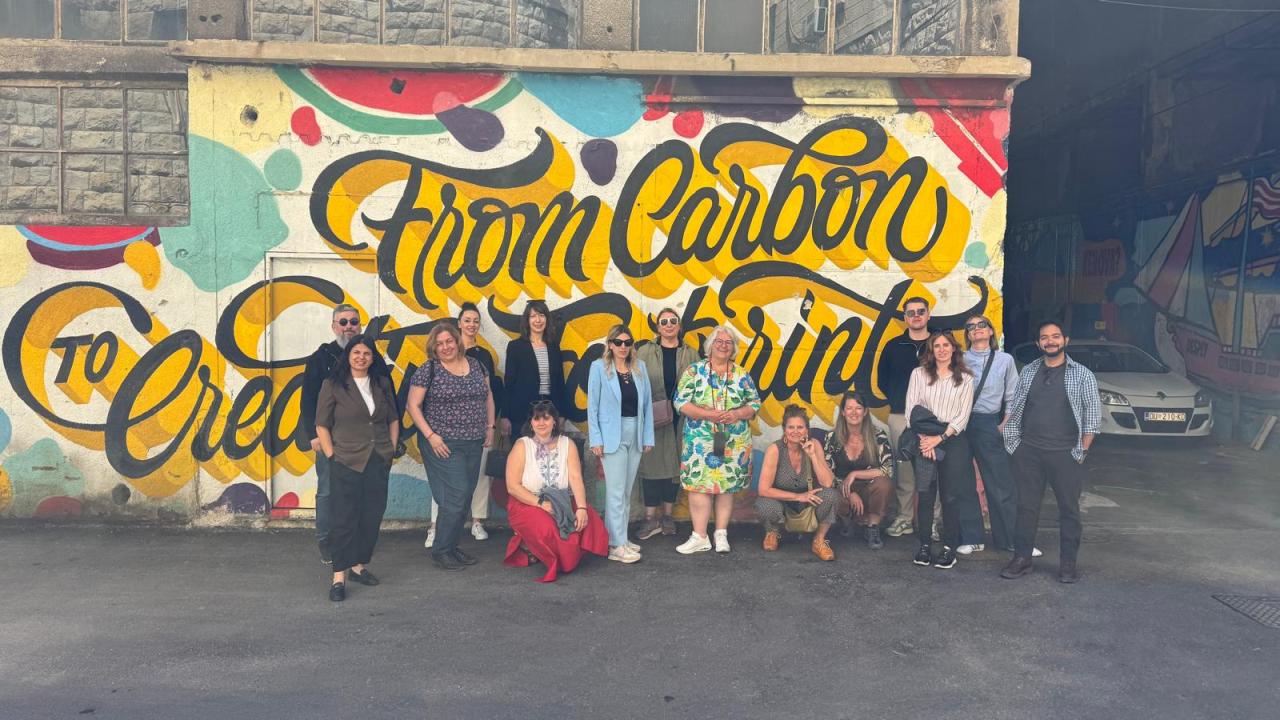
Another important takeaway was that cultural infrastructure is not only about buildings. Former industrial sites, libraries, community centres, neighbourhood venues and digital platforms became meaningful when they were activated by local communities. The experience of Dubrovnik's TUP Factory clearly illustrated that regeneration starts when people begin using a space and shaping its identity, even before physical transformation is fully completed.
Across the network, partners learned that successful place-making depends not only on physical investment, but also on participation, programming and community ownership.
Building ecosystems, not projects
RECUP also highlighted the importance of collaboration. Sustainable cultural policies rely on networks of actors including municipalities, cultural organisations, schools, businesses, community groups and residents. Cities often achieve the greatest impact when they act as facilitators and connectors, helping these stakeholders work towards shared goals.
The network further demonstrated that cultural initiatives are more resilient when they build on existing local assets and partnerships rather than depending entirely on short-term project funding
Main results of the network
During the transfer journey, RECUP:
implemented six Testing Actions across six different urban contexts;
established active URBACT Local Groups involving residents, public institutions, cultural actors, businesses and community organisations;
developed five Integrated Investment Plans and one Continuity Plan;
strengthened cooperation between cultural, social, educational and economic actors
generated practical tools and evidence for addressing loneliness, social fragmentation and participation through culture.
Looking ahead
Perhaps the most important legacy of RECUP is a shift in thinking. The network showed that culture can be much more than a cultural policy objective; it can be a tool for creating stronger relationships between people and places.
Across very different local contexts, partners reached a common conclusion: culture-led urban development is ultimately about creating the conditions for people to meet, contribute, participate and belong. By listening, testing and learning before investing, cities can develop more inclusive, participatory and sustainable responses to the social challenges they face today.