
There are spaces that nobody photographs. They do not appear in tourist brochures, they rarely feature in architects’ renderings, and they almost never become the subject of political debate. They are a small triangle of grass between two buildings, a bench beneath a row of trees, a courtyard hurriedly crossed on the way to a bus stop, a leftover urban space that seems to have lost its purpose. Yet it is often in places like these that the quality of a city is measured, centimetre by centimetre.
The difference between a space and a place does not depend only on the project that created it. It depends on the people who inhabit it, the relationships that develop within it, and the ability of a community to recognise it as part of its everyday story. Over the last few decades, we have learned to describe urban transformation (or have been taught that this is how it should be described) through major projects, investments, infrastructure and masterplans. All important elements, certainly. Yet more and more European cities have discovered, and continue to discover, another dimension of urban change: less visible, perhaps, but equally decisive. It is the change that emerges from people’s initiative, from collaboration between citizens and public administrations, and from the ability to activate the energies already present within communities.
In an era characterised by growing individualisation, fewer opportunities for social interaction and widespread distrust in institutions, public space takes on a meaning that goes far beyond its physical dimension. Public space becomes one of the few remaining arenas where relationships can still be built, trust can be generated and active citizenship can be practised in tangible ways. It is from this intuition that We Create Space was born: the Good practice developed by the City of Ostrava and now at the heart of an URBACT Transfer Network involving cities from across Europe. The question that inspired this experience is both simple and radical: what would happen if citizens were no longer seen merely as recipients of urban policies, but became protagonists in the transformation of public space?
When a small green patch becomes much more than a community garden (and citizens become urban changemakers)
The story of We Create Space began in 2017, when the City of Ostrava launched Tvoříme prostor, a programme providing financial resources, technical support and administrative assistance to enable citizens, associations and informal groups to develop projects in public spaces across the city. The idea behind the programme was straightforward: instead of asking what interventions should be designed for citizens, the municipality began asking what conditions should be created so that citizens themselves could propose and develop solutions for the places they use every day.
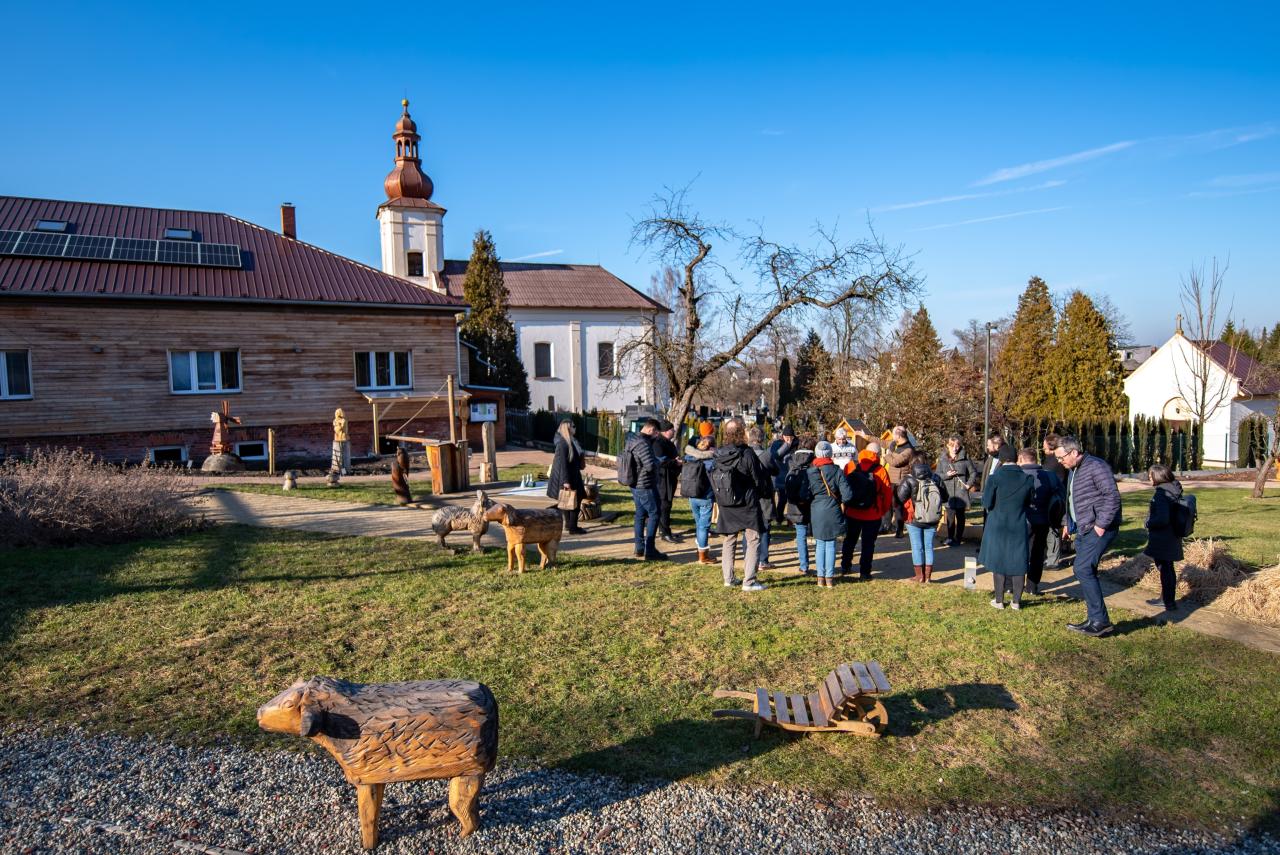
Over the following years, dozens of projects were supported: community gardens, cultural initiatives, temporary activations of underused spaces, tactical urbanism interventions, community events and small-scale urban transformations aimed at improving quality of life in neighbourhoods. At first glance, these may appear to be modest interventions. Yet a closer look reveals something more significant.
A bench is not simply a piece of urban furniture; it can become an invitation to meet. A shared garden is not merely a green space; it can become an opportunity to build relationships between neighbours who, until the day before, were complete strangers. A temporary project can open new possibilities for using public space and change the way a community perceives a place, paving the way for more permanent and long-term transformations. The true value of the programme lies not only in the physical changes it generates, but above all in its capacity to create trust, collaboration and a sense of belonging.
Over time, Ostrava progressively refined its approach, building an integrated system composed of open calls, micro-grants, administrative facilitation, public space activation, community engagement, communication activities and continuous monitoring of results. It is through this combination of tools that the programme evolved into an URBACT Good Practice.
What makes We Create Space relevant for other European cities is the method that underpins it: a method that sees public space as a common good to be activated through collaboration between institutions and communities. In a period marked by increasing social isolation, declining trust in institutions and the need to build more resilient, inclusive and sustainable cities, this approach acquires a significance that extends far beyond the physical dimension of urban space.
Six cities, one European learning laboratory
When URBACT selected We Create Space as a Good Practice, a new chapter in its story began. Today, the network brings together six partner cities (Granollers, Rouen Normandie Métropole, Pescara, Bucharest District 6, Koszalin and Niš) all sharing a commoall sharing a common challenge: understanding how citizens and communities can become protagonists of urban transformation.
The differences between the partners are substantial. Granollers (Spain) brings extensive experience in participatory governance. Rouen Normandie Métropole (France) has long worked at the intersection of urban regeneration, public space and community engagement. Pescara (Italy) contributes practices developed in vulnerable neighbourhoods and through work with disadvantaged groups. Bucharest District 6 (Romania) addresses the challenges typical of large metropolitan environments. Koszalin (Poland) offers consolidated expertise in managing funding programmes and local development initiatives. Niš (Serbia) experiments with innovative approaches that combine communication, digital tools and placemaking.
This diversity represents one of the network’s greatest strengths. Transferring a Good Practice does not mean copying it. Every city has its own history, administrative capacities, levels of civic participation and political priorities. What works in Ostrava cannot simply be replicated elsewhere; it must first be understood, then reinterpreted and adapted.
During the first months of the network, partners focused on gaining a deeper understanding of the Good practice and exploring its transfer potential within their different local contexts. Through two Transnational meetings in Ostrava and Koszalin, the Lead Expert’s city visits to partner cities, and a range of peer-learning activities, participants had the opportunity to observe the practice in action, meet project promoters, municipal staff and local stakeholders, and discuss the factors that have contributed to the programme’s success over time.
This collective learning process led to the development of the Transferability study, a shared document that analyses the evolution of the Good practice, identifies its key components and operational dimensions, maps the assets and barriers of each partner city, and defines the methodological framework that will guide the transfer journey in the coming years. At the same time, URBACT local groups (ULGs) have been established in all partner cities, bringing together municipal departments, civil society organisations, citizens and relevant stakeholders to discuss local needs, opportunities and possible adaptations of the practice. Together, these activities have contributed to building a shared knowledge base that will support the next phases of experimentation, adaptation and transfer.
A central role will be played by the Testing actions, small-scale experiments that each city will implement in its own local context. These tests will allow partners to verify how specific elements of the practice work in reality, gather evidence, identify barriers and build the foundations for their future Transfer Plans.
In this sense, the network itself functions as a European urban laboratory: a space where cities can experiment, learn and improve together. Perhaps this is the most important lesson emerging from the We Create Space experience: cities change when they succeed in unlocking the energies that already exist within them. When they transform citizens, associations and communities from spectators into protagonists. When they understand that the value of public space depends not only on what it contains, but on the relationships it makes possible.
Because creating space does not simply mean transforming a place. It means creating the conditions for people to meet, collaborate and experience the present of their city together.