
One good practice, seven different places
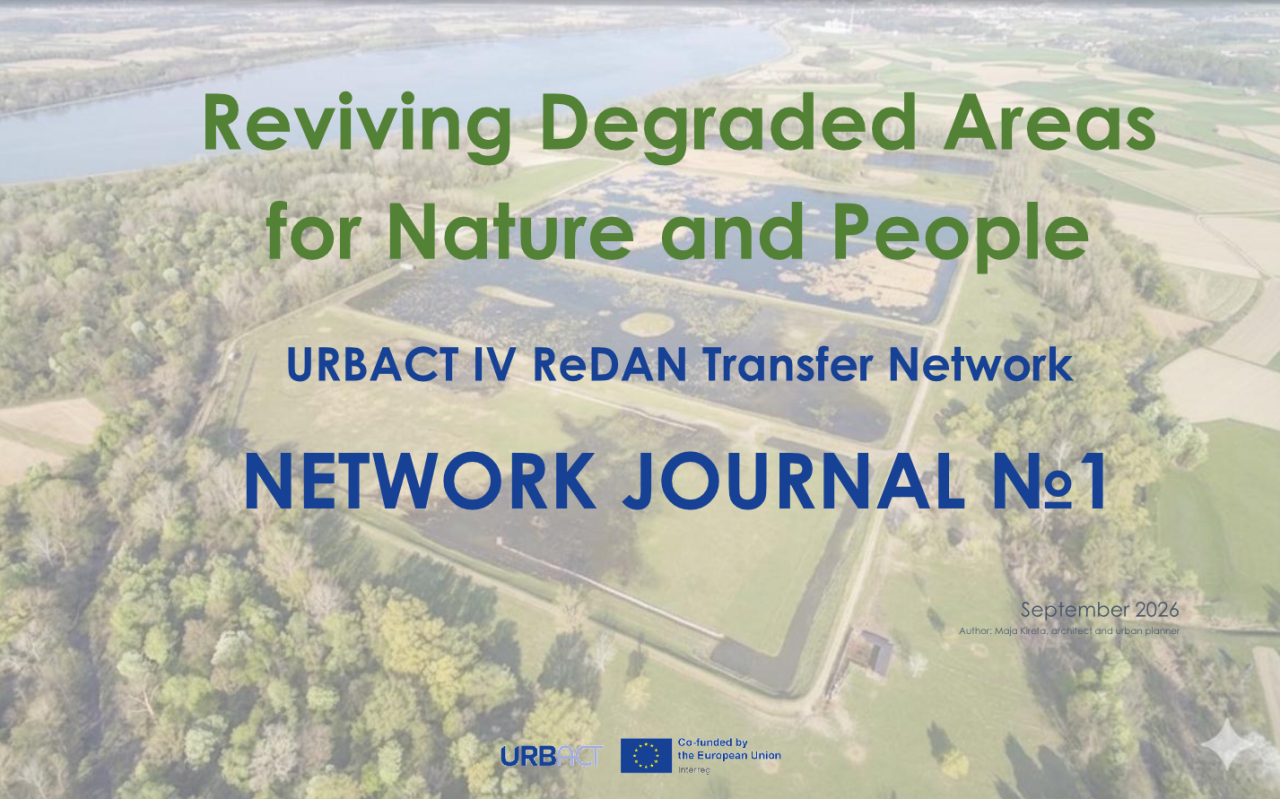
ReDAN – Reviving Degraded Areas for Nature and People – starts from a very specific story in Ormož, Slovenia. The Ormož Basins were originally built as part of the wastewater system of the former sugar factory. Over time, the area developed into an important habitat for birds and other wildlife. After the factory closed, years of restoration and conservation work transformed the former industrial site into the nature reserve we know today.
That experience is now being shared with Alcanena, Bogovinje, Limerick, Priboj, Srebrenica and Yaremche. But from the beginning, one thing has been clear: the aim is not to recreate Ormož somewhere else.
Each partner is working with a different landscape and a different set of local challenges – from river corridors and lake shores to wastewater treatment areas, underused green spaces and degraded landscapes. What makes the network valuable is precisely this difference. What can travel are the principles, methods and lessons behind the Good Practice.
Understanding before acting
The first months of ReDAN have therefore been less about rushing into solutions and more about understanding each place properly.
The city visits and the Transferability Study gave the network a chance to look closely at local conditions, challenges and opportunities. Together, we explored what can realistically be transferred from the Ormož experience and where adaptation will be needed.
Several common themes are already emerging across the network: spatial and legal questions linked to land transformation, stakeholder engagement, habitat restoration, education and awareness, and the connection between nature, tourism and local development.
The work has also confirmed something equally important: transfer is not a copy-and-paste exercise. It only becomes meaningful when the original idea is tested against local reality.
Local groups are where the transfer becomes real
Across the partner cities, URBACT Local Groups are bringing together municipalities, environmental organisations, public institutions, local communities, experts and other stakeholders.
These meetings are where broad project ideas start becoming local conversations. Partners have been discussing biodiversity, water management, land ownership, public awareness, stakeholder involvement and the future use of their selected areas.
The first ULG meetings have also shown that local participation takes time. The right people do not always join at the first attempt, and some questions only become visible once the discussion starts. That is part of the process, and it is already helping partners refine their approach.
Learning together in Ormož and beyond
The first ReDAN Transnational Meeting in Ormož brought the whole partnership together around the Good Practice for the first time. Partners visited the Ormož Basins Nature Reserve, presented their own target areas and worked together on stakeholder mapping, local challenges and the first steps of the transfer process.
The network later continued this learning process at the URBACT University in Cork, where partners worked with practical tools for stakeholder engagement and participatory planning. Mapping, role-playing and empathy exercises encouraged the teams to look at their projects through the eyes of people who are often missing from planning processes – including young people, local businesses, researchers, civil society and elected representatives.
These shared experiences are now returning to the local level, where each partner has to turn them into something useful in its own context.
A snapshot of where we are now
ReDAN Network Journal № 1 brings these first months together in one place. It covers the partner city visits, the Communication Plan, the Transferability Study, the first Transnational Meeting in Ormož, local activities across the network and the lessons from the URBACT University.
More importantly, it shows a partnership that is still learning. Some ideas are becoming clearer, some assumptions are being challenged and new questions are appearing as the work progresses.
The foundations are now in place. The next stage is to move from understanding to adapting – and to turn shared learning into practical local action.