It all started in a library
When the six cities of URBAN ECHO met for the first time, in January 2026, the meeting began in the Old Library of Ghent's City Hall. On the wall, a text from the former library reads: “Het begin is een echo. Zonder obstakels weerkaatst er niets.” The beginning is an echo. Without obstacles, nothing is reflected.
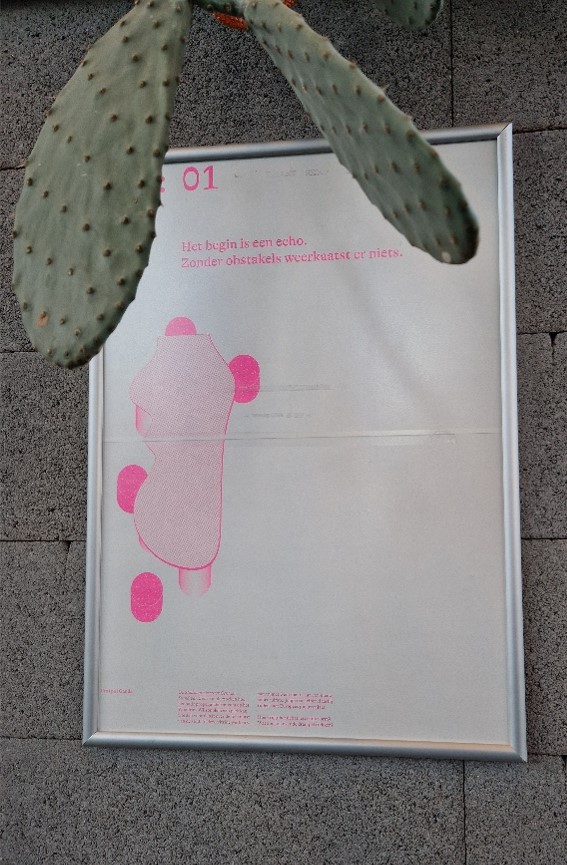
Nobody had planned to build a network philosophy around a monument. But the coincidence was striking. An echo is not a copy: it exists only because something resists, interrupts and reshapes the original sound. And that is exactly what an URBACT Transfer Network asks its cities to be. Ghent's Good Practice on integrated neighbourhood renewal is not a model to reproduce; each partner city, with its own governance, its own participation culture and its own administrative capacity, is the obstacle that shapes how the practice is received and transformed. What emerges in Cluj-Napoca, Düsseldorf, Las Gabias, Perugia or Pezinok will not be Ghent. It will be recognisable, but changed by what it met on the way.
A Good Practice, obstacles included
That first meeting continued with something you don't often see from a city presenting its Good Practice: an honest discussion of what had not worked.
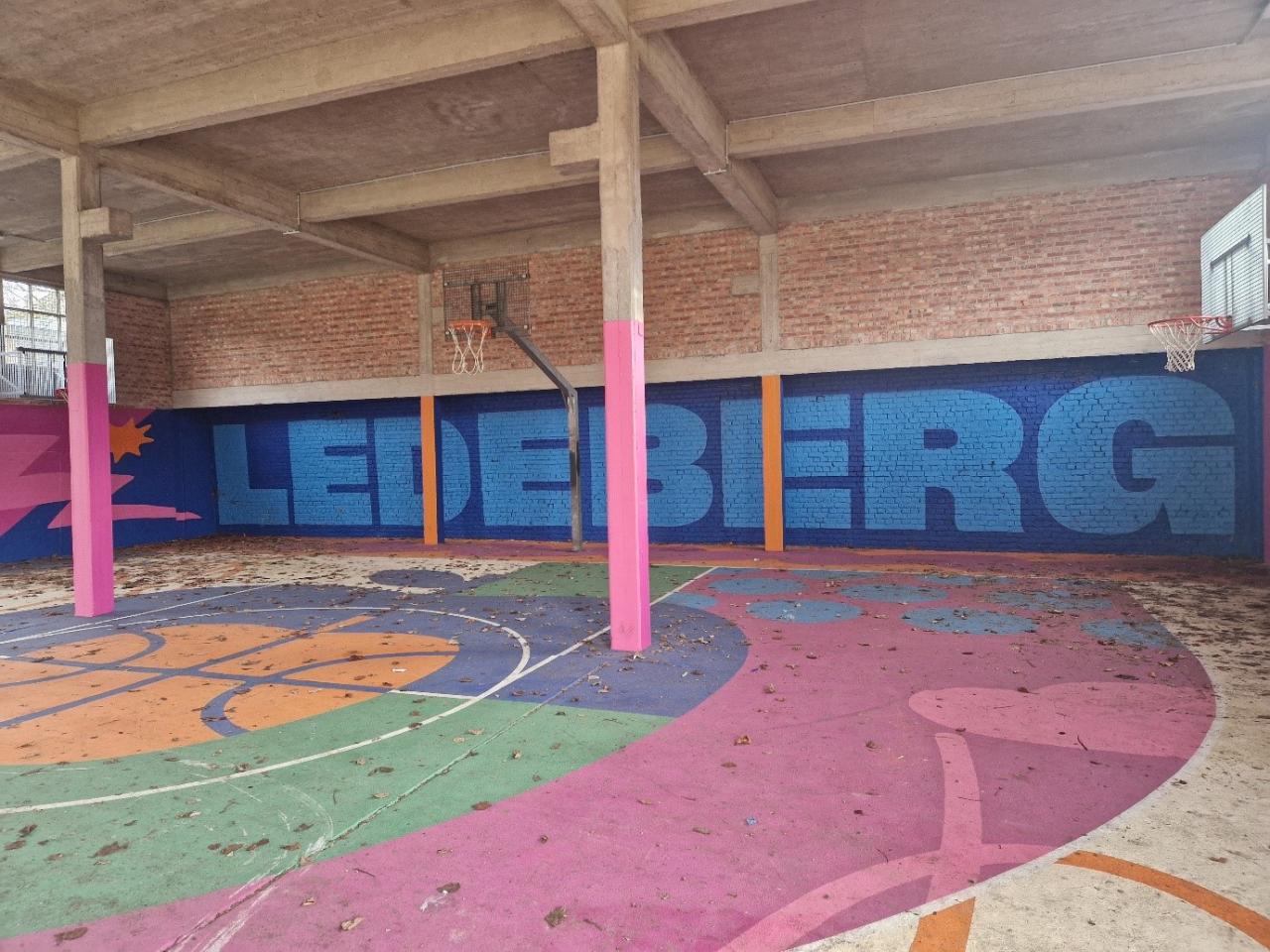
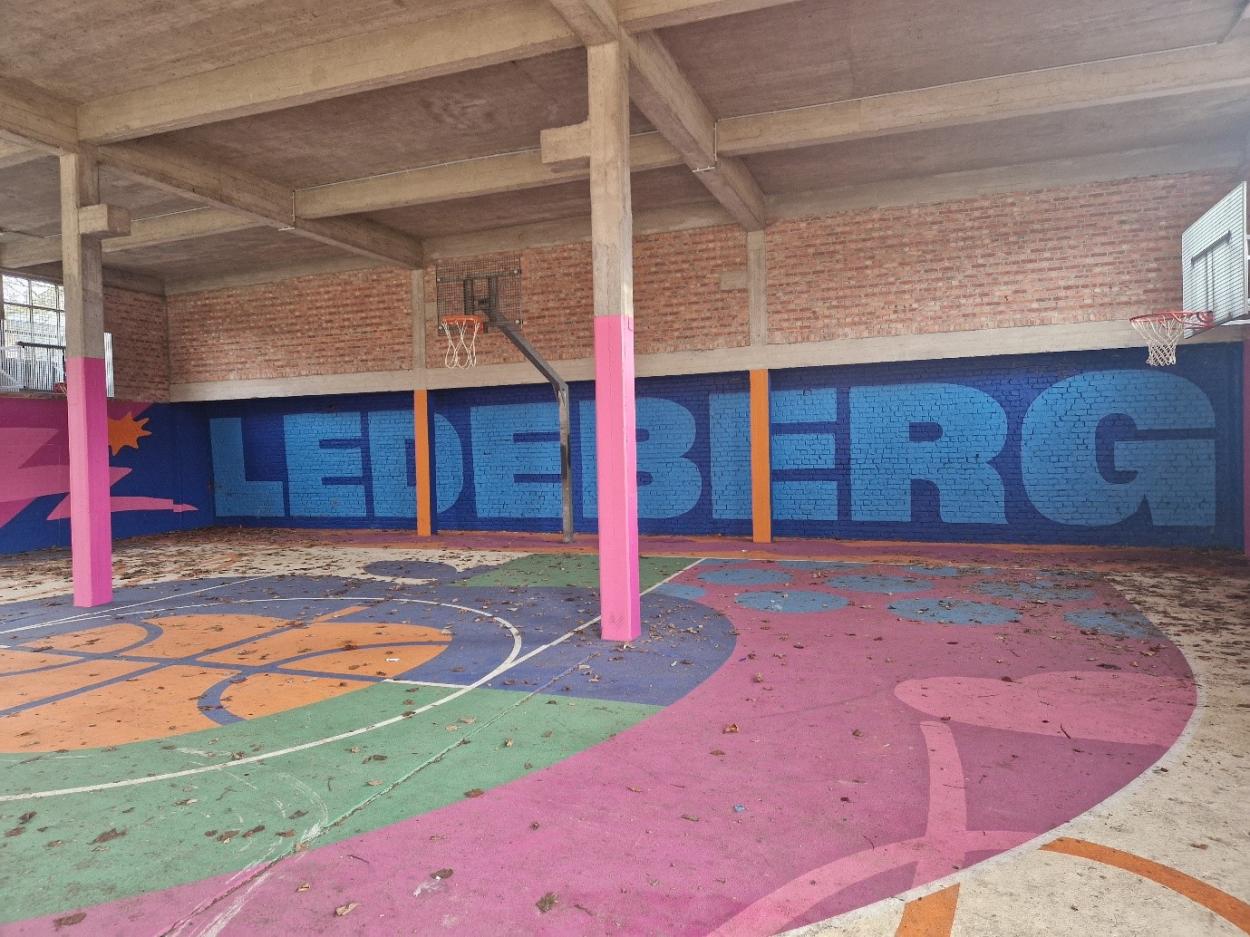
As participants walked through Ledeberg, passing redesigned streets, energy-efficient housing, a former woodworking workshop transformed into a resident-run community hub, and new green spaces linked to care facilities, Ghent also highlighted projects that had fallen short of expectations. The group stopped at a community garden and park that never fully attracted local users and visited areas where vandalism remains a recurring challenge despite ongoing efforts.
The message was clear and refreshingly candid: not every intervention succeeds, and even the most successful programmes require continuous adaptation. Urban transformation is not a linear process but one of experimentation, learning and adjustment over time.
That honesty set the tone for everything that followed. Because the real question behind a Transfer Network is not “how good is the Good Practice?” It is: which part of it can actually travel to a city with a different history, a different budget, and a different level of trust between the town hall and its residents?
What Ghent brings
URBAN ECHO is an URBACT Transfer Network running from November 2025 to April 2028. The City of Ghent (Belgium) leads it; the five transfer partners are Düsseldorf (Germany), Pezinok (Slovakia), Cluj-Napoca (Romania), Perugia (Italy) and Las Gabias (Spain). The mix is deliberate: two towns of around 24,000 people, two large cities and one mid-sized regional capital, all testing the same practice in very different conditions.
The practice itself has been more than twenty years in the making. Since the early 2000s, Ghent has run long-term, integrated renewal programmes in the neighbourhoods where social, spatial and environmental challenges pile up together. The city is organised into 25 neighbourhoods of roughly 10,000 people, each with a dedicated neighbourhood manager. Where challenges concentrate, a multi-year renewal programme is set up; ten are running today, and each pairs a programme manager with a dedicated communicator. Physical works go hand in hand with social goals, and residents are involved from the concept stage, not consulted at the end.
Ledeberg, the reference neighbourhood for URBAN ECHO, shows the scale: a programme running since 2007 under the name “Ledeberg Leeft”, roughly €32 million combined from municipal, Flemish and EU sources, and 31 projects built around six objectives that residents helped shape.
What impressed the partners in January was not any single project, though many were extremely interesting. But the most important aspect was the system underneath: structured coordination across departments, long-term commitment protected from short-term pressures, communication treated as a profession, and a level of trust between politicians, administration and residents that supports and leverages it all. That system, not one square or one park, is what made this a Good Practice worth transferring.
What can travel, and what cannot
This is precisely where the first stage produced its most important finding. The elements that make Ghent’s model particularly effective, such as the trust built over time, a stable political commitment to participation, and a renewal unit that reports directly to the city’s general manager and works across departmental boundaries, are also the hardest to replicate. At least not in the short term.
What can be transferred more easily are the mechanisms and working methods behind the model. These include participation formats that bring residents and technical staff together at the earliest stages of project development, before positions become entrenched and dialogue becomes more difficult.
Communication planned and budgeted as a core function, rather than an afterthought. Another key shift was the move from one-off, funding-driven projects to a programme: a multi-year commitment with a beginning, a middle and a planned end. Equally important is a principle Ghent calls ‘seeking the silent crowd’: making making a deliberate effort to reach and listen to people who never attend meetings, rather than relying solely on the usual voices.
To support implementation , the network's Transferability Study (June 2026) breaks the Good Practice into six modules: strategy and funding, neighbourhood diagnostics, participation, cross-departmental coordination, communication, and monitoring and evaluation. Each partner selects approximately two priority areas based on its current stage of development and where it sees the greatest potential for progress.
Five cities, five reasons
Each partner arrived with its own reason for joining, and usually a very concrete one.
Pezinok came with a fresh lesson. The town secured €1.5 million in external funding to redesign its main square with climate-adaptation measures, a real achievement for a small municipality. But the tight deadlines and financing conditions attached to EU-funded projects made early, in-depth consultation difficult, and residents were engaged only once the design was largely settled. Many would have welcomed earlier involvement. That experience is precisely why Pezinok has high expectations of URBAN ECHO: it wants to learn how to organise participation earlier, more clearly and in a more structured way. Its testing ground is Cajla and Pezinok-Sever, a neighbourhood of about 8,200 residents, where a local group was now set-up and meeting regularly.
Las Gabias, a fast-growing municipality of 24,000 inhabitants near Granada, joined the network to learn how to manage its growth in a more integrated way. Its different urban centres are oriented more towards the metropolitan core than towards one another, while a new tram line could either help reconnect the municipality or reinforce existing imbalances.
One of URBAN ECHO’s first steps here were, during the study visit in April, the organisation of a 2-day cross-departmental workshop spent with municipal staff reading their own territory together, negotiating in real time what they saw and what they had missed. For several people in the room, it was their first cross-departmental working session. The URBACT Local Group is being built now precisely to keep that room open.
Cluj-Napoca is the highest absorber of EU funds in Romania, with a project portfolio above €4 billion. Romanian law requires annual budget approval, which works against multi-year commitments, and the city has a strong city-wide strategy but no neighbourhood-level equivalent yet. Its focus area, Iris, is already undergoing significant transformation, but without a shared long-term vision to guide its future development. In this context, Ghent’s lottery-based approach to selecting citizen panels attracted particular interest. The method offers a way to hear a broader cross-section of residents, ensuring that participation extends beyond the voices of those who are already actively engaged.
Düsseldorf has the most advanced framework in the network after Ghent and is using URBAN ECHO to launch a new initiative in Friedrichstadt, a dense inner-city district with very little green space and mostly private landlords. The city aims to transfer it into its first near-climate-neutral neighbourhood. The transfer is already visible. In March, the team ran its first public event as an open information market with thematic stations, a format adopted directly from Ghent. More than 100 residents attended. The team’s conclusion, which was shared accross the network was clear: an open , drop-in format generates significantly higher levels of participation and engagement than traditional information sessions where citizens are expected to sit and listen.
Perugia joined the network on the basis of a strongpolitical mandate. Its newly elected mayor campaigned on a commitment to reshape the city through citizen participation, and the administration is now establishing Participation Houses across neighbourhoods through a structured engagement process known as Partecipa Perugia. What Perugia seeks from the network is not so much new frameworks as support in embedding participation more firmly within its institutions. In particular, the city is looking to strengthen cross-departmental coordination and develop place-based approaches that will help the Participation Houses become active hubs for neighbourhood engagement once they open their doors.
How the transfer moves forward
The first stage, UNDERSTAND, closed at the second network meeting in Pezinok in June 2026. By then, every transfer partner had hosted a study visit, the Transferability Study had been through review rounds with all cities, and the module readiness matrix, an honest reading of where each city stands on each of the six modules, was co-validated by the partners in Pezinok's House of Culture.
The network now enters the ADAPT phase. Through their URBACT Local Groups, the structures responsible for embedding the network’s commitments within local administrations, cities will begin testing concrete actions and adapting the Good Practice to their own contexts. Progress, challenges, and lessons learned will be shared and discussed between meetings, allowing partners to learn from one another’s experiences as the transfer process unfolds.
The next network meeting will take place in Cluj-Napoca in October 2026, followed by meetings in Las Gabias, Düsseldorf, and Perugia throughout 2027.
Why this matters beyond six cities
Why should anyone outside these six cities care? One reason is timing.
On 3 December 2025, the European Commission presented the EU Agenda for Cities, the first EU framework that treats cities as direct partners in delivering Europe's priorities rather than as places where policies simply land. The Agenda is built around three commitments: a structured political dialogue with cities, simpler rules and procedures, and more strategic investment. Member states backed it in Council conclusions in February 2026.
The Agenda also draws explicitly on the New Leipzig Charter and its central idea ofthe integrated urban development, bringing together physical, social, economic and environmental interventions instead of addressing them through separate policy silos. This is, in many ways, a description of what Ghent has been putting into practice in its neighbourhoods for more than two decades.
At the same time, the money behind all of this is being renegotiated. The Commission's proposal for the next long-term EU budget, covering 2028 to 2034, would merge cohesion policy, agriculture and several other funds into a single plan that each country negotiates with the Commission.
The discussion in Brussels is mostly about how money reaches cities. URBAN ECHO works on what happens after it arrives. Because the Agenda and the draft budget rest on the same quiet assumption: that city administrations, large and small, can turn European priorities into integrated, long-term work on the ground. The Commission itself recognises that this capacity is thinnest where administrative resources are most limited. That is exactly the gap that this Transfer Network fills: five administrations are testing and adapting twenty years of Ghent's practice in a limited amount of time. If the next EU budget is to deliver in a town of 24,000 as well as in a regional capital, Europe will need much more of precisely this.
An echo, after all, is not a copy. The six partner cities are drawing on the same Good Practice, but each is adapting it to its own political, institutional and territorial context. What they learn about sustaining integrated urban development, and making it work in different realities, will have relevance far beyond their own borders.