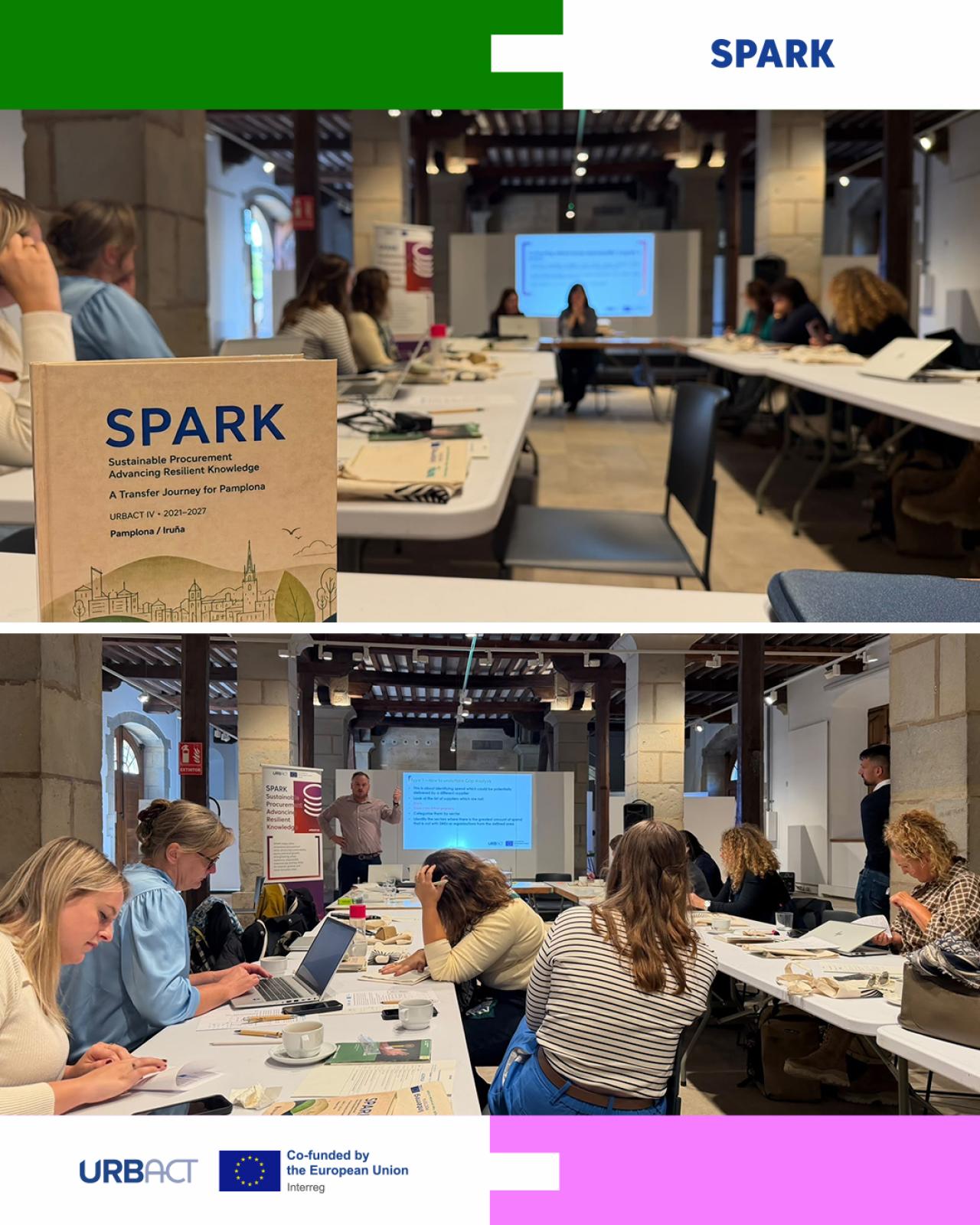
The third transnational meeting of the SPARK Transfer Network took place on 20-21 October 2026 in Pamplona, Spain. Hosted at the historic Sala de Armas, the meeting brought together network partners to exchange experiences, explore practical approaches and advance the transfer process based on the Good Practice of the Municipality of Kavala.
The programme centred on two main themes: Spend Analysis and Testing Actions. Both are important components of the SPARK journey, helping partners understand their current procurement practices, identify opportunities for improvement and test potential approaches before integrating them into their Transfer and Improvement Plans.
Spend Analysis: Understanding where public money goes
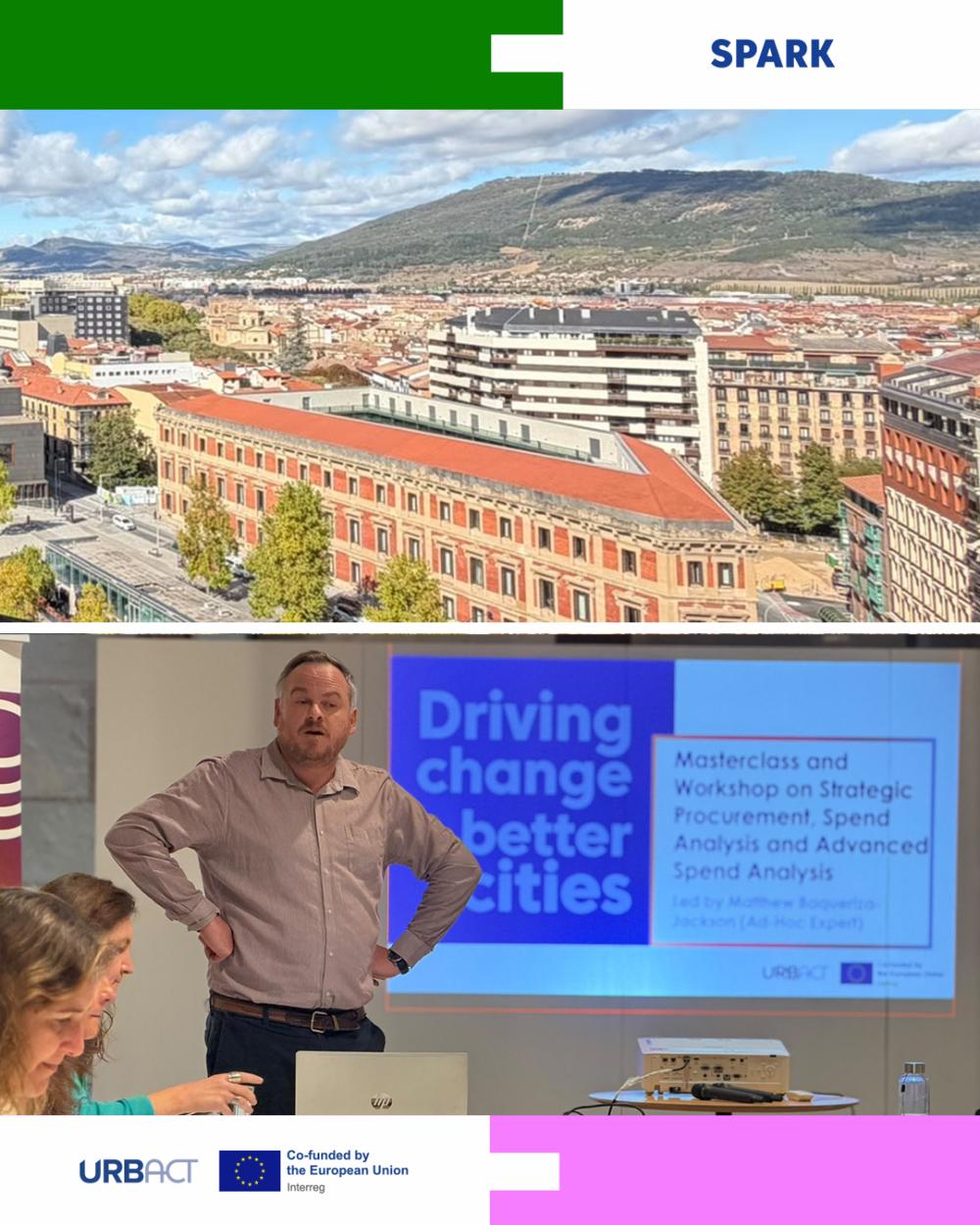
The first day focused on Spend Analysis and its potential to help cities understand how their procurement expenditure is distributed geographically, across economic sectors and among different types of suppliers.
Ad-Hoc Expert Matthew Baqueriza-Jackson delivered a masterclass introducing the methodology and practical steps involved in conducting a Spend Analysis. Participants explored how to define the scope of an analysis, collect and categorise supplier data, and identify patterns that can inform future procurement decisions.
A live demonstration of the Making Spend Matter Tool, using fictional data prepared for the SPARK network, allowed partners to familiarise themselves with the practical application of the methodology.
The masterclass also introduced advanced approaches to Spend Analysis, including gap analysis and the identification of influenceable expenditure, re-spend analysis and the assessment of wider impacts. These approaches can help cities identify where changes may be possible and examine how procurement expenditure can contribute to local economic development and broader social and environmental objectives.
Partners also worked on a practical exercise using fictional supplier data, calculating total procurement expenditure and the shares allocated to suppliers in the defined geographical area, SMEs and different economic sectors.
The session provided a starting point for partners to reflect on how they could apply Spend Analysis in their own cities and use the findings to inform their procurement strategies.
Testing Actions: Turning ideas into evidence
The second key theme was the development of Testing Actions: small-scale, time-bound initiatives designed to assess the relevance, feasibility and added value of a proposed approach before considering its wider implementation.
The workshop introduced the principles of testing within URBACT, emphasising that a Testing Action should be limited in scope, clearly defined and linked to a specific challenge or decision. Its purpose is not necessarily to prove that an approach works, but to generate useful evidence that can help cities decide whether to scale it up, adapt it or discontinue it.
To illustrate different approaches, partners explored examples from other European cities. These included Tartu's participatory approach to playground procurement, Liège's pilot initiative to measure food waste in school canteens, and Nantes' development of a prototype observatory for monitoring corporate social responsibility.
The examples demonstrated how relatively small interventions can help public authorities identify challenges, test new processes and gather evidence to support future decisions.
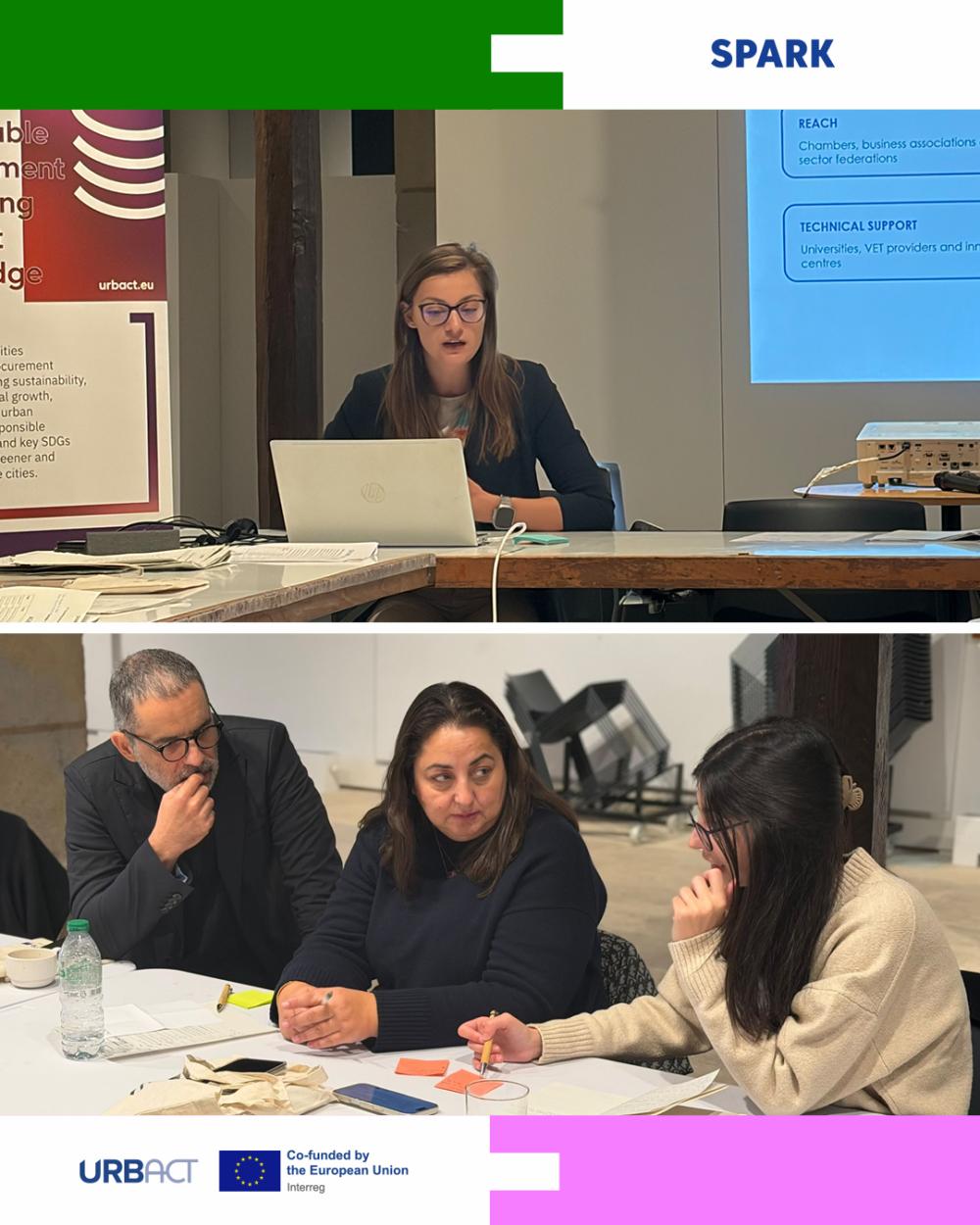
During a practical exercise, partners used post-it notes to reflect on three key questions:
- What is the gap or challenge that needs to be addressed?
- What Testing Action could help address it?
- How will the results and impact of the action be measured?
This exercise encouraged partners to connect their local needs with potential actions and appropriate indicators, while considering how the lessons learned could contribute to their Transfer and Improvement Plans.
Strengthening collaboration with the market
Alongside the two main themes, the meeting included a workshop on Working with the Market, led by Lead Expert Sabina Reichert.
The session explored how public authorities can strengthen engagement with suppliers and intermediary organisations, such as chambers of commerce and business associations. Participants discussed how early dialogue can help identify suppliers' needs, assess the feasibility of procurement requirements and improve the accessibility of public procurement opportunities, particularly for smaller businesses.
Partners were encouraged to consider practical ways of connecting their Urban Local Groups (ULGs) with the local business community and developing realistic initiatives to address specific capacity gaps.
Moving forward: From analysis to action
The discussions in Pamplona marked an important step in the SPARK transfer process. Partners will continue developing their Spend Analyses, identifying opportunities for improvement and designing Testing Actions that respond to their local contexts.
By combining evidence-based analysis with practical experimentation, the network aims to help cities better understand the impact of their procurement expenditure, identify opportunities for change and develop approaches that can be adapted to local needs.
SPARK continues to support cities in exploring how public procurement can become a strategic tool for local economic resilience, social value and environmental sustainability.
The network would like to thank its hosts in Pamplona, Lead Expert Sabina Reichert, Ad-Hoc Expert Matthew Baqueriza-Jackson and all participating partners for their contributions and commitment to the network's shared objectives.