
“When we started this journey, we faced a serious problem. Our local market was gradually losing public contracts”, recalls Despoina Chinisoglou, Supplier Manager at the municipality. “Many local companies were not prepared for the new public procurement system, and electronic procedures were unfamiliar to them. As a result, more and more contracts were awarded to large companies from outside our city.” Kavala could not legally “reserve” contracts for local firms, but it could not ignore the impact of its own spending either.
Across Europe, public authorities spend around EUR 2.5 trillion a year on goods, services and infrastructure, and close to half of this is managed by local and regional governments. This volume of spending has enormous potential to support green transitions, social inclusion and local economic resilience, yet sustainable criteria still appear in only a minority of tenders. The URBACT SPARK Transfer Network starts from a simple question: if a city like Kavala can shift from procurement as paperwork to procurement as a lever for change, what would it take for other cities to do the same? In other words, what if public procurement was treated not just as a cumbersome, compliance-driven “thing that cities have to do”, but rather as a strategic tool to ensure the wellbeing of citizens and the environment?
That is the core question of SPARK, a new URBACT Transfer Network built around the Good Practice of the Greek municipality of Kavala in sustainable and centralized procurement. Together with partners DURA, the Development Agency of the City of Dubrovnik (HR), Heerenveen (NL), Pamplona (ES), Pombal (PT) and Roeselare), the work starts from a simple, but powerful reality: every city already spends public money, but not all of them know how to use that spending in a meaningful way towards achieving sustainability goals.
From fragmented spending to a “green switch”
Kavala is located in Eastern Macedonia and Thrace, the least developed region of Greece, with around 70,000 inhabitants and an economy dominated by tourism, alongside emerging agri-food and blue growth sectors. The municipality’s annual revenues were close to EUR 49 million, with about EUR 4 million spent on goods and services and EUR 15 million on works and construction, split between different departments. Like many Greek cities, it operated in a legal environment where social and environmental criteria were allowed under national law, but rarely used in practice.
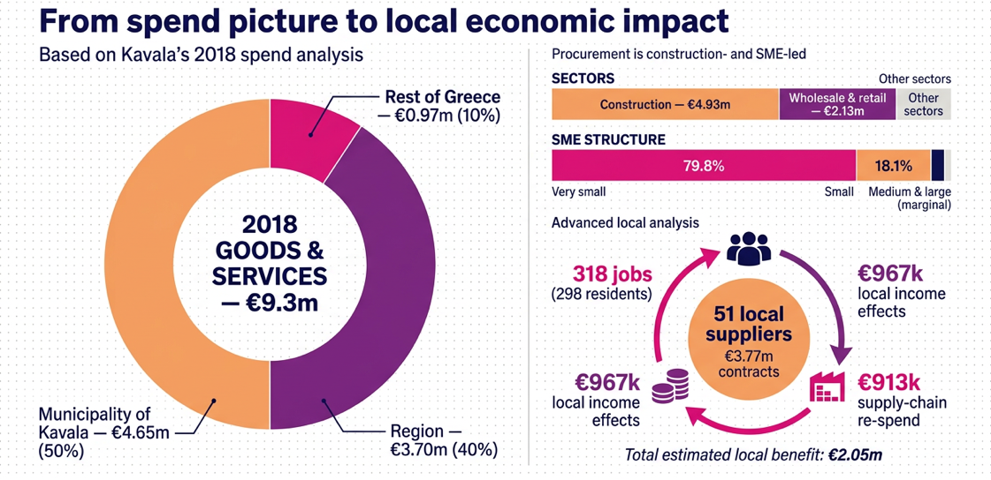
The turning point came when Kavala joined the URBACT Making Spend Matter Transfer Network led by Preston (UK). For the first time, the municipality carried out a systematic spend analysis: mapping where municipal money went, which suppliers benefited, and how much of this spend stayed within the local area. The results were eye-opening: out of just over EUR 9.3 million in procurement for goods and services, only about half was retained in the local economy, with the rest flowing to other parts of the region or the country.
“At the beginning, we did not fully understand the size of the problem. That is why spend analysis became our first and most important tool,” says Despoina. “It helped us understand what was really happening, using real data and numbers, to clearly identify the problem and define the framework for action.”
Armed with this evidence, the city moved from analysis to action, looking for a suitable pilot where green and social criteria could be tested without overwhelming the system. Early ideas, such as switching to alternative disposable products, proved tricky: some “easy” green options were simply too expensive or unavailable locally. Instead of deciding everything behind closed doors, the municipality invited local suppliers, trade associations, the Chamber of Commerce and even the Court of Audit to help co-design a realistic pilot.
The result was a “green switch” in an apparently ordinary area: municipal cleaning materials. In 2020, Kavala launched a tender covering seven categories of products, worth around EUR 465 000 over two years, and made a deliberate break with the traditional “lowest price only” rule. The new criteria required zero plastic packaging, prioritised biodegradable materials, and asked that 1% of the contract value be allocated to local social initiatives. Thanks to the early market dialogue, suppliers themselves helped shape the criteria and confirmed what was feasible.
The tender was won by four small and medium-sized enterprises, proving that strict environmental and social requirements do not have to push out local businesses if they are accompanied by support and clear communication. The Greek Ministry of Development later highlighted the procurement as an example of good practice, giving local officials additional reassurance that this new approach was both legal and replicable. From there, Kavala began extending the same logic to other categories such as food services, office supplies, construction, energy and waste management, and embedding sustainability considerations in its budgeting and planning procedures.
A modular good practice, not a miracle recipe
Kavala’s experience is more than a one hit wonder tender, but rather a sequence of learning steps that link three elements: a method for analysing and steering spend, a collaborative way of working with stakeholders, and a new approach to designing and running tenders. This combination forms the Good Practice at the heart of the Transfer Network.
SPARK: Sustainable Procurement Advancing Resilient Knowledge brings Kavala together with five diverse partners: Pamplona (ES), Pombal (PT), Roeselare (BE), Heerenveen (NL) and DURA, the development agency of Dubrovnik (HR), which will work together over the next two years to adapt the good practice. In order to do so, we are breaking down Kavala’s experience into five pillars, built on the foundational layer of the spend analysis:
Pre-market engagement and supplier dialogue
Green and social criteria in tenders
Centralisation and coordination of procurement
Support to SMEs
Internal capacity building.
This is a modular practice rather than an all-or-nothing package, where some parts, such as basic spend analysis, are highly transferable where financial data can be accessed and classified. Pre-market engagement is also widely transferable, but the format needs to reflect local legal cultures and market maturity. Green and social criteria are legally possible across all partner countries, yet they differ in administrative complexity and in how ready suppliers are to respond. Centralisation of procurement is often the hardest element to move, because it touches organisational mandates and political culture. Capacity building, finally, is relevant everywhere, but must be adapted to the specific bottlenecks of each city.
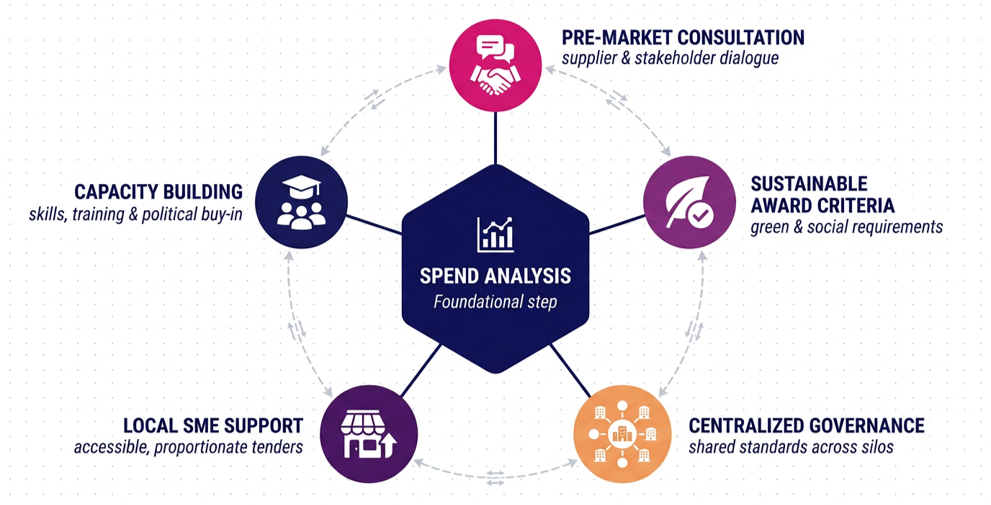
For SPARK, this modularity is the method of working: partners understand the full logic of the practice, then choose which pillars to work on first, depending on their own governance structures, data maturity, market conditions and policy ambitions.

How SPARK makes transfer feel doable
All partners share a desire to make procurement more strategic, but they differ in how centralised their systems are, how good their data is, how experienced their local suppliers are, and how advanced their sustainability agendas already feel.
Making transfer happen means using a three-layer methodology. First, full-network exchanges are used to build a common understanding of the good practice, share stories and evidence, and carry out joint reflection. Second, smaller thematic clusters allow cities with similar needs to go deeper together, for example around green criteria, social value clauses, data management or governance reforms. Third, targeted bilateral coaching helps individual partners work through specific technical or organisational challenges with tailored support from the Lead Partner and Lead Expert.
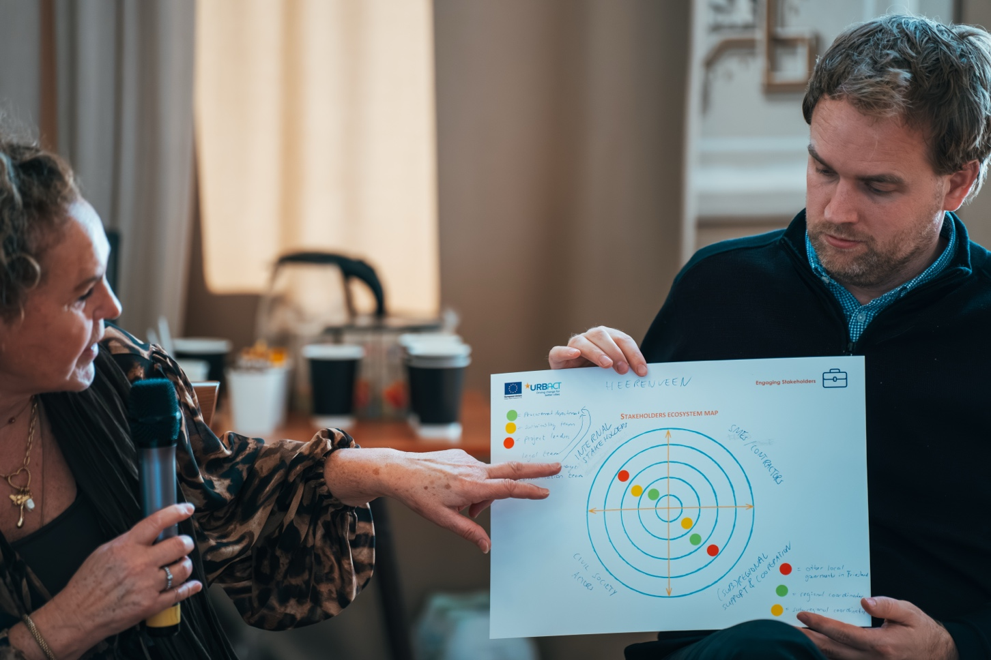
This approach recognises that the realistic goal for a two-and-a-half-year transfer process is not to “finish” sustainable procurement, but to reach a stage of transfer readiness. For some cities, this may mean having completed their first meaningful spend analysis and identified priority categories for greener tenders. For others, it could be testing a pilot tender that combines environmental and social criteria, or establishing a more coordinated procurement function inside the municipality. In each case, the emphasis is on steps that can be taken now, with existing resources, and that build confidence for the next phase. As the market stakeholders in Pamplona’s roundtable put it, "Sustainable procurement is a creativity and awareness problem."(13 Feb 2026)
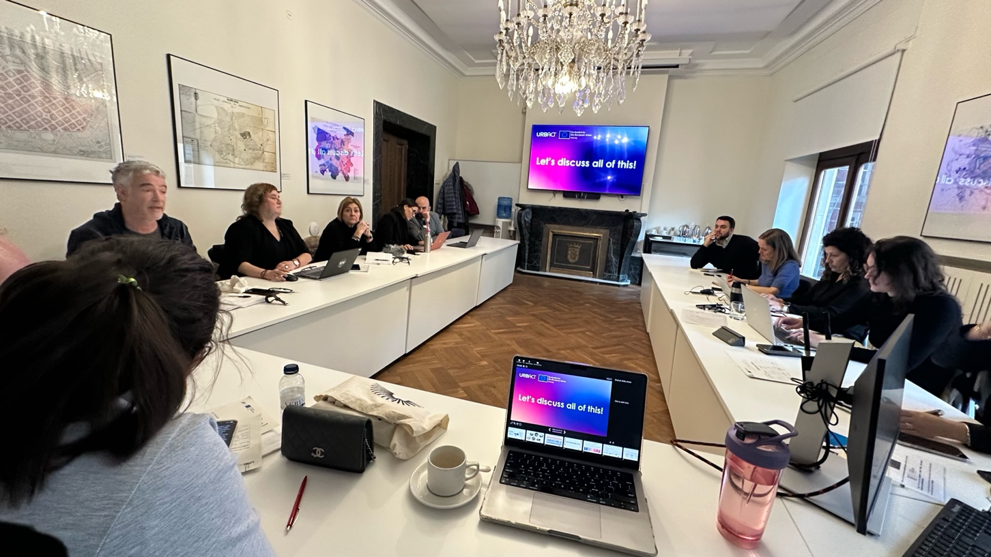
Because procurement reform is detail-heavy, SPARK also makes purposeful use of digital formats between in-person meetings, for example to work on data structures, criteria design, supplier consultation techniques or internal governance arrangements in short, focused sessions. This helps maintain momentum without overburdening teams, and gives URBACT Local Groups and other stakeholders more chances to stay engaged between major milestones.
Overcoming challenges ahead
All of the partners that came together to make SPARK happen are aware that this work is not easy. Coordinating procurement can unsettle existing roles and habits, data systems may not have been built with analysis in mind, local SMEs might worry that new criteria will add costs or paperwork. Legal interpretations can vary, and some administrations are understandably cautious about changing long-established tender templates.
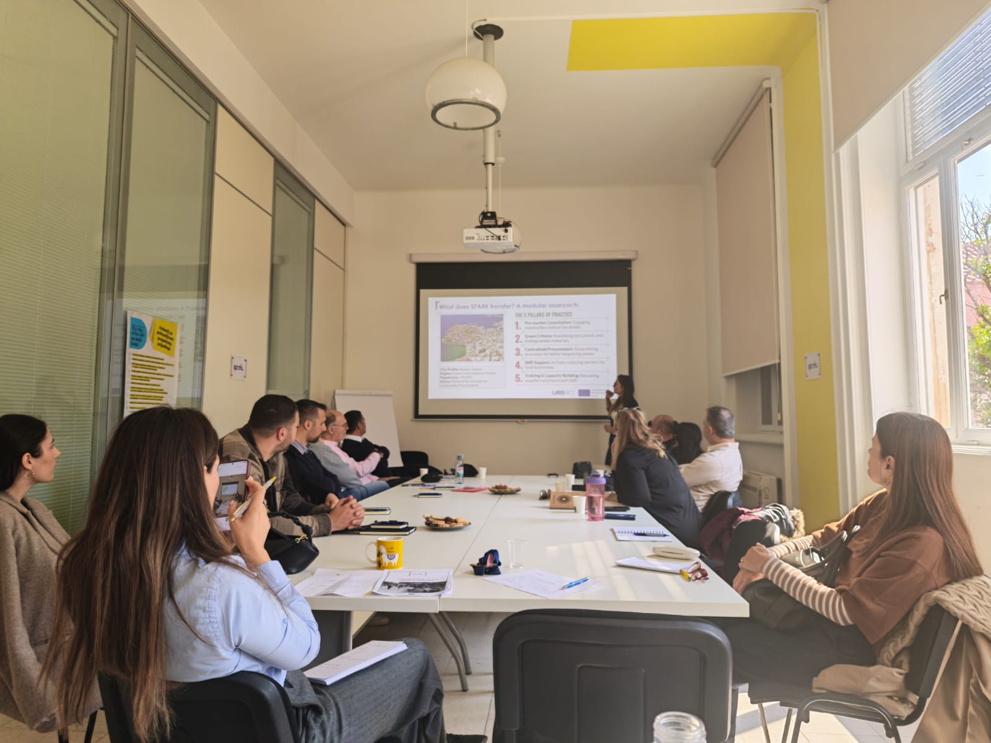
Yet our project’s beginning message is that these challenges can be dealt with in practical ways. When data is weak, a first step can be a rough spend analysis on a limited number of categories, using whatever information is available. When suppliers are apprehensive, early and honest dialogue can demystify public tenders and show that sustainable criteria are not designed to exclude them. When internal capacity is limited, then short, targeted training together with peer learning can help civil servants gain the confidence they need without waiting for a complete institutional overhaul.
Start where you are!
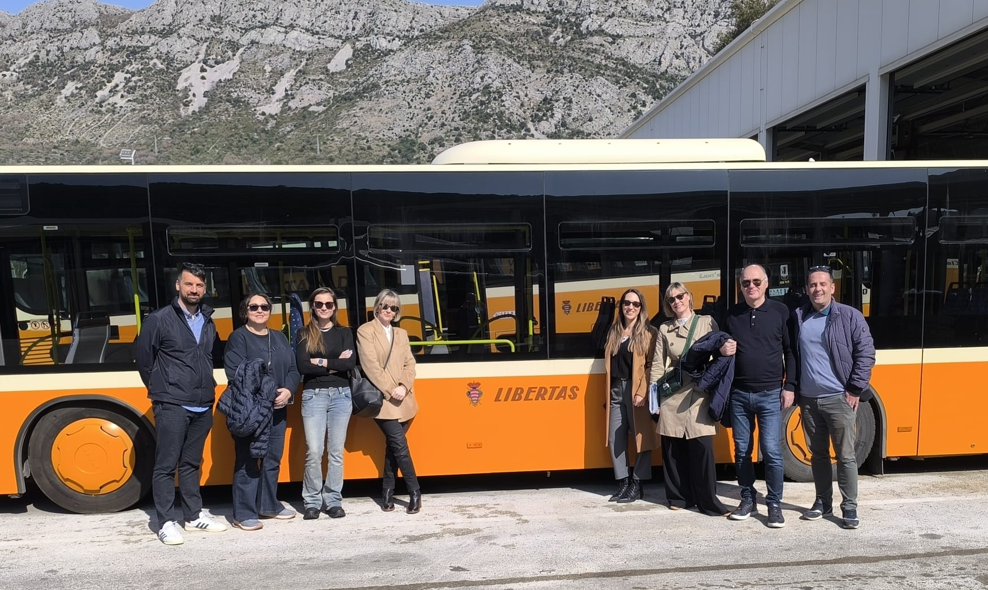
Kavala’s story shows that strategic procurement does not have to start with structural reform or a flagship infrastructure project. It can start with a spreadsheet, a difficult conversation about where money is going, or one carefully chosen pilot tender that is big enough to matter but small enough to manage. Through SPARK, this experience is being translated into a flexible, modular pathway that cities with very different systems can adapt.
Our transfer network’s ambition is not to create a handful of “green tenders”, but to help each partner (and ultimately many other cities) see procurement as a tool they can shape, not just a rulebook to comply with.
For all cities wrestling with climate targets, social inequalities and economic fragility, what we in SPARK aim to achieve over the next two years moves beyond the question of whether procurement can help, and towards how soon we can all take the smallest step.