
Reviving Degraded Areas for Nature and People: ReDAN transfer network
Funded under URBACT IV, ReDAN unites seven cities with divergent starting points around a shared mission. It brings together a Central European Good Practice, an EU flagship biodiversity city, an EU veteran, three newly arrived Western Balkan partners, and a community in a war-torn country. This article invites you along their journey to learn from Ormož. Leading this network until April 2028 is the Lead Partner, Ormož Development and Research Centre (RRC Ormož).
The Good Practice being transferred is the Ormož basins nature reserve. This sanctuary provides living proof of how a severely degraded industrial landscape can be systematically reborn as a thriving ecosystem. Once used as wastewater basins for a sugar factory, these basins have been transformed over two decades, through the vision of the non-governmental organization DOPPS – BirdLife Slovenia, into a protected wetland of international importance.
By allowing nature to reclaim the space, the site has become an area for nesting and migrating waterbirds, attracting rare species and ecotourists. The success of the Ormož basins lies in using natural processes to manage the blue and green landscape, proving industrial footprints aren't permanent scars. This cost-effective model unites conservation, education, and tourism through low-maintenance natural succession, offering high transferability for European cities facing similar challenges.
Seven cities, one water
Water remembers, connects, and knows no boundaries drawn by human hands. When we look at our partner cities, stretching from the Atlantic shores to the rugged peaks of the Carpathians, we see different languages, distinct cultures, and fragmented political systems. Yet, across this vast distance beats the same pulse - a network of communities sharing the same blue and green wounds inflicted by decades of neglect.
This journey begins on the Atlantic edge in Limerick (IE), an ancient Viking and Georgian city on the banks of the powerful River Shannon. Beneath this lush mantle lies the historical fatigue of nineteenth-century industrialization and a contemporary biodiversity crisis. In response, building upon extensive experience, a new consciousness is awakening within the Groody Valley. Here, 50 hectares of neglected land in the heart of the city are being transformed into a wild wetland park and natural sponge to restore native wildlife, enhance environmental education, and provide sustainable recreation.
Moving south, Alcanena (PT) lies at the foot of the karst massif of Serras de Aire e Candeeiros, where the mythic Alviela River springs to life. A centuries-old leather tanning industry left behind a heavy environmental debt, with water choking under severe chemical pollution. Today, Alcanena refuses to settle for standard engineering; across 15 hectares along the Carvalho stream, adjacent to a Wastewater Treatment Plant, a macrophyte wetland will be developed to naturally heal the water toward a nearly zero discharge reality, resurrecting biodiversity so citizens can finally breathe alongside their rivers.
The current of regeneration flows eastward into the Balkans, arriving under the protective canopy of Mount Shara in Bogovinje (MK), a profound reminder of the strength of ancestral, rural rhythms. Here, water is the literal lifeblood of community survival, yet erosion and illegal dumping threaten this delicate equilibrium. Bogovinje response is to utilize NbS along the banks of the Bogovinje River, substituting harsh human impacts with living structures and turning areas once marred by waste into educational eco-trails where humanity and nature realign.
Further through the Balkan valleys lies Priboj (RS), a city carrying the industrial heritage of a former automotive giant alongside the blessing of its 36.6°C thermal springs. At the confluence of the Uvac and Lim rivers, a national triple-border, ecology collides with geopolitics as floating waste traveling downstream from neighbouring countries chokes the reservoir. Here, Priboj wants to carve out a two-hectare zone of metamorphosis, utilizing riverbank stabilization, creating a vibrant public space, and raising collective awareness that a river remains one, regardless of passports.
This transboundary struggle mirrors the reality in Srebrenica (BA), cradled in a narrow, forested valley, a community bearing a heavy historical weight but finding its future within breathtaking natural wealth, from its healing Guber springs and the emerald Drina River to Lake Perućac. Facing overwhelming transboundary floating waste, Srebrenica's ultimate goal is to completely clean the lake. Currently, this effort focuses on a 1,5-hectare bay, which will be transformed into "Perućac Lake in a nutshell": a living blueprint for ecological regeneration designed to be later scaled up across the entire body of water.
Finally, the journey culminates in Yaremche (UA), nestled in the Carpathians along the rushing Prut River. Today, this city balances tourism with the harsh realities of wartime. Despite these immense trials, Yaremche refuses to surrender its green transition, introducing NbS to stabilize eroding riverbanks and create sustainable recreational zone on a 650m2 site. Adjacent to the Wastewater Treatment Plant, this intervention links landscape regeneration with water infrastructure to filter runoff. This act of resistance through preservation proves that even in the darkest times, we must honour the living water we leave to the earth.
Let's chunk up, let's chunk down
To prevent overwhelm across such a vast spectrum of experience, the project's operational structure was defined during a Chunking workshop at the first Transnational Meeting in Ormož (ReDAN FB) in early May 2026. Rooted in cognitive psychology (George A. Miller), chunking overcomes the short-term memory limit of holding only seven plus or minus two items. By categorizing the project into digestible modules, partners maintain absolute clarity. The framework utilizes three dimensions: Chunking Down to break abstract visions into actionable steps, Chunking Up to group details into a coherent strategy, and Chunking Sideways to explore alternative options, transforming complex planning into manageable local action. So, we have chunked up the transfer into four pillars: 1. Wastewater treatment, 2. Small (urban) infrastructure, 3. Biodiversity, 4. Awareness & education. And there is more chunking to follow.
People are watching
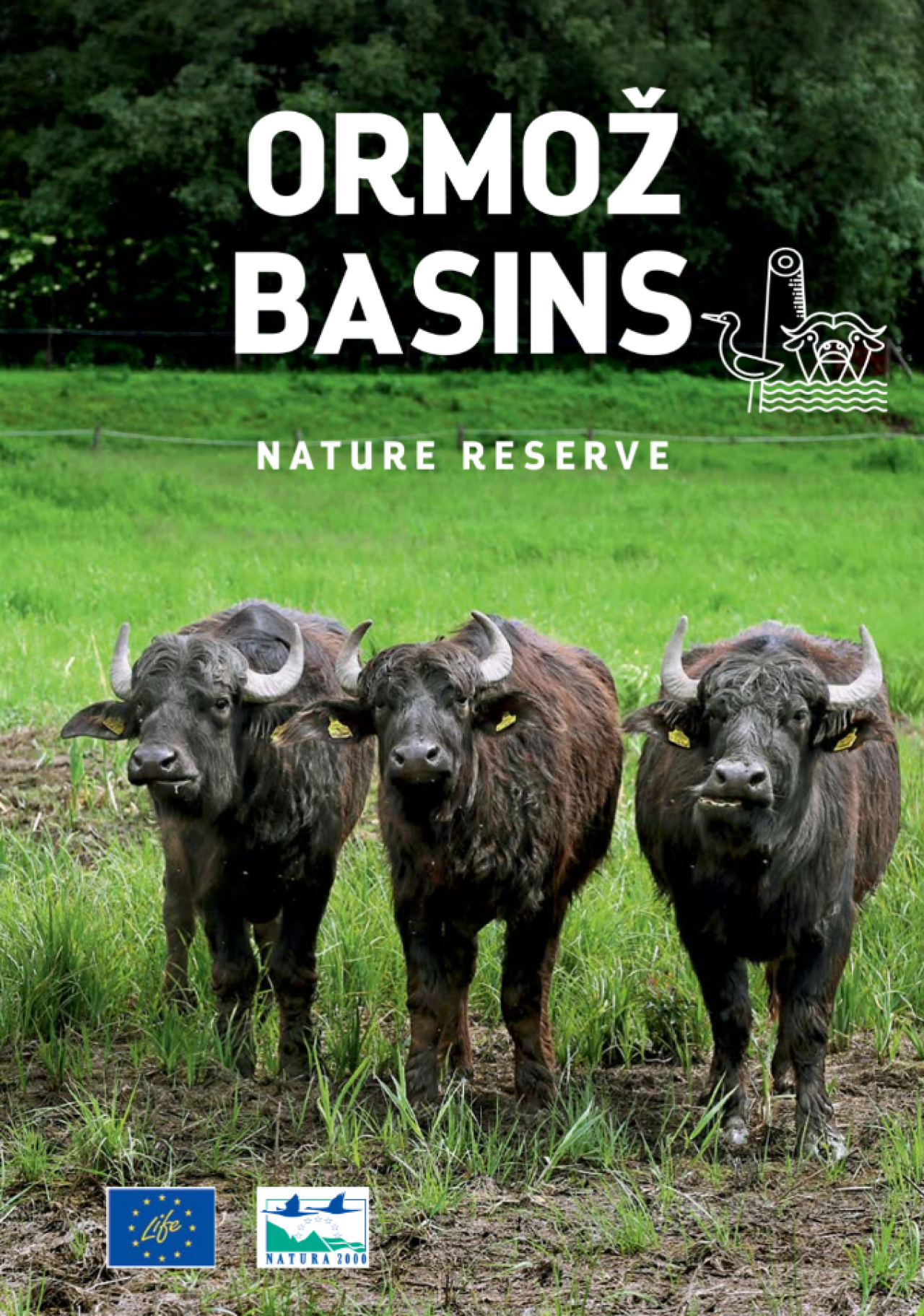
Back in Ormož, water buffaloes chew grass untroubled by human planning. Yet, the delegation watching them leaves with renewed clarity. The serenity of this sanctuary powerfully reminds us what is at stake. Armed with URBACT methodologies and inspired by a reborn ecosystem, the partners now look ahead. Over the next two years of the ReDAN journey, this shared vision will translate into concrete local actions, proving that when human ingenuity aligns with the laws of nature, degraded landscapes can find their way back to life. Want to find out what these water buffaloes are actually doing here? Follow our project!