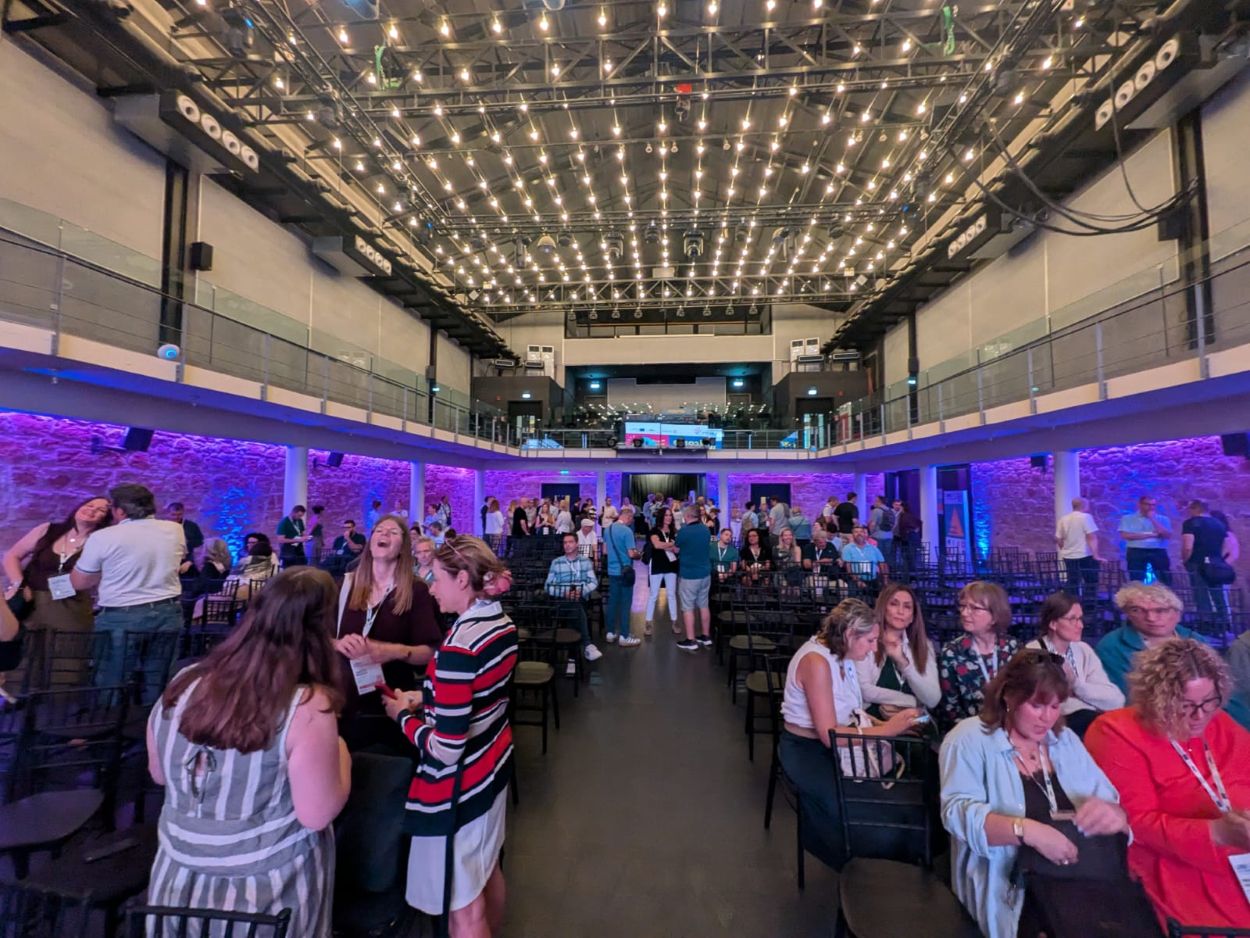
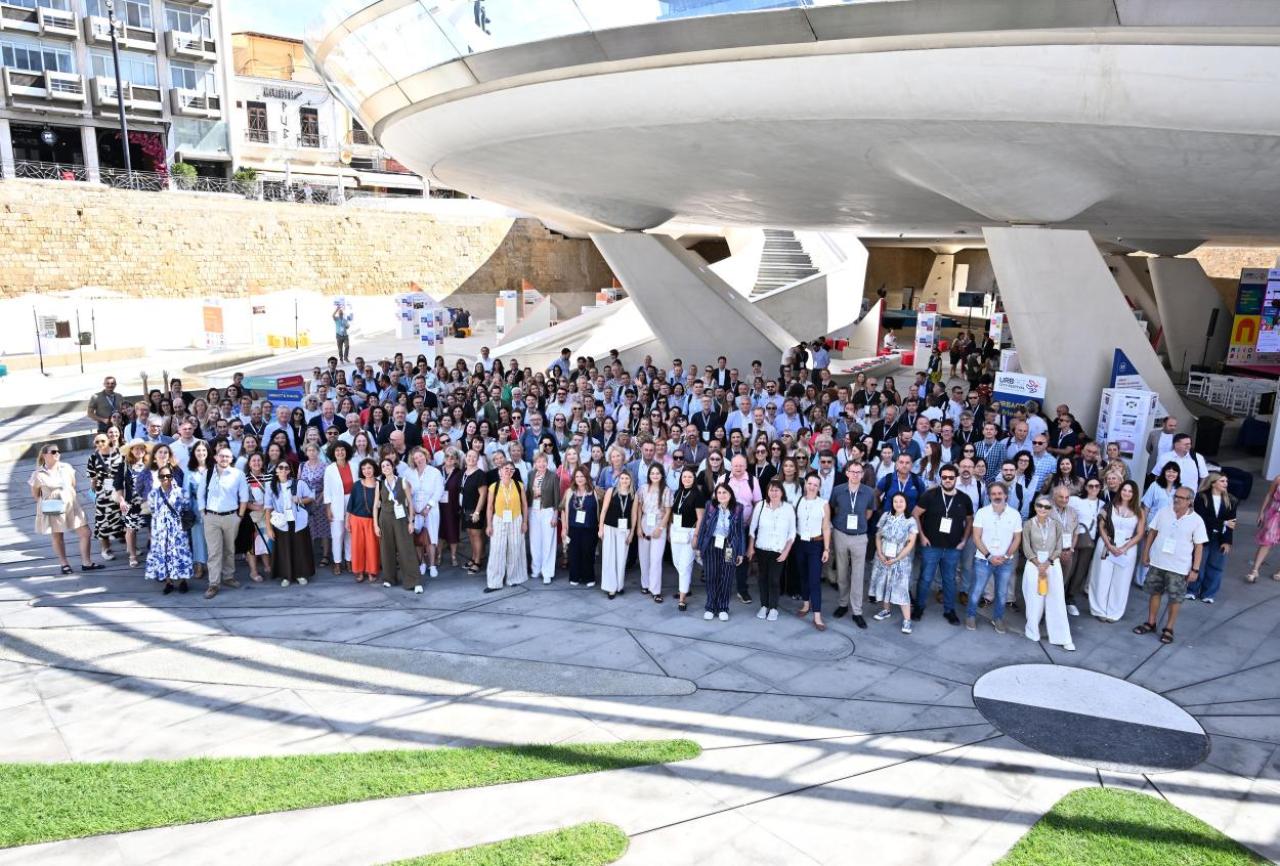
The Beyond the Urban European network took part in the URBACT City Festival 2026, held on 29 and 30 September in Nicosia, Cyprus. The event brought together representatives from cities and regions across Europe to exchange experiences, discover local initiatives and explore new opportunities for collaboration.
Although Beyond the Urban officially came to an end in December 2025, the festival provided an opportunity for some of its partners to reunite and continue building on the knowledge, experiences and relationships developed over more than two years of working together.
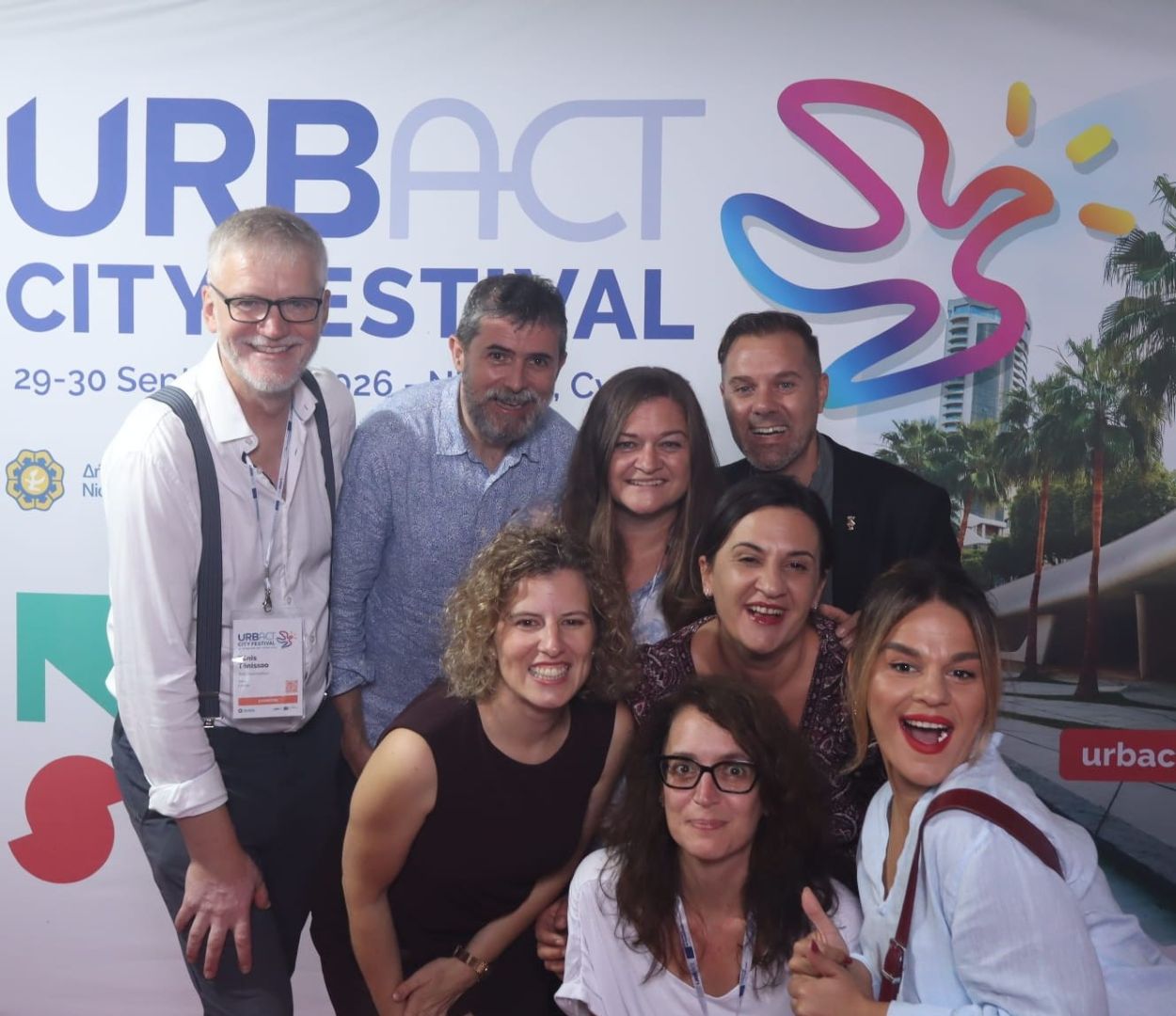
Representatives of the Beyond the Urban network at the URBACT City Festival
Five representatives of the ten territories involved in the network attended the festival: Hradec Králové (Czech Republic), Tartu (Estonia), Kočani (North Macedonia), Szabolcs 05 (Hungary) and Osona (Spain). They were also joined by Clyde Hutchinson, Beyond the Urban's Lead Expert, and Mònica Carrera, the network's Project Coordinator and representative of Osona.
A space to share experiences and build new connections
Throughout the festival, Beyond the Urban representatives attended various thematic sessions addressing challenges faced by European cities and territories, covering topics such as sustainable mobility, urban planning, citizen participation, social inclusion and digital transition.
One of the highlights of the event was the Local Actions Marketplace, a showcase of initiatives developed by European cities through the URBACT programme. This space offered participants the opportunity to discover experiences from other networks, exchange knowledge with those behind the initiatives and identify potential synergies and opportunities for collaboration.
The festival also encouraged direct exchanges with professionals, policymakers and technical experts from different countries, creating an open environment for learning, networking and sharing ideas.
Beyond the working sessions, participants had the opportunity to explore Nicosia, the host city, and discover some of its urban spaces and projects. Social activities and city visits also helped strengthen personal and professional connections among network partners and other festival participants.
Osona's experience featured in panel discussions
Beyond the Urban also made an active contribution to the festival programme through Mònica Carrera, the network's Project Coordinator, who presented Osona's experience in two thematic sessions focused on mobility and urban planning.
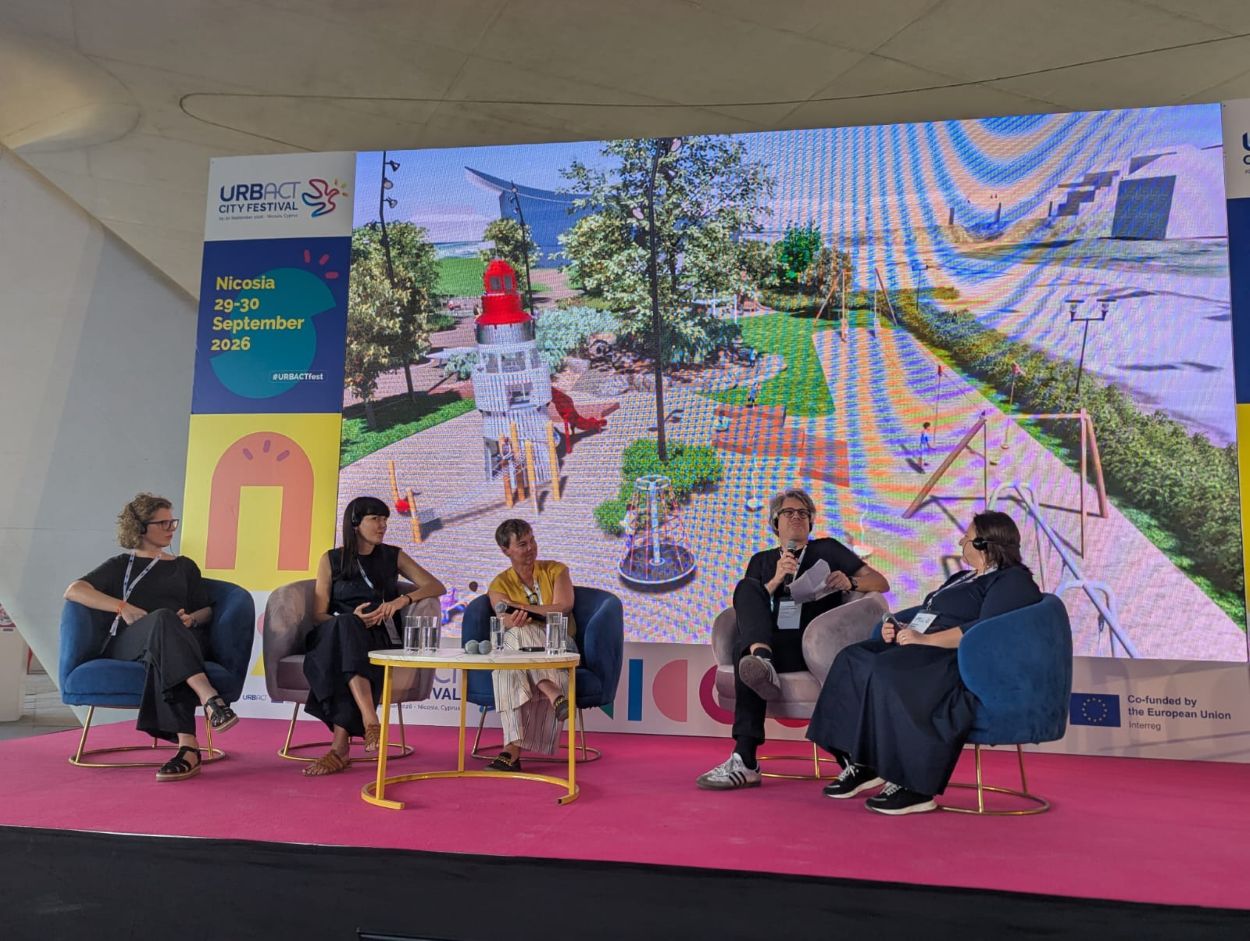
Mònica Carrera (left) during one of the panel discussions
During the mobility session, Carrera shared key lessons learned from the project on the importance of political commitment in turning plans into action. Osona's experience highlighted the need to involve political decision-makers from the outset, build lasting consensus and establish mechanisms to ensure the continuity of planned actions. In this context, she presented the creation of the Osona Mobility Office as one of the project's first tangible results.
In the urban planning session, her contribution focused on the value of involving local stakeholders in shaping public policies. In Osona, Beyond the Urban engaged 135 people from 85 organisations through various collaborative and participatory activities. This process made it possible to combine technical expertise with local knowledge and jointly develop the territory's Integrated Action Plan for mobility.
Both contributions highlighted some of Beyond the Urban's key lessons: the need to combine technical planning, participation and political commitment to achieve real and lasting improvements in mobility.
A network that keeps collaboration alive
Participation in the URBACT City Festival also provided an opportunity to reflect on the journey of Beyond the Urban, a network that brought together ten European municipalities and regions with the aim of improving urban-rural mobility through more sustainable, accessible and integrated solutions.
Throughout the project, partner territories exchanged experiences, explored new planning tools and developed their own action plans to address local mobility challenges.
The reunion in Nicosia demonstrated that the relationships and knowledge developed throughout the project continue to bring value even after its official conclusion. The festival allowed partners to stay connected, gain new perspectives from other European experiences and continue exploring opportunities for collaboration towards more sustainable and inclusive mobility.