
Validated Expert info
Expert can perform the Lead expert role and Ad hoc expertise missions at network and programme level in relation to:
1. The design and delivery of (transnational) exchange and learning activities
2. Thematic expertise:
> Climate adaptation
3. Methods and tools for integrated and participatory approaches:
> Monitoring and evaluation for effective implementation
Summary
Dr.-Ing. Klodian Zaimi
URBACT IV Validated Lead Expert | Climate Adaptation | Water-Sensitive Urban Development | Integrated and Participatory Urban Action | Transnational Exchange and Learning | Monitoring and Evaluation
Professional Profile and Distinctive Expertise
Dr.-Ing. Klodian Zaimi is a validated URBACT IV Lead Expert, senior Hydrotechnical Engineer and researcher with more than 20 years of professional experience in climate adaptation, integrated water resources management, disaster risk reduction, resilient infrastructure and sustainable urban development.
He combines national institutional leadership and extensive international project experience with direct URBACT experience in municipal capacity building, stakeholder facilitation, participatory planning, Action Labs and implementation of small-scale urban actions.
He is Head of the Department of Hydrology and the National Hydrological Service at the Institute of GeoSciences, Polytechnic University of Tirana, and Albania's representative for hydrology at the World Meteorological Organization (WMO).
His professional achievements include approximately ten years of leadership in national natural-hazard forecasting, contributions to flood risk management planning across five major Albanian river systems covering approximately 300 km of river reaches, and regional stormwater master planning involving six municipalities.
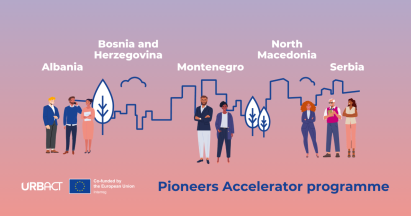
During 2025–2026, he served as Local Mentor for Kamza, Lezhë and Himarë under the URBACT Pioneers Accelerator, supporting local teams through the complete participatory learning process, from identifying challenges and developing shared visions to co-designing actions, supporting implementation and reviewing results.
His distinctive added value is the ability to connect technical evidence, institutional coordination, participatory learning and practical implementation, helping cities transform strategic objectives into feasible, inclusive, locally owned and measurable actions.
Experience in Urban Action Implementation and Participatory Processes
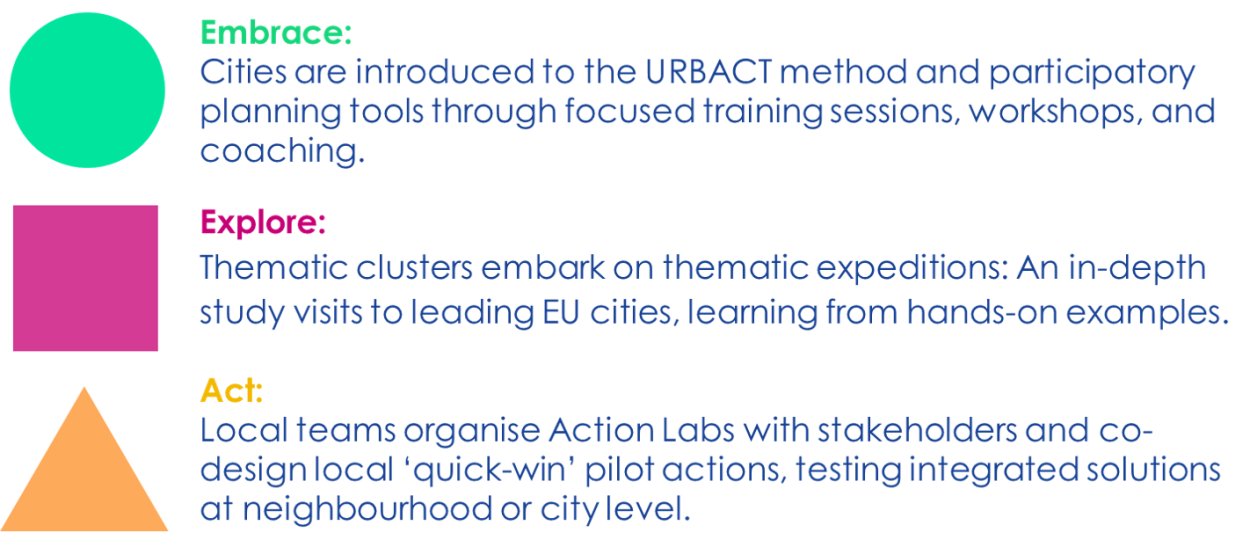
As a Local Mentor in the URBACT Pioneers Accelerator, Dr. Zaimi supported three Albanian municipalities with different policy priorities and institutional capacities, applying the Discover, Define, Develop and Deliver methodology.
His responsibilities included facilitating local stakeholder meetings and Action Labs, helping municipal teams identify challenges and implementation barriers, supporting action development, engaging local communities, and reviewing progress and lessons learned.
Kamza | Circular Economy, Waste Management and Community Engagement
In Kamza, he supported participatory activities focused on waste reduction, waste separation, recycling and reuse, connecting municipal departments, local businesses, schools and young people.
A school-based Action Lab in September 2026 involved students, teachers and municipal representatives in recycling education, practical reuse of materials and discussion of improvements to local waste-management practices. The activity also introduced a student-developed digital application for recycling information.
The work demonstrated the value of combining environmental education, local institutional cooperation, youth participation and practical experimentation to support behavioural change.
Lezhë | Sustainable Tourism, Local Development and Implementation
In Lezhë, he supported participatory planning and local action development aimed at connecting cultural heritage, protected natural areas, local businesses and tourism services.
The programme included stakeholder workshops, tourism itineraries, nature-based activities and the Wine Fair, creating opportunities to strengthen destination identity and local economic cooperation.
A significant implementation outcome was the Municipality's installation of two permanent interactive tourist-information points in September 2026, at the Skanderbeg Memorial in Lezhë and on the Shëngjin seafront.
These outputs demonstrate how the participatory process contributed to the development of lasting municipal visitor-information services, translating identified needs into tangible local interventions.
Himarë | Sustainable Urban Mobility and Digital Solutions
In Himarë, he facilitated municipal and stakeholder discussions addressing seasonal congestion, public transport accessibility, fragmented mobility information and connections between coastal settlements and inland communities.
The local learning process contributed to a functioning Himara Mobility digital platform prototype, integrating information on transport, bus stops, parking and other mobility services.
Additional outputs included a physical information-board concept and planning inputs for the Himarë Mobility Plan 2026–2030, supporting the municipality's continuing efforts to improve public transport and territorial connectivity.
Across the three municipalities, his work demonstrates practical experience in participatory governance, stakeholder engagement, local capacity building, action development, implementation support and learning from results across different sustainable urban development themes.
National Leadership, Climate Resilience and Operational Systems
Dr. Zaimi has approximately ten years of experience as Team Leader at Albania's National Centre for Forecasting and Monitoring of Natural Risks.
He played a leading role in developing the national multi-hazard forecasting and early warning system, integrating meteorological, hydrological, flood, geological and forest-fire hazard information to support disaster preparedness and public decision-making.
His experience includes hydrometeorological monitoring, operational forecasting, flood and drought risk assessment, institutional coordination and technical communication with national authorities responsible for disaster management and civil protection.
He has contributed to national hydrometeorological modernisation, monitoring-network development, flood forecasting and risk-informed planning, connecting scientific evidence with operational public services.
He also has extensive experience advising public institutions on flood management, hydraulic infrastructure, dam safety and climate-related risks.
International Projects and Water-Sensitive Urban Development
Dr. Zaimi has worked as Team Leader, Deputy Team Leader, Project Manager and senior technical expert on multidisciplinary assignments supported by European and international programmes, including the European Commission, World Bank, Western Balkans Investment Framework (WBIF), GIZ, IUCN, UNDP, UNEP and Global Water Partnership–Mediterranean.
Selected assignments and achievements include:
- Flood Risk Management Planning, Albania (2021–2024): Flood Management Expert in a WBIF-supported assignment covering the Ishëm, Erzen, Shkumbin, Seman and Vjosa river systems, with approximately 300 km of river reaches within the project scope. The work addressed flood hazards, climate change, protection measures and risk-reduction priorities.
- Durrës Regional Stormwater and Sanitation Master Plan (2025–2026): Senior Hydrological and Stormwater Expert supporting integrated urban drainage and flood-risk planning across six municipalities: Durrës, Kavajë, Krujë, Fushë-Krujë, Shijak and Rrogozhinë. Activities include hydrological analysis, flood-prone area identification, GIS-based assessment, drainage-system evaluation and technical inputs for investment planning.
- Municipal Disaster Risk Assessments, Kosovo (2025–2026): Flood and Drought Risk Assessment Expert supporting Gjakova, Prizren and Gjilan, including interpretation of official flood hazard scenarios, exposure and vulnerability assessment, identification of risk hotspots and development of risk-reduction priorities.
- GEF/UNEP NEXUS II, Albania (2024–2025): Team Leader and Water Resources Expert for the Çorrush Reservoir assignment, integrating water availability, irrigation rehabilitation, renewable energy, ecosystem considerations and stakeholder consultation into alternative climate-resilient development scenarios.
- Nature-Based Solutions and Watershed Resilience (2023–2024): Hydrological expert in an IUCN-supported assessment of the Gurra catchment, examining flood and erosion risks and evaluating nature-based alternatives to conventional engineering measures.
- Transboundary Drin–Buna Basin Cooperation: Contributions to hydrological and hydraulic modelling, integrated water resources management, reservoir-operation assessment and flood-risk analysis involving cooperation across Western Balkan countries.
These assignments demonstrate an integrated understanding of the urban and territorial water cycle, including river flooding, stormwater runoff, drainage infrastructure, water availability, drought resilience, environmental protection and climate adaptation.
His expertise is particularly relevant to water-sensitive urban development, sustainable urban drainage, urban flood resilience, nature-based solutions, blue-green infrastructure, water retention, integrated water management and evidence-based planning of climate-resilient interventions.
He combines technical assessments with consideration of institutional feasibility, environmental impacts, investment priorities, monitoring requirements and the needs of local authorities.
Facilitation, Transnational Exchange and Municipal Capacity Building
Dr. Zaimi's methodological approach combines scientific and technical knowledge with collaborative learning, participatory decision-making and practical problem-solving.
Through the URBACT Pioneers Accelerator, he has designed and facilitated local stakeholder meetings, Action Labs, thematic discussions and co-creation activities involving municipal officials, service providers, businesses, educational institutions and local communities.
He has applied URBACT tools and approaches including stakeholder mapping, SWOT analysis, City Safari, needs assessment, How Might We questions, collaborative visioning, Action Labs and Dynamic Journals.
He has participated in international URBACT learning activities and cooperated with thematic experts and programme representatives, helping municipal teams interpret good practices and adapt them to their local contexts.
His wider professional experience includes coordinating multidisciplinary technical teams and collaborating with international institutions, consultants and public authorities across Albania and the Western Balkans.
His approach places particular emphasis on making complex technical issues understandable to different stakeholders, building shared ownership, strengthening municipal capacities and linking local implementation challenges with opportunities for peer learning.
He sees transnational exchange not only as the sharing of successful examples, but as a structured process of comparing challenges, identifying implementation conditions, testing solutions and transferring practical knowledge between cities.
Integrated and Participatory Approaches, Monitoring and Evaluation
Monitoring and evaluation are central to Dr. Zaimi's professional expertise and his approach to sustainable urban development.
His experience includes establishing technical baselines, assessing hazards and vulnerabilities, comparing intervention alternatives, evaluating feasibility, identifying implementation priorities and reviewing progress against technical and institutional objectives.
He promotes the use of realistic indicators, stakeholder feedback and continuous learning to distinguish planned activities from completed outputs and longer-term results.
Within urban development programmes, he emphasises the importance of connecting environmental performance with social inclusion, institutional capacity, accessibility and the needs of different population groups.
For climate adaptation and water-sensitive urban development, this means considering both the effectiveness of technical measures and their wider environmental, social and territorial benefits.
He supports integrated decision-making that combines evidence-based analysis, participatory governance, implementation feasibility and transparent monitoring.
Approach to the URBACT Lead Expert Role
Dr. Zaimi's proposed approach to supporting an URBACT Action Network is based on four interconnected dimensions.
1. Network Development, Baseline Study and Network Roadmap
Supporting the Lead Partner and participating cities in developing a shared understanding of their policy challenges, institutional capacities, stakeholder needs and implementation priorities.
This includes partner consultations, baseline assessments, identification of complementary experiences, definition of common learning objectives and development of a realistic Network Roadmap adapted to the partnership.
2. Transnational Exchange, Peer Learning and Local Coaching
Designing and facilitating interactive learning activities that respond to partners' needs and support continuous exchange between the transnational and local levels.
Suitable formats include thematic workshops, peer reviews, study visits, implementation clinics, practical demonstrations, collaborative problem-solving and structured reflection sessions.
His approach emphasises coaching municipal teams, supporting URBACT Local Groups and helping partners adapt solutions to their own contexts rather than reproducing practices without considering local conditions.
3. Integrated Action Implementation and Results Monitoring
Supporting partner cities in transforming strategic objectives into feasible, participatory and measurable local actions.
This includes connecting technical baselines with stakeholder priorities, assessing alternative solutions, identifying delivery barriers, supporting Action Labs and Action Portfolios, and developing proportionate monitoring indicators.
He promotes continuous learning through implementation, including the identification of technical, financial, institutional and social factors that influence delivery.
4. Knowledge Capture, Communication and Transferability
Supporting the systematic documentation of experiences, practical results, implementation challenges and lessons learned across the partnership.
His approach focuses on translating complex knowledge into accessible, transferable outputs that can support network communication, practical guidance and the development of an Actions Playbook.
The objective is to ensure that transnational learning produces lasting value for participating municipalities and generates useful knowledge for other European cities.
Added Value for European Urban Networks
Dr. Zaimi offers a combination of expertise that is particularly relevant to implementation-oriented European urban networks:
Technical expertise: Climate adaptation, hydrology, urban stormwater management, flood and drought resilience, integrated water resources management, nature-based solutions and resilient infrastructure.
Leadership and coordination: More than 20 years of professional experience across national institutions, multidisciplinary technical teams, international cooperation programmes and major environmental and infrastructure assignments.
Urban implementation and facilitation: Direct URBACT experience supporting municipal teams through participatory planning, stakeholder engagement, Action Labs, small-scale actions and implementation reflection.
Monitoring, evaluation and knowledge transfer: Experience using technical evidence, indicators, stakeholder consultation and structured learning to improve planning, guide implementation and assess results.
His particular professional interest is in supporting networks addressing water-sensitive territories and cities, inclusive climate governance, climate adaptation, environmental resilience, nature-based solutions, integrated territorial development and evidence-based implementation of urban actions.
His objective as a URBACT Lead Expert is to help European municipalities move beyond the exchange of ideas and strategies towards effective, inclusive, locally owned and measurable urban transformation, while building the institutional capacity and transferable knowledge necessary to sustain results beyond the network's lifetime.